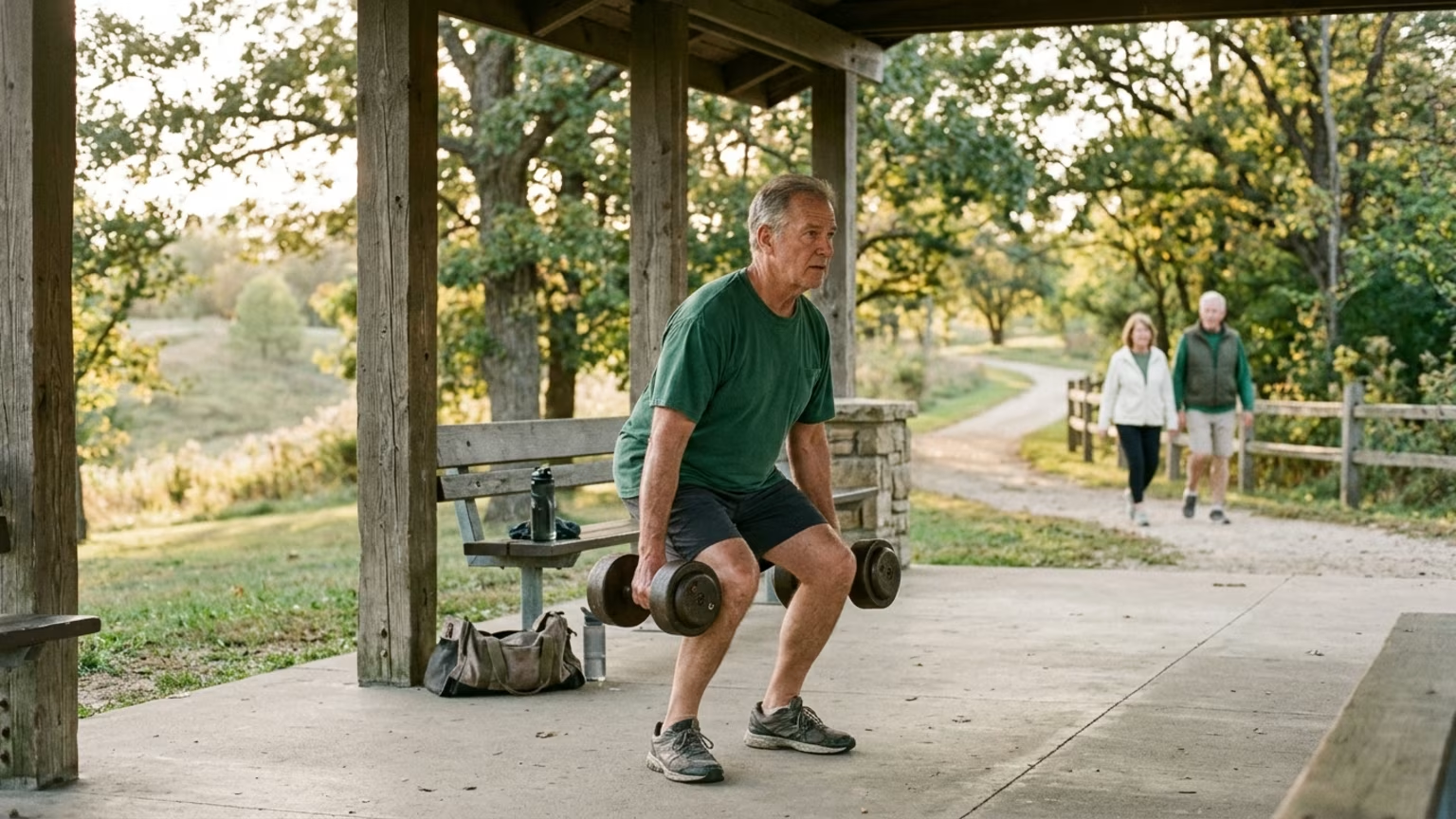

Build a progressive golf warm-up with walking, controlled joint movements and easy practice swings, without treating it as a guarantee against injury.




At Golfergy, the priority is practical preparation for the game you want to keep playing. A warm-up organized around movement fits that approach better than chasing a larger stretch or a faster first swing.
A 2019 review of 23 golf warm-up studies, summarized by Physio for Golf, found that dynamic and resistance-inclusive routines tended to improve performance measures. Evidence that warm-ups reduce golf injuries remained mixed and inconclusive. The same guide notes conflicting findings about the relationship between hip mobility and lower-back symptoms, so stiffness alone should not be treated as an explanation for pain.
The opening walk provides a simple opportunity to notice how movement feels before adding golf swings. The senior-golfer guidance from Sports Medicine Weekly recommends monitoring stiffness or pain as activity increases.
Use that observation through the first comfortable shoulder circles and gentle turns. Notice which movements feel restricted and whether symptoms appear as you move. There is no need to force a larger motion to find out how stiff you are.
This is a check of your starting point rather than a home strength test. The practical question is whether the movements feel comfortable today, not whether you can reach an arbitrary position.
Physio for Golf advises stopping a drill if it causes sharp pain or worsening symptoms. Pins and needles or weakness are also reasons to stop, as are symptoms that persist after stopping. Persistent pain or pain that affects play calls for an individual assessment with a qualified clinician.
The sequence needs no bands or foam rollers. A golf club provides support for the optional ankle drill, and a short iron is used for the opening practice swings.
The club is support for the ankle movement. It is not a tool for forcing a deeper stretch.
Sports Medicine Weekly outlines a progression from walking through controlled joint movements to short-iron half swings. Physio for Golf describes a five-minute sequence that also moves from mobility work toward progressively faster swings.
The outline below follows those shared principles. It adds no breathing counts or timed stretch holds. The focus stays on a controlled pace and a comfortable range rather than a special breathing technique.
Begin with general activity rather than a full golf swing. The senior-golfer resource suggests a brisk walk as the starting point.
Keep the purpose clear: this is the transition from rest into movement. It is not a fitness test before the round. Continue observing how you feel rather than treating walking speed as another performance target.
This fits a no-rush progression toward full swings, with each stage preparing the way for the next.
Move the shoulders through controlled circles. Keep the circle within a comfortable range rather than trying to make it as large as possible.
Focus on this movement alone before moving to the hips. The senior-golfer guidance includes shoulder circles as part of the sequence, not as a test of how much motion you can produce.
Turn the hips through a comfortable range, then return from the turn in a controlled way. Keep attention on the hip movement rather than immediately building a full golf swing around it.
Both sources include hip movement in their preparation guidance. The aim here is to move comfortably, not to force a particular amount of rotation before you are allowed to play.
Move on to a controlled trunk turn. Turn within a comfortable range and return without rushing.
Physio for Golf includes thoracic rotations in its mobility sequence. That means rotation through the mid-back region. For this outline, the task remains a comfortable turn rather than a technical exercise in reaching a prescribed position.
Do not make each turn larger simply because the previous one felt manageable.
For the optional ankle drill described by Physio for Golf, use a club for support and keep the working foot flat. Move the knee forward over the middle toes.
Keep the heel down as the knee moves. Return from the movement with control rather than pushing farther at the end.
The useful detail is the direction of movement with the foot remaining flat. A larger forward movement is not the goal of this warm-up outline.
Sports Medicine Weekly recommends short-iron half swings before full swings. Physio for Golf advises beginning practice swings at about half pace and building toward normal playing speed.
These are separate parts of the progression: begin with an easy half swing, then gradually build the swing and its pace. There is no need to make the first rehearsal look like your full playing swing.
Keep the movement controlled as you progress. Normal playing speed is the destination described by the guidance, not the starting point.
The most tempting mistake is to turn a warm-up into a flexibility contest. A restricted movement can make an enthusiastic golfer push harder for a bigger turn. That changes the task from comfortable preparation to forcing motion.
Another mistake is skipping the progression because you have already walked from the car. The source guidance includes both general activity and controlled joint movements before the swing progression. Walking is the opening stage rather than a replacement for everything that follows.
Starting with a flat-out practice swing also reverses the intended order. The physiotherapy guidance moves from about half pace toward normal speed. It does not begin at maximum effort and work backward.
Keep each small movement distinct. There is no need to combine shoulder circles, hip rotations and trunk turns into one complicated drill.
A practical on-course extension is to use an easy rehearsal swing as a reminder of the same progression. The cue is controlled movement rather than extra speed or a larger turn.
Between shots, that keeps the focus on the golf movement ahead without turning the fairway into another exercise session. It applies the pre-round principle rather than adding a new stretching routine.
The same idea runs through a gradual transition from rest to golf movement: preparation should lead toward the task you are about to perform.
A useful warm-up does not need to become a contest against stiffness. Walking, controlled joint movement and progressively faster practice swings provide a clear sequence without demanding a particular stretch depth.
Bottom Line: The value of a golf warm-up is a steady transition into the movements of play. Comfortable motion and a gradual build toward your normal swing make preparation the goal, not the biggest stretch you can manage.
Follow Golfergy for practical insights on performance, mobility, recovery and healthy ageing. Stay connected for new articles, research-led guidance and ideas to help you play better for longer.


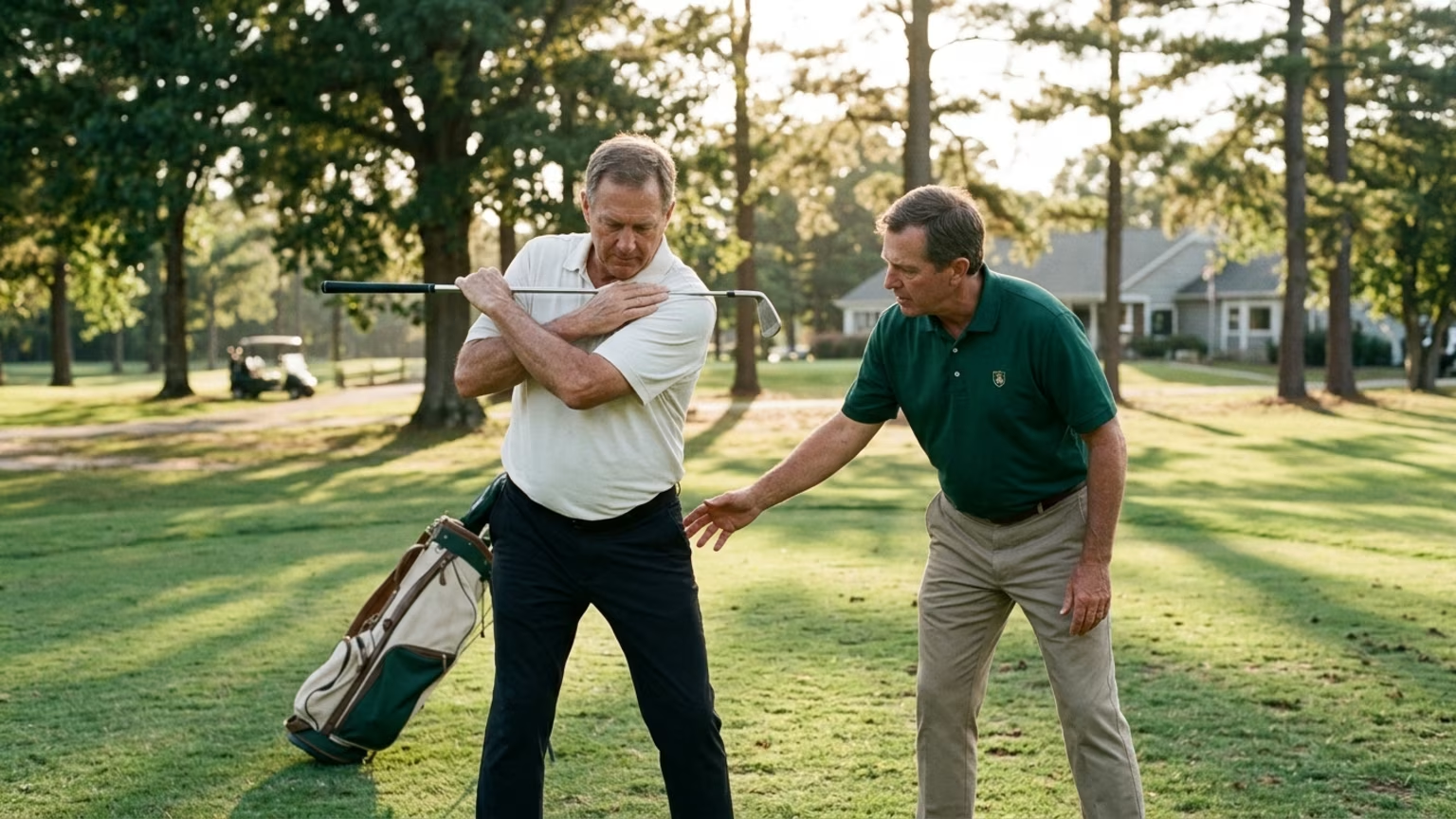
See why a useful golf turn is about available movement and control, with practical questions for golfers over 40 and 50.

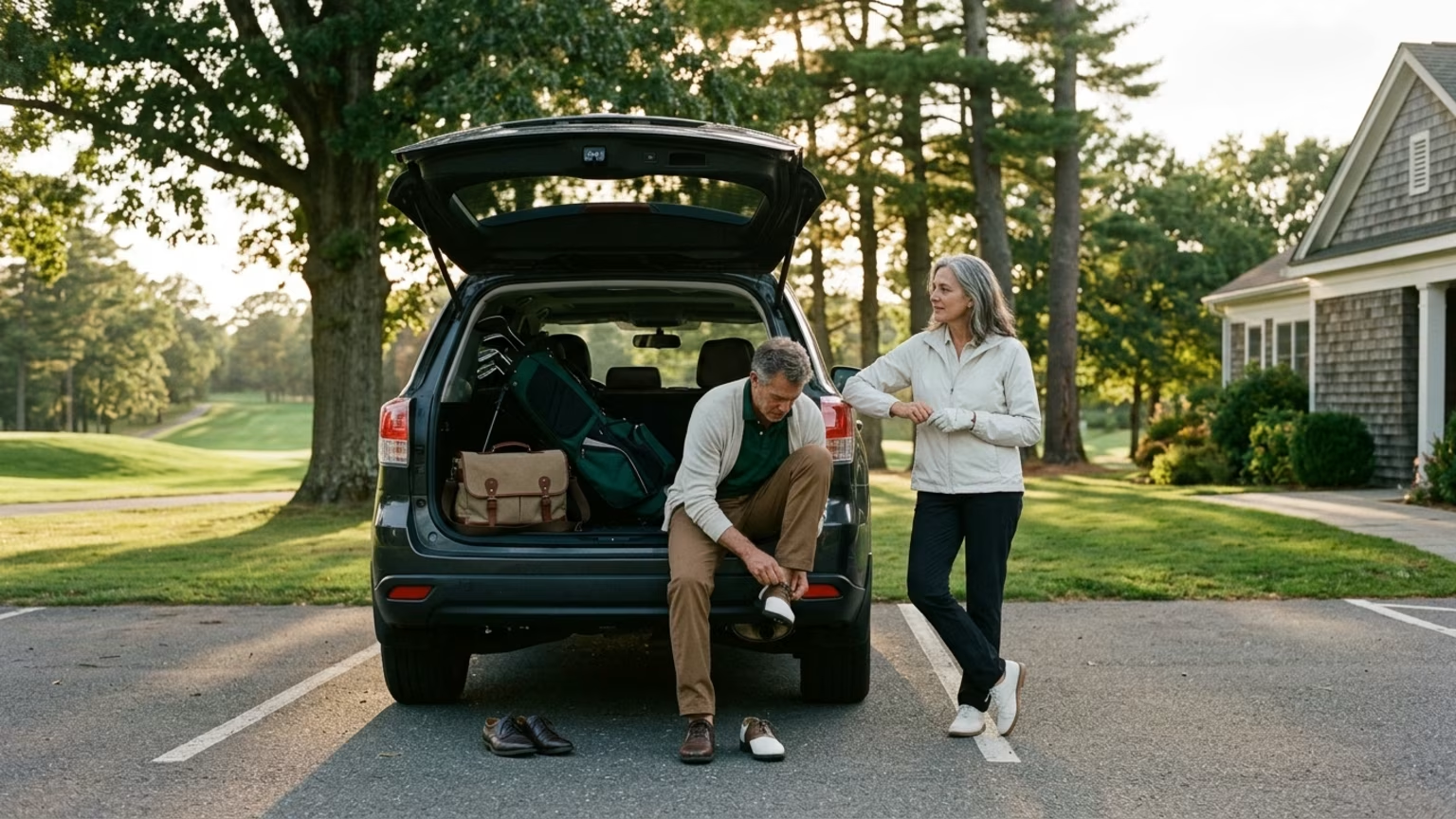
Keep everyday movement separate from golf preparation, with practical habits for desk and travel days plus a clear look at warm-up evidence.
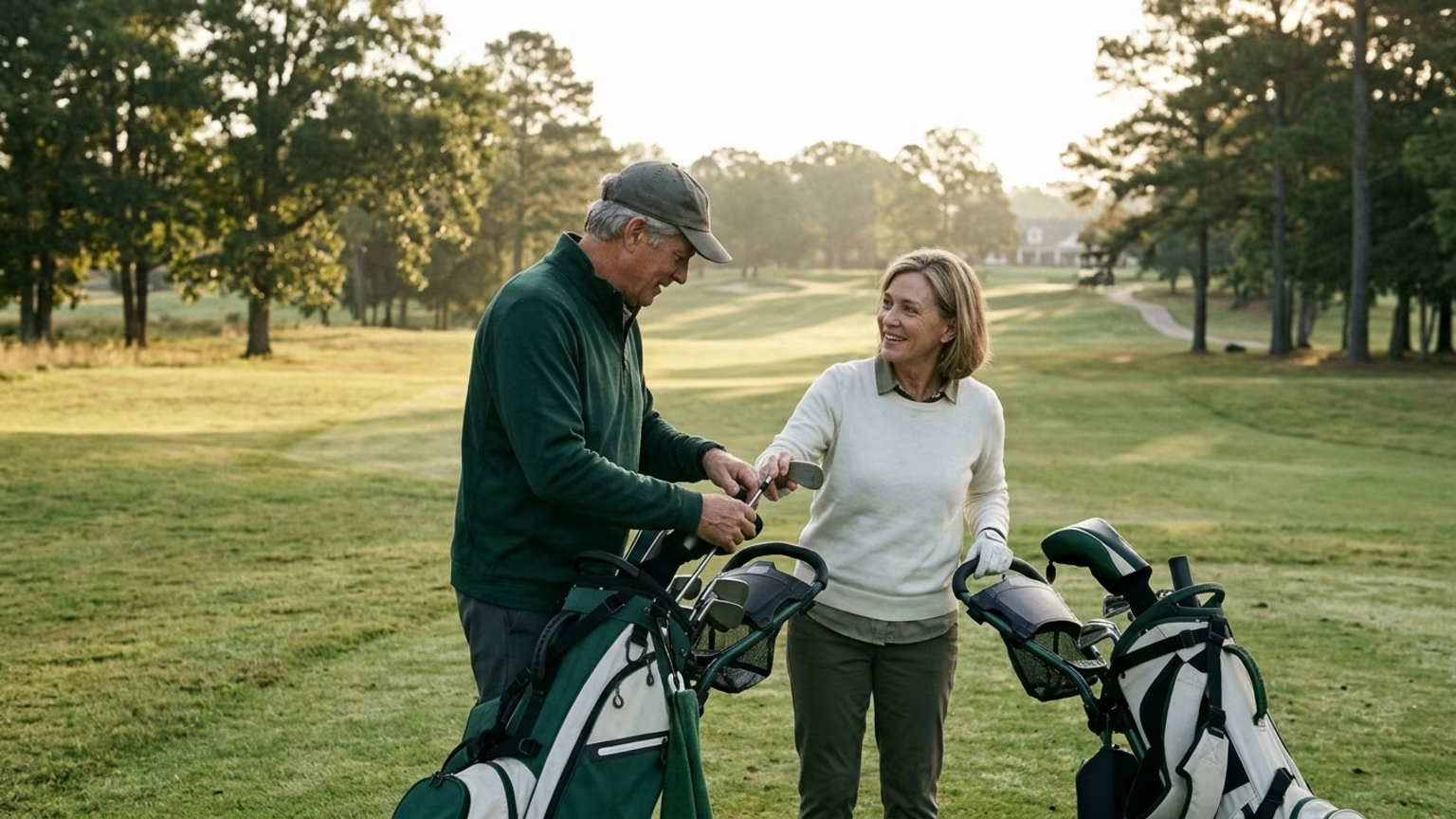
Understand how hips, trunk and shoulders share a golf turn, with gentle ways to notice restrictions and work within a comfortable range.
Explore practical resources on performance, recovery, mobility and golf longevity.
Read the Blog