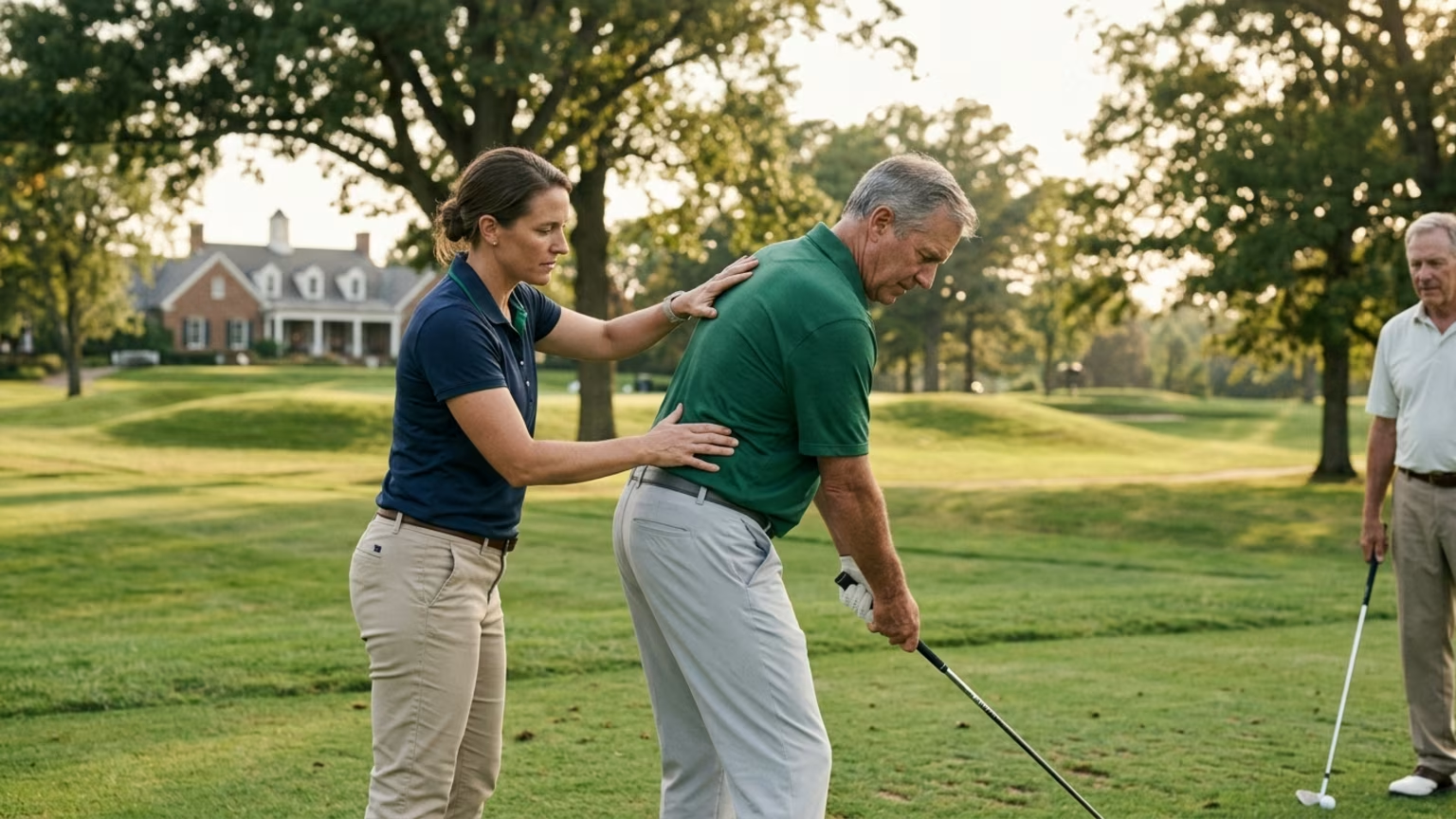

Learn how coordinating your hips, pelvis, thoracic spine and shoulders creates a safer golf rotation and protects your lower back as you age.




A safe golf turn is simply your body's ability to share rotation across multiple joints rather than forcing one area to do all the work. It requires a coordinated contribution from your hips, pelvis, thoracic spine and shoulders. The lumbar spine acts as a bridge to link these segments and maintain your posture. When your body moves efficiently, the hips and thoracic spine provide much of the usable rotational range. Relying on the lower back to manufacture a complete turn often leads to stiffness and poor mechanics.
During a typical backswing, your lead hip needs internal rotation while your trail hip externally rotates. This specific joint coordination allows you to coil into your trail side comfortably. According to Total Body Works Personal Training, restricted hip motion can encourage compensations such as lumbar over-rotation or sway. The pelvis functions as a vital transfer point between your legs and trunk during every swing. In the downswing and follow-through, pressure shifts toward the lead limb while the pelvis and trunk rotate rapidly.
A pelvis that is excessively locked can make the lumbar spine act as the primary rotary joint. Conversely, a pelvis that sways can ruin your balance and disrupt your club path. The shoulders should complete the upper body turn naturally to help guide your arms. One golf therapy source highlights trail-arm external rotation and lead-arm internal rotation as relevant components of a controlled backswing. If you want to develop a safer rotation that protects your lower back, you must let your upper back and hips share the physical load.
A controlled shoulder turn should feel like the rib cage and shoulder blades are moving together. Your arms should not just be pulled across your chest independently. For older recreational golfers, the practical objective is not maximum passive flexibility. It is controlled rotation while the pelvis and trunk remain organized.
As golfers pass age 40 and 50, natural stiffness often settles into the mid-back and hips. When hip or thoracic mobility is limited, the lower back may compensate by rotating more than it otherwise would. The lumbar spine is repeatedly exposed to combined rotation, side-bending and extension during the golf swing. A physical therapy source describes this combination as particularly demanding when performed rapidly and under load. These physical changes explain why forcing a massive shoulder turn can easily backfire.
Golfers with low-back pain are reported to commonly show reduced hip mobility, reduced thoracic rotation and impaired trunk control. This creates a challenging cycle where restricted joints force the spine to work harder than intended. If you push through stiffness to reach a specific swing position, you risk placing severe stress on your lower back. Learning how to build useful rotation without forcing your back is a much safer approach to extending your playing years.
Physical therapists regularly caution against treating the lower back as a primary twisting mechanism. Congruency Physical Therapy specifically recommends that golfers develop thoracic rotation independently of lumbar rotation. They note that inadequate mid-back movement can cause the low back to assume motion it is not well suited to handle. The thoracic spine should rotate comfortably above a comparatively stable lumbar region.
Better joint range does not automatically guarantee massive power gains on the course. Launch Point Golf reports that a 2024 study found only a trivial-to-small relationship between seated thoracic rotation and clubhead speed among elite players. This finding suggests that mobility should be viewed as a tool for assessing your rotational control rather than a direct proxy for swing speed. The primary goal is finding a repeatable posture that distributes stress evenly across your body.
You can start building a safer sequence with a few basic movements that isolate specific joints. Golf mobility routines commonly include drills like open-book thoracic rotations, quadruped rotations and half-kneeling hip-flexor work. The 90/90 hip switch is a reliable starting point for improving lower body flexibility. To perform this movement, sit with both legs bent approximately 90 degrees and slowly move the knees from one side to the other while keeping the torso upright.
Another helpful movement is the quadruped thoracic rotation. From a hands-and-knees position, place one hand behind your head and rotate your elbow upward in a controlled manner while keeping the lower body stable. This isolates your upper back without placing any weight on your spine. You can also try a half-kneeling hip flexor drill to improve your pelvic stability. Place one knee down, gently activate the glute of the kneeling leg and maintain a controlled pelvic position while reaching or rotating through the upper body.
You can also practice a supine hip-rotation drill to build better awareness. Lie on your back with both knees bent, keeping one knee stacked over the other. Rotate the top leg inward and outward while observing whether the pelvis or low back shifts. Building glute strength and lower body stability using these precise movements supports a much cleaner twisting motion.
Once you build comfort on the floor, you can progress to standing movements and golf posture rehearsals. You can practice placing a club across your shoulders and rehearse slow turns in golf posture while monitoring whether the pelvis and thoracic spine share the movement. This teaches your body to coordinate the upper and lower halves smoothly. One golf mobility program aimed at golfers over 60 recommends two sessions per week for its first four weeks and three sessions per week for the following four weeks, with sessions lasting 25 to 40 minutes.
They divide each session into approximately 10 minutes of warm-up, 15 to 25 minutes of targeted exercises and five minutes of gentle stretching. Remember to move slowly and within a comfortable range of motion. A mobility drill should never create sharp pain or a need to hold your breath. Treat these sessions as regular maintenance for your swing rather than a strenuous workout.
Building a coordinated, joint-by-joint turn is the foundation of playing better for longer.
Follow Golfergy for practical insights on performance, mobility, recovery and healthy ageing. Stay connected for new articles, research-led guidance and ideas to help you play better for longer.



Compare static stretching against dynamic movement for older golfers. Learn why active motion prepares your golf swing while static holds belong post-round.

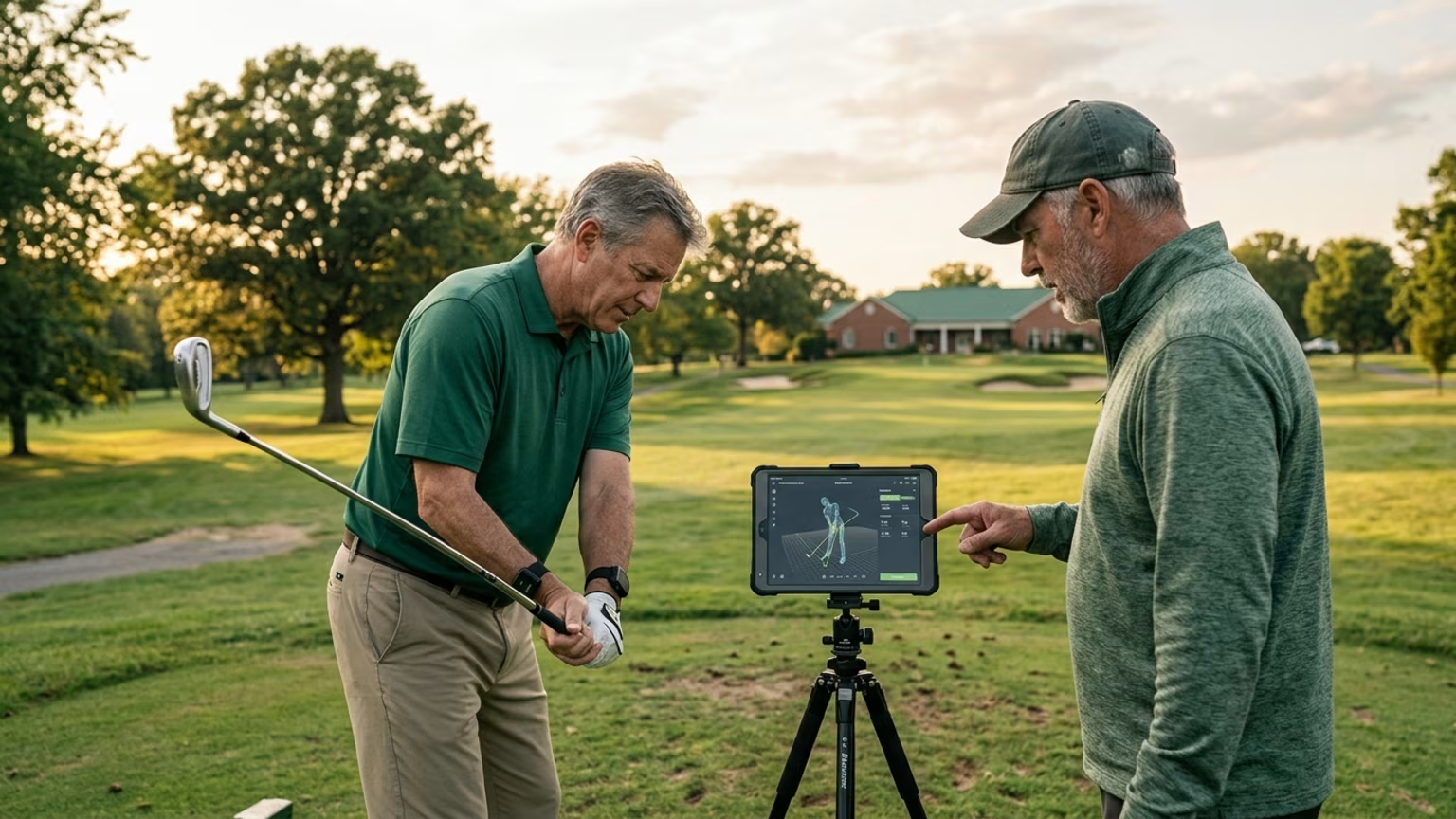
A new Alita and Fujitsu AI motion tracking system debuted at ISS 2026. Learn how camera-based analysis helps older golfers identify restricted swing mechanics.

Learn how to apply GolfWRX's five pillars of fitness to protect your senior golf swing, improve mobility, and stay on the course longer without injury.
Explore practical resources on performance, recovery, mobility and golf longevity.
Read the Blog