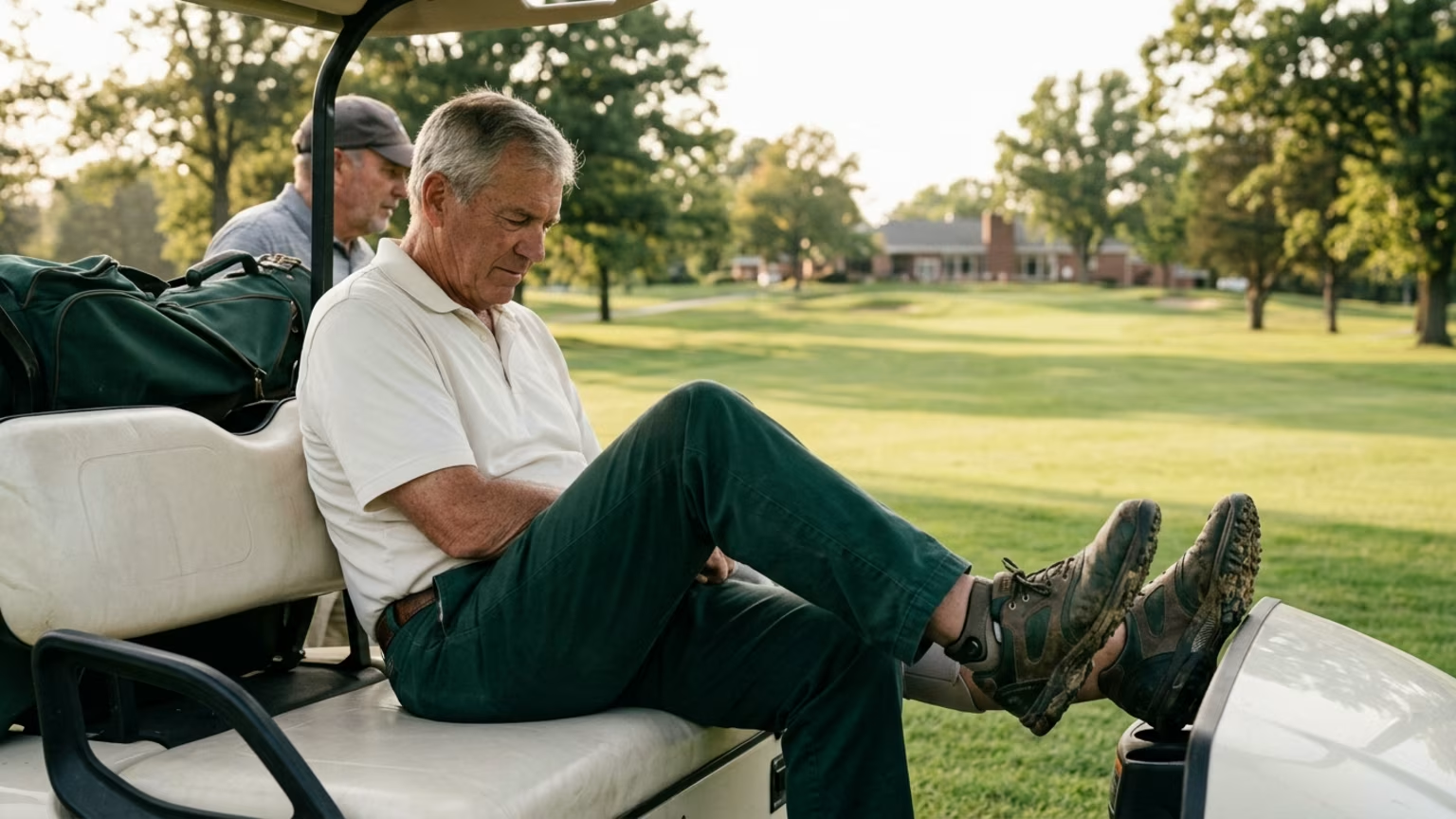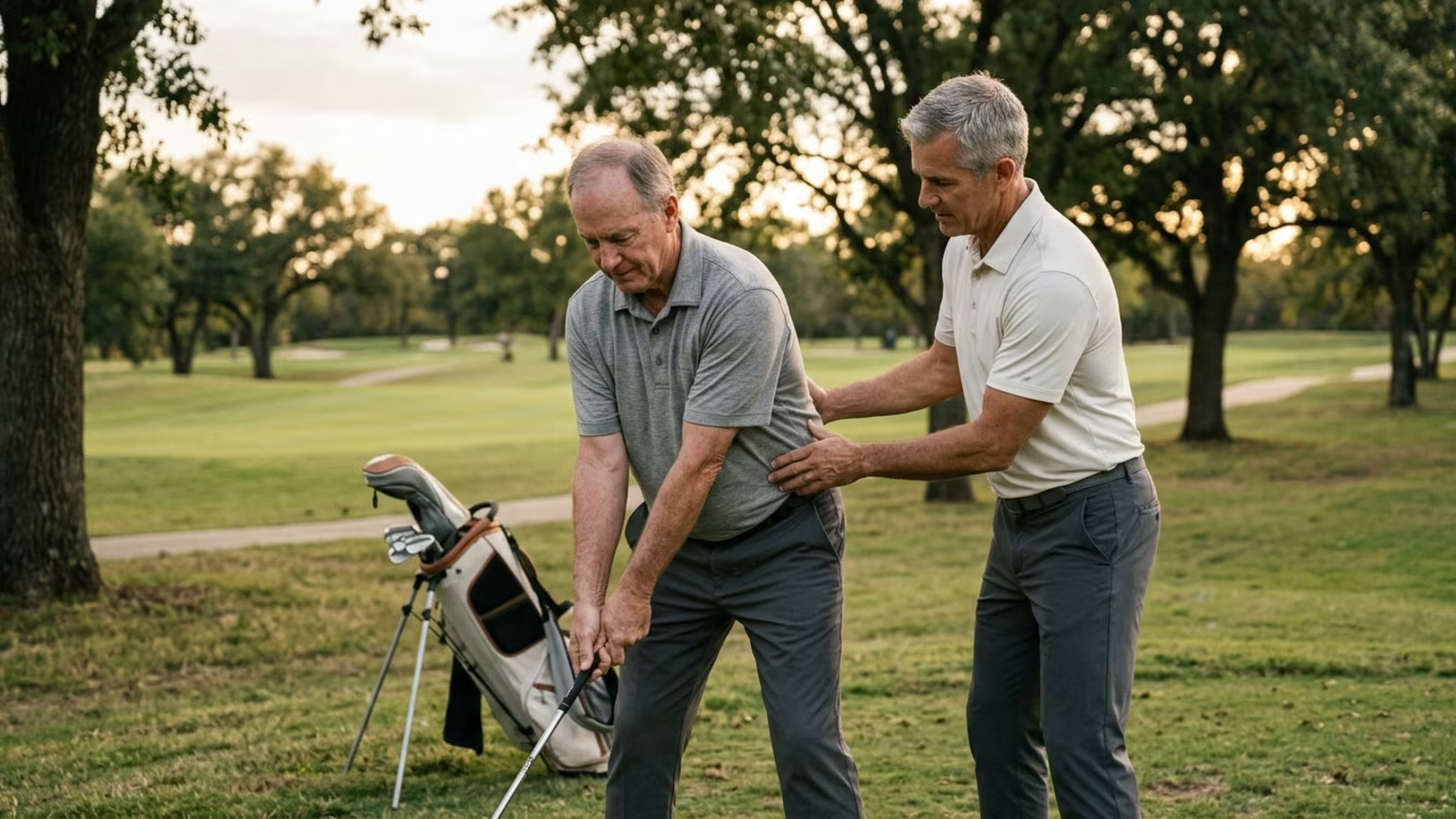

Protect your lower back with a safer golf turn. Learn how hip and thoracic mobility preserves rotational capacity without forcing dangerous range.




Forcing your shoulders to turn further on the practice tee is the fastest way to ruin your lower back. Many players believe a massive shoulder turn is the absolute requirement for distance. A forced rotation places intense pressure on the spine and causes early fatigue. The game demands a much smarter approach to movement.
I used to stand on the first tee doing long, static hamstring stretches because I thought it was the right way to warm up. I would actually feel weaker on my first drive. Research later showed me that dynamic movements, like leg swings and torso twists, prime the nervous system much better. Changing my five minute warmup completely transformed my opening tee shots.
Golfers frequently misunderstand where back pain truly originates. One review summarized the condition as representing between 18% and 54% of documented golf ailments, depending on the population and methods used. The golf swing places unusual demands on the lumbar spine. We must rethink how we prepare our bodies for the course.
The traditional advice tells older players to simply stretch more often. A TPI-related expert discussion reported that stretching alone is insufficient and should be combined with movement, strength and coordination work. Flexibility without control is a fast track to pain. The golf swing is a high-speed athletic movement.
It combines rapid rotation with side-bending, extension and compression. One biomechanics summary reported peak compressive loads during the downswing exceeding six times body weight. These massive forces act directly on the lumbar spine. A recreational golfer over 40 cannot handle that stress by twisting harder.
A large shoulder turn only works when supported by pelvic movement and thoracic mobility. The lower back takes the punishment when the surrounding joints refuse to turn. Moving past this outdated flexibility advice is the first step toward a healthier spine. Severe, persistent or radiating pain requires medical evaluation.
The real issue is how rotation is shared across your body. The hips and thoracic spine are the primary engines for a golf turn. The main role of the lumbar spine is to stabilize and transfer force between the pelvis and upper body. It should not act as the primary source of rotation.
A TPI-related expert discussion reported that golfers over 50 commonly present with limitations in the hips or thoracic spine. They also show reduced glute control and have difficulty coordinating these areas in golf posture. This stiffness forces the lower back to compensate. Players who cannot rotate effectively through the hips and thoracic spine may repeatedly load the lumbar region instead.
A restricted hip alters the entire movement pattern. Physiotherapy guidance for golfers identifies limited hip internal rotation as a common restriction. Poor thoracic rotation is another major cause of lower back stress. Improving your thoracic spine rotational capacity offers a safer way to maintain your swing.
When these joints stop moving well, the lower back pays the ultimate price. The lumbar spine can only handle a limited amount of twisting under high compression. Your body will always find a way to complete the swing. It will steal mobility from vulnerable areas if your main rotational hubs are locked up.
Many players equate a long backswing with a complete, powerful turn. They chase a parallel club position at all costs. This effort forces the body into a reverse-spine or aggressive lumbar-extension pattern. A shorter backswing that preserves posture is much safer and often more consistent.
Freezing the hips to create maximum separation is another common mistake. The backswing requires coordinated movement of the pelvis, thorax and shoulders. Holding your hips perfectly still places massive torque on a vulnerable spine. Focusing on proper hip mobility stops this dangerous compensation.
Fatigue makes this problem significantly worse on the back nine. Tired golfers often chase distance by adding extension and rotation through the low back. The smarter approach is to reduce your backswing length and swing at a controlled speed. A repeatable movement pattern always beats maximum carry distance.
A finish that requires aggressive lumbar arching is not evidence of a complete swing. Finish in balance, allow the body to decelerate naturally and avoid deliberately crunching your spine.
Building a safer swing starts with simple self-checks at home. A seated thoracic-rotation check can reveal obvious asymmetries in your upper body. Sit upright with your knees together and face forward, then rotate your rib cage gently to each side. Do not let your hips swivel during this test.
You can also check your movement quality against a wall. Stand in golf posture with your hips lightly touching a wall behind you. Make a slow backswing turn without allowing your pelvis to slide laterally. If you must sway or lose posture, you need to reduce your required turn.
At golfergy, our grounded approach includes a warm-up, hip mobility, trunk strength and gradual practice-load increases. A sports-injury guidance source recommends a combination of mobility, strength and workload management. Rebuilding from short shots to partial swings and then full speed is the safest method. Adding targeted glute activation exercises helps your pelvis control these high-speed forces.
Golf injury guidance specifically recommends warming up before a round or range session and building mobility, trunk, leg and shoulder strength. A five minute preparation period can include walking, hip circles and bodyweight hinges. This short routine prepares the body to handle the demands of a full swing. Guidance for golf injuries recommends obtaining swing advice when symptoms keep returning.
A sustainable golf game relies on steady, comfortable movement. It is not about forcing a massive turn at the expense of your spine. We recommend practicing dynamic movements like open-book thoracic rotations and controlled hip transitions. These simple habits build the coordination your body desperately needs.
Take time to read more about integrating trunk stability with your mobility routine. Finding a routine that works for your specific limitations brings joy back to the game. True longevity on the course comes from moving well within your natural physical limits. The game feels much better when your body works together as one coordinated system.
Follow Golfergy for practical insights on performance, mobility, recovery and healthy ageing. Stay connected for new articles, research-led guidance and ideas to help you play better for longer.



A new study of over 64,000 adults shows that brisk walking can improve longevity. Learn how golfers over 40 can use stepping intensity to build endurance.


A clinical trial examines how HMB and whey protein impact muscle turnover in adults over 65. Read why older golfers need a multi-component recovery plan.

Life Time's ARORA program expansion highlights the value of multi-component fitness. Learn how older golfers can adapt this format for mobility and longevity.
Explore practical resources on performance, recovery, mobility and golf longevity.
Read the Blog