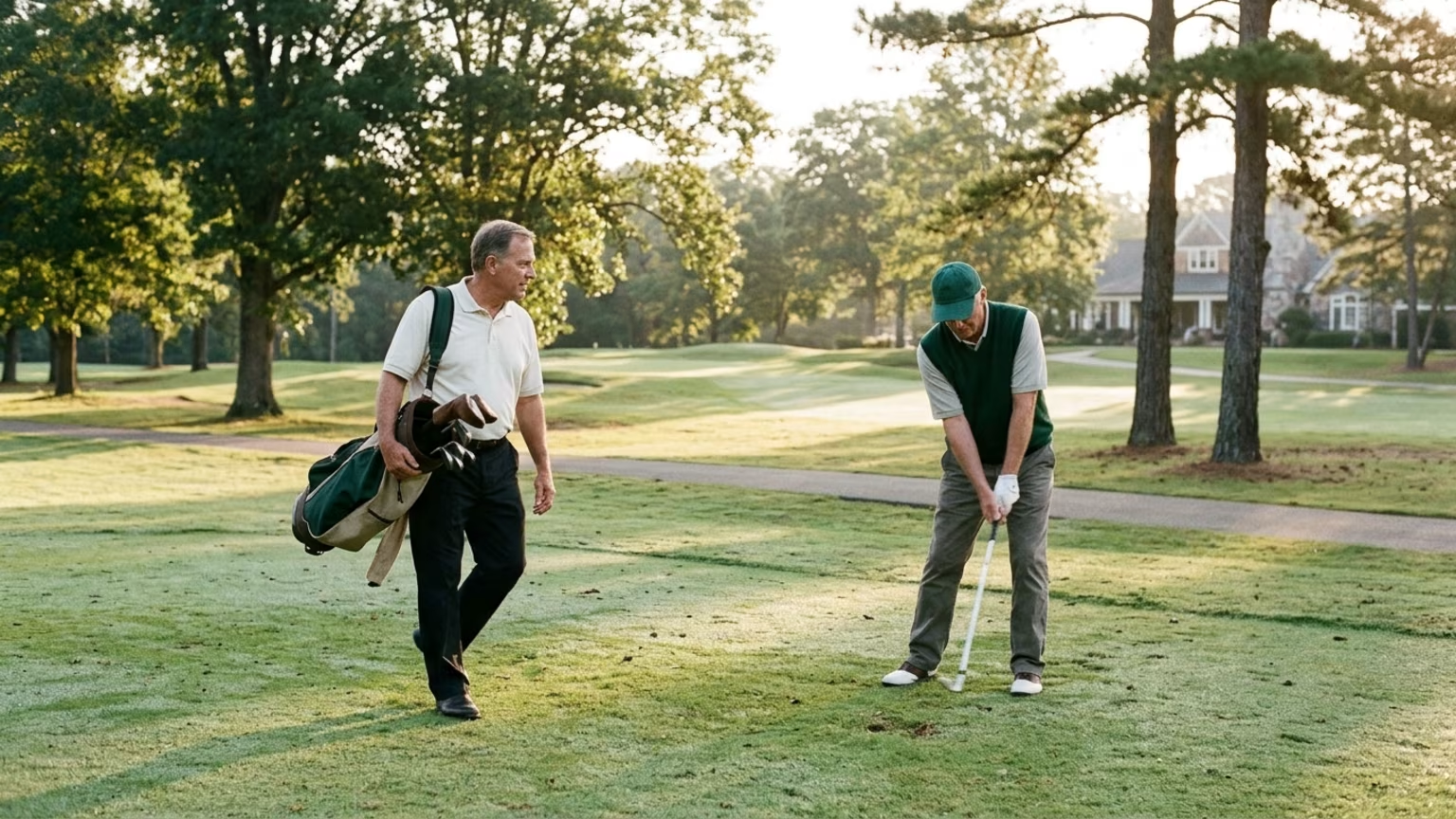

A practical golf warm-up progression from walking to controlled movement and fuller practice swings, with clear limits on injury-prevention claims.




This progression follows a practitioner-published golf warm-up that moves from walking through controlled mobility work to practice swings. It offers a practical order for preparing to play, not a requirement to reach a particular position.
A golf-physiotherapy summary of a 2019 systematic review covering 23 studies reports that dynamic and resistance-inclusive warm-ups tended to support golf-performance measures. Evidence for reducing golf injuries remained mixed and inconclusive.
The progression below is an example rather than a validated prescription for golfers aged 40 and older. It does not establish the best sequence, detailed exercise technique or an ongoing mobility-training schedule. The useful takeaway is the gradual move toward swinging, not a promise of injury prevention.
Use the opening walking and controlled movements as a simple check-in. There is no need to add a demanding stretch or turn the check into a contest with your usual backswing.
As you begin each movement category, notice how it feels before trying to make it larger. Focus on the hips first when you reach that part of the sequence. Give the trunk and shoulders their own attention later.
The question is simple: can you approach the movement without trying to force your way through discomfort? This is an observation of today's starting point, not a diagnosis of tightness or weakness.
For personal questions about pain, weakness or restricted movement, seek advice from a qualified clinician. Do not use the warm-up as a test of how much discomfort you can tolerate.
Golfergy's guide to working with the turn available to you provides related context for keeping movement goals separate from an ideal swing shape.
Keep the sequence straightforward. The published example provides the order below; it should not be read as a detailed prescription for a particular hip or shoulder exercise.
Walking comes before the controlled movement work in the published routine. Let that be the opening stage rather than treating the first full practice swing as the start of preparation.
Keep your attention on the stage you are doing. There is no need to rehearse a large turn while also trying to complete the walking portion.
Next comes the hip portion. Focus entirely on that movement rather than trying to assemble a full golf swing at the same time.
The word controlled matters here. Do not make the movement larger simply to feel that you have done more. Keep breathing normally rather than using a held breath to push farther.
This stage is not a challenge to produce your longest backswing. It is part of the transition toward golf movement.
Then bring attention to the trunk portion of the sequence. Keep the task small: controlled movement before a complete swing.
Avoid turning this stage into a speed exercise. The published progression places gradually faster practice swings later, after the controlled mobility movements.
For related reading, Golfergy covers coordinating movement across the swing rather than treating more turn as the only goal.
Shoulder mobility follows the hip and trunk work in this example. Keep the focus on that stage rather than rushing through it to reach the club swings.
The sequence is not asking you to prove that every area moves equally well. Stay with controlled movement rather than seeking a deeper stretch or a more dramatic position.
Practice swings come last. Begin with a smaller motion, then build toward fuller swings and gradually greater speed.
A separate golf-focused guide also describes walking and mobility work followed by swings that build in amplitude. That means the size of the swing increases through the progression.
Keep the purpose on preparation. A practice swing does not need to become a test of your fastest possible effort.
A bigger turn is not the success measure for every stage. Reaching farther than feels comfortable changes the task from controlled preparation into an effort to claim more movement.
Stay with the movement category in front of you. Hip movement does not need to become a full backswing rehearsal.
The published example builds toward speed. Starting with your hardest practice swing skips that gradual approach.
Use the order as the guide: walking, controlled movement and then progressive swings. Avoid judging the routine by how hard you work at the finish.
The separate golf-focused guide distinguishes preparation before play from mobility work outside the round. Keep that difference clear in your own expectations.
A pre-round routine asks how you will approach today's swings. Longer-term mobility work concerns what you want to develop over time. Do not turn the warm-up into an attempt to solve every restriction before your tee time.
Carry the progression's logic onto the course rather than adding a new set of stretches. A practical application is to keep walking and controlled movement in mind before moving into a fuller rehearsal swing.
If you choose to rehearse a shot, let the motion build rather than making the first rehearsal your biggest effort. This is an application of the same preparation idea, not a separate on-course protocol.
Keep the distinction between preparation and pushing through symptoms. Golfergy's discussion of when discomfort changes your swing offers related reading on that decision.
At Golfergy, the priority is practical preparation rather than a quick fix. Walking, controlled movement and progressively fuller swings provide a clear framework without making the warm-up a contest.
Bottom Line: Prepare the turn you bring to the course today. Build toward your swing without forcing extra range, chasing maximum speed or treating the routine as protection against every ache.
Follow Golfergy for practical insights on performance, mobility, recovery and healthy ageing. Stay connected for new articles, research-led guidance and ideas to help you play better for longer.


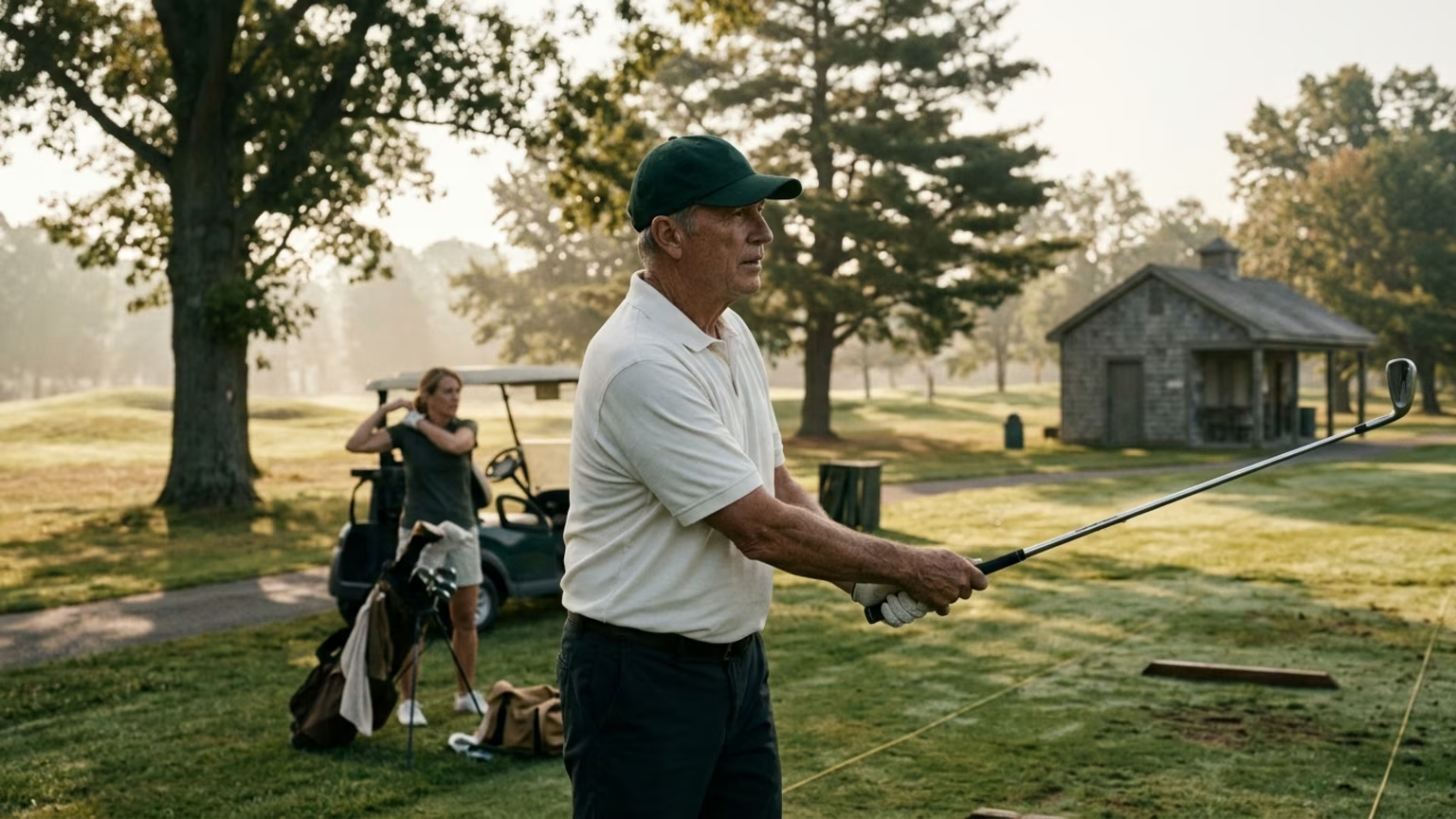
Build a progressive golf warm-up with walking, controlled joint movements and easy practice swings, without treating it as a guarantee against injury.

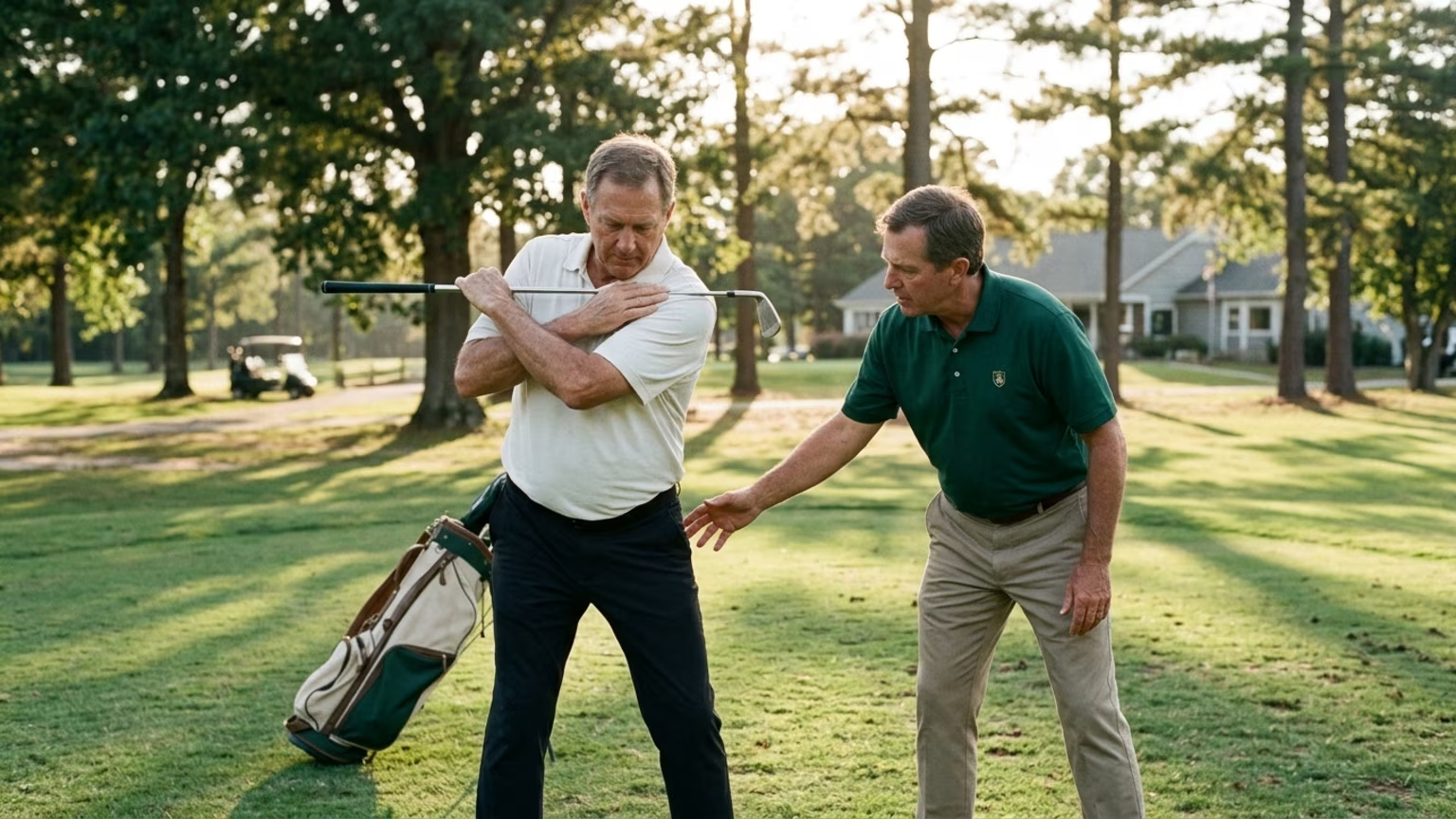
See why a useful golf turn is about available movement and control, with practical questions for golfers over 40 and 50.
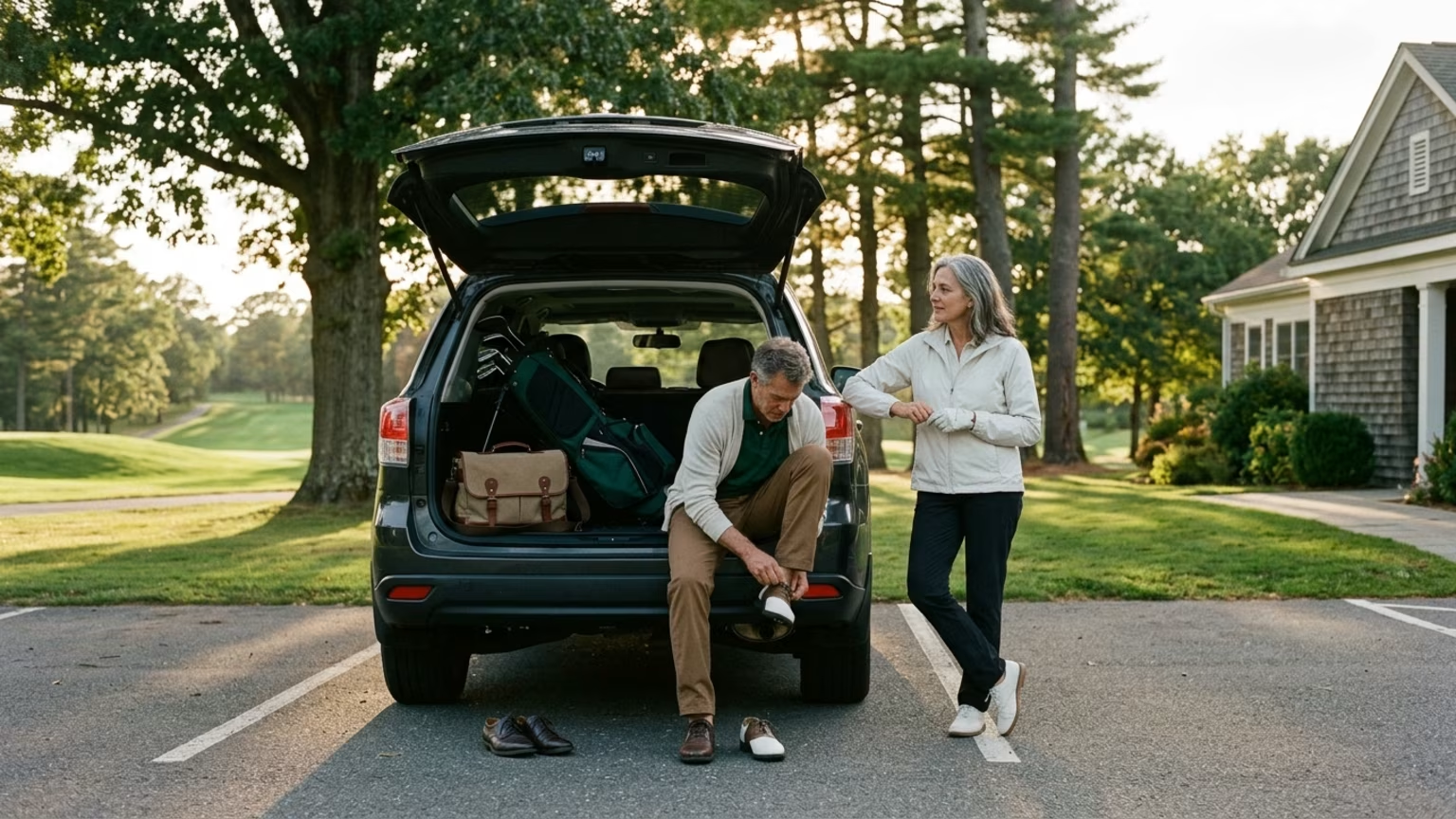
Keep everyday movement separate from golf preparation, with practical habits for desk and travel days plus a clear look at warm-up evidence.
Explore practical resources on performance, recovery, mobility and golf longevity.
Read the Blog


