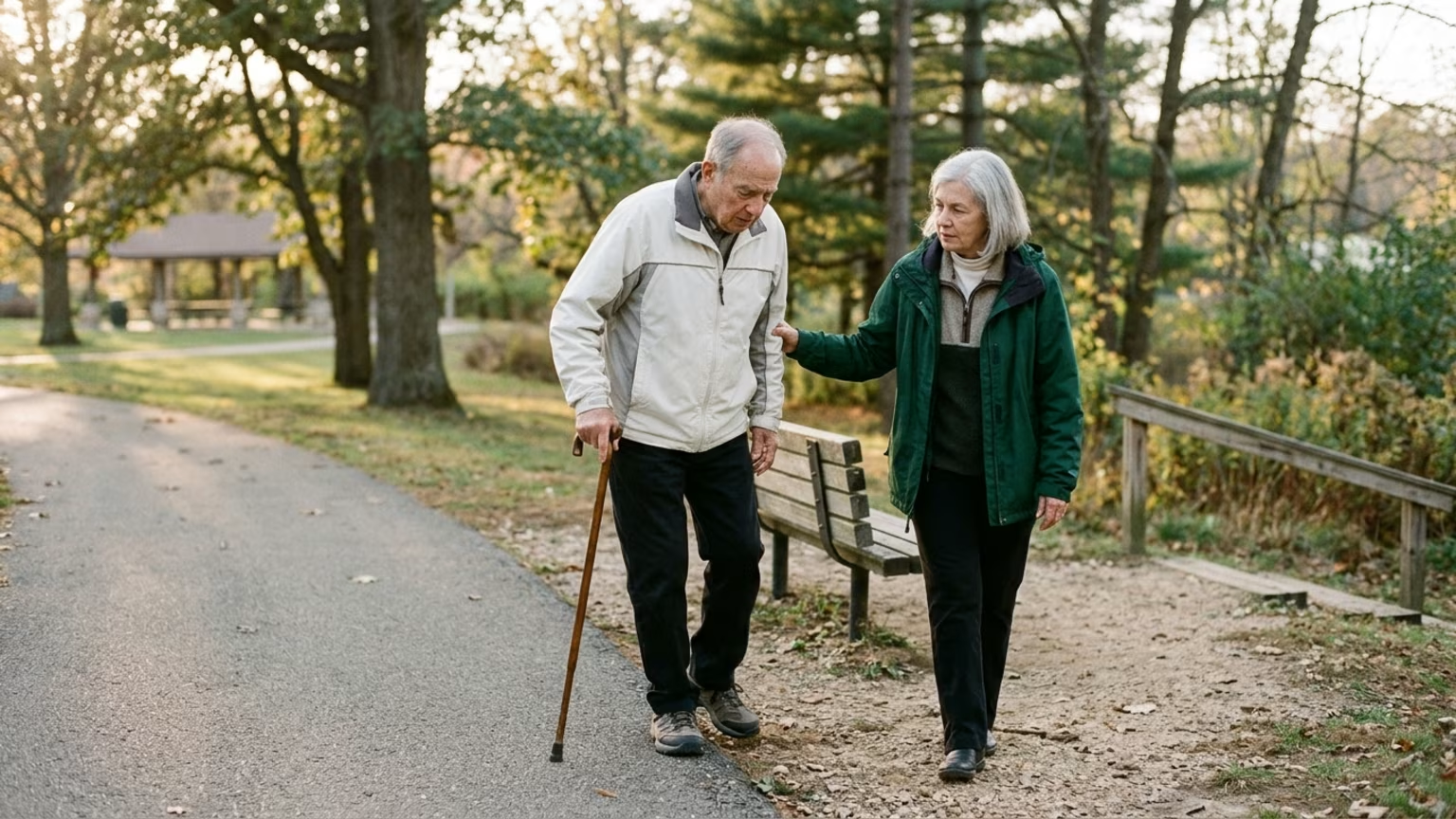

Learn how hips and back share your golf turn, how to notice movement differences, and when an individual assessment may help.




Golf rotation is the shared turning motion of your hips and trunk during the swing. Your hips help your pelvis turn. Your thoracic spine, better known as your mid-back, contributes to trunk rotation. Your lumbar spine, or lower back, also takes part rather than remaining motionless.
A golf low-back-pain review discussed in this physical therapy resource describes the swing as a coordinated movement with substantial rotational demands on the lower back. That makes shared movement a useful starting point for understanding your turn. The aim is not to find one body part that should do everything.
During the backswing, your pelvis and trunk contribute to the turn. The review describes a deliberate backswing followed by a forceful downswing and follow-through. These are connected parts of the same movement rather than separate jobs for isolated joints.
The hips matter because their movement helps the pelvis turn. The mid-back contributes to the turning of the trunk. When one region contributes less movement, producing the same overall turn may involve more movement elsewhere.
That is the basic idea behind compensation. It describes how movement can be redistributed across the body. It should not become an instruction to freeze the lower back or force the hips to turn farther.
Across a standard 18 holes, the practical question is how the whole action feels at different points in the round. Does a practice turn feel comfortable before play? Does one direction feel different from the other? Does the turn feel more restricted after a long session?
These observations describe your experience without assigning blame to a joint. They also keep the focus on the whole movement. Our guide to how the hips and upper body contribute together takes the same shared-motion approach.
The review also identifies golf's repeated and one-sided swing pattern as a possible contributor to lower-back stress. That puts mobility within a wider picture. How often the swing is repeated matters alongside how the movement is produced.
For golfers moving through their 40s and 50s, a changing turn can raise an obvious question: is this simply age? The research discussed here does not establish a normal rate or mechanism of age-related hip or mid-back rotation loss. It would be misleading to turn either birthday into a fixed mobility deadline.
The review does offer a useful distinction between feeling restricted and knowing why. It notes that restricted hip rotation can sometimes be related to osteoarthritis and may not respond to exercise. That is a reason for individual assessment rather than assuming every stiff-feeling hip needs more stretching.
The review also discusses a small comparison of professional golfers. Those with a history of low-back pain had less lead-hip rotation and less ability to extend the lower back than those without that history. The finding was an association rather than proof that the movement differences caused pain.
Those professionals were not a study group of recreational golfers over 40. A summary of research on swing mechanics and back pain also reports limited and conflicting evidence linking particular swing variables with low-back pain. Together, these findings argue against a universal explanation for a sore or restricted-feeling turn.
A sensation alone cannot identify whether the issue comes from the hip, mid-back, strength or another factor. A standing turn comparison is not a validated diagnostic test. Nor does it establish which exercise would change the movement.
The practical lesson is to keep the question broad. The review describes low-back pain as having several possible contributors, including practice volume and swing mechanics. It also includes trunk strength and endurance alongside hip mobility.
For Golfergy, this fits a steady approach to healthy ageing: understand the movement before chasing a quick fix. Our discussion of a turn that feels different after 40 provides related context without making age the whole explanation.
The supplied research supports a gentle way to notice movement and a simple way to record the experience. These habits focus on information that may be useful during an assessment. They do not require chasing a longer backswing.
The body-awareness option described in the research starts from relaxed standing. The focus stays on one small movement at a time:
Keep the comparison about the sensation rather than the size of the turn. The useful observation might be that one direction feels more restricted. It might be that a slower movement feels different from a more effortful one.
There is no need to translate that observation into a label such as “tight hip” or “blocked mid-back.” A plain description is more useful: “Turning right feels restricted” or “The turn feels different when I slow it down.” That preserves what you actually noticed.
The second habit is to connect the sensation to its setting. The research suggests noting what you felt and when it appeared. A practice swing and the period after a long session are examples of useful context.
A short note can include:
That gives a healthcare professional or golf coach something specific to discuss. It also keeps the conversation grounded in your experience rather than a self-selected diagnosis.
An individualized assessment may be useful when the restriction persists or affects normal play. Pain or a history of back or hip trouble also makes personal assessment relevant. A qualified clinician can look at the hips and trunk alongside symptoms and other factors.
If swing changes are part of the discussion, the review supports collaboration between a healthcare provider and a qualified golf coach. New or worsening symptoms warrant professional advice. The same applies to symptoms that concern you.
Playing Better for Longer starts with understanding how your hips and back share the turn, not forcing one region to do the whole job.
Follow Golfergy for practical insights on performance, mobility, recovery and healthy ageing. Stay connected for new articles, research-led guidance and ideas to help you play better for longer.


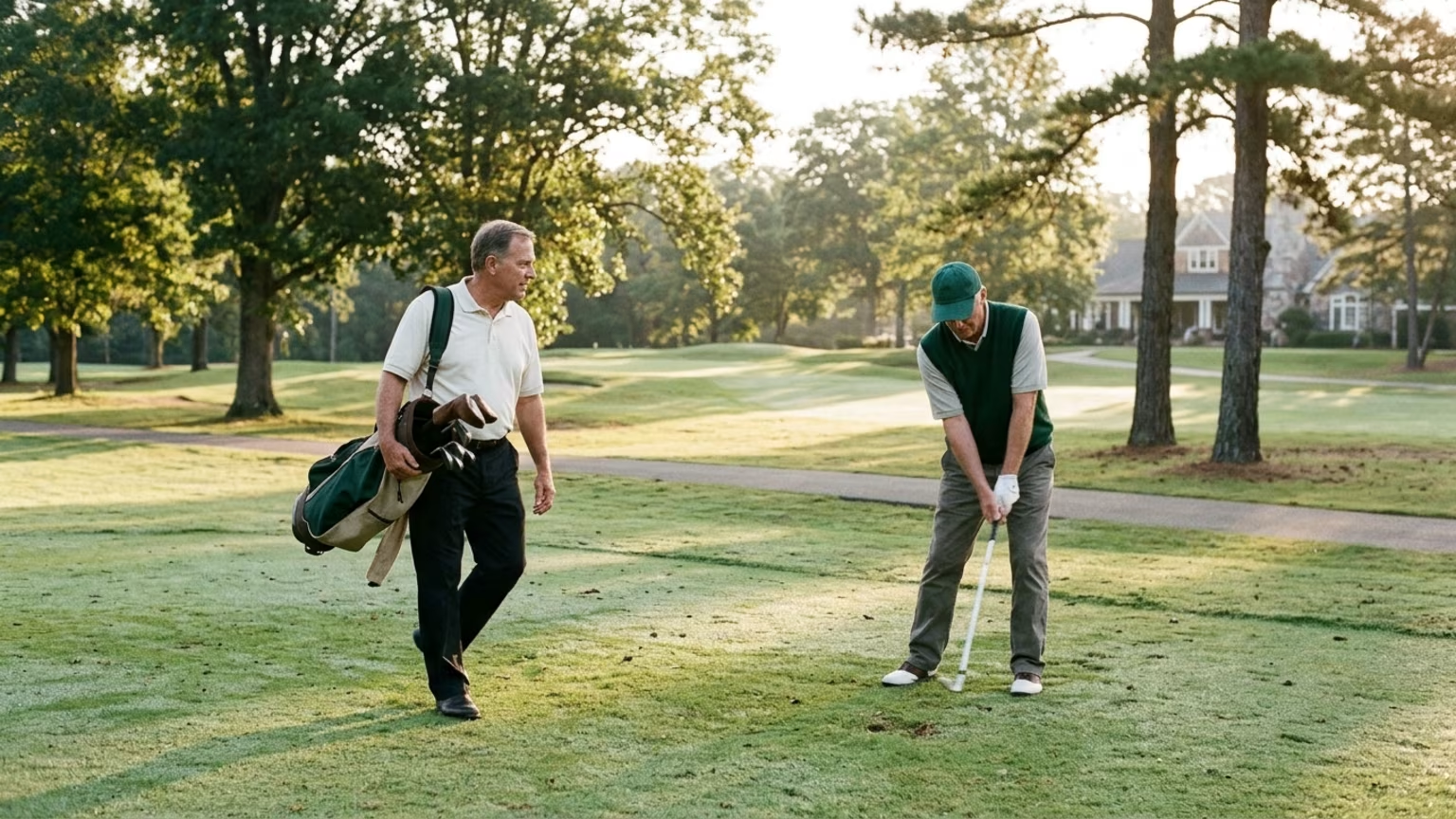
A practical golf warm-up progression from walking to controlled movement and fuller practice swings, with clear limits on injury-prevention claims.


Build a progressive golf warm-up with walking, controlled joint movements and easy practice swings, without treating it as a guarantee against injury.
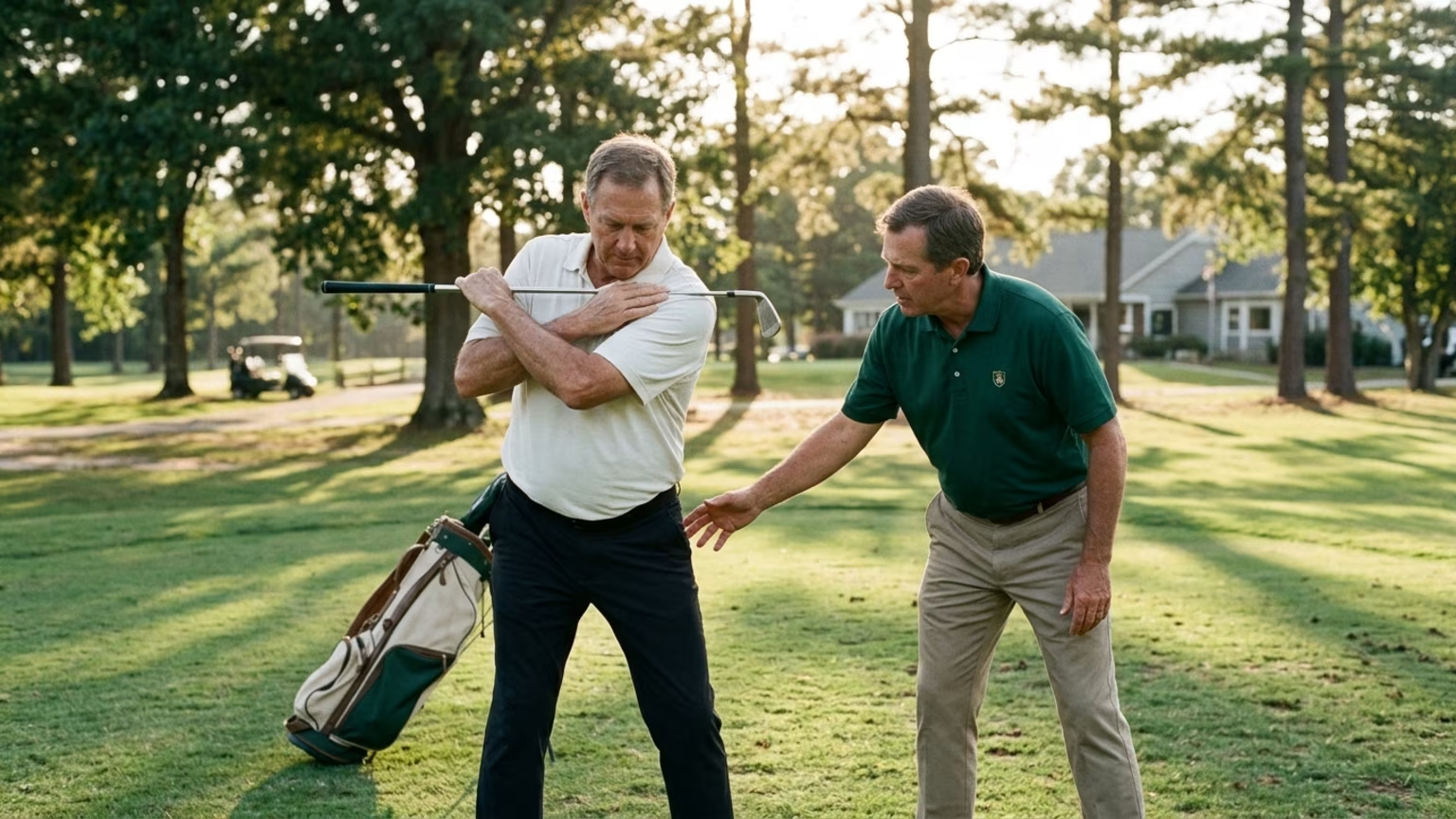
See why a useful golf turn is about available movement and control, with practical questions for golfers over 40 and 50.
Explore practical resources on performance, recovery, mobility and golf longevity.
Read the Blog