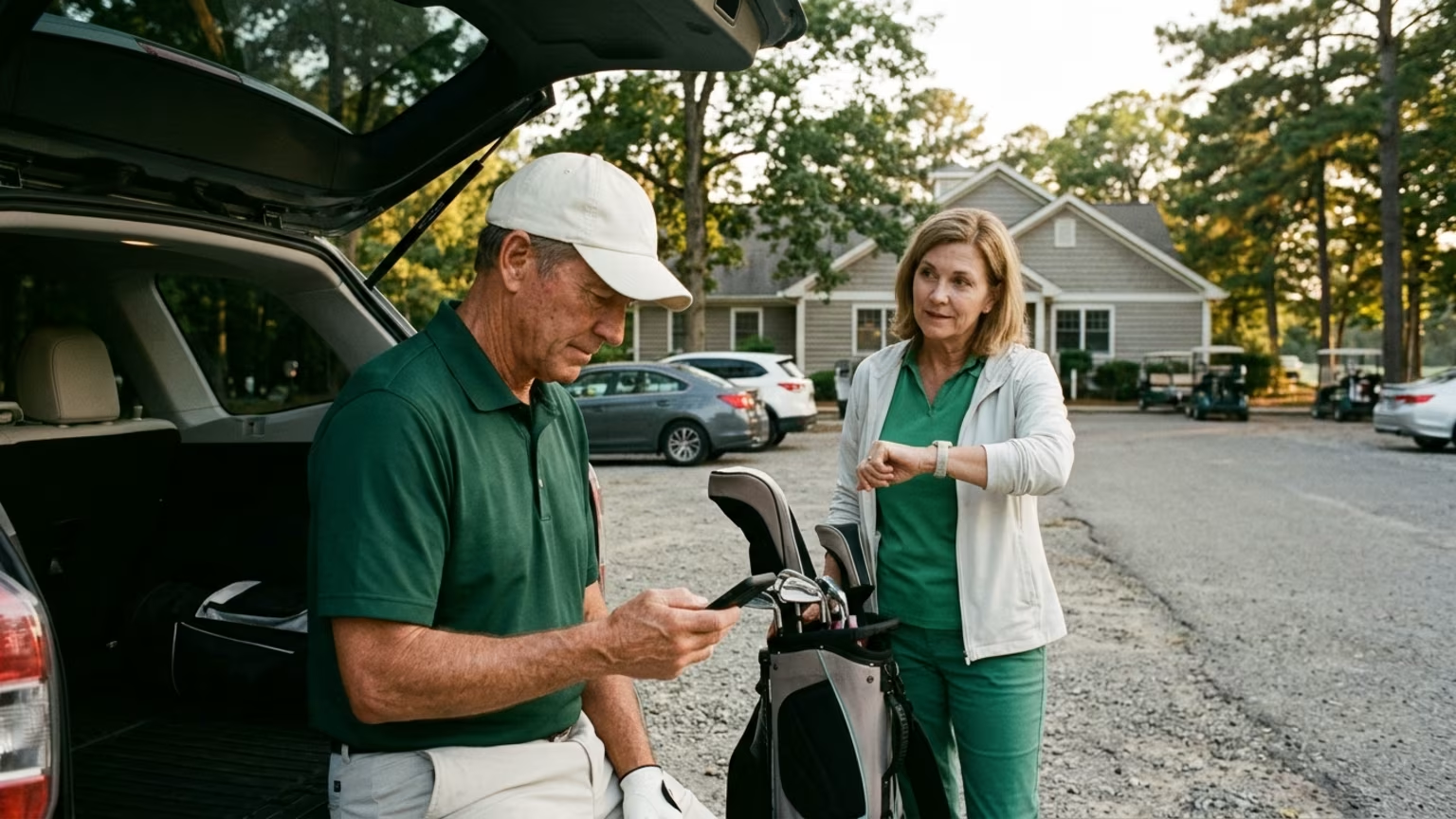

Understand how legs and hips contribute to your golf swing, what ground-force research shows, and how to assess lower-body control without copying a stance.




Lower-body strength is your leg and hip muscles’ ability to produce force. Lower-body control is how you manage that effort during movement. For a golfer, the useful goal is a comfortable and balanced swing rather than the hardest possible push against the ground.
Your feet connect you to the turf. Your legs and hips belong to that base, but they should not be judged apart from the rest of your swing. The practical question is whether lower-body strength or control deserves attention in your own game.
That question does not require copying another golfer’s stance. It starts with understanding what the evidence shows and noticing how your usual swing feels.
A secondary account of ground-force research describes a 2019 study of 63 highly skilled male golfers. The study examined ground forces and clubhead speed. The account reports that the trail foot contributed to the pivoting moment, meaning a turning effect.
In plain language, the golfer’s interaction with the ground was part of the turning action. The feet and legs were not simply a platform beneath an otherwise separate swing. That gives lower-body work a useful connection to golf rather than making it strength training with no clear purpose.
The distinction between force and control matters here. A force measurement describes part of the movement, while a golfer’s concern may be whether the swing feels manageable. Golfergy’s guide to the different jobs of strength and power provides another way to frame that conversation.
Across a standard 18 holes, translate the idea into observations rather than technical commands:
These are questions to notice during play, not findings about what must happen to every golfer. A difficult swing does not identify weak legs or hips by itself.
The useful description is specific: “I felt unsteady on that lie.” That gives a coach or health professional something to assess. “My hips must be weak” jumps straight from an observation to an explanation.
For golfers moving through their 40s and 50s, it is tempting to treat every change in control as an age-related loss of strength. The evidence here supports a more individual view.
A secondary summary of a 2023 comparison reports that recreational golfers aged 65-79 had higher grip strength and better static and dynamic balance than sedentary peers. Static balance refers to balance while still. Dynamic balance refers to balance during movement.
The evidence has clear limits. The ground-force study involved highly skilled men, so it does not establish a universal stance or pressure pattern for recreational golfers. Relationships with clubhead speed do not prove that producing more force creates a controlled or safer swing. The older-golfer comparison was cross-sectional, so it cannot show that golf caused the differences or trace how strength and balance change through the 40s and 50s.
That leaves a practical distinction: age belongs in the conversation, but it does not identify the cause of a movement concern. The comparison also does not tell us whether an individual golfer needs stronger hips or a different approach to balance.
Rather than attaching a fixed explanation to a birthday, describe what has changed in your golf. Perhaps comfortable control feels less consistent. Perhaps one type of lie raises questions that a level stance does not.
Those observations can shape an assessment without becoming a diagnosis. This fits Golfergy’s approach to treating age as training context rather than an exact fitness formula.
The starting point is not a universal leg exercise or a prescribed stance. It is a clearer picture of the task that needs attention. Two accessible habits can help make that conversation more useful.
Use the comfortable swings already present in your golf as an observation opportunity. Keep the focus narrow: did that swing feel balanced?
There is no need to turn the observation into an extra effort to push harder. The purpose is to describe your current movement, not to manufacture a particular pressure pattern.
Notice the setting alongside the sensation. Was control available from your usual lie but less consistent elsewhere? Did the movement feel comfortable, difficult or painful?
This is a self-observation prompt, not a validated home screening test. It does not grade your strength or decide which exercise belongs in your routine.
A useful observation might be that balance is comfortable during familiar swings but uncertain on a slope. Another might be that the concern is pain rather than balance. Keeping those descriptions separate gives an assessment a clearer starting point.
A coach or qualified health professional can observe whether comfortable swing control is available across different lies. The assessment can address strength, balance, mobility and swing mechanics rather than assuming that one factor explains everything.
Bring the concern in ordinary golf language. “I feel unsteady on uneven lies” is more useful than arriving with a firm conclusion that your legs need a particular exercise.
If movement feels difficult or inconsistent, an individual assessment can help identify a sensible training priority. Pain calls for qualified health input rather than an attempt to solve the problem by forcing a stronger push or a different stance.
The discussion should stay connected to your goal. Are you trying to feel more balanced during comfortable swings? Are you trying to understand why control changes with the lie?
That keeps lower-body work focused on a real playing concern. It also leaves room for the finding that strength is only part of the question. Golfergy’s guide to balancing available movement with control develops that broader perspective.
The aim is not to collect exercises because they look golf-specific. It is to understand which part of your movement deserves attention and build the next step around that finding.
Understanding how your legs and hips support your swing means matching strength and control to your needs, with the goal of Playing Better for Longer.
Follow Golfergy for practical insights on performance, mobility, recovery and healthy ageing. Stay connected for new articles, research-led guidance and ideas to help you play better for longer.


Learn how supported single-leg strength and balance practice fits golf preparation, with realistic expectations for swing control and uneven lies.

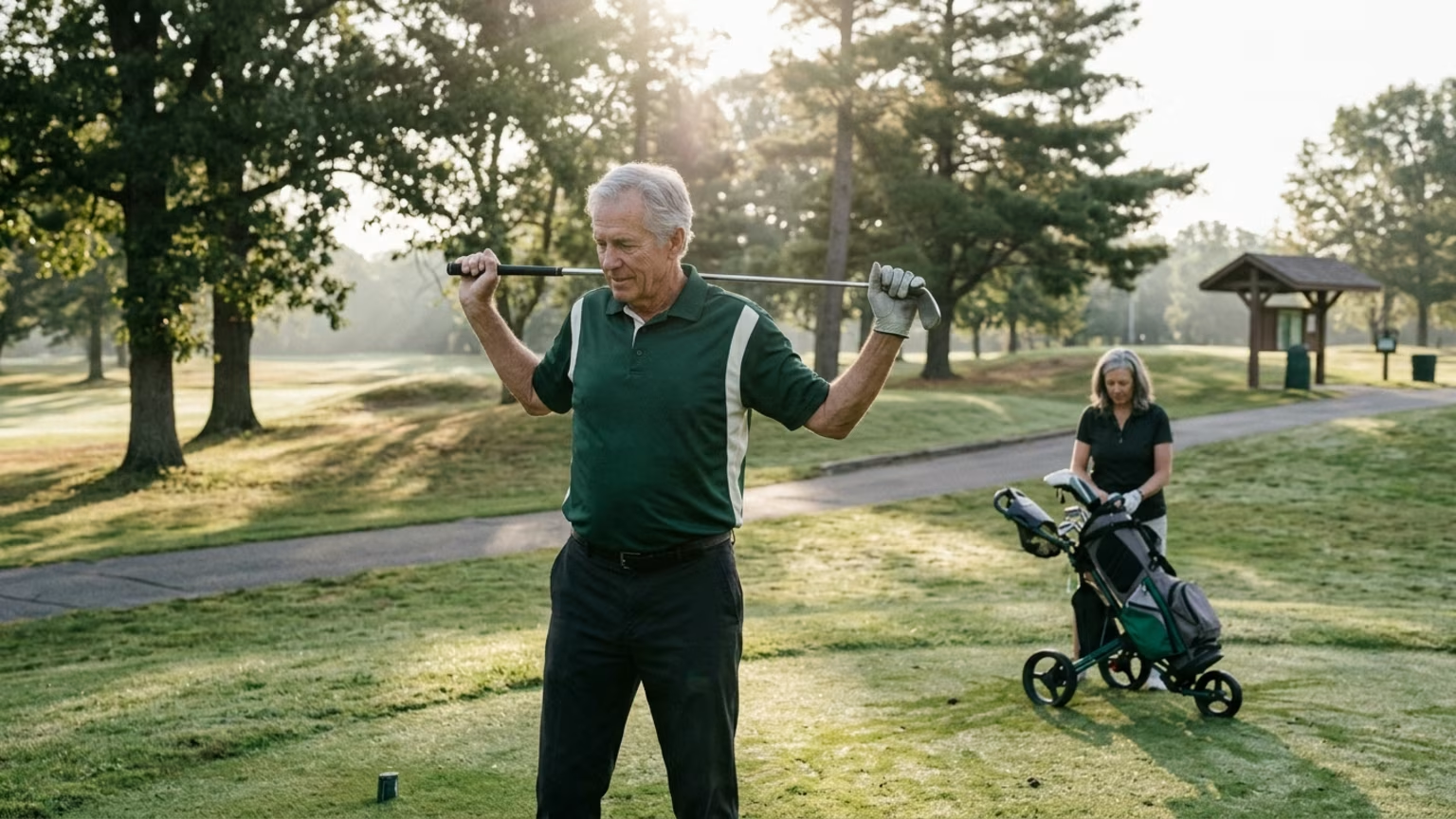
Learn how legs, hips, trunk and upper body work together in the golf swing, with simple movement examples and age-aware guidance.
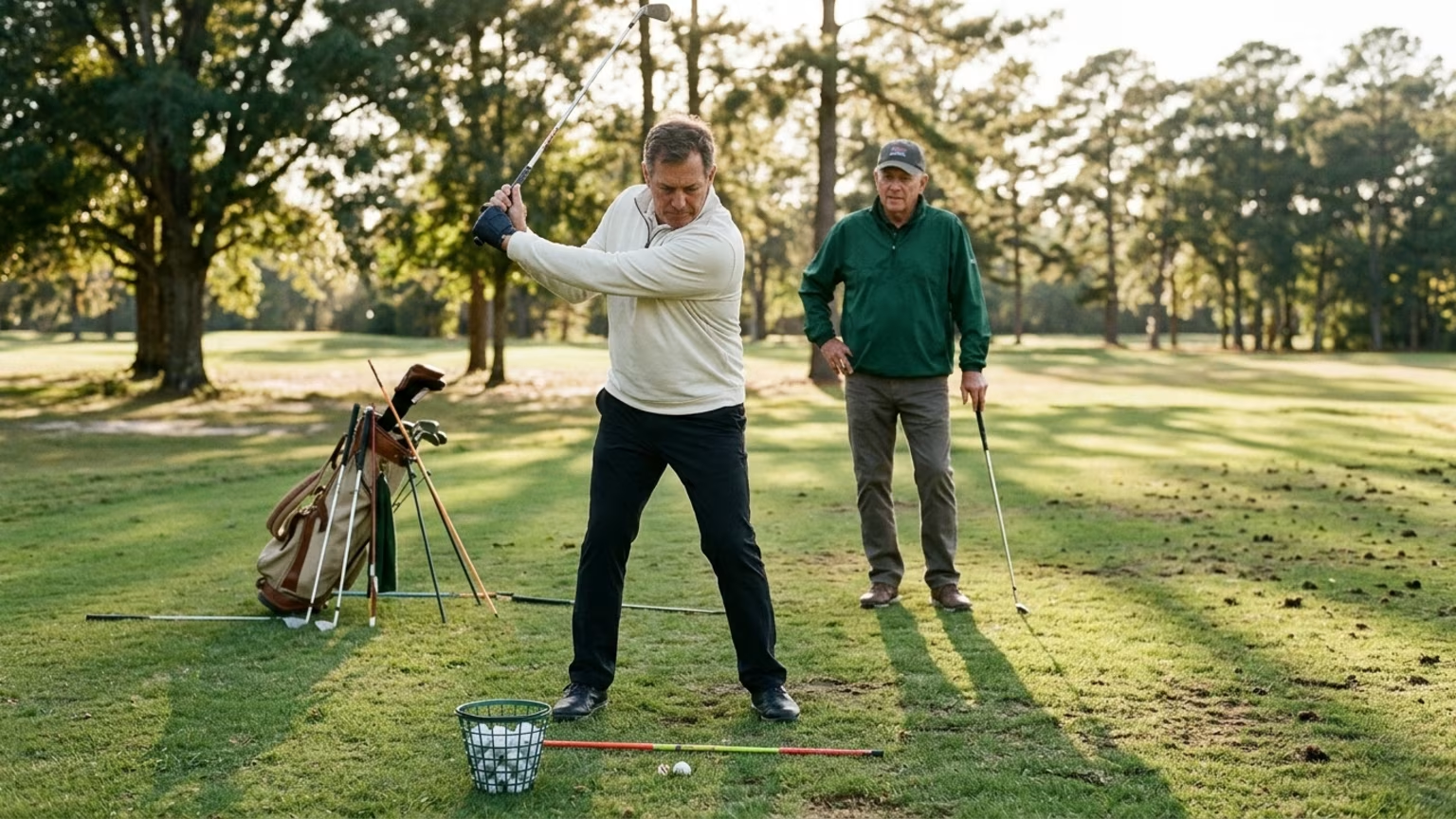
Learn how strength differs from power in the golf swing, what older-golfer studies show, and why controlled training matters more than chasing effort.
Explore practical resources on performance, recovery, mobility and golf longevity.
Read the Blog