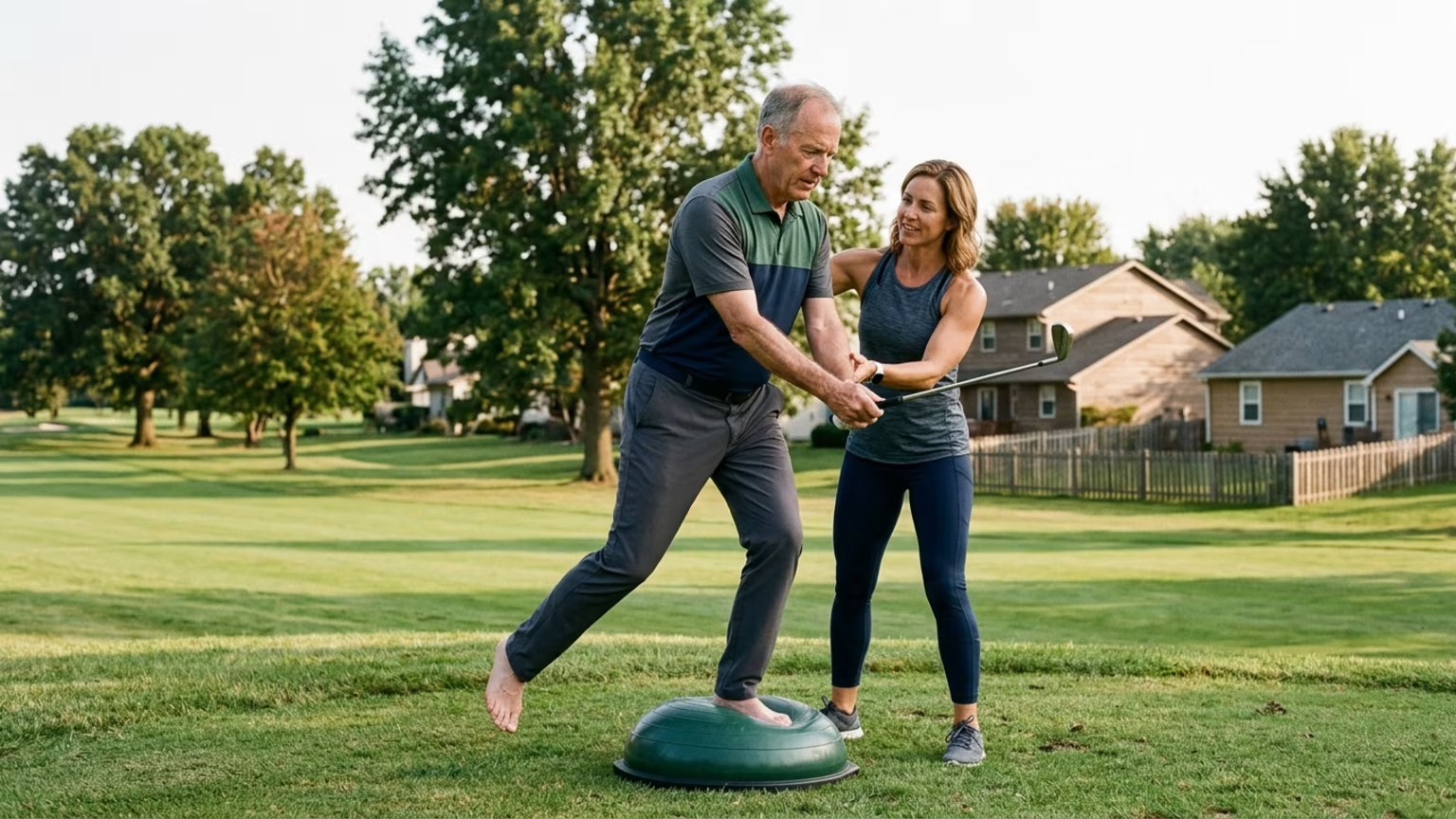

Learn how to balance golf and a weekly strength schedule. Prevent mid-round back tightness with a sustainable maintenance plan that keeps you playing well.




The World Health Organization recommends muscle-strengthening activity involving all major muscle groups on at least two days per week. This baseline matters because it forms the foundation of physical resilience for older players. A consistent routine keeps you on the course rather than recovering on the couch. Many players ignore this guideline because they fear gym fatigue will ruin their weekend round.
"Why does my lower back tighten up rigidly around the 14th hole?" It is the most common question we hear from golfers over 40. We understand how frustrating it feels to lose a good round to physical fatigue. A few years ago, I noticed my swing falling apart around the 14th hole.
My lower back would tighten up, and I started compensating with my arms. I spent months thinking it was a swing flaw. It was not until I started a simple evening hip mobility routine that I realized my glutes were just turning off from fatigue. Fixing that one physical limitation brought my back nine scores down drastically.
Mid-round tightness often stems from simple muscle fatigue rather than a structural injury. A 2021 systematic review examined resistance-training methods and their effects on golf clubhead speed and hitting distance. However, for recreational players, the real benefit of strength work is durability. When your legs and trunk tire, your body searches for stability elsewhere.
The lower back often takes the strain when primary movers give out. Older players frequently struggle with this because their weekly routine lacks a dedicated strength component. Walking the fairways provides excellent cardiovascular benefits, but it does not maintain muscle capacity. Without adequate leg and trunk strength, the repeated rotational forces of the golf swing eventually overwhelm smaller muscle groups.
This fatigue creates the rigid feeling that ruins your scorecard late in the day.
As your lower body tires, you lose the ability to clear your hips effectively. This physical limitation forces your arms to take over the downswing. This often creates an over-the-top swing path, weak contact, and a noticeable loss of distance. You might see your drives fading weakly into the right rough late in the round.
When your glutes stop firing, your pelvis loses its stable foundation during the rotational phase of the swing. The lower back muscles are forced to act as primary rotators rather than stabilizers. This unnatural demand causes the muscles to lock up defensively. You will lose the ability to compress the golf ball at impact.
Your divots might become shallow, and your ball flight will likely become weak and unpredictable. This chain reaction ruins your consistency and makes the game incredibly frustrating. Building a baseline of strength helps prevent these late-round mechanical breakdowns. When your legs stay strong through 18 holes, you can maintain your posture and proper sequence.
You can learn more about what true strength requires to keep your mechanics sound.
If you feel that familiar stiffness setting in, avoid aggressive stretching. The best immediate action is gentle mobility work between shots. Try standing tall and performing a slow thoracic rotation. Focus entirely on turning your trail hip and upper back together.
This small movement can provide temporary relief without risking further strain. You want to coax the muscles back into a functional range of motion gently. Do not try to force a deep stretch while you are standing on the tee box. Simple movements keep the joints lubricated until you can finish the round and recover properly.
The goal is creating a sustainable weekly template rather than a punishing gym plan. According to World Health Organization guidance, adults also need 150 to 300 minutes of moderate-intensity aerobic activity each week. Alternatively, they recommend 75 to 150 minutes of vigorous activity. Walking the course easily contributes to this aerobic base.
However, walking does not replace the need for resistance training. We need a schedule combining two strength sessions with walking, practice, and recovery. A recent systematic review and meta-analysis of 20 studies involving 556 participants looked at training intensity. It found that resistance training performed without reaching muscular failure was at least as effective as failure training for most measured adaptations.
The review found no significant differences between failure and non-failure training for isometric strength, hypertrophy, muscular endurance, or muscular power. This is great news for busy golfers. You can build strength without exhausting yourself before a weekend round. You can stick to efficient compound exercises and stop your sets early.
Schedule one strength session early in the week and one later. Focus on basic movements like squats, rows, and deadlifts. Keep the volume moderate and always leave two or three repetitions in the tank. A 2024 review summarized by Fit for Golf reported that explosive-strength measures showed stronger associations with clubhead speed than maximal upper- or lower-body strength.
Still, your primary goal is maintaining physical capacity during a busy playing season. Focus on controlled movements rather than constantly trying to lift heavier weights. Golf-injury guidance emphasizes preparation, mobility, strength, and gradual increases in practice load. You must balance your gym efforts with your actual playing time to avoid excessive soreness.
Improving how your hips function is often more valuable than chasing heavy lifting records. To build this routine, try pairing an upper-body push movement with a lower-body pull movement. For example, follow a set of dumbbell presses with a set of Romanian deadlifts. This approach works the whole body efficiently without creating massive local fatigue.
Keep your rest periods long enough to feel fully recovered before the next set. Rushing through the workout will only create unnecessary cardiovascular strain. Treat a long hilly walking round as a meaningful lower-body workload. The next day might be better suited to light recovery rather than heavy lifting.
You must adapt your weekly strength schedule around your actual time on the grass. If you play twice a week, your gym volume should naturally decrease to accommodate the extra walking. A smart golfergy plan prioritizes freshness on the first tee over records in the weight room.
Recovery is highly individual and cannot be forced into a rigid timetable. A review of resistance-exercise recovery in adults aged 65 and older included 27 studies. It found inconsistent results across soreness, strength loss, physical function, and biological markers. This means you must monitor your own body and adjust your schedule accordingly.
If your swing feels sluggish, take an extra rest day or swap a gym session for an easy walk. Soreness is not the only measure of recovery. Pay attention to your sleep quality and your ability to perform normal daily functions. The best schedule fits around your golf and keeps you feeling energized for the course.
Incorporating a sustainable mobility routine on your rest days can also aid recovery.
During your next practice session, pay close attention to your body after fifty swings. Assess whether your lower body is still driving the motion or if your arms are taking over. Notice if that familiar lower back tightness begins to creep in. Use this physical feedback to guide your training volume for the upcoming week.
By adding two moderate strength sessions to your routine, you can change that 14th-hole experience. You will build the durability needed to swing freely from the first tee to the final green. You will step onto those final tee boxes feeling capable rather than dreading the tightness.
Follow Golfergy for practical insights on performance, mobility, recovery and healthy ageing. Stay connected for new articles, research-led guidance and ideas to help you play better for longer.



A new cellular study reveals how aging muscle affects your golf swing. Learn why older golfers need resistance training to protect their tissue capacity.


Golf Digest recently published a five-part single-leg fitness challenge. Learn what this movement reveals about your balance, strength, and golf longevity.

Elite tournament recovery relies on sleep hygiene and structured training. Golfers over 40 can use these exact methods to prevent late-round fatigue.
Explore practical resources on performance, recovery, mobility and golf longevity.
Read the Blog