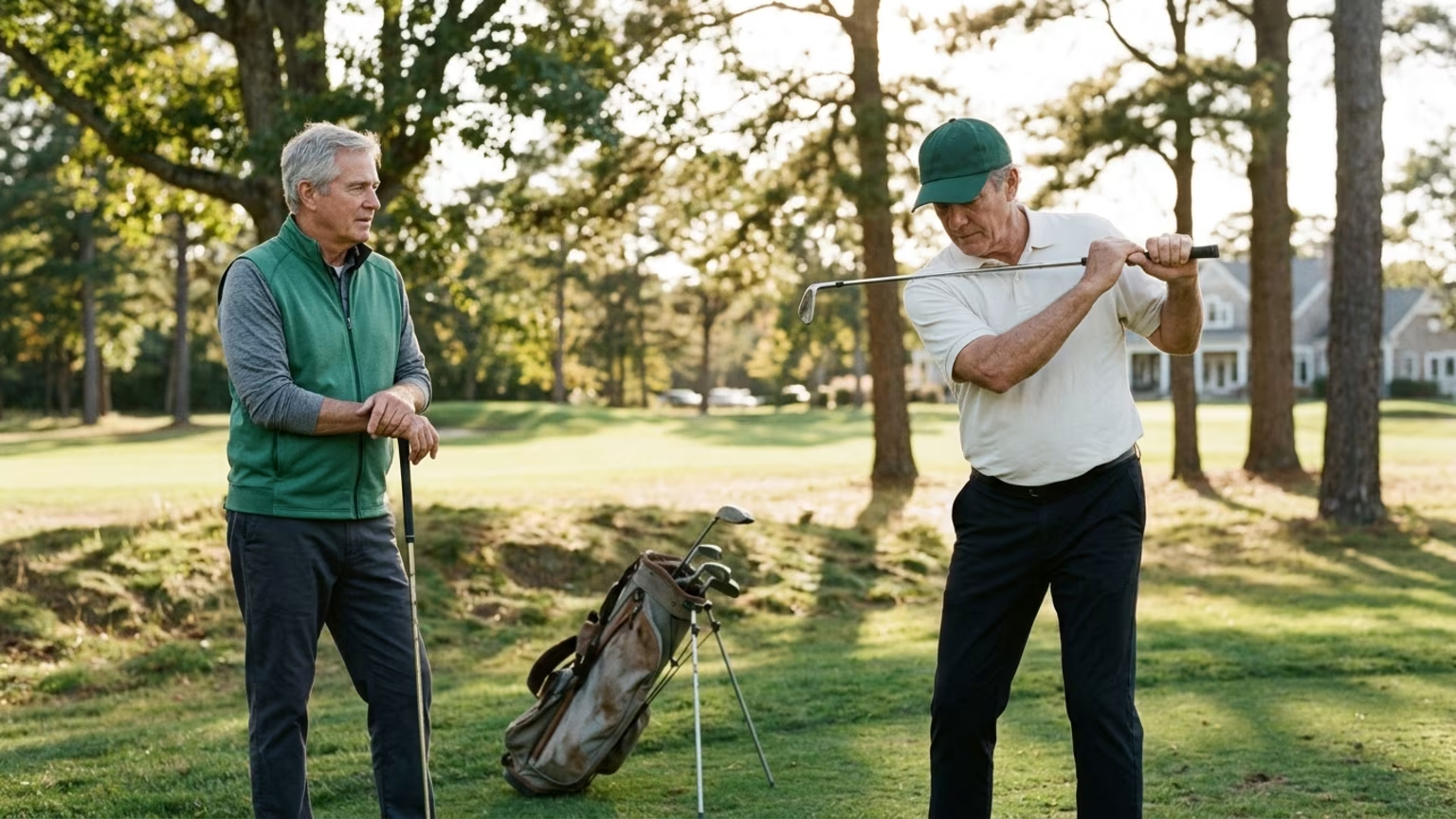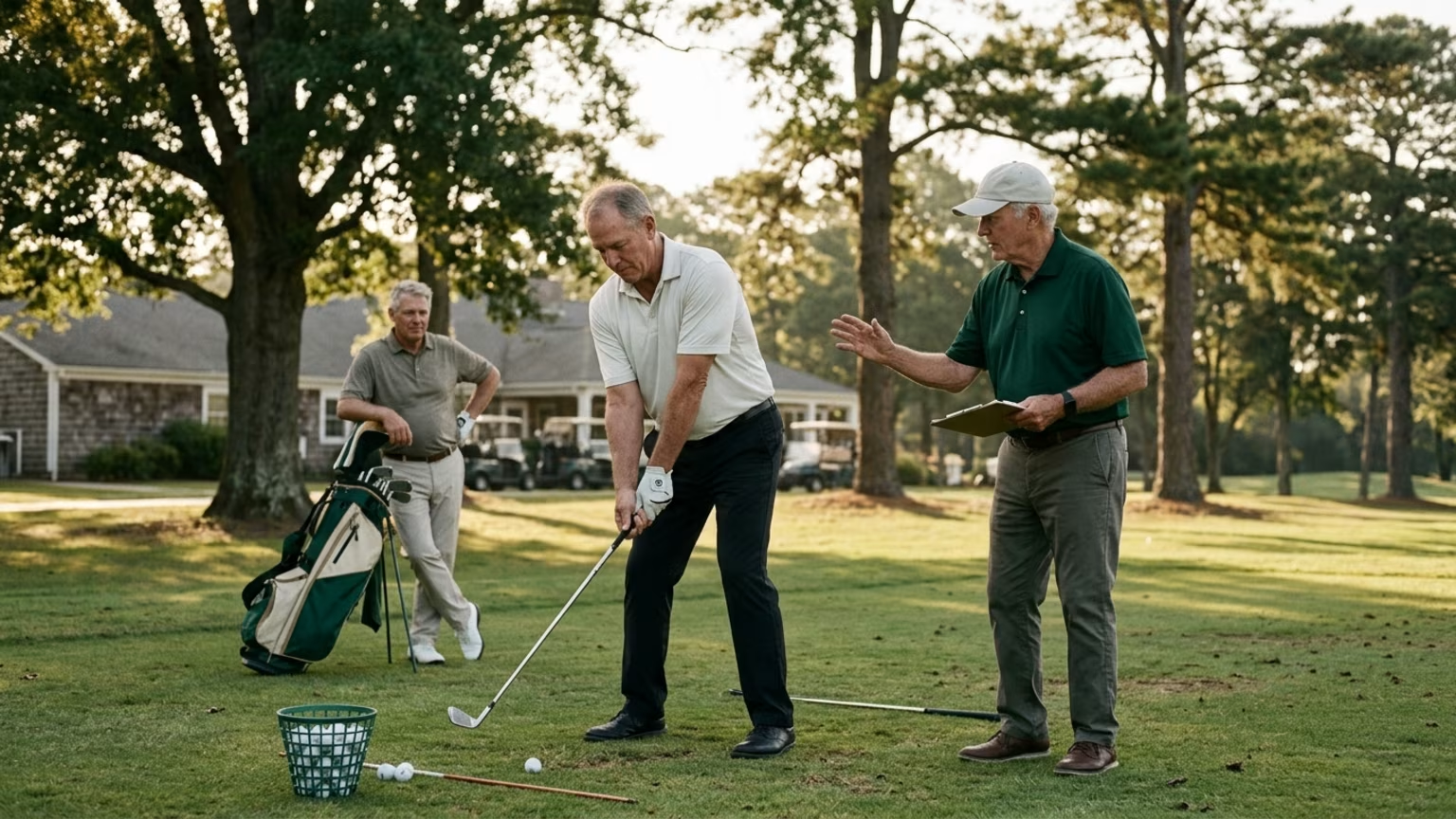

Learn how strength, mobility, balance and power relate to golf after 40, with practical ways to notice needs and discuss a sensible starting point.




Golf fitness is the ability to reach golf positions, control your body, produce force and produce it quickly. Strength, mobility, balance and power describe those different jobs. Together, they offer a more useful way to discuss your golf body than a single flexibility score.
Golf screening providers describe assessing several movement and fitness domains. These include mobility, strength and balance. A useful starting question is not simply how far you can stretch. It is which part of golf movement needs attention.
For Golfergy, that means keeping the discussion practical. The goal is to connect physical qualities with the positions and movements you use on the course.
During a standard round, use these qualities as different ways of describing the same swing. Reaching the top of a backswing is one question. Feeling in control through the motion is another. These familiar golf examples help make the screening categories easier to understand.
On the front nine or the back nine, the aim is to name the demand accurately. Describing every difficulty as tightness can blur the difference between reaching a position and controlling movement through it.
Mobility concerns moving through positions and ranges. In swing terms, think about whether a comfortable backswing position is accessible. This is about movement rather than a stretch score taken away from golf.
Keep the observation specific to the position. A difficult turn is information to discuss, not a reason to assume that every part of your game needs more stretching.
Strength is the ability to produce and control force. The golf connection is the force-producing part of your swing, not just how far you turn. A golfer describing a movement as hard work is raising a different question from whether the position is reachable.
That distinction keeps a strength question from being automatically treated as a flexibility problem. For a movement review, describe the task that feels demanding rather than deciding what muscle or joint is responsible. That keeps the starting conversation about function.
Balance concerns controlling your body during movement. During a swing, feeling steady through the motion is a separate observation from reaching the top of the backswing. A comfortable turn and a controlled movement are different parts of the discussion.
It helps to keep steadiness separate from flexibility when describing this part of your round. The observation can stay small. Focus on whether you feel steady through one familiar part of the swing rather than judging your entire game from one shot.
Power means producing force quickly. Strength and power are related concepts, but they are not interchangeable. For the swing, power brings the speed of force production into the discussion rather than force alone.
Across a round, keep the language clear: difficulty reaching a position and difficulty producing speed describe different concerns. Noticing that distinction is useful without trying a new high-speed drill. The next step is to discuss which quality deserves assessment.
A birthday gives context, but it does not identify your starting point. The screening approaches described here look across several qualities. For a golfer past 40 or 50, the practical question is which current demand deserves attention.
A secondary summary of a 2024 review reports significant associations between strength or explosive-power measures and clubhead speed. Flexibility considered on its own did not show a significant association. This gives strength and power a place in the conversation without making mobility irrelevant.
The same account reports a small study of 18 male golfers with an average age of about 71. Average clubhead speed rose from roughly 79 to 83 mph after an eight-week functional-training program. Sports Medicine Weekly also describes an older-golfer trial in which an eight-week strength-and-flexibility program improved strength and range of motion along with clubhead speed.
Sports Medicine Weekly also reports a 2023 comparison in which older recreational golfers had higher grip strength and better static and dynamic balance than sedentary peers. That adds balance to the broader picture of physical capacity.
These are secondary accounts of research, and the training programs combined several elements. Associations do not prove that training one quality will increase an individual golfer’s speed. The comparison was cross-sectional, so it does not show that golf caused the differences. The reports do not establish how or why each capacity naturally changes after 40 or 50, or promise the same training result for another golfer.
The useful takeaway is a capacity-led view of ageing. Age can inform a professional conversation without standing in for a look at how you move today.
The available screening material supports two accessible habits: noticing movement clearly and asking better questions about an assessment. Neither requires choosing an exercise program from a flexibility result.
Choose one familiar part of your golf movement to describe. The focus might be whether a comfortable turning position feels accessible. Keep that observation separate from questions about strength or speed.
On another occasion, your note might concern steadiness through that movement. Record the specific concern rather than labelling your whole body stiff or weak. The purpose is to bring a clear description to a professional conversation, not give yourself a pass or fail.
Keeping one movement in view also makes the conversation manageable. You are describing what you notice during golf, not trying to turn a round into a full assessment.
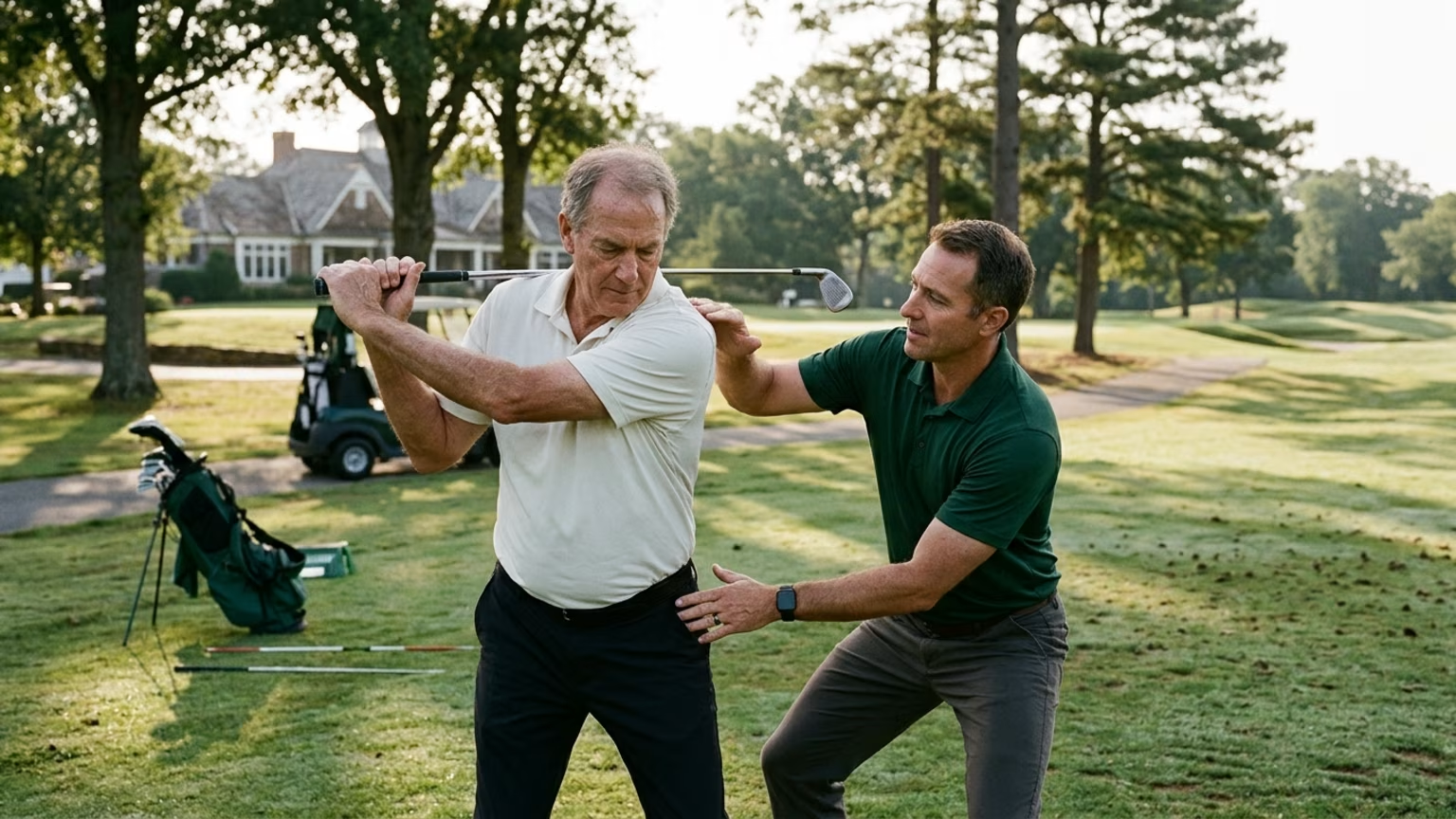
A practitioner’s description of a golf-fitness assessment includes power and core control alongside movement quality. That gives you a useful question to ask: which capacities are being assessed, and how will those findings shape the plan?
Ask why the proposed starting point matches your observations. A mobility concern and a speed-related concern call for different questions. There is no need to treat every finding as a reason to begin fast exercises or add more stretching.
The practitioner also distinguishes a fitness assessment from medical diagnosis. If pain, a recent injury or a medical concern is involved, personal decisions belong with a qualified clinician rather than a fitness score.
From there, the aim is to connect fitness planning with a full round. A useful plan should explain what you are working on and why it matters to the golf you want to keep playing.
Build around the movement your body needs today, with strength, mobility, balance and power serving one aim: Playing Better for Longer.
Follow Golfergy for practical insights on performance, mobility, recovery and healthy ageing. Stay connected for new articles, research-led guidance and ideas to help you play better for longer.


Separate golf mobility from strength and warm-ups, keep practice manageable, and recognise when a restriction needs professional assessment.


Move from walking to controlled movements and easy swings, with clear expectations about warm-ups, injury evidence and longer-term golf fitness.

Early mitochondrial research offers golfers over 40 a measured view of exercise science, resistance and endurance activity, and the limits of mouse findings.
Explore practical resources on performance, recovery, mobility and golf longevity.
Read the Blog