

Compare static stretching against dynamic movement for older golfers. Learn why active motion prepares your golf swing while static holds belong post-round.




Every day, older golfers face a choice between holding deep static stretches and performing dynamic movement preparation before they play. The precise question we all want answered is which method actually protects our swing, and which one might secretly be costing us distance on the first tee.
Static stretching involves moving into a specific physical position and holding it for an extended period. Dynamic movement relies on controlled motion through a comfortable range to prepare the body for athletic action. Golfers frequently find themselves choosing between these two approaches when they arrive at the course feeling stiff. They know they need to loosen up before grabbing a driver, but they often receive conflicting advice on the practice tee.
I used to stand on the first tee doing long, static hamstring stretches because I thought it was the right way to warm up. I would actually feel weaker on my first drive. Research later showed me that dynamic movements, like leg swings and torso twists, prime the nervous system much better. Changing my five minute warmup completely transformed my opening tee shots.
The debate between static holds and active motion is a daily reality for mature players. It dictates how we feel on the back nine and how our joints recover the next morning. Understanding the mechanics of both options allows us to build a smarter and safer pre-round routine.
The available material does not establish that static stretching before golf prevents or causes injuries. The golf source explicitly says its evidence concerns swing speed and distance rather than injury rates. A broad sports science consensus summary notes that regular static stretching might reduce some muscle-tendon injuries when used as part of a wider routine. That sounds appealing for an older golfer trying to stay healthy.
However, the same summary points out that it has little effect on overuse, joint, or impact injuries. For golf performance, long static holds right before a round carry a proven penalty. A golf-focused physical therapy review reported that long static stretches immediately before play reduced driving distance and swing speed in several trials. For older joints, forcing maximum range while cold can create discomfort rather than actual readiness.
When you stretch cold, you might struggle to focus entirely on turning your trail hip during the swing. Static stretching is not useless. It is simply better suited for after a round or during a separate flexibility session. Using it post-round focuses on relaxation and flexibility rather than trying to produce immediate high-speed swings.
If your goal is to cool down, a comfortable static stretch can feel fantastic. A daily routine should be brief and comfortable rather than an intense stretching session. If you want to include static holds in your week, place them in the evening. This separates the passive lengthening of muscle tissue from the aggressive rotational demands of the golf swing. Understanding when to modify your movements and when to rest keeps you on the course.
Dynamic mobility involves repeated motions like arm circles, walking lunges with rotation, and progressively faster practice swings. The golf swing can accelerate the club to 80 to 100-plus miles per hour in roughly one-quarter of a second. That violent speed requires a nervous system that is fully awake and joints that are prepared to move. This active preparation is precisely why movement-based routines make sense for our demographic.
The saddest thing I have seen in golf is watching lifelong playing partners slowly drop out of our weekend group. It usually starts with a nagging shoulder or knee issue they ignore until it requires surgery. That pattern is exactly why I became obsessed with golf longevity. We do not have to stop playing as we age, provided we do the right maintenance work between rounds.
Dynamic movement provides that crucial physical preparation right before you step onto the course. The cited physical therapy review found that dynamic warm-ups improved clubhead speed, driving distance, and shot quality. The recommended pre-round sequence takes roughly five to 10 minutes. A golf therapy source quotes Dr. Aidan Crone, who calls this short window a very small investment relative to the time spent on the course.
A proper dynamic routine starts with easy walking or basic movement. You then progress to arm circles, standing trunk rotations, and leg swings. A hospital-affiliated sports medicine article notes that a warm-up should resemble the actual sport being performed. You finish with eight to 10 practice swings, starting at half speed and gradually increasing your effort.
Many players think hitting a bucket of balls is a sufficient warm-up. The evidence points out that hitting balls alone should not be treated as a complete preparation routine. A club-only warm-up did not produce the same benefits as a short dynamic sequence followed by practice swings. This progression safely builds your readiness without pushing your body into fatiguing positions.
When evaluating which option helps you play better for longer, we have to look at how each method fits into your week. Dynamic movement clearly wins the pre-round battle. It raises your body temperature, rehearses the specific golf pattern, and prepares you for the sheer speed of the swing. Static stretching simply cannot match this level of active preparation on the tee box.
Many injuries arise from a body that was not prepared to repeat good swings. To truly protect your joints, you should add loaded range-of-motion work in a separate training session. This concept combines movement with light resistance to build active control. Examples include controlled split squats, cable rotations, or light goblet squats performed through a tolerable range.
The golfer must control the physical position while producing force. The available evidence does not directly compare loaded range-of-motion training with other mobility methods in older recreational golfers. That makes it better suited to a separate strength session rather than an aggressive pre-tee routine. A defensible daily template could include gentle thoracic rotations, controlled hip movements, and band-assisted shoulder motion.
You can also add light strengthening through comfortable ranges if those exercises are already familiar. Movements like glute bridges and pelvic rotations help build a resilient body away from the course. Just remember to stop short of sharp pain or fatigue that might affect your next round. Elite players on the PGA Tour utilize massive performance-care models with physical therapy and multiple recovery modalities.
Recreational golfers do not need a tour van, but they do need simple and consistent habits. Building a solid stretching and mobility foundation gives you the stability you need to enjoy the game. The American College of Sports Medicine highlights integrating physical activity into routine health care, which aligns perfectly with building a daily movement habit.
If you want to maintain your mobility, you must match the method to the exact moment. A smart schedule places dynamic movement on the tee box and saves longer static flexibility work for the evening. Golfers over 40 need to focus on mobility that transfers directly to the swing rather than chasing random flexibility goals.
Choose dynamic movement preparation right before you play to protect your swing speed, and choose comfortable static stretching after your round to support long-term joint health.
Follow Golfergy for practical insights on performance, mobility, recovery and healthy ageing. Stay connected for new articles, research-led guidance and ideas to help you play better for longer.


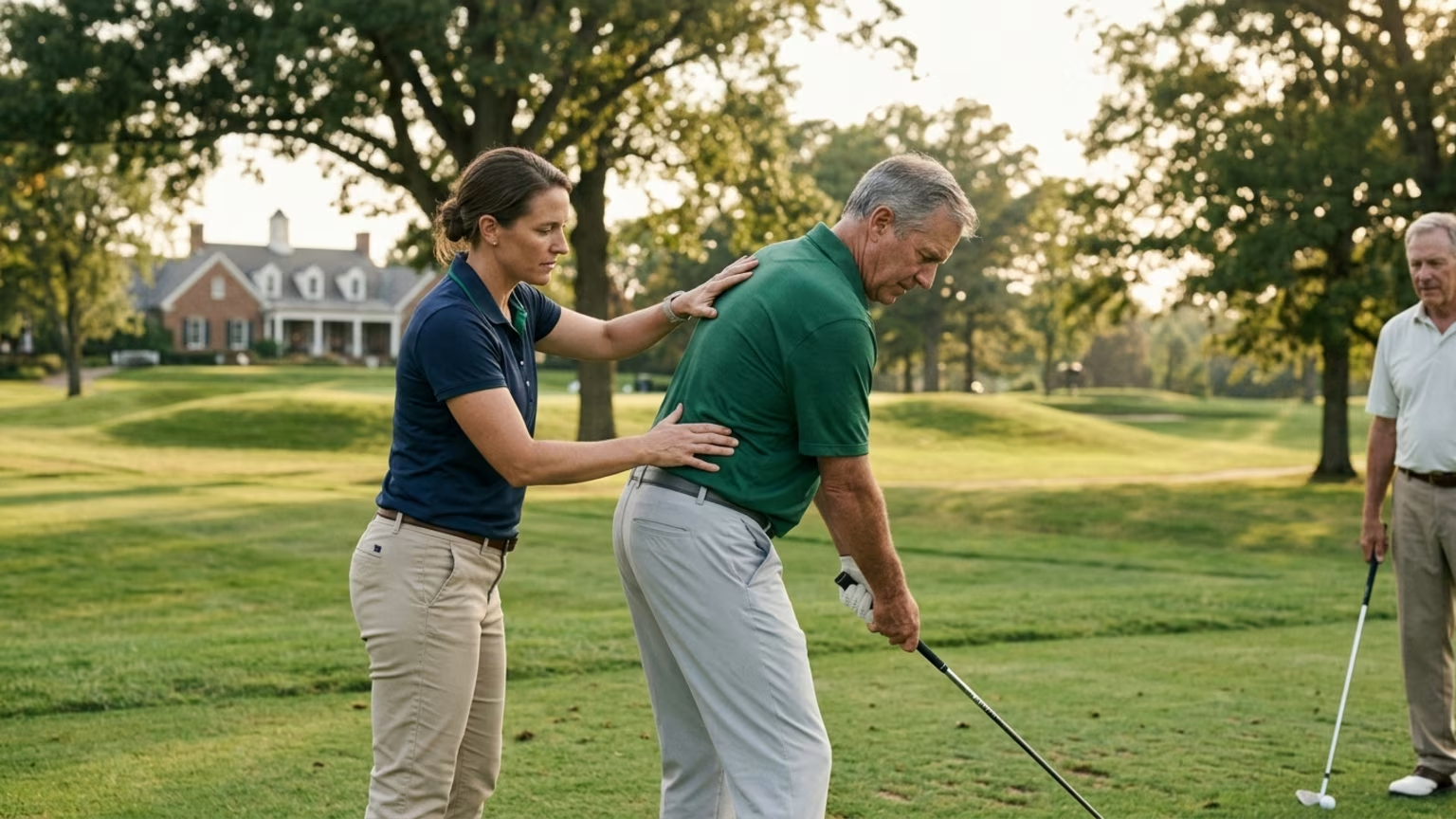
Learn how coordinating your hips, pelvis, thoracic spine and shoulders creates a safer golf rotation and protects your lower back as you age.

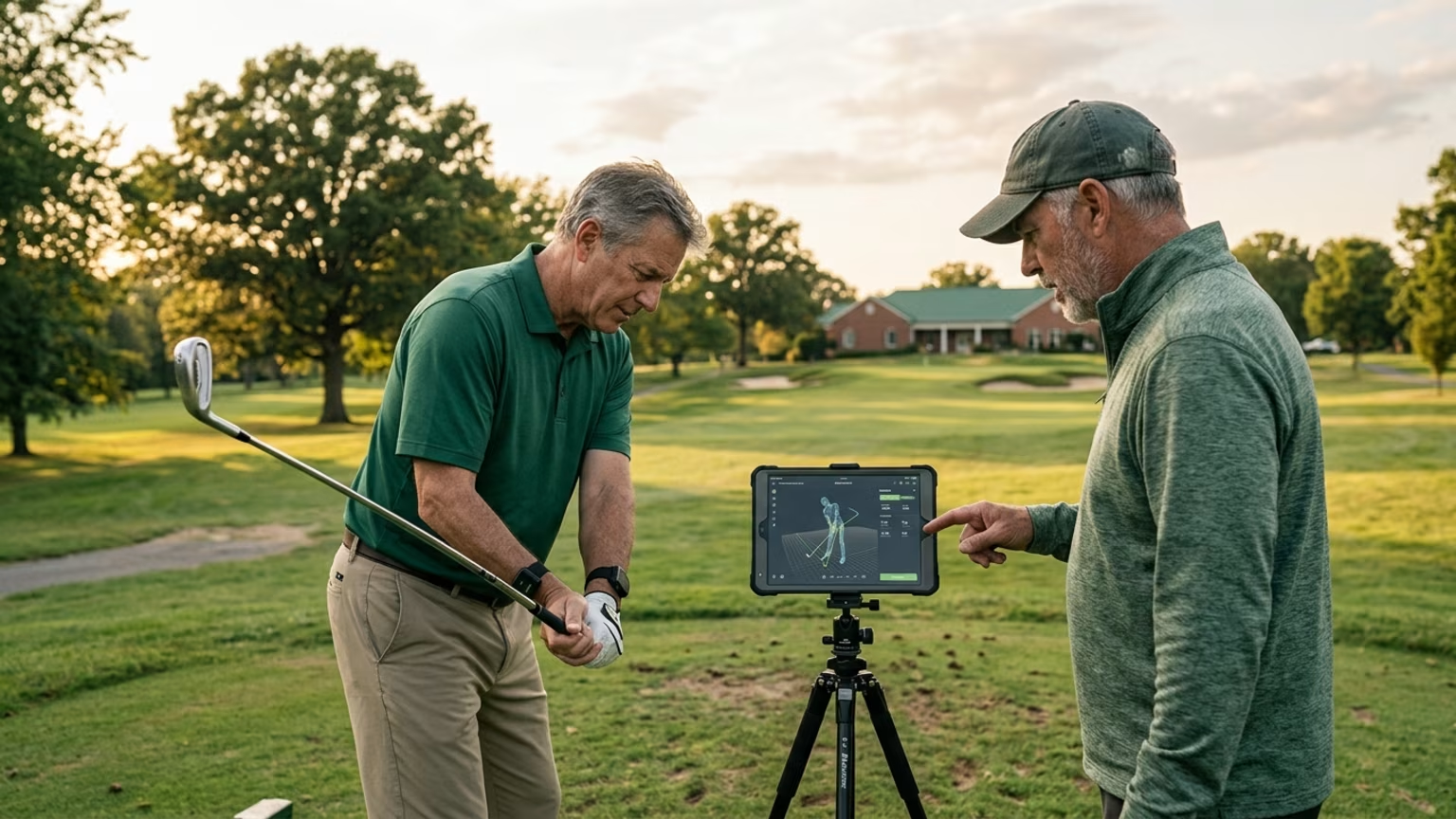
A new Alita and Fujitsu AI motion tracking system debuted at ISS 2026. Learn how camera-based analysis helps older golfers identify restricted swing mechanics.

Learn how to apply GolfWRX's five pillars of fitness to protect your senior golf swing, improve mobility, and stay on the course longer without injury.
Explore practical resources on performance, recovery, mobility and golf longevity.
Read the Blog