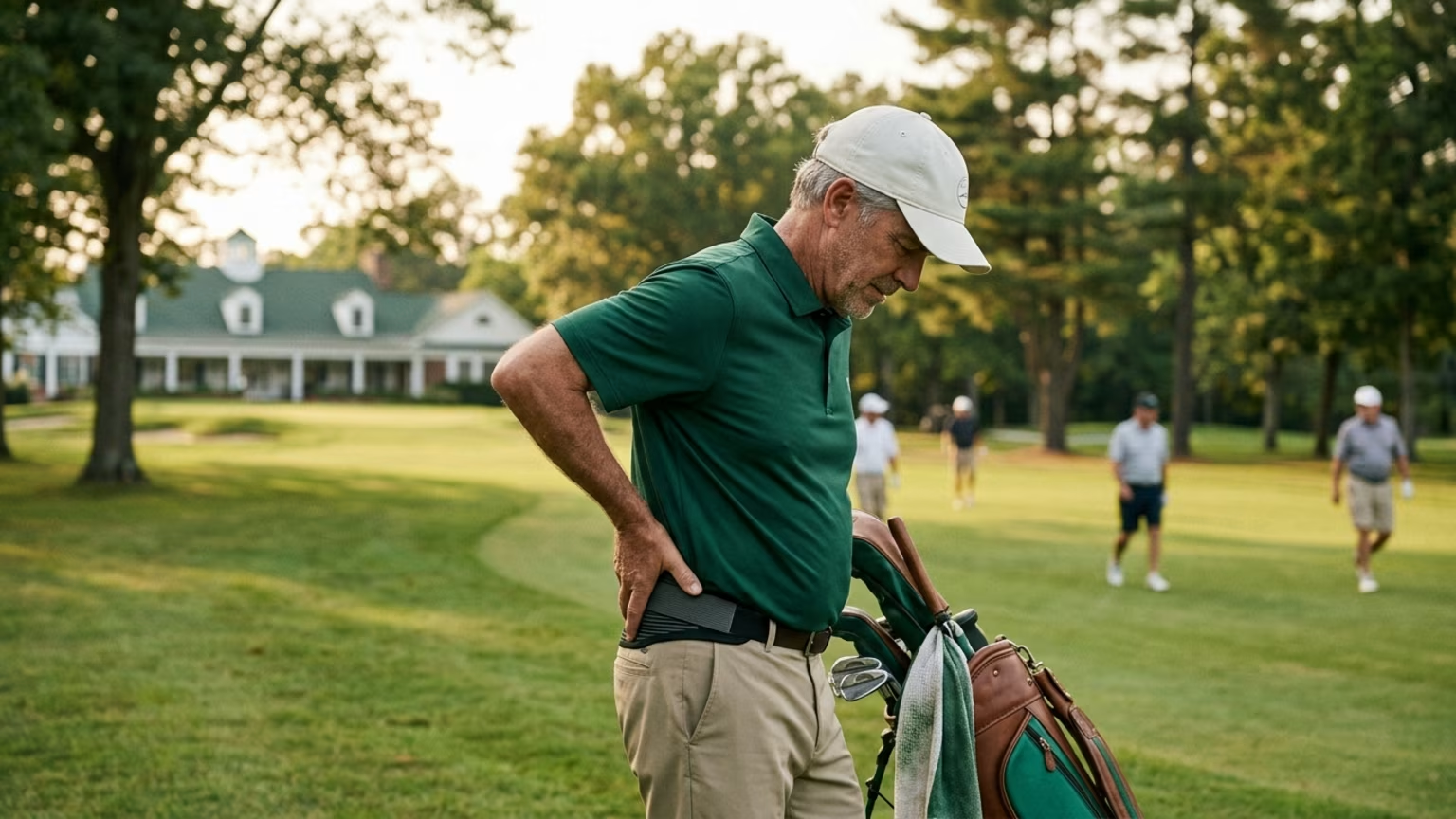

Use this data-driven framework to manage golf pain safely. Learn when to modify your swing, when to rest, and when to seek professional help after age 40.




Resting until you feel absolutely zero pain is a fast track to giving up the game entirely. We often treat any physical discomfort as a reason to panic and sit on the couch. But complete inactivity fails to build physical resilience. The American Academy of Orthopaedic Surgeons identifies low-back problems as the most common complaint among golfers.
They report that one study attributed up to 34% of golf injuries to the lower back. The saddest thing I have seen in golf is watching lifelong playing partners slowly drop out of our weekend group. It usually starts with a nagging shoulder or knee issue they ignore until it requires surgery. That pattern is exactly why I became obsessed with golf longevity.
We do not have to stop playing as we age, provided we do the right maintenance work between rounds. Complete rest might calm an irritated nerve temporarily. However, it does nothing to prepare your body for the violent rotational forces of the golf swing. Golfergy focuses heavily on finding the middle ground between pushing through injury and quitting the sport entirely.
Pain is not always a strict measure of structural damage. According to golf rehabilitation guidance, mild local back awareness does not always require complete avoidance. It is simply a metric of physical capacity versus current demand. If your discomfort remains mild and localized, you can often modify your activity instead of stopping.
Modification means actively scaling back your physical dose. You might take shorter swings, hit fewer balls, or take longer rest breaks. A player might focus purely on putting rather than hitting full driver shots. A golf injury guide recommends using rhythm and normal movement as your criteria for continuing.
If you find yourself protecting one side or altering your swing, it is time to step away. Golf-focused rehabilitation guidance recommends stopping when pain becomes sharp. You must also stop if pain rises with each shot or produces visible physical compensation. Pushing through altered mechanics only shifts the stress to healthy joints.
For older golfers, the stakes are very different. A young athlete might shake off a strained back after a few days of rest. But mature players face a more complex physical reality. Golf rehabilitation guidance warns that jumping from rest straight into 18 holes can exceed current tolerance.
The golf swing combines bending, rotation, speed, and repetition. We must pay strict attention to how our physical symptoms present themselves. Mild muscle soreness is a normal part of athletic training. But new tingling, numbness, weakness or balance changes require immediate professional assessment.
You should never continue swinging to see if nerve-like symptoms will loosen up. Arrange a professional evaluation when pain repeatedly returns with golf. Persistent discomfort that remains after reducing your activity is a clear signal to get help. It helps to understand when golf pain is a warning sign.
Taking smart action means adopting a staged approach to reloading the body. Before returning to full swings, you should first be able to walk without pain. You must also perform basic movements like a squat or a hip hinge comfortably. Focus entirely on turning your trail hip.
Once basic movement feels stable, you can slowly introduce golf activities. Golf-specific return-to-play guidance recommends rebuilding tolerance in gradual stages. Start with putting and short chipping on the practice green. Then progress to partial swings, full iron swings, woods, and finally longer rounds.
The AAOS recommends warming up and progressing from wedges toward longer clubs before playing. To build long-term durability, they describe strengthening your lower back and trunk. They suggest exercises like rowing, pulldowns, yoga, and Pilates. For preventing elbow pain, they advise forearm-strengthening movements and reducing swing speed.
Hydration is another simple way to support joint health. The AAOS recommends drinking water before, during, and after play. If you have arthritis, a proper physical warm-up becomes even more critical. Always discuss any medication or anti-inflammatory use with a doctor.
We need realistic benchmarks to manage our return to the course. The ultimate test of your capacity is how you feel the next morning. Golf-specific guidance recommends recording your symptoms during the activity, after finishing, and the following day. If symptoms are worse the next morning, you need to reduce the physical load.
Increase only one variable at a time when you feel ready to progress. You can change your swing length, the number of balls, or your walking distance. But do not increase them all simultaneously. A physical-therapy guide lists pain that lasts more than 48 hours as a clear warning sign.
Another golf-focused elbow guide advises consultation when symptoms fail to improve. Specifically, they suggest getting help after two weeks of self-care. It also recommends getting help if symptoms worsen after resting. We must listen to these timelines when understanding when to take a break.
Chasing the pain-free recovery speed of our youth is a losing game. The goal is a repeatable level of activity that preserves mobility. We want to maintain normal movement and keep playing for decades. Focusing on maintaining a full backswing without pain is better than chasing maximum yardage.
Numbers do not lie: monitoring your next-day physical response is the ultimate equipment upgrade. You can buy new clubs or try a dozen swing changes. But true performance comes from pacing your physical exposure over time.
A recent systematic review found that return-to-play criteria after muscle injury remain heterogeneous. They are often based on consensus or lower-level evidence. Medical science does not offer a single magic formula for every aging athlete. We play our best golf when we finally listen to the silence between the swings.
Follow Golfergy for practical insights on performance, mobility, recovery and healthy ageing. Stay connected for new articles, research-led guidance and ideas to help you play better for longer.


A practical strength framework for golfers over 40, built around everyday goals, sensible progression and a careful look at limited golf research.


A research-led look at strength, balance, mobility and trunk control, with a flexible planning framework for golfers over 40.
Understand golf mobility after 40 with a comfortable-turn self-check, hip and shoulder guidance, and a clear look at flexibility and swing speed.
Explore practical resources on performance, recovery, mobility and golf longevity.
Read the Blog


