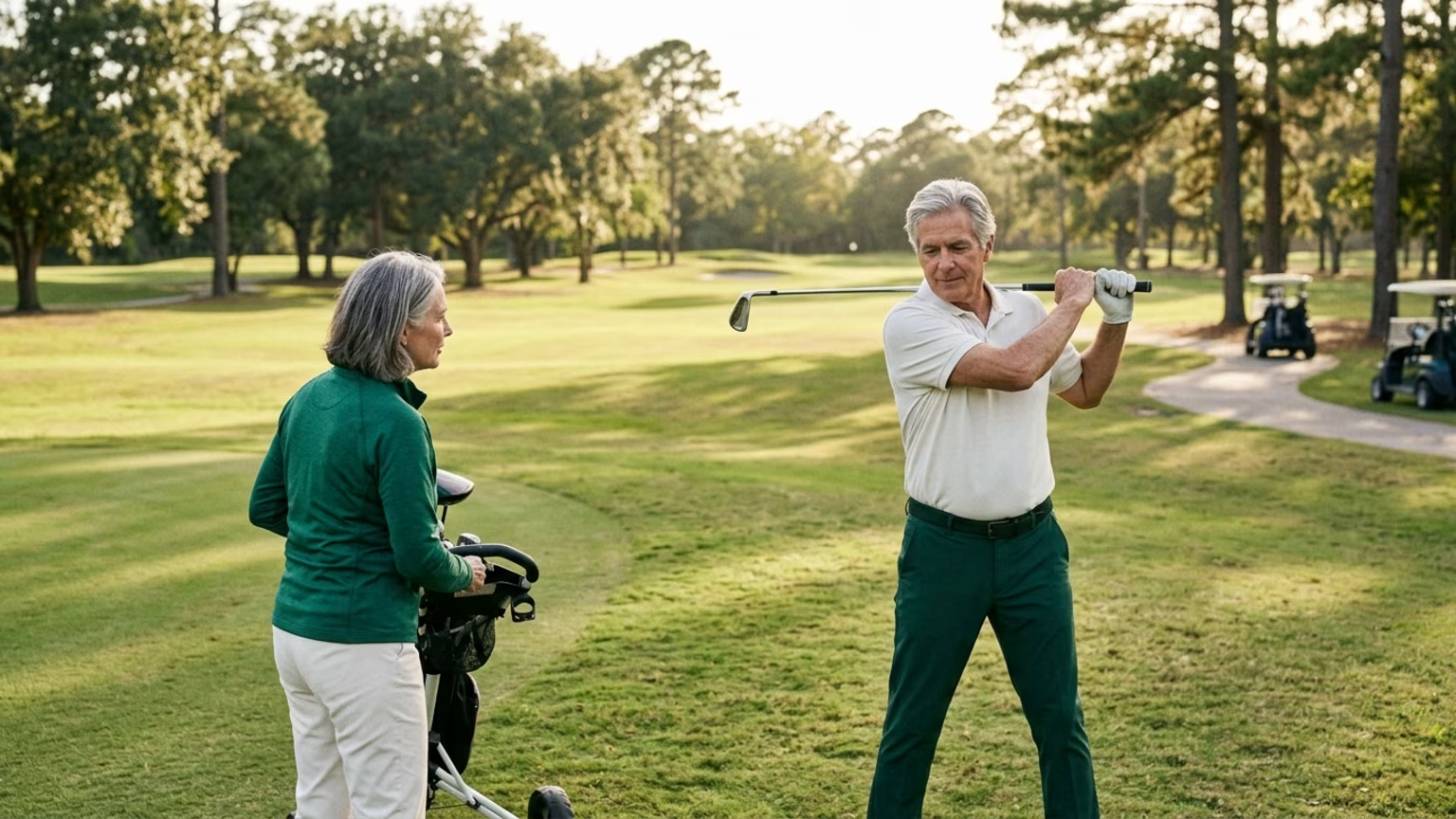

Learn how golfers over 60 can maintain swing mobility and protect their joints through consistent, gradual strength training and smart daily movement habits.




On 11 October 2026, The Independent published a feature on how a trainer coaches older adults for strength and longevity. The article detailed how individuals can maintain their physical capacity well into their later decades. Will Pate, identified in the article as a Third Space master trainer, shared his practical approach to helping clients stay capable. The primary takeaway is that the fundamental principles of strength training apply across all age groups.
The starting point and the pace of progression simply need to match the individual. Pate assesses his clients thoroughly before selecting their exercises. He checks their mobility, joint concerns, movement control and injury history.
This careful evaluation allows him to create a plan that challenges the muscles safely. His advice provides a helpful framework for recreational golfers who want to protect their physical abilities.
When a golfer ages, the muscles supporting the major joints naturally lose some of their mass and force output. This gradual decline changes how your body handles the intense rotational forces of a standard golf swing. The lower body serves as your anchor during the backswing and your main power source during the downswing. If the muscles around your hips and knees weaken, your joints absorb much more of the direct stress.
This lack of muscular support forces your body to compensate in unhealthy ways. A weak lower body often demands more rotation from the lower spine. Over time, these compensations lead to stiffness and a frustrating loss of rotational flexibility. Maintaining leg and core strength keeps the physical load on the muscles rather than the vulnerable joint capsules.
When your muscles function correctly, your pelvis can turn smoothly through the impact zone. This proper movement pattern reduces the friction placed on your knees and lower back. The golf swing requires the hips, spine and shoulders to rotate in a precise sequence. When muscles lose their elasticity and power, this sequence breaks down rapidly.
A golfer might feel a sudden restriction in their backswing, causing them to sway off the ball instead of turning. This sway places an uneven load on the outside of the trail knee and hip. Building muscle resilience helps you maintain your posture and rotate safely. Understanding these physical mechanics helps you appreciate the value of resistance work.
A solid muscular foundation acts as a shock absorber for your entire skeletal system. When you swing a golf club, this foundation limits the sheer force traveling up your spine. Taking steps for protecting your joints with usable strength is a practical way to extend your playing years safely.
If you feel your physical power has already faded, the reported data suggests recovery is highly possible. The Independent recounts a 1990 study of 10 frail care-home residents in their 90s. These individuals completed eight weeks of leg-strengthening exercise using a standard leg-extension machine. The article reports that all 10 participants improved in both strength and mobility over that two-month window.
The results from this older study demonstrate the body's remarkable capacity to adapt to resistance at any age. Some of the residents even regained the ability to walk without assistance or rise from a chair unsupported. While this specific study focused on a frail population rather than recreational golfers, it highlights a clear biological truth. Human muscle tissue responds positively to a controlled physical challenge.
Applying this timeline to a golf context offers a reassuring perspective. An eight-week commitment to targeted resistance can create a noticeable difference in your physical foundation. You do not need years of training to see the benefits in your daily movements. Consistency over a couple of months can help you regain the stability needed for a reliable golf swing.
Golfers over 40 often face a high risk of losing their swing mobility because the sport itself does not build strength. Walking 18 holes burns calories, but it does not apply enough resistance to prevent muscle loss in your legs. Many older amateurs spend their days sitting at a desk or commuting in a car. This sedentary daily routine tightens the hip flexors and weakens the crucial glute muscles.
When you step onto the first tee with this physical profile, your body struggles to separate the upper and lower halves. Amateurs swing with less speed than the pros, but their weaker supporting muscles leave them highly vulnerable to joint strain. The resulting fatigue often ruins your scorecard on the back nine of a round. Without a proactive routine, the physical demands of the game simply wear you down.
Understanding what your swing actually needs can help you avoid these common pitfalls. Recreational players frequently ignore their declining strength until an injury forces them off the course. They might try to swing harder to compensate for lost distance, which only increases the strain on weak tissues. The lack of a structured recovery protocol makes it harder to bounce back after a long weekend of golf.
Recognising this vulnerability is the first step toward building a more resilient body. Many older players attempt to solve their stiffness by stretching aggressively before a round. Stretching without building underlying strength rarely provides a lasting solution for joint restriction.
A muscle often feels tight simply because it is too weak to stabilize a joint through its full range of motion. Adopting a smarter preparation routine focuses on warming up the tissues while respecting their current limits.
To protect your swing and avoid late-round fatigue, you need to introduce consistent resistance. The Independent article reports Pate suggesting two strength sessions per week to his older clients. He also recommends performing three sets of sit-to-stands a few times weekly to maintain lower body power. Start at a manageable level and progress gradually with lighter weights.
When performing the sit-to-stand exercise, keep your attention on your form. Focus entirely on pushing evenly through your feet as you rise from the chair. Control your descent on the way back down, rather than simply dropping into the seat. This deliberate movement builds exceptional strength in the quadriceps and glutes. These are the exact muscle groups you rely on to generate power from the ground up during your golf swing.
Concentrate on controlling your movements rather than lifting heavy loads right away. Choosing exercises like machine or cable variations can challenge your muscles while reducing balance demands. This controlled approach builds the stability required for a safe golf swing. If you are training at home, bodyweight movements done with precision offer an excellent starting point.
Pate advises clients to tell their coach about any joint replacements, medications and specific medical conditions. He says to consult a GP if you have heart or other medical concerns before starting a new routine. Listening to your body and seeking qualified guidance helps you avoid unnecessary setbacks. You can learn specific movement checks to monitor your progress safely.
A common misconception is that older adults cannot build new muscle late in life. Pate clearly states that people in their 70s and 80s can still build strength effectively. Another mistake is believing that resistance training must involve heavy, high-impact movements from the very first day. Pate notes that problems arise when people do too much too soon or attempt positions they cannot yet control.
He initially holds back on high-impact or heavily loaded movements for newer clients to prevent joint strain. Some golfers mistakenly believe they need to perform complex Olympic lifts to gain clubhead speed. The reality is that basic, supported exercises offer plenty of stimulus for older muscles without risking severe injury. Avoiding these misconceptions allows you to build a sustainable habit.
The goal is not to train like a professional athlete in their twenties. The focus should remain on maintaining the physical capacity to enjoy your life and your time on the course. Recognizing the difference between athletic peak performance and healthy ageing keeps your expectations realistic and your joints safe.
Protecting your body requires consistent effort away from the golf course. A proactive approach to maintaining muscle mass can help you play the game you love for many years to come. The right resistance plan focuses on long-term joint health and realistic, sustainable habits. What adjustments will you make to your weekly routine this season to protect your mobility and maintain your swing?
Follow Golfergy for practical insights on performance, mobility, recovery and healthy ageing. Stay connected for new articles, research-led guidance and ideas to help you play better for longer.


A practical strength framework for golfers over 40, built around everyday goals, sensible progression and a careful look at limited golf research.


A research-led look at strength, balance, mobility and trunk control, with a flexible planning framework for golfers over 40.
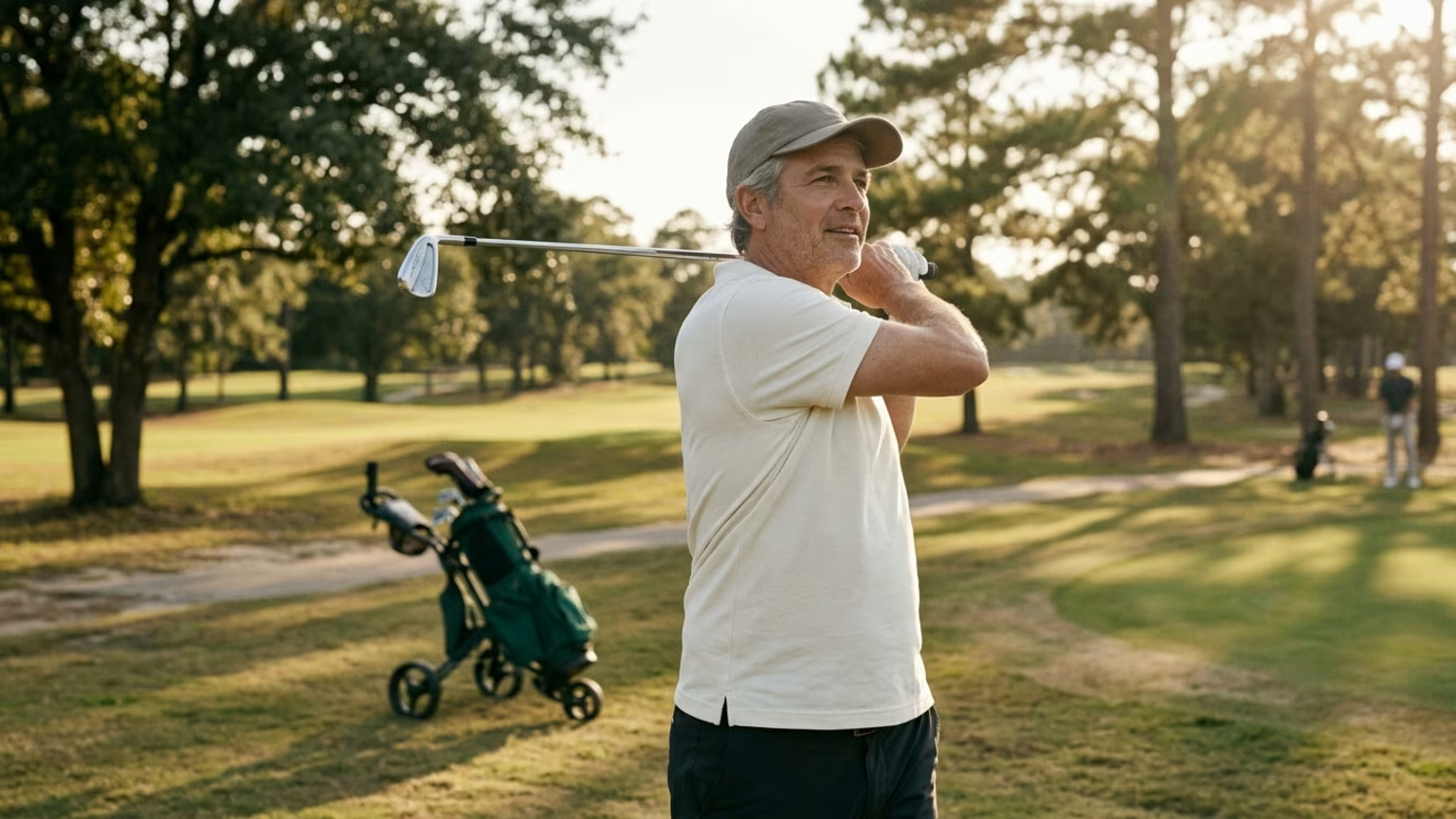
Understand golf mobility after 40 with a comfortable-turn self-check, hip and shoulder guidance, and a clear look at flexibility and swing speed.
Explore practical resources on performance, recovery, mobility and golf longevity.
Read the Blog



