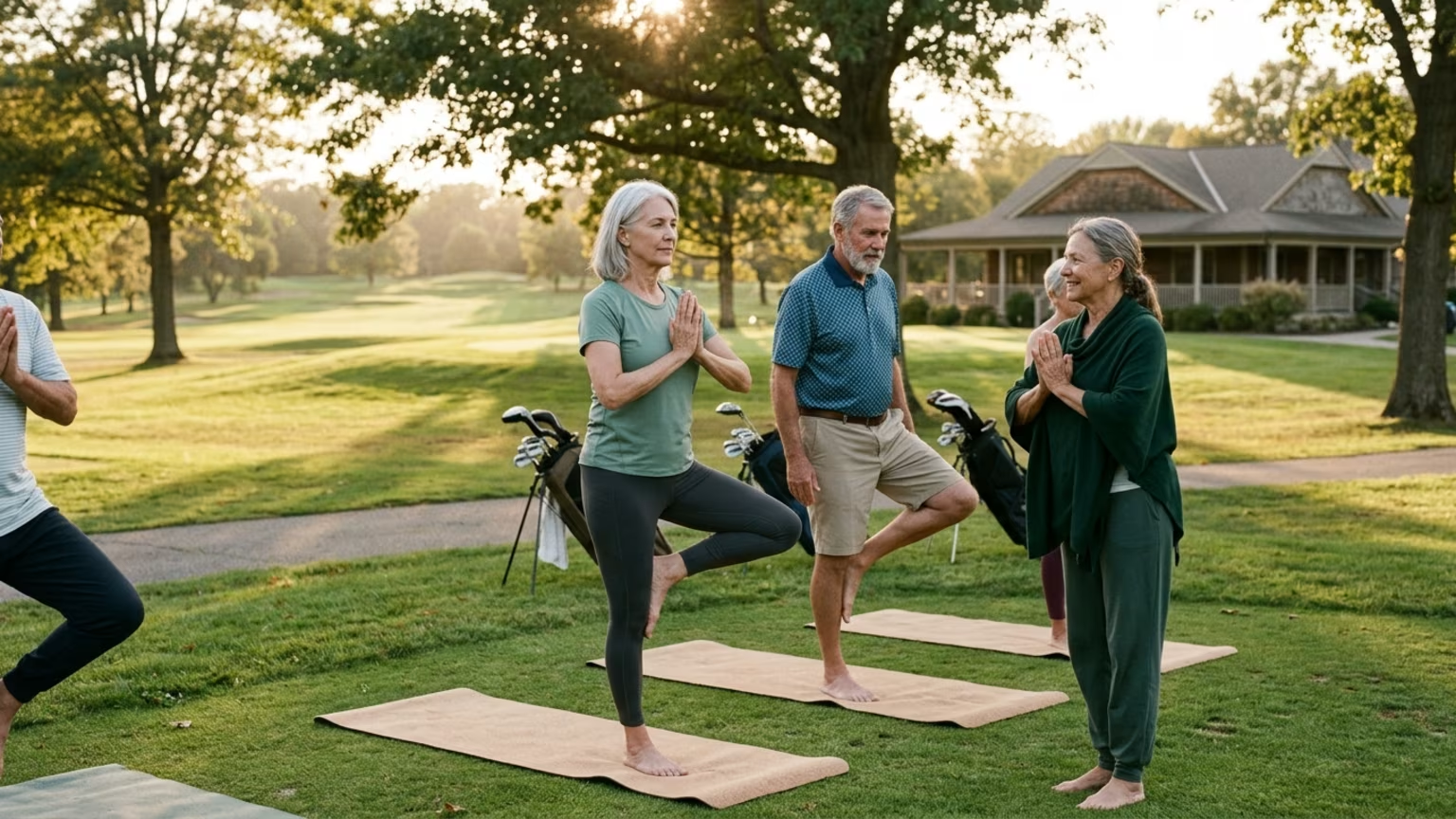

Read why golfers over 50 should prioritize movement quality over swing speed. We cover practical preparation and mobility habits to protect your aging joints.




On September 23, 2026, when The Golf Wire published a feature on physiotherapist Chiara Cantone, the message bypassed typical tour news. Instead of covering a professional athlete withdrawing from a major tournament, the article focused entirely on the physical challenges faced by recreational players over 50. This widely shared feature successfully promoted a recent episode of The Traveling Golf Diva Podcast hosted by Doris Muscarella. The episode focused heavily on women’s golf wellness, mobility, strength, injury prevention and general longevity in the game.
According to The Golf Wire's summary, Cantone encourages older golfers to understand their changing bodies and play smarter rather than simply trying to swing harder. This grounded approach perfectly aligns with the reality that sustainable physical habits matter far more than chasing pure clubhead speed. Taking a more measured approach to your physical longevity helps prevent the nagging aches that ruin a weekend round. By prioritizing fluid movement over sheer force, mature players can maintain their playing schedules and protect their long-term health.
Many recreational players struggle with a severe loss of rotational flexibility as they progress through their fifties. A standard golf swing requires significant turning forces through the middle of the body to generate clubhead speed. The thoracic spine, which sits in the upper and middle back, is naturally designed to rotate freely. When this area becomes stiff from daily sitting or a lack of physical activity, the lower back is often forced to compensate.
The lower spine is fundamentally built for rigid stability rather than deep twisting movements. Forcing this stable area to rotate excessively during a downswing places high friction and stress on the surrounding tissues. Over time, this mechanical overload creates the exact type of lower back pain after a round that plagues so many older amateurs. Focus entirely on turning your trail hip to help relieve this lower back pressure during the backswing.
Many older players mistakenly believe that their loss of distance is purely a technique issue. In reality, the physical restriction in the upper back acts like a brake on the entire swing sequence. When the thoracic spine fails to turn freely, the arms often take over and create a disconnected upper-body motion. This mechanical breakdown not only robs the player of power but also places massive strain on the elbows and wrists.
The saddest thing I have seen in golf is watching lifelong playing partners slowly drop out of our weekend group. It usually starts with a nagging shoulder or knee issue they ignore until it requires surgery. That pattern is exactly why I became obsessed with golf longevity. We do not have to stop playing as we age, provided we do the right maintenance work between rounds.
Older recreational players swing with much less speed than tour professionals, yet they still face significant physical risks on the course. A professional athlete has access to constant physical therapy and a highly structured recovery protocol. An amateur golfer typically steps out of a car, grabs a driver and immediately expects their body to perform at peak capacity.
Aging naturally alters flexibility, strength, recovery times and overall range of motion for every person. These normal physical changes can heavily influence the golf swing and change how a player navigates the course over eighteen holes. The Golf Wire article frames changes at ages 50, 60 or 70 as normal adaptations rather than proof that a golfer has lost their game. By recognizing these physical shifts early, players can adapt their approach and protect their joints over the long term.
One practical way to avoid lower back strain is to rethink how you prepare for your tee time. I used to stand on the first tee doing long, static hamstring stretches because I thought it was the right way to warm up. I would actually feel weaker on my first drive. Research later showed me that dynamic movements, like leg swings and torso twists, prime the nervous system much better.
Changing my five minute warmup completely transformed my opening tee shots and improved my overall comfort on the course. One highly effective golf preparation guide recommends a specific sequence to help older players get ready for a demanding round. The guide advises progressing from general aerobic activity to golf-specific mobility work and finally to practice swings. This layered approach helps the body slowly transition from a resting state into the highly dynamic movements required for a full swing.
By adopting a smarter preparation routine, aging players can protect their joints and maintain better mechanics from the first hole to the last. The International Consensus Statement on Golf and Health is summarized as characterizing golf as a highly beneficial moderate-intensity physical activity. The statement suggests that health benefits are likely greater when golfers walk rather than ride, assuming they are physically able to do so safely. Walking the course keeps the leg muscles engaged and actively prevents the lower back from stiffening up inside a seated golf cart.
Many older players mistakenly believe that riding in a cart will save their energy for the final few holes. Sitting down between every single shot actually causes the hips and lower back to cool down and stiffen rapidly. Players should gradually increase their walking duration, time on their feet and consecutive walking days before a major golf trip. If walking eighteen holes is currently excessive, starting with nine holes is a highly practical adjustment that keeps you active without inviting injury.
A common misconception in the golf fitness industry is that one perfect mobility drill will automatically restore youthful flexibility and prevent all injuries. Many online programs promise that a single magic exercise will eliminate joint pain and add thirty yards to your drives overnight. The available evidence actually supports a broader, highly individualized approach rather than a single universal exercise prescription. No available sources establish that mobility work alone will prevent injury, restore lost distance or improve performance for every single golfer.
Instead of searching for a quick mechanical fix online, players should rely on a personalized plan tailored to their specific injury history. An exercise that helps a younger player generate massive speed might actively harm an older player dealing with joint deterioration. It makes far more sense to evaluate your own physical limitations and build a routine that supports your unique swing mechanics. Scaling your physical effort to match your current fitness level is the absolute best way to maintain a sustainable playing schedule.
Taking the time to understand your changing physical capabilities is the first step toward lasting comfort on the course. You can continue to build better movement habits by incorporating progressive walking limits and layered warmups into your weekly schedule. Paying close attention to your body will help you avoid the common physical pitfalls that sideline so many experienced weekend players. Consistent and thoughtful preparation serves as the ultimate key to extending your playing years and enjoying the game you love. What adjustments will you make to your mobility routine this season to steer clear of this hazard?
Follow Golfergy for practical insights on performance, mobility, recovery and healthy ageing. Stay connected for new articles, research-led guidance and ideas to help you play better for longer.



Learn how experienced golfers over 40 manage lumbar spinal stenosis safely through guided swing modifications, structured conditioning, and walking adjustments.

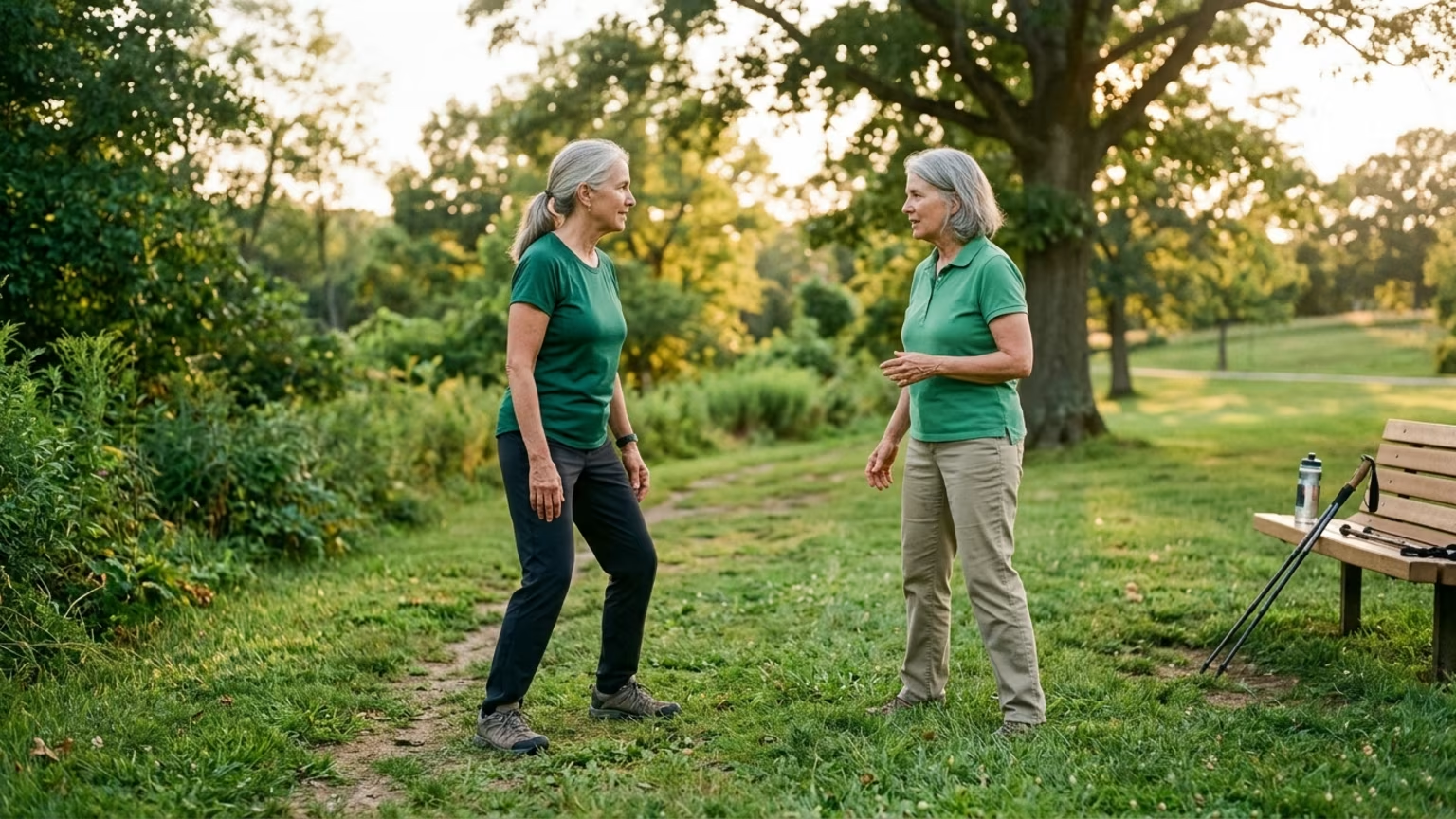
Engaging your quadriceps while putting creates a firm lower body. This simple stance adjustment helps older golfers reduce mechanical back strain on the greens.
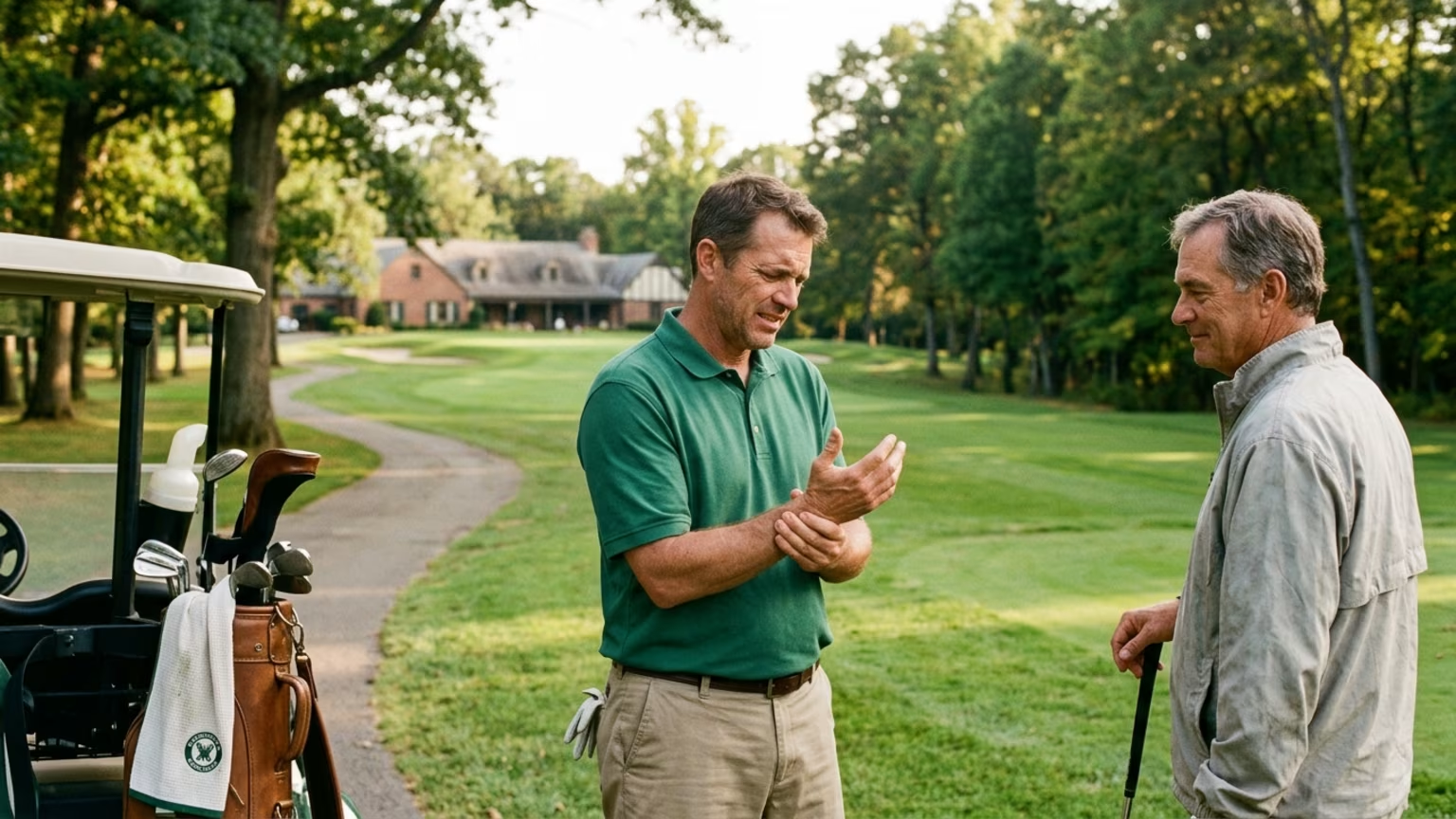
Patrick Reed withdrew from the BMW PGA Championship with a hand injury. Learn why golfers over 40 should never ignore sudden wrist pain on the course.
Explore practical resources on performance, recovery, mobility and golf longevity.
Read the Blog