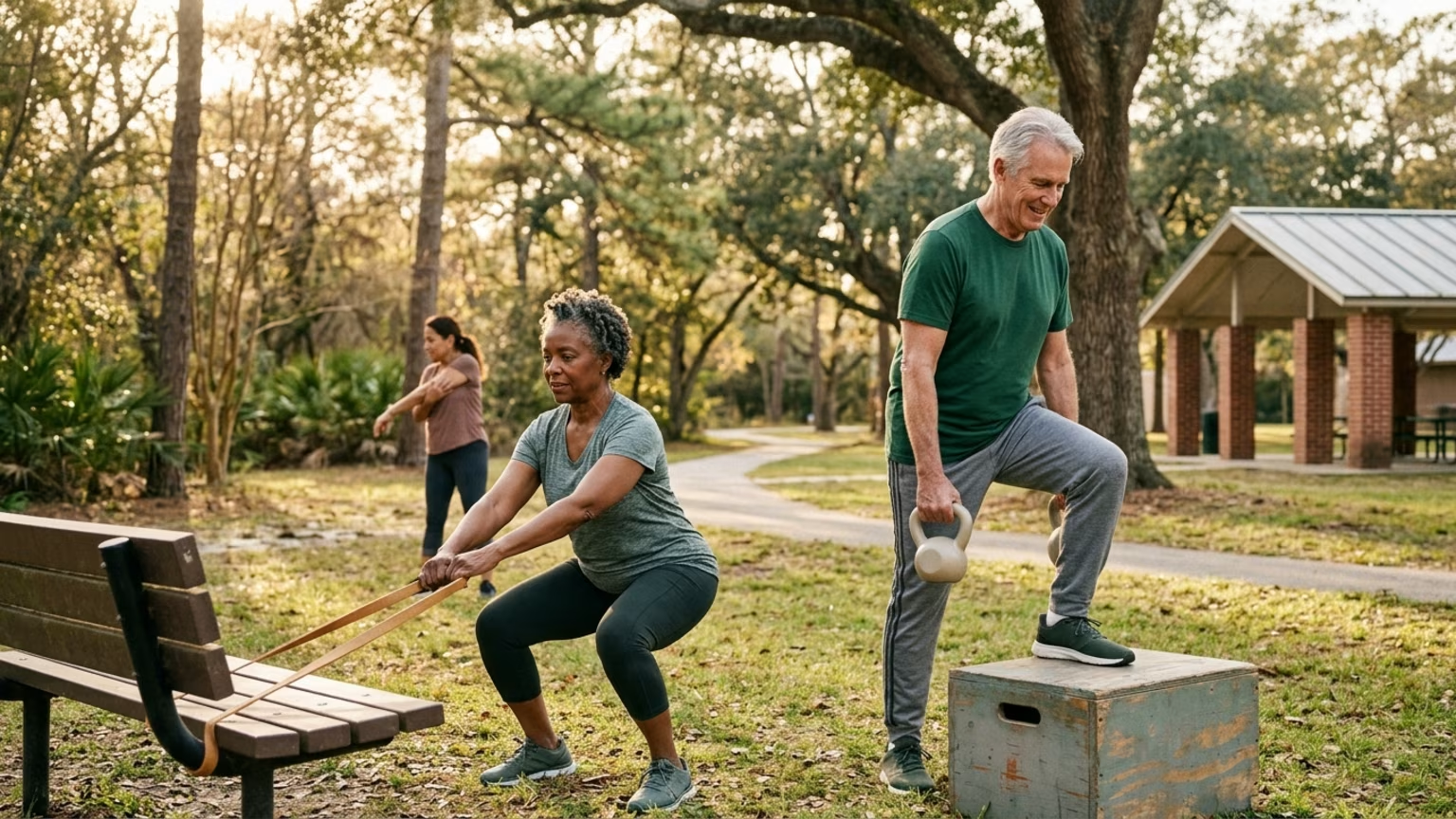
Discover why golfers over 40 need usable mobility rather than passive flexibility to maintain a powerful, pain-free swing and protect their longevity.




A report summarized in 2026 coverage of the R&A’s “Golf and Health 2021–2025” work associated golf participation with approximately 40% lower mortality risk and roughly five years longer life expectancy in a Swedish population of about 300,000 golfers. This observational data highlights the immense physical upside of staying active on the course. Internationally, the R&A reported 112.2 million adults and juniors participating in golf in all forms outside the United States and Mexico in 2025, an increase of 4.2 million from 2024. As participation climbs, players want to maintain their health benefits for as long as possible.
However, many golfers lose their ability to swing comfortably long before they stop walking the fairways. They mistake a lack of usable mobility for a simple flexibility problem. This confusion leads them to stretch endlessly without seeing any improvement in their swing. Understanding the difference between the two concepts is critical for your longevity in the game.
Flexibility describes passive range of motion. It measures how far an outside force can move a joint or lengthen a piece of tissue. Mobility is your ability to move through that available range actively with muscular control and stability. You can possess substantial passive flexibility without being able to actively control the same range during your backswing.
When you swing a club, your body needs coordinated movement across several regions. The hips and thoracic spine are frequently highlighted in golf-performance guidance because they contribute to rotation and separation between the pelvis and torso. A golf-physiotherapy practitioner cited by Movement Driven recommends prioritizing thoracic-spine and hip mobility but cautions that stretching alone is insufficient. If a player lacks active control in these joints, compensation often occurs elsewhere.
This compensation frequently shifts stress toward the lumbar spine, lead elbow, or wrists. A movement is often limited by insufficient strength or poor balance. Inadequate motor control and difficulty coordinating different body segments can also cause issues rather than a hard structural restriction. Your lower back is forced to rotate excessively when your mid-back or hips fail to turn.
This creates discomfort and limits your ability to generate effortless power. Players often try to force their bodies into positions they cannot control. This lack of control ultimately degrades your ball striking over time. Physical testing must be combined with swing observation to identify the real cause of the problem.
Golf has a rapidly growing base of older players. The National Golf Foundation reported that the number of U.S. golfers aged 65 and older had nearly doubled from 2016 levels, according to Golf Digest. The average age of on-course golfers reportedly declined slightly from 44.6 in 2019 to 44.1 in 2025. This suggests the aging audience is growing alongside younger participation rather than simply being replaced.
The U.S. National Golf Foundation reported 48.1 million Americans aged six and older participating in golf in some form during 2025, including on-course and off-course activities. Golfers over 40 face unique mobility challenges within this massive demographic. Even when swinging with less speed than tour professionals, older amateurs often lack the underlying stability to protect their joints. They might pass a passive flexibility test on a physical therapy table but fail to hold those angles while standing over a golf ball.
This gap between passive tissue length and active rotational control makes mature players highly vulnerable to strain. Walking a golf course can provide meaningful physical activity. One report estimates approximately 6.4 to 8 kilometers and 11,000 to 17,000 steps for an 18-hole round when walking rather than using a cart. The same source reported that even golfers using carts averaged more than 6,000 steps.
Sustaining this daily activity requires robust joint health. Players who want to maintain their longevity approach to distance after 40 must focus on usable mobility. A larger passive range is practically useless if you cannot control it actively. When a player forces a joint into a deep stretch without building strength, the nervous system often perceives it as a threat.
The most common treatment for a stiff swing is static stretching. I used to stand on the first tee doing long, static hamstring stretches because I thought it was the right way to warm up. I would actually feel weaker on my first drive. Research later showed me that dynamic movements, like leg swings and torso twists, prime the nervous system much better.
Changing my five minute warmup completely transformed my opening tee shots. The belief that more flexibility is automatically better remains widespread among mature players. We see many players at golfergy who try to fix their tight hips by forcing painful yoga poses. This approach ignores the need for stability and coordination.
The path to a pain-free swing involves a logical progression from basic control to golf-specific positions. You should start by establishing controlled joint movement in unloaded positions. Try performing slow hip rotations from a seated position or ankle rocks with your heel grounded. The goal is to observe whether you can move smoothly under your own control to help identify a genuine structural restriction.
You can also add thoracic rotations from a quadruped position or controlled shoulder wall slides. Once a movement is available, practice holding or producing force in that position. You might add single-leg balance combined with a shallow hinge or practice shoulder elevation while maintaining rib control. Mobility requires the ability to stabilize and control the available range.
Incorporating this kind of rotational audit into your routine builds a stronger foundation. Your joints must learn to accept force in new ranges of motion. A passive stretch might feel good in the moment. However, strength and control are what actually protect your joints on the course.
The next step is to test dissociation to see if body segments move independently. Practice keeping your pelvis relatively quiet while rotating your thoracic spine. You should also work on rotating your pelvis while maintaining a stable upper body. Practitioner guidance specifically highlights coordination and dissociation as the bridge between newly available range and an efficient swing sequence.
Practicing a hip hinge and trunk rotation without losing posture builds this critical coordination. Finally, you must link these movements directly to golf positions. Start at address and focus entirely on turning your trail hip during the takeaway without swaying. You want to see shoulder and thoracic movement without immediately lifting the pelvis.
At the top of your backswing, check if you can maintain your hip and thoracic rotation with good balance. Move into the transition with a controlled pressure shift and pelvic movement rather than an uncontrolled lunge. Linking these capacities directly to your hip mobility and the golf swing mechanics helps the physical work translate to better ball striking. Continued rotation through impact prevents forcing the lumbar spine to provide all the motion.
You need to determine whether your swing flaw stems from a true restriction or a control problem. A genuine restriction becomes plausible when both your active and passive ranges are limited. It is also noticeable when the same limitation appears in multiple positions. Mild stiffness might be acceptable for gradual training, but persistent pain warrants assessment by a qualified healthcare professional.
A player might have adequate passive range but poor usable mobility under certain conditions. This happens when a partner or strap can move the joint farther than the player can move it actively. The golfer might reach the position only by losing balance or changing posture. You might achieve the position in isolation but lose it while holding a club.
Another clear sign of a stability problem is when movement breaks down under rotational demands. Your range often improves substantially when the movement is slowed or supported. This distinction follows the recommendation to assess strength and coordination alongside range of motion. Movement training becomes far more effective when you stop chasing passive tissue length.
A sequencing problem might be the culprit when you have acceptable isolated hip and thoracic movement but cannot use them in the swing. The pelvis, torso, and hands might move together without meaningful separation. Technical changes can sometimes alter an apparent restriction more than stretching does. The appropriate response may then be a combination of movement training and coaching.
Testing providers recommend relating physical screens to swing and performance data rather than assuming a movement restriction automatically explains a technical fault. You must compare changes in movement with ball flight, contact, speed, and comfort.
Understanding the difference between passive flexibility and active mobility changes how you approach your physical preparation. The goal for any mature player is to maintain enough controlled motion to repeat the swing, walk the course, recover between rounds, and continue playing comfortably. What adjustments will you make to your mobility routine this season to steer clear of this hazard? Keep your body moving, stay grounded in your practice, and we will see you on the first tee.
Follow Golfergy for practical insights on performance, mobility, recovery and healthy ageing. Stay connected for new articles, research-led guidance and ideas to help you play better for longer.


Learn how Golf Pride's new CP grip and dynamic mobility habits can help older golfers reduce hand tension, manage repetitive strain, and protect their joints.

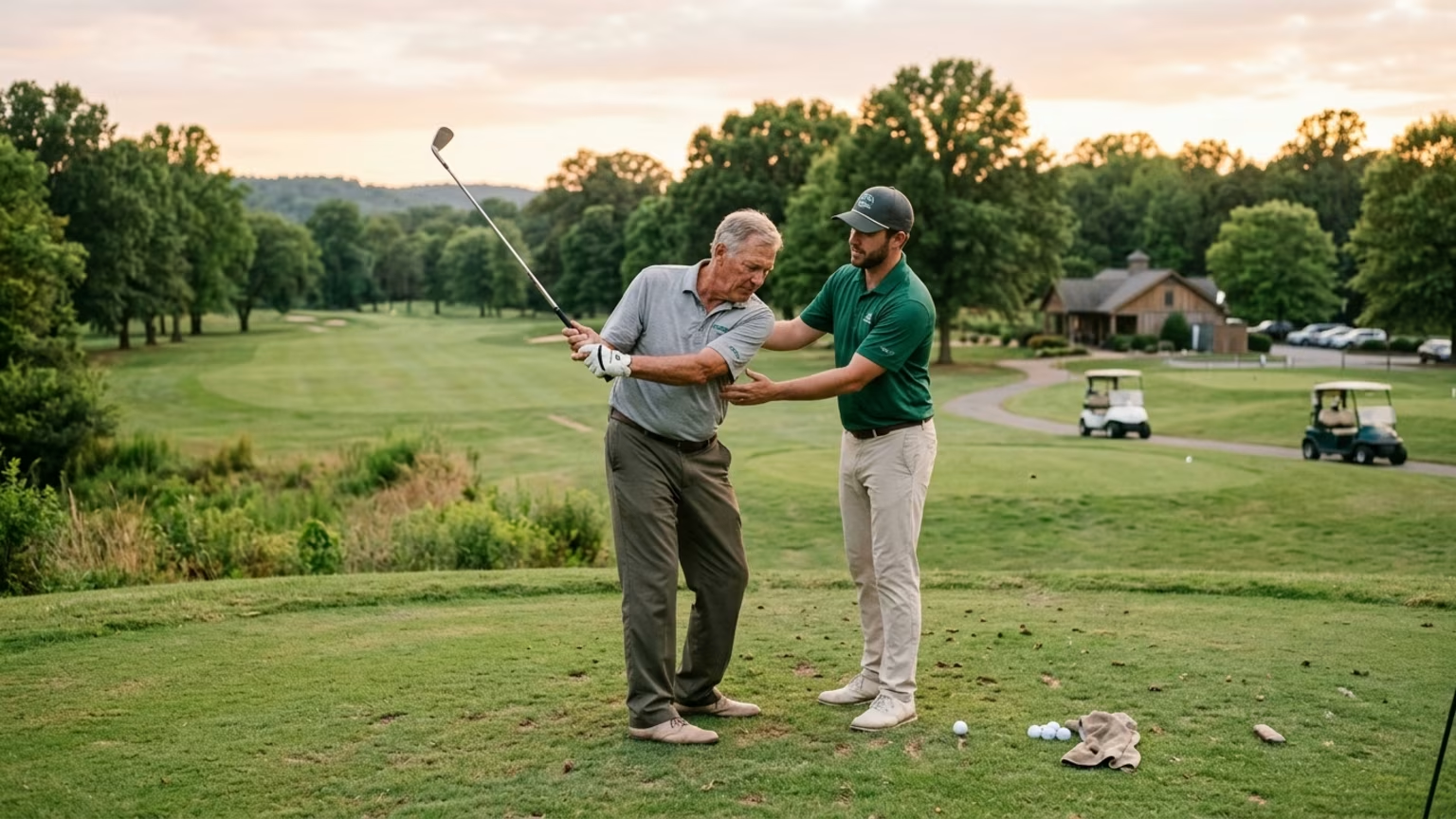
Golf.com detailed three pro-approved drills for better hip rotation. Learn how older golfers can adapt these sequencing exercises to protect their lower back.
Tiger Woods returning to the practice range highlights the difference between hitting balls and full-round readiness. Learn why mature golfers must pace recovery.
Explore practical resources on performance, recovery, mobility and golf longevity.
Read the Blog