

Discover how limited hip rotation shifts unwanted stress to your lower back. Learn a safe daily routine to build usable range and protect your golf swing.




Here at golfergy, we know that peak compressive loading during the golf downswing can reach more than six times a player's body weight, according to secondary biomechanics estimates. Golfers also experience reported anterior shear approaching 1.6 times body weight, and medial shear near 0.6 times body weight during the follow-through. That massive force must transfer smoothly through your hips, pelvis, and spine for a safe swing. When parts of that rotational chain stop moving properly, your body is forced to compensate.
Here is the three-step routine to maintain a fluid swing and protect your joints:
A few years ago, I noticed my swing falling apart around the 14th hole. My lower back would tighten up, causing me to compensate with my arms. I spent months thinking it was a swing flaw. It was not until I started a simple evening hip mobility routine that I realized my glutes were just turning off from fatigue, and fixing that limitation brought my back nine scores down drastically.
Clinical golf assessments often examine internal and external rotation side-to-side. Practitioner sources commonly identify restricted lead-hip internal rotation as one potentially modifiable contributor to golfing back symptoms. You can test your own baseline safely at home with a firm chair. This movement screen reveals how much functional torque your body can naturally produce without cheating.
Sit tall on a chair with your knees and hips at 90 degrees. Keep your thighs still, and move one foot outward to rotate the hip internally. Next, move the foot inward to rotate the hip externally. Repeat this process on the other side, and compare the left and right legs. Look for any pelvic shifting, trunk leaning, or a painful pinch at the end of the movement.
A seated hip-rotation comparison is consistent with clinical golf assessments that examine internal and external rotation side-to-side. If your entire thigh and pelvis rotate together, your body is likely borrowing that motion from your lower back. A golf-specific assessment can compare hip rotation, thoracic rotation, impact mechanics, and hip strength rather than relying on one flexibility test.
A useful distinction for older players is the difference between available range and usable range. Available range is how far your hip moves when tested passively. Usable range is how far you can move while maintaining pelvic position, trunk control, and your intended swing posture. One commercial mobility guide uses approximately 30 degrees of internal rotation and 40 degrees of external rotation as practical reference figures, not universal injury thresholds.
Clinical guidance for golfers commonly combines hip mobility, thoracic rotation, glute strength, and swing-specific exercise progressions rather than treating stretching as a complete solution. Golf rehabilitation guidance specifically combines glute strengthening for pelvic control with hip mobility work. Start your routine with controlled hip rotations from a seated position. Slowly rotate your thigh inward and outward for five repetitions, keeping your focus entirely on turning your trail hip.
Next, move to the floor for 90/90 hip transitions. Sit with one leg in front and the other behind, with both knees bent at 90 degrees. Move slowly between the two positions without collapsing through your lower back. The 90/90 drill trains both internal and external hip rotation, and it is also recommended in PGA golf mobility guidance. This controlled sequence is an excellent way to maintain hip mobility before a practice session.
After completing your rotations, practice half-kneeling thoracic rotation. Kneel with one knee down and the opposite foot forward. Bring your pelvis underneath you gently, and rotate your upper body toward the front leg. PGA guidance includes a similar lunge-with-twist variation for golf mobility routines. Keep the movement comfortable, and stop immediately if you feel any sharp pain.
Finally, establish better pelvic control with a standard glute bridge. Lie on your back with your knees bent and your feet flat on the floor. Lift your hips smoothly without arching your spine, and pause briefly at the top. Proper glute activation provides a stable base for your rotational mechanics. Perform two sets of eight to twelve repetitions twice a week.
Golf-specific rehabilitation guidance recommends progressing from mobility to glute strength and then to exercises that allow the swing pattern to change as mobility improves. Once the standard glute bridge feels effortless, you can introduce single-leg variations or lateral band walks. These progressions force your trunk to resist unwanted rotation. Add a side plank from your knees, holding the position for 15 to 30 seconds per side.
Enthusiastic golfers often chase maximum flexibility instead of focusing on usable control. A smaller, controlled range of motion is always preferable to a massive stretch that twists your pelvis. Pushing your joints into sharp groin pain will not magically improve your golf swing. Your body will simply find another way to cheat the movement, placing more stress on your lumbar spine.
Another frequent error is treating a temporary stretch as a permanent fix. A stretch might increase your passive range temporarily, but that does not teach your body to control the new position under load. Evidence summaries suggest that trunk-strengthening and coordination-focused exercise can help people with chronic low-back pain, although the findings are not specific to golfer populations. This lack of control causes players to arch their lower back during floor exercises, so you must stop the movement immediately if you cannot keep your spine neutral.
You can monitor your usable range seamlessly while waiting on the tee box. Make several slow practice swings at roughly 25 to 50 percent of your normal speed. Watch for your pelvis stalling while your chest continues turning through the shot. If your swing temporarily feels smoother but degrades quickly on the back nine, your limitation involves endurance rather than flexibility alone.
If your back feels tight late in the round, shorten your backswing slightly. Focus on smooth pelvic clearance instead of a massive shoulder turn. Golf physiotherapy guidance recommends progressing from short shots to partial swings and then full-speed swings while managing volume. This cautious approach preserves your posture and protects your overall lower back health while you finish the round.
We started by looking at the massive six-times-body-weight compression forces your spine handles during a downswing. When you combine targeted hip rotation with strong pelvic control, your lower back no longer absorbs that intense stress alone. You distribute the rotational load properly across your hips, thoracic spine, and trunk. The 10-minute investment today that saves you 18 holes of aches tomorrow.
Follow Golfergy for practical insights on performance, mobility, recovery and healthy ageing. Stay connected for new articles, research-led guidance and ideas to help you play better for longer.



Excessive lower-back arching at address strains your golf swing. Read how players over 40 can use better hip mobility and dynamic warm-ups to prevent pain.

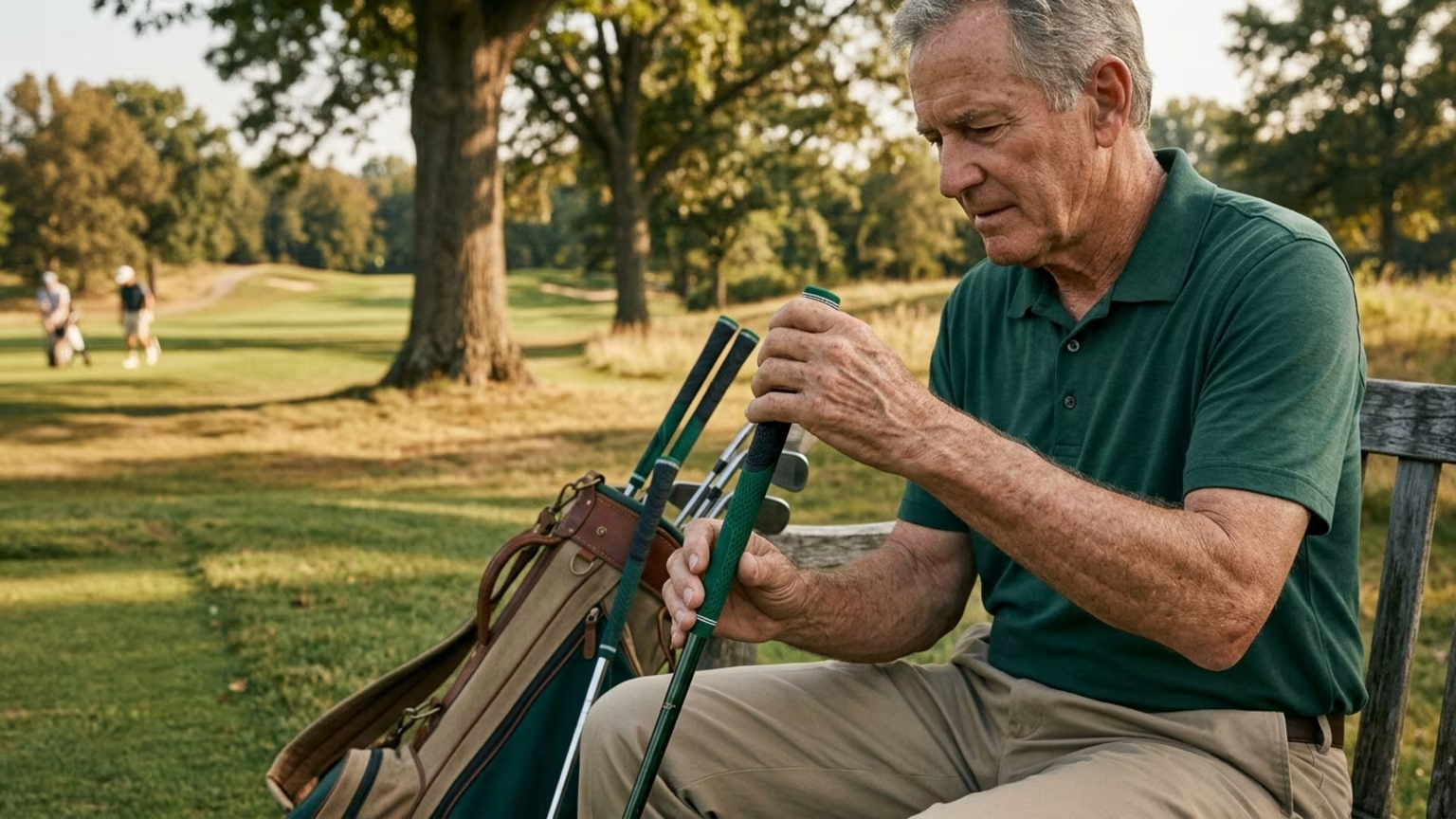
Learn how Golf Pride's new CP grip and dynamic mobility habits can help older golfers reduce hand tension, manage repetitive strain, and protect their joints.

Golf.com detailed three pro-approved drills for better hip rotation. Learn how older golfers can adapt these sequencing exercises to protect their lower back.
Explore practical resources on performance, recovery, mobility and golf longevity.
Read the Blog