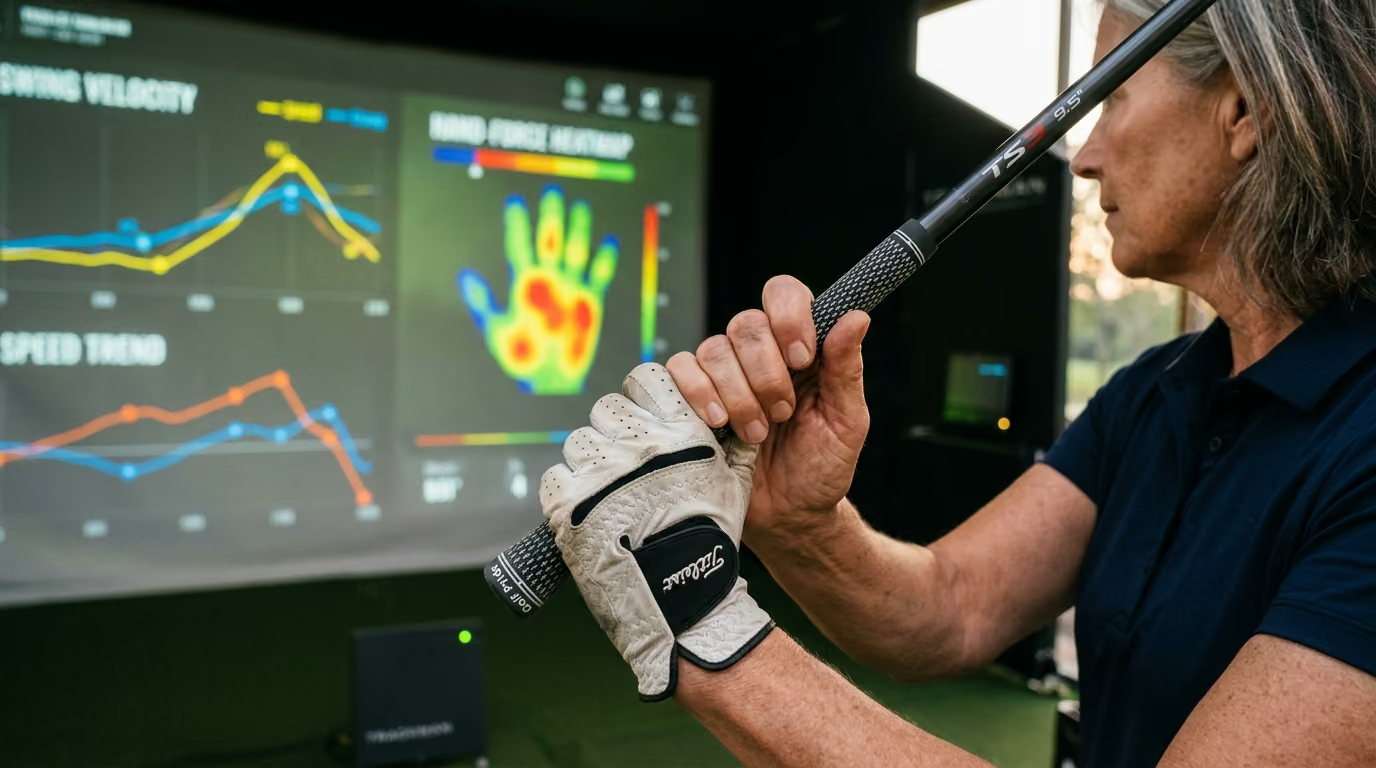

Swinging a club relies less on raw arm strength than on proper glute activation to stabilize your pelvis and generate true rotational power.




Glute activation for golfers is the process of waking up the large muscles in your buttocks before you swing a club. It is not about building massive muscles or lifting heavy weights at the gym. It is about establishing a clear connection between your brain and your hips. Many players assume that hitting a bucket of balls on the range is enough of a warm up. But swinging with cold glutes forces other muscles to do the heavy lifting. This often leads to fatigue, poor ball striking, and a sore lower back.
Improving your pelvic mobility and stability is key to a long playing career. When your glutes are awake, they keep your pelvis stable. This stability allows your upper body to rotate freely. Without this foundation, your swing will lose speed and consistency.
This resource provides an in depth examination of how your glutes drive the golf swing. We will look at the science of muscle inhibition, simple tests you can do at home, and quick ways to wake up these muscles on the first tee. By focusing on your pelvic stability, you can protect your back and maintain your distance for years to come.
Imagine you are standing on the fourteenth tee box on a Saturday afternoon. You have played thirteen solid holes, but now you feel a dull ache in your lower back. You tee up your ball and swing. Instead of a powerful rotation, you feel your hips slide toward the target. The ball slices into the right trees, and your distance has dropped by fifteen yards since the front nine.
This sudden drop in performance is not a lack of skill. Your brain has simply lost touch with your glutes. When these muscles stop firing, your body finds other ways to move. Your hamstrings and lower back muscles try to do the work, which causes a physical breakdown. You lose your posture, your swing path changes, and your lower back begins to hurt.
This on course situation is incredibly common for golfers over forty. The fatigue you feel is not just cardiovascular. It is a neurological disconnect between your nervous system and your primary power generators. When your glutes go to sleep, your swing suffers immediately.
The glutes are the most important muscle group in golf because they maintain the posture of the lower body while the upper body rotates around it. Biomechanics experts call this the King of the Swing framework. Your glutes consist of three main muscles, which are the gluteus maximus, the gluteus medius, and the gluteus minimus. Each of these muscles plays a specific role in keeping your swing stable.
According to research from the Titleist Performance Institute, the glutes act as the anchor of the golf swing. In the stability and mobility chain of the body, different joints have different primary jobs. Your knees require stability, while your hips require mobility. Above your hips, your pelvis requires stability to transfer energy. The glutes provide this pelvic stability, which allows you to transfer energy from the ground up through your core to the clubhead.
This transfer of energy relies on Ground Reaction Forces. When you swing, you do not just use your arms. You push down into the ground, and the ground transfers force back up through your body. Your glutes are the primary muscles responsible for managing these vertical and rotational forces. If your glutes are weak, this force cannot travel efficiently, and your swing speed drops.
Without strong glutes, your pelvis will tilt or sway during your swing. This movement breaks the stability chain, which forces your lower back to absorb the rotational stress. Over time, this stress leads to wear and tear on your spine. By using your glutes to stabilize your pelvis, you protect your back and create a more efficient path for power.
Gluteal amnesia is a condition where the brain forgets how to activate the glutes. This inhibition often happens because of prolonged sitting. When you sit at a desk for several hours, your hip flexors become short and tight. These tight muscles send a signal to your brain to turn off the opposing muscles, which are your glutes.
This muscle imbalance is known as Lower Crossed Syndrome. It is characterized by weak glutes and weak abdominals paired with tight hip flexors and tight lower back muscles. This imbalance creates a physical pull on your pelvis. It tilts your pelvis forward, which creates a posture that is highly inefficient for golf.
In golf, this pelvic tilt often leads to an address position known as S-Posture. Some golfers are taught to stick their butt out at setup to look athletic. This actually causes S-Posture, which puts a severe arch in the lower back. This posture inhibits glute activation and places extreme stress on the lumbar spine.
According to the Asian Journal of Sports Medicine, lower back conditions account for about 25 percent of all golf injuries, with some reports citing rates as high as 54 percent. Many of these injuries are direct results of Lower Crossed Syndrome and S-Posture. When you sit in an office chair all day, your body adapts to that shape. You cannot expect to stand up, walk to the first tee, and instantly have active glutes without specific preparation.
The glutes perform different tasks on each side of your body during the swing. For a right handed golfer, the right side is the trail side, and the left side is the lead side. Understanding these distinct roles helps you focus your mind on the correct muscle movements.
During the backswing, your trail gluteus medius and maximus are loaded for stability. As you turn back, focus entirely on turning your trail hip. The trail glute must contract to hold your pelvis in place. This contraction prevents your hips from swaying to the right, which keeps your turn compact and powerful.
During the downswing, the movement shifts to the lead side. The lead gluteus maximus contracts powerfully to create hip extension. This contraction stabilizes your pelvis as your upper body rotates through impact. Pushing down through your lead heel helps activate this lead glute, which acts as a brake to stop your hips from sliding forward.
Research shows that the trail leg gluteus maximus reaches 62 to 72 percent of its maximum activation during the golf swing. Electromyographic studies demonstrate that high handicap golfers consistently show lower trail leg glute activation compared to low handicap golfers. This difference in muscle firing explains why better players maintain their posture and hit the ball further.
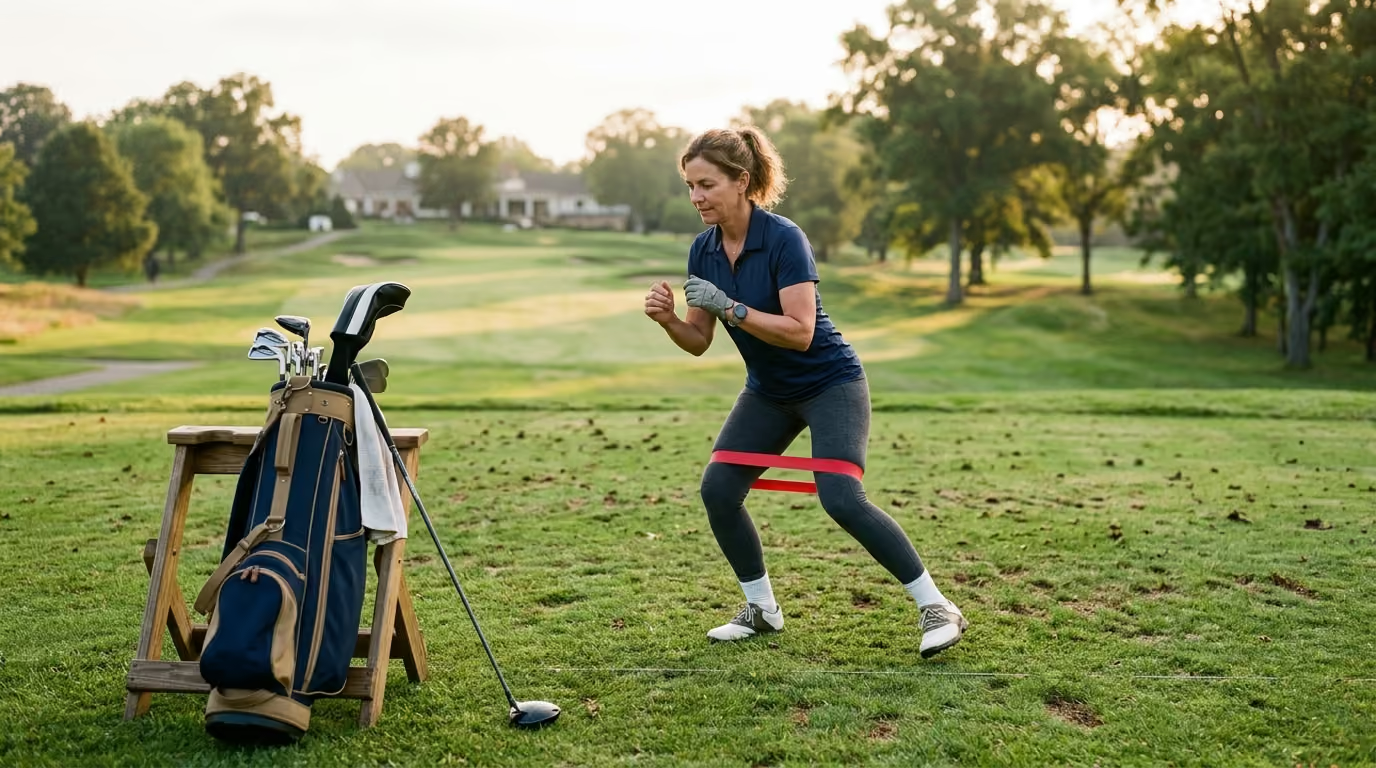
You do not need a gym or special equipment to wake up your glutes before your round. You can perform a simple routine right next to your golf cart. This routine takes less than three minutes, but it prepares your nervous system for the physical demands of the game.
The first movement is a standing glute squeeze. Stand with your feet shoulder-width apart, and place your hands on your hips. Slowly tuck your pelvis under your spine, and squeeze both butt cheeks as hard as you can. Hold this squeeze for ten seconds, then release. Repeat this five times to send a clear signal from your brain to your hips.
The second movement is the Squeeze the Cheeks Drill. Take a short iron, and stand as if you are preparing to hit a half-shot. Take a slow backswing, and focus entirely on turning your trail hip. As you swing forward to the impact position, consciously squeeze your glutes. Perform ten of these slow practice swings, and feel how your buttocks stabilize your lower body.
These simple movements help overcome the office chair effect. They stretch your tight hip flexors and force your glutes to fire. Doing this before your first tee shot makes sure that your body uses the correct muscles from the very first swing.
To build a strong foundation for your swing, you need a regular training routine. These exercises target the glutes to build lasting strength and coordination. You can perform these movements at home three times a week to improve your strength and stability.
Before you train, you should test your current level of glute activation. This assessment helps you identify if other muscles are trying to do the work.
If your pelvis drops, your hamstring cramps, or your lower back hurts, you have failed the test. This failure indicates that your hamstrings or lower back are compensating for weak glutes. If you feel a cramp, it is a clinical indicator that your glutes are not firing properly.
This exercise is one of the best movements for golf performance. It trains your balance, hip extension, and glute strength at the same time.
Perform three sets of eight repetitions on each leg. Focus entirely on pushing through your heel rather than the ball of your foot. This foot position keeps the tension in your glutes instead of your quadriceps.
This exercise mimics the physical rotation of the golf swing. It loads the glutes while challenging your balance.
Return to the starting position by pushing through your front heel. Perform three sets of ten repetitions on each side. This movement trains your glutes to stabilize your pelvis while your torso rotates.
This movement targets the gluteus medius, which is the muscle responsible for preventing your hips from swaying.
Perform three sets of fifteen repetitions on each side. Keep the movement slow and controlled. If you feel your lower back arching, you are lifting your knee too high.
Many golfers make mistakes when trying to improve their glute function. These mistakes can lead to further imbalances or even injury. Recognizing these pitfalls helps you train more safely.
One common mistake is the Hamstring Takeover. When your glutes are weak, your hamstrings will automatically try to lift your hips during bridges or lunges. If you feel a deep burn in the back of your thighs rather than your buttocks, your hamstrings are taking over. To fix this, always focus on pushing directly through your heels and squeezing your butt cheeks before you start the movement.
Another major error is falling for the S-Posture Myth. Some players believe that arching their back at address gives them a more athletic base. In reality, this arch shuts down the glutes and compresses the joints in your lower back. To find a safe address position, stand tall, tuck your tailbone slightly, and bend from your hips while keeping your spine straight.
Finally, do not confuse lateral movement with rotation. If your gluteus medius is not active, your hips will slide forward or sway backward during your swing. This lateral movement ruins your low point control and reduces your swing speed. Always focus on rotating your hips around a stable central axis rather than moving them side to side.
Your gear plays a surprising role in how your body moves. Your shoes, your bag, and even your grips can affect your ability to activate your glutes. Paying attention to these details can help you stay balanced.
Your golf shoes are your only connection to the ground. Spiked shoes provide more traction, which allows you to push harder against the turf. This extra grip increases ground reaction forces, which helps activate your glutes. If you wear spikeless shoes with worn down tread, your feet may slip, which prevents your glutes from firing fully.
How you transport your clubs also matters. Carrying a heavy golf bag for eighteen holes places a massive load on your shoulders and lower back. This constant weight tightens your hip flexors and fatigues your back muscles, which can turn off your glutes. Using a push cart or riding in a cart keeps your body fresher, which allows your hips to function properly on the back nine.
Even your grip size can influence your lower body. If your grips are too small, you will squeeze the club too tightly. This upper body tension can travel down your arms and spine, making it harder to maintain a neutral pelvic posture. Proper grip sizing reduces tension, which helps your entire body move more fluidly.
As we age, our bodies naturally lose muscle mass and joint flexibility. This process makes it even more important to protect our joints from injury. Focusing on injury prevention is the best way to extend your playing years.
Active glutes absorb the physical stress of the swing, which spares your spine and knees from excessive wear. When your glutes are strong, they act as shock absorbers. This protection is especially important for golfers over forty who may already have mild joint degeneration.
Proper muscle activation also speeds up your recovery after a round. When your glutes do their job, your lower back does not have to work overtime. This means you will feel less stiffness the next morning, allowing you to play multiple days in a row without pain.
Investing time in your physical health is the best way to maintain your performance as you grow older. By keeping your hips strong and active, you can enjoy the game you love for decades.
Waking up your glutes before you play protects your lower back and provides the power you need for a stable, consistent swing.
While squats are a great exercise, they are not always the best way to activate dormant glutes. If your glutes are inactive, your quadriceps and lower back will often do most of the work during a squat. You should start with isolation movements like glute bridges or clamshells to make sure the target muscles are firing. Once you can feel your glutes working, you can progress to squats and lunges.
A typical activation routine will wake up your muscles for about thirty to forty-five minutes. Because a round of golf takes several hours, your glutes can slowly go back to sleep, especially if you spend time sitting in a golf cart between shots. To prevent this, perform a standing glute squeeze or a few practice swings with a glute focus every three or four holes.
Yes, orthotics can have a positive effect on your glute activation. If your feet roll inward, it can cause your knees to cave in and your hips to tilt. This poor alignment makes it very difficult for your gluteus medius to stabilize your pelvis. Proper foot support keeps your ankles aligned, which makes it easier to push into the ground and activate your hip muscles.
Yes, stretching your hip flexors is highly recommended before you start your activation exercises. Tight hip flexors physically prevent your hips from extending fully, which limits how hard your glutes can contract. By stretching the front of your hips first, you remove this restriction, which allows your glutes to fire with much more power.
Follow Golfergy for practical insights on performance, mobility, recovery and healthy ageing. Stay connected for new articles, research-led guidance and ideas to help you play better for longer.


Explore practical resources on performance, recovery, mobility and golf longevity.
Read the Blog