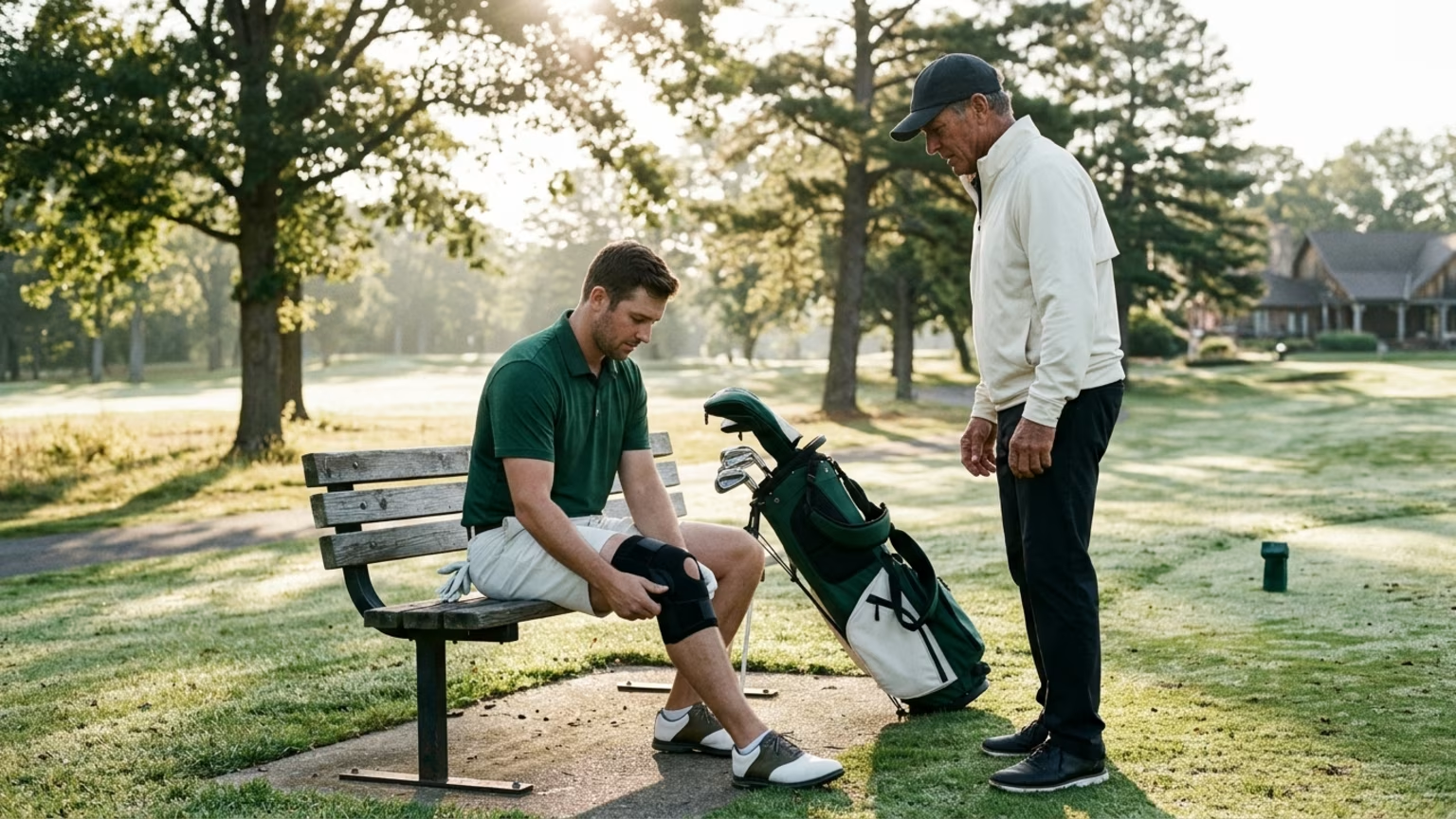

Ben Griffin returned with a 64 and his first 18-hole walk since August. A grounded look at the lessons and limits for golfers over 40.




Ben Griffin returned to PGA Tour competition at the VidantaWorld Mexico Open on October 29, 2026. According to PGA Tour coverage, it was his first competitive start since the BMW Championship in August. It was also his first time walking 18 holes since that event’s final round.
Griffin said an MRI showed a fissure in the cartilage of his left knee. He reported receiving platelet-rich plasma (PRP) and hyaluronic-acid injections. During the break, he said he had played very little golf.
The round came about seven weeks after treatment, according to Griffin. He said he had been told the treatment would “kick in between six and eight weeks.” He described competing at that point as “pushing it a little bit,” though he said he felt good.
Griffin shot a seven-under 64. He made 159 feet of putts and gained more than four strokes on the greens. PGA Tour coverage described it as the best putting performance in the field that day.
It was also Griffin’s first tournament round with veteran caddie Jon Yarbrough. Griffin credited Yarbrough with helping confirm his reads on the greens. That detail belongs in the account of his scoring success, alongside the putting numbers.
The round therefore had two distinct features: a strong competitive score and a full walk around the course. For readers following the return, the putting was an immediate performance highlight. For readers interested in golf after a knee problem, the walking milestone offers a different point of reference.
For golfers over 40, a return can involve more than the swing itself. If knee pain affects your walk around the course, completing the round becomes part of the question. Griffin’s account brings that demand into view without making age a diagnosis.
The point is not to put a recreational player beside a tour player on a recovery scale. It is to separate the demands of playing from the result on the card. A golfer whose main concern is walking the course has a different question from one asking only whether they can strike the ball.
At Golfergy, our focus is experienced recreational golfers who want to maintain mobility and keep playing for longer. That makes the physical demands of a round relevant alongside the score. Our coverage of building back after time away addresses that broader return-to-golf theme.
The comparison has clear boundaries:
A 2026 review described PRP evidence for knee osteoarthritis as inconsistent. It also described guideline positions that do not support routine hyaluronic-acid injections for osteoarthritis.
That research concerns osteoarthritis, not Griffin’s reported cartilage fissure. It cannot establish whether either injection was appropriate or effective for his individual condition. The distinction matters because naming a treatment does not tell us enough about the problem it was intended to address.
Inconsistent evidence is not a statement that every treatment attempt fails. Nor does a professional’s positive account settle the evidence. These are different kinds of information: one describes an individual experience and the other assesses research on a defined condition. Keeping those roles separate avoids asking either source to answer a question it did not study.
The practical starting point is the effect of symptoms on your own activities. If knee pain is affecting walking, stairs, balance or your swing, seek an individualized assessment from a qualified health professional. Describe the activity that is affected rather than assuming the same knee problem as a tour player.
Keep the discussion tied to the golf you are trying to return to. Taking swings and completing a full walking round are different parts of Griffin’s reported return. They can be discussed separately without turning his experience into a set of rehabilitation steps.
That is a useful way to read the news: identify the activity that mattered, then keep personal medical decisions personal. There is no need to choose an injection or a return date from a tournament report. Questions about your own care belong with the professional assessing your knee.
For related reading, Golfergy’s guide to making sense of post-round body signals covers the wider topic of recognising physical signals after golf. It is part of our focus on practical guidance for mature players who want to stay mobile and keep playing.
Griffin returned to competition and completed his first 18-hole walk since August after a period of very little golf. He paired that return with a 64 and reported feeling good.
The open questions concern what followed: how his knee responded after the round and whether the return proved durable over subsequent weeks. The reporting does not answer those questions.
Follow Golfergy for practical insights on performance, mobility, recovery and healthy ageing. Stay connected for new articles, research-led guidance and ideas to help you play better for longer.


Learn how hips, trunk and shoulders share a golf turn, with practical habits focused on comfortable rotation rather than a bigger backswing.

Build a manageable golf mobility habit with a moving warm-up, separate home sessions and broader conditioning during quieter parts of the season.
Learn how hips and back share your golf turn, how to notice movement differences, and when an individual assessment may help.
Explore practical resources on performance, recovery, mobility and golf longevity.
Read the Blog


