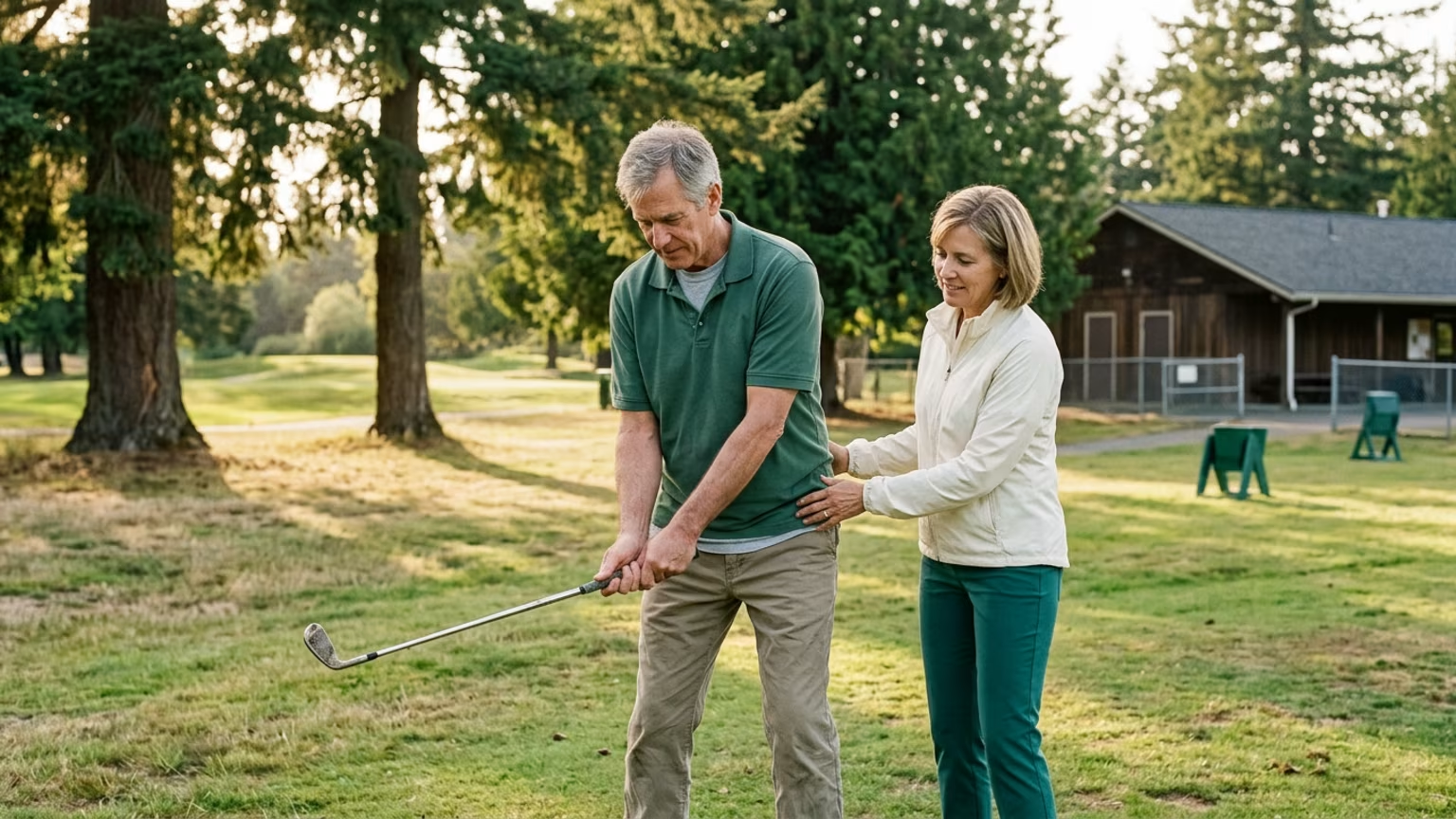

Learn how a new NIH-funded clinical trial on ketone esters highlights the importance of strength and mobility routines for protecting your golf longevity.




On September 10, 2026, UConn Health highlighted a multi-site clinical trial testing a new intervention. The NIH-funded study is examining whether ketone ester supplementation can improve overall health span in older adults. This period of life is defined by how long people remain healthy, active, and independent. Specifically, the trial targets adults aged 65 and older who are classified as pre-frail.
The trial is led at UConn Health by Jenna Bartley, Ph.D., and uses a randomized, blinded design. Participants receive either a ketone ester supplement or a placebo to test the effects. They take study packets twice daily for 20 weeks to maintain a consistent dosage. Furthermore, participants visit the UConn Health research team four times during the study period.
The research team monitors the participants closely during the early stages of the program. The intervention is gradually increased during the first four weeks of the trial. Researchers may adjust the daily dose if participants experience gastrointestinal symptoms such as an upset stomach. This careful pacing helps older adults adapt to the supplements without severe physical distress.
To understand the mechanics of this trial, we must look at how the body processes energy. Ketones are naturally produced when the body uses fat rather than glucose as a primary fuel source. This biological shift typically happens during periods of fasting or substantial carbohydrate restriction. The UConn research team is testing whether supplementation can produce ketone-related benefits without a strict diet.
The researchers are investigating ketones as more than just a simple alternative fuel source. They want to see if ketones act as signaling molecules within the aging human body. These specialized molecules might influence muscle metabolism, metabolic regulation, and vital immune responses. The study’s primary endpoint is a composite "vigor-frailty" score that combines physical and cognitive measures.
While the ketone trial is ongoing, other research highlights the physical challenges of aging. A separate 2026 report on older adults examined the relationship between different exercises and cognitive health. It found that strength training was associated with a 74% lower risk of dementia compared with no exercise. In that same report, playing gateball and park golf were associated with a 32% lower risk.
However, the specific findings for traditional golf were less encouraging in this particular study. In that report, ordinary walking, calisthenics, and standard golf did not show statistically significant differences in dementia risk. This variance reminds us that a weekly round is not always enough to maintain our health span. Golfers must actively pursue strategies to adjust to their changing physical capacity off the course.
Experienced golfers often assume that walking 18 holes provides a complete physical conditioning program. Yet, players over 40 face a gradual loss of muscle mass and joint mobility. The saddest thing our team has seen in golf is watching lifelong playing partners slowly drop out of our weekend group. It usually starts with a nagging shoulder or knee issue they ignore until it requires surgery.
That pattern is exactly why Golfergy became obsessed with practical golf longevity. We do not have to stop playing as we age, provided we do the right maintenance work between rounds. Pre-frailty can easily sneak up on recreational players who rely solely on their weekend tee times. A steady loss of basic strength directly threatens our physical independence and our ability to swing a club.
Recreational players are highly vulnerable because they swing with less speed than tour professionals. This slower motion often masks underlying mobility restrictions until a sudden injury occurs on the course. A pre-frail condition makes the lower back and shoulders work harder to complete a basic rotation. Ignoring these gradual changes can turn a minor stiff neck into a permanent absence from the course.
Until the UConn trial publishes controlled results, golfers should focus on proven physical habits. We recommend establishing a consistent routine that includes progressive strength work and weekly mobility training. Adding resistance exercises to your schedule protects the exact physical function the researchers are measuring. This targeted effort acts as a crucial buffer against normal age-related decline.
You can start by evaluating your current physical movement patterns directly at home. Performing a simple 10-minute mobility screen helps older players track their baseline physical readiness. From there, focus entirely on turning your trail hip during gentle practice swings in the backyard. Small, intentional adjustments help you keep playing safely with a changing body.
Golfers should treat longevity as an active process rather than a passive hope. We must dedicate time to stretching and strengthening the core muscles that support our spine. A strong lower body provides a stable foundation for a safe and repeatable golf swing.
Some players might view ketone esters as an immediate quick fix for physical decline. The UConn article notes that earlier research established the safety and feasibility of these supplements in older adults. However, clinical evidence that supplementation actually improves health span remains heavily limited today. There are currently no formal trial results, sample size data, or adverse-event rates reported by the researchers.
Individual stories from the ongoing trial cannot prove that the actual supplement works. For example, one participant underwent a hip replacement during the study period. That person’s subsequent physical recovery and later strength cannot be cleanly interpreted as a supplement effect. Because the study uses a blinded design, neither participants nor researchers know who received the real ketone ester.
The search for practical longevity solutions will undoubtedly continue to evolve in the coming years. Science is constantly evaluating new methods to maintain our physical and cognitive sharpness as we age. We will closely monitor the results of this clinical trial when the findings are finally published. What adjustments will you make to your mobility routine this season to steer clear of this hazard?
Follow Golfergy for practical insights on performance, mobility, recovery and healthy ageing. Stay connected for new articles, research-led guidance and ideas to help you play better for longer.


We examine a 2026 Cell Metabolism report on protein restriction and explain why older golfers must prioritize muscle retention and adequate protein intake.

A review of a Cell Reports Medicine study showing how brief, high-intensity exercise impacts blood proteins, and what this means for older golfers' routines.

Examine the clinical evidence on how resistance training, proper protein intake and structured recovery help older golfers preserve muscle mass and stability.
Explore practical resources on performance, recovery, mobility and golf longevity.
Read the Blog