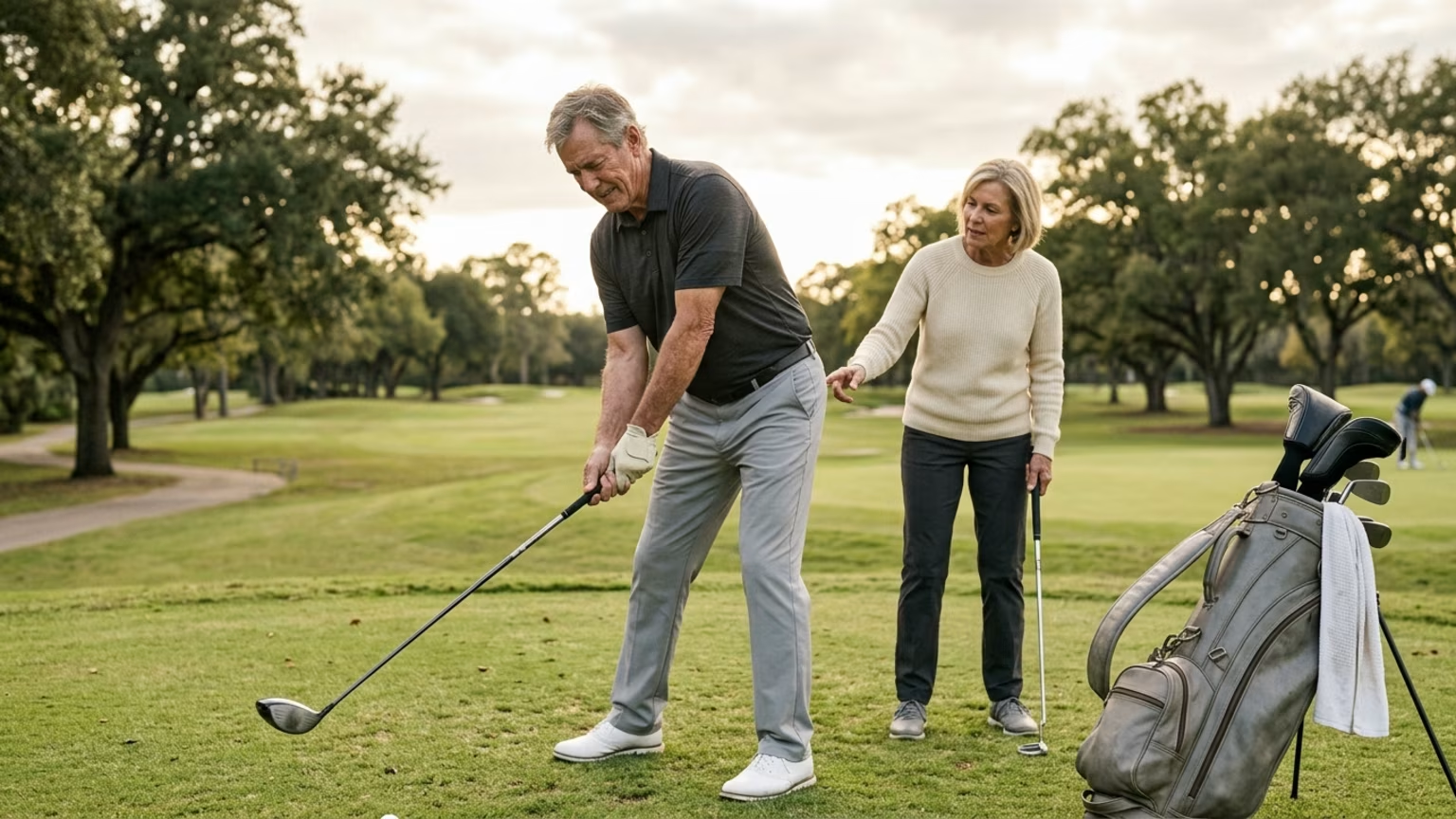

Learn how older golfers can adapt their strategy to maintain confidence, lower injury risk, and extend their playing years without chasing maximum ball speed.




Refusing to adapt your golf swing as you age does not make you tough, but it might rob you of five extra years of life. The R&A's Golf and Health 2021 to 2025 report cites Swedish data involving about 300,000 people. This analysis associated golf participation with roughly 40% lower mortality risk and an approximately five-year life expectancy difference. Those numbers show exactly why staying in the game matters far more than preserving a youthful swing.
These statistics highlight a powerful link between continued play and a longer lifespan. The reported association remained after researchers adjusted for factors including age, sex and socioeconomic status. The findings show an association, not proof that golf itself caused the longevity difference. However, it provides strong evidence that staying active on the course aligns with healthy aging over time.
The metric here measures sustained physical engagement and social connection across decades. Golf requires walking, repeated movement, outdoor exposure and complex decision-making. These elements create a comprehensive physical challenge that keeps the body moving well. When players quit because of physical frustration, they lose access to these significant benefits.
The cognitive benefits of playing golf also highlight why staying engaged matters. A Japanese observational study reported 39% lower odds of cognitive decline among current golfers compared with never-golfers. In that study, years of golf history were the variables associated with lower odds of cognitive decline. Reported round frequency did not show the same measurable relationship.
We see the global impact of this continued engagement in recent participation reports. Adult and junior participation under R&A jurisdiction reached 112.2 million in 2025. That represents an increase of 4.2 million, or 3%, from 2024. That figure includes 65 million adults and 47.1 million juniors.
A changing body directly alters how force is produced on the course. A golfer who protects a stiff back by making a guarded turn may lose clubhead speed. This abbreviated movement often reduces solid contact and diminishes trust in the swing. Players who protect a sore knee by avoiding normal movement become much more tentative around the ball.
These protective movements are reasonable performance mechanisms for managing discomfort. However, refusing to acknowledge this reduced speed leads to poor course management. Players repeatedly choose shots that demand a physical output they no longer possess. This disconnect between ambition and reality destroys confidence faster than any swing flaw.
The saddest thing I have seen in golf is watching lifelong playing partners slowly drop out of our weekend group. It usually starts with a nagging shoulder or knee issue they ignore until it requires surgery. That pattern is exactly why I became obsessed with golf longevity. We do not have to stop playing as we age, provided we do the right maintenance work between rounds.
Older golfers often treat a changing body as a temporary inconvenience rather than new information. They try to power through stiffness instead of reading the signals their body sends. Confidence drops rapidly when a mature player measures success against a younger version of themselves. We must accept that swing modifications are required to stay in the active golfing population.
The reality of playing after 40 requires a shift in mindset and strategy. Pain that alters your gait or persists outside normal activity needs professional medical evaluation. You cannot build a sustainable golf swing on top of an unaddressed structural injury. Separating normal muscle fatigue from acute pain signals is critical for long-term survival.
When physical reserves run lower, risk management must become much more deliberate. An older player has less margin for error when swinging aggressively from a bad lie. Uneven terrain and thick rough become physical problems rather than just tactical challenges. A pre-shot routine must begin with asking what movement you can safely repeat today.
Reversing the trend of physical frustration requires immediate changes to how you play. The first step is choosing your tees based on your current capabilities today. The right tees let you play the course with repeated, comfortable decisions. Moving forward reduces forced swings and keeps your round enjoyable.
You should also adjust your practice structure before reducing your ambition entirely. Make sure your recovery that scales with your age dictates your total session volume. Start with mobility work before moving to high-speed swings. Keep technical sessions short with a strict focus on centered contact.
Equipment changes can also ease the physical burden on a changing body. A slower swing makes different shaft profiles and grip sizes much more appropriate. Unsuitable clubs require extra effort and make a changing swing feel worse. A simple launch monitor session can separate a physical limitation from a clear equipment mismatch.
Lastly, manage your risk according to your body's current margin for error. Favor a club and target that produce a reliable miss every single time. Replace heroic recovery attempts with a basic return-to-playable strategy. Reducing range of motion on uneven lies can help you avoid unnecessary back strain.
You need realistic targets that reflect your current abilities rather than past performance. Success should be measured by playable dispersion and overall carry reliability. Chasing maximum ball speed on every drive is a fast track to injury. A healthy target metric is your ability to hit preferred approach zones comfortably.
Older golfers do not necessarily need to practice less often. They may simply need to practice with clearer objectives and more rest between efforts. Focus entirely on turning your trail hip rather than trying multiple adjustments. You should only attempt high-speed work when you feel completely pain-free.
Your benchmark for a successful round should focus heavily on decision-making and comfort. Can you complete the round without your mechanics deteriorating from muscular fatigue? Do your second shots leave playable clubs rather than long forced carries? If you can answer yes to these questions, you are playing within your physical limits.
This approach protects confidence because it relies entirely on a controllable plan. You measure your performance against reliable execution instead of chasing raw distance. The primary focus shifts from hitting the ball far to playing the game intelligently. Understanding how the game extends your healthspan requires deep patience and realistic expectations.
Numbers do not lie: preserving your ability to play is the ultimate measure of success. The Swedish data shows that staying active offers far more value than a perfect swing. Adaptation allows mature players to trade temporary ego for decades of healthy participation. The golf course will always be there for those who choose to evolve.
Follow Golfergy for practical insights on performance, mobility, recovery and healthy ageing. Stay connected for new articles, research-led guidance and ideas to help you play better for longer.


A practical strength framework for golfers over 40, built around everyday goals, sensible progression and a careful look at limited golf research.


A research-led look at strength, balance, mobility and trunk control, with a flexible planning framework for golfers over 40.
Understand golf mobility after 40 with a comfortable-turn self-check, hip and shoulder guidance, and a clear look at flexibility and swing speed.
Explore practical resources on performance, recovery, mobility and golf longevity.
Read the Blog


