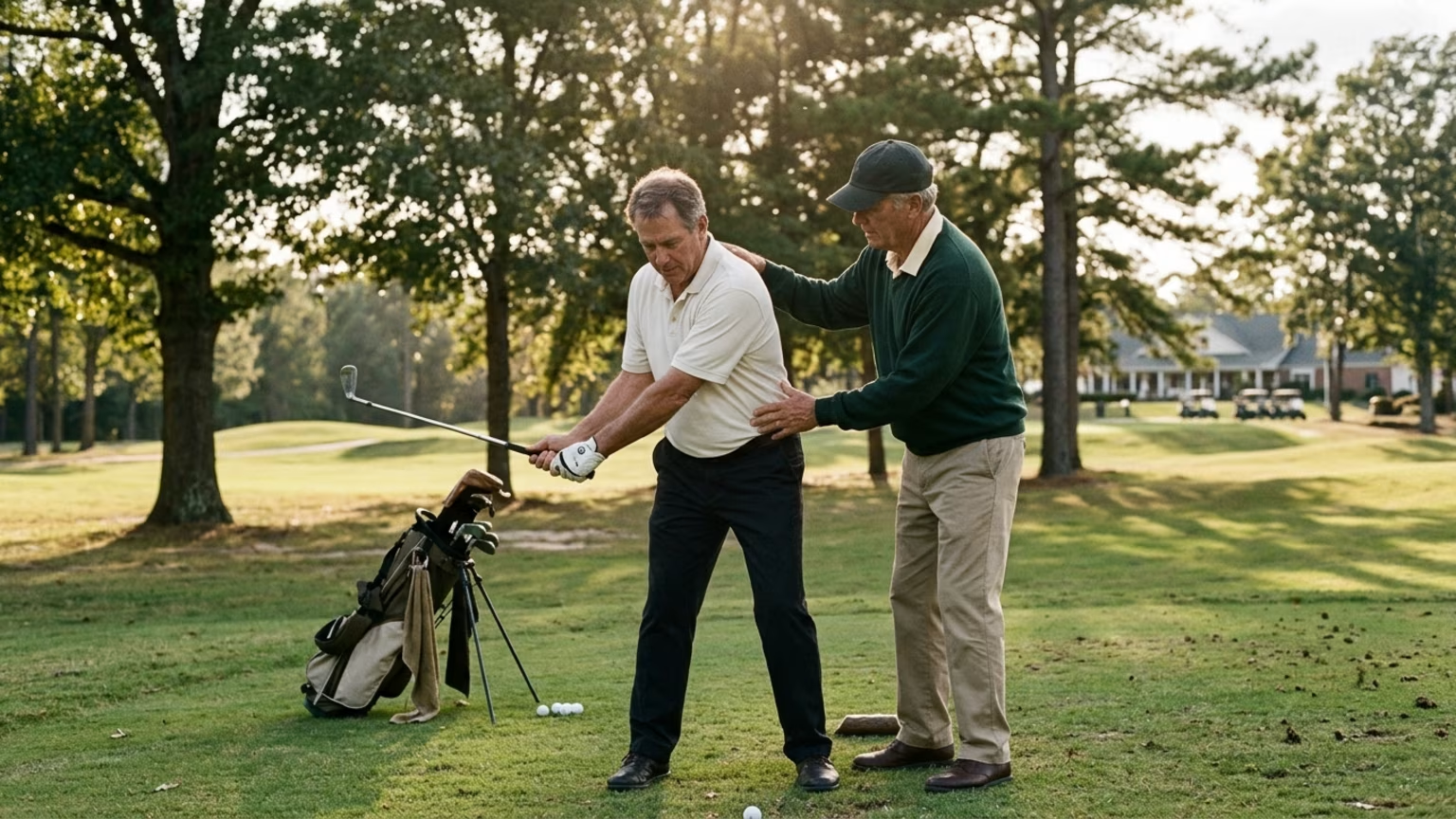
Learn how strength and power differ, what golf research reports about clubhead speed, and how older golfers can plan training around their own progress.




Combined strength and fast golf-specific training beat non-specific resistance training in reported average clubhead-speed gains: 4.1% versus 1.6%, according to a golf-fitness review summary.
That is a reason to separate strength from power rather than treat them as the same training goal. For an experienced recreational golfer, the useful question is how both fit into a plan that also respects mobility and control.
Strength is the capacity to produce force. Power involves producing force quickly. Moving a heavy load and generating force rapidly during a golf swing are related tasks. They are not the same task.
This distinction changes how you read progress. Handling more resistance is a strength result. Producing force more quickly concerns power. Clubhead speed is the golf outcome you are trying to influence.
The golf-fitness summary reports associations between clubhead speed and both upper-body and lower-body strength. It also reports links with explosive qualities. Jump impulse was the strongest association among the qualities it described.
The practical point is broader than any single test. A strength measure describes one part of your physical capacity. An explosive measure describes another part. Neither should be used as a different name for clubhead speed.
For Golfergy, that distinction fits a practical approach to playing better for longer: understand what each part of training is meant to contribute. A stronger golfer and a golfer who can produce force quickly are not automatically describing the same physical quality.
The same review summary reports average hitting-distance gains of 5.2% for combined strength and fast golf-specific movement. It reports 4.8% for non-specific resistance training alone.
Those distance figures sit closer together than the reported clubhead-speed figures. The combined approach had the larger reported average speed gain, but that difference should not be copied straight into a yardage expectation.
For planning purposes, keep speed and hitting distance as separate outcomes. The useful question is not just whether a training number improved. It is also what changed in your golf.
For golfers over 40, the relevant reference point is current ability rather than a young tour player's profile. The older-golfer research offers a more useful example of training in later playing years.
An account of a small eight-week trial in older male golfers reports that mean driver clubhead speed rose from 127.3 to 133.6 km/h in the exercise group. The control group did not improve. Training combined flexibility with core stability, balance and resistance exercise.
A separate account of the trial identifies participants as golfers aged 55 to 79. It reports improvements in strength, range of motion and clubhead speed.
The evidence has clear boundaries. Associations do not prove cause and effect, and group averages are not individual forecasts. The mixed program cannot isolate the contribution of strength or power. These summaries establish neither age-specific healthy targets nor a universal routine or a direct comparison with young tour players.
That leaves a useful message for mature golfers: a combined exercise approach has been studied in older men. Age provides context for planning. It does not need to become a formula for what your swing should produce.
The evidence supports a framework rather than a fixed workout. For a low-impact approach, ask a qualified exercise professional to help select appropriately scaled movements. Give strength, faster movement and physical control distinct jobs within the same plan.
Include resistance training as part of the broader golf-performance plan. Its purpose here is to develop the capacity to produce force. Keep attention on one chosen movement at a time rather than trying to work on several swing concerns at once.
For more on this starting point, read Golfergy's guide to building general strength before chasing speed.
Give faster golf-related movement a place alongside general resistance work. This reflects the combination associated with larger average speed gains in the intervention review summary.
Keep its purpose clear: this part of the plan concerns producing force quickly. It is a separate goal from handling more resistance. Ask the professional helping with your plan how to scale that element to your current ability.
Keep flexibility, core stability and balance in the discussion. These were components of the older-golfer program alongside resistance exercise.
That makes the study relevant to a broad physical preparation plan rather than a speed-only routine. Give each selected movement a clear focus. Work on that movement instead of trying to rebuild the whole swing during an exercise.
Golfergy's article on bringing strength and mobility together provides related reading on this approach.
Record your training and your clubhead-speed measurements. Compare later results with your own starting point rather than importing a published percentage into your goals.
Keep the training record and the golf outcome distinct. One records what you practised. The other records how your swing responded. Bring both into discussions about what to retain or adjust.
A realistic target starts with your current measurements. It does not start with a tour player's strength test or a younger golfer's speed reading.
Use separate reference points for the separate goals:
Discuss what meaningful progress would look like with the professional helping you. This keeps the target personal without turning age into an excuse or a performance deadline. Golfergy's guide to assessing strength and power for golf offers a related assessment-focused perspective.
The aim is a plan that fits your present ability and supports continued play. Matching a younger player's numbers is not a requirement. If pain or another health concern affects exercise choices, take those decisions to a qualified clinician.
Strength and power deserve separate attention because they describe different physical qualities. The research points toward combining general resistance work with faster golf-related movement while keeping mobility and control in the picture.
Your most useful comparison is the one between your starting point and your later response. That makes measurement a guide for steady training rather than a promise attached to a workout.
The numbers point toward a blend: build force, practise producing it quickly, and judge progress against your own starting line.
Follow Golfergy for practical insights on performance, mobility, recovery and healthy ageing. Stay connected for new articles, research-led guidance and ideas to help you play better for longer.


Strength and power play different roles in golf. See what research supports and how golfers over 40 can approach both without chasing yardage promises.


Look beyond a flexibility score with a practical guide to strength, power, mobility and balance, plus ways to track comfort, control and speed.

Build a comfortable golf turn around movement you can control, with practical observations and a coach-led approach for golfers over 40.
Explore practical resources on performance, recovery, mobility and golf longevity.
Read the Blog