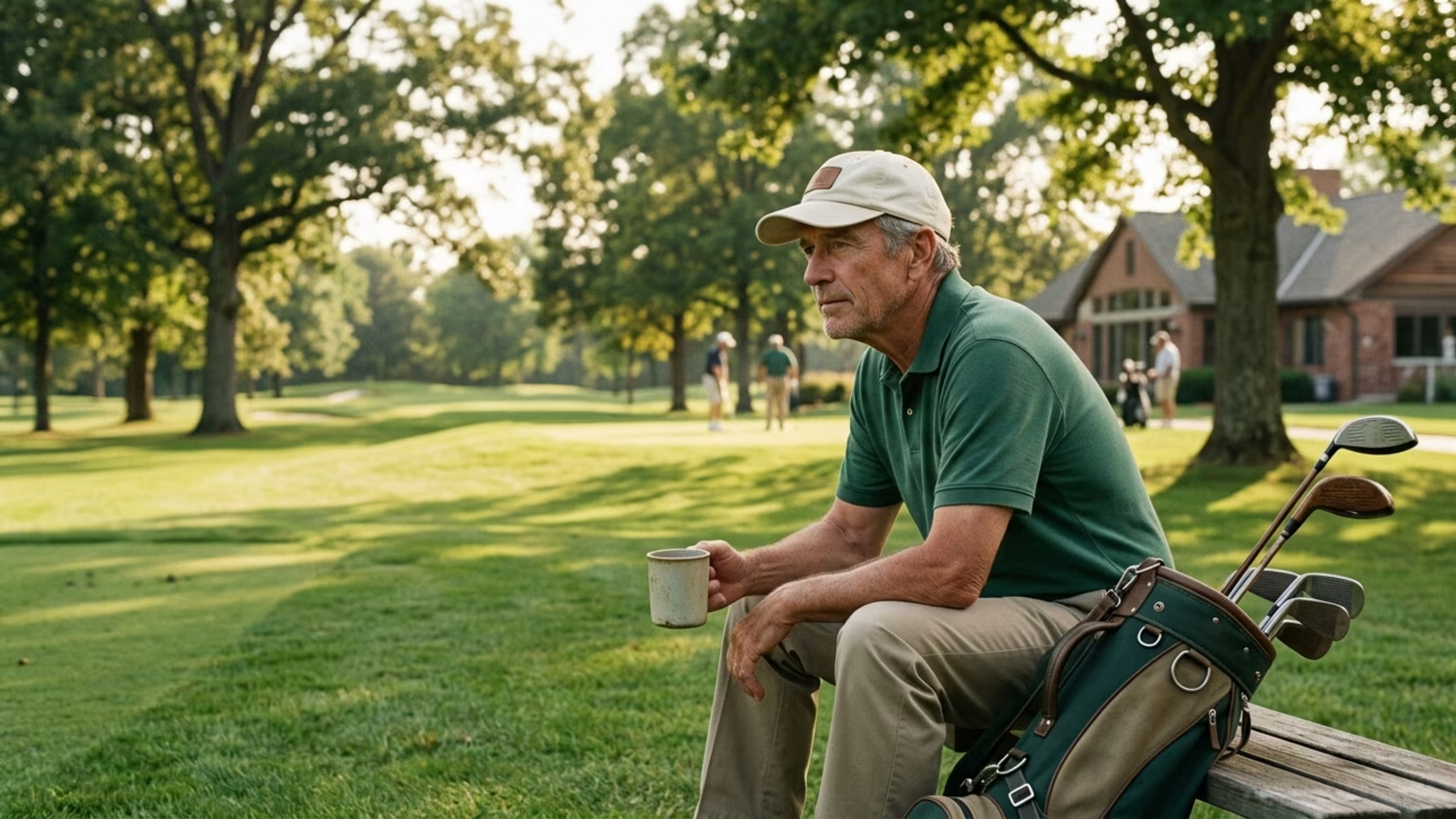

Golf.com detailed three pro-approved drills for better hip rotation. Learn how older golfers can adapt these sequencing exercises to protect their lower back.




On September 17 of 2026, Golf.com published an instruction feature detailing three coach-led drills. These drills focus on practicing rotation, transition sequencing and lead-hip clearance. The piece reports on a performance session involving PGA Tour player Rafael Campos and DP World Tour Q-School participant Ty Gingerich. Instructor Jackson Koert and trainer Kolby Tullier led the session.
The publication of this feature highlights a growing trend in golf media. The broader golf-performance discussion increasingly connects distance preservation with movement quality. Instructors are focusing on rotation, posture and balance rather than treating speed as an isolated hand action. This shift away from simple arm strength aligns perfectly with healthy aging strategies for senior players.
While the feature focuses on high-level players, the concepts apply to everyday recreational golfers. Many older players struggle to maintain their distance as their bodies change. The Golf.com session highlights specific mechanics that can help players make the most of their remaining mobility. By focusing on how the body sequences movement, older players can find more speed safely.
The physical mechanics of a powerful golf swing require precise timing and control. A proper backswing involves loading energy into the trail leg. The golfer must then learn to brake the rotation rather than simply continuing to turn. Golf.com describes the desired sensation at the top of the backswing as the lead shoulder moving over the trail foot while maintaining a stretch.
This braking action acts as a trigger for the downswing sequence. When the lower body stabilizes, it creates a firm foundation for the upper body to rotate against. The lead hip must then move around and back to create space for the arms. If the golfer fails to clear the lead hip, they tend to pitch forward toward the ball.
This movement fault disrupts balance and costs the player significant clubhead speed. Proper sequencing protects the vulnerable joints of the lower back, since the spine avoids bearing the entire rotational load. A golf-performance source identifies rotation, posture and balance as key mobility elements. These elements help players maintain swing-plane control and create a longer swing arc.
Golfers over 40 face a significant risk of mobility loss as they age. We lose natural thoracic and hip rotation over time from daily habits and less active lifestyles. When older players try to replicate the massive turns of elite professionals, they often over-stress the spine. Trying to force a young player's turn with an older body is a recipe for back pain.
GolfTEC provides specific guidance for players experiencing this physical decline. Their instruction suggests that older golfers might need to modify their fundamental setup. Changing your stance width or adding foot flare can give your hips more room to turn freely. Altering your trail-knee movement during the backswing also reduces lower back tension.
The saddest thing I see in golf is watching lifelong playing partners slowly drop out of our weekend group. It usually starts with a nagging shoulder or knee issue they ignore until it requires surgery. That pattern is exactly why our team became obsessed with golf longevity. We do not have to stop playing as we age. We just need to do the right maintenance work between rounds to protect our joints.
When older players lose hip mobility, the lower back instinctively compensates. The lumbar spine is designed for stability, not massive degrees of twisting. Forcing a stiff body to turn past its comfortable limit leads to tissue strain. This physical reality makes proper sequencing much more critical for recreational seniors than for flexible touring professionals.
The Golf.com feature presents three practical exercises that you can adapt for safer movement. The first exercise is the assisted and resisted rotation drill. You cross your arms over your chest while a strap provides assistance in one direction. The strap then provides resistance in the opposite direction. This tension helps you feel how to load the trail leg and brake the turn safely.
The second movement uses a strap or resistance band to pull the golfer toward the target during transition. A partner holds the band to provide light tension. This encourages the lead hip to move before the hands or shoulders. It is a fantastic way to maintain your swing velocity without increasing your effort.
The band tension makes sequencing errors immediately perceptible. A 2026 systematic review reported improved balance-related test performance after elastic-band training in older adults with sarcopenia and obesity. The authors rated the certainty of this evidence low to very low. You should approach band-based golf drills with caution and keep the resistance light.
The third adjustment is the electric fence drill. You place a soft foam roller or alignment stick just in front of your hips during slow-motion downswings. You must move your lead hip around and back to create space without contacting the obstacle. Touching the roller provides instant feedback that you have pitched forward or spun out.
This spatial awareness helps you develop better lower-body mechanics for joint safety. You should treat these as movement-awareness exercises first. Begin with slow, low-effort rehearsals so you can identify which body part initiates the transition. A golf-rehabilitation progression paper recommends changing only one workload variable at a time.
Do not increase your swing count, swing effort and resistance in the same session. If you experience sharp pain or radiating symptoms, you must stop the drill immediately. These drills are instructional ideas, not clinical treatments for spinal injuries. Older golfers should individualize the movement and avoid forcing a full, painful turn.
You can pair this practice with broader mobility work to build a stronger abdominal foundation for rotational power. A golf-injury-prevention source recommends adding active mobility and core-stability exercises to your weekly routine. These include thoracic-rotation, hip-rotation and anti-rotation movements. Building this physical foundation prepares your body for swinging aggressively over the long haul.
A common misconception is that effective braking means stopping completely at the top of the swing. Many players think they should pause and wait for their arms to drop. The Golf.com instructor argues that energy actually comes up through the ground. The transition should be a loaded, controlled movement rather than a static pause.
Another frequent error involves starting the downswing instinctively with the hands and club. When players do this, they cast the club early and lose their stored power. The sequence-isolation drill corrects this false start by forcing the hips to move first. Rehearsing these transitions slowly will train your body to sequence the swing safely.
Some players believe that more resistance automatically equals more power. Using excessive band tension or an aggressive partner pull can make the movement less controlled. The goal is to notice what leads during the transition, not to test your maximum strength. Using just enough external force to create awareness is the safest approach for seniors.
Protecting your spine requires an honest assessment of how your body currently moves. These pro-approved drills offer a framework for better hip clearance, but they require patience and slow rehearsals. What adjustments will you make to your mobility routine this season to steer clear of this hazard?
Follow Golfergy for practical insights on performance, mobility, recovery and healthy ageing. Stay connected for new articles, research-led guidance and ideas to help you play better for longer.


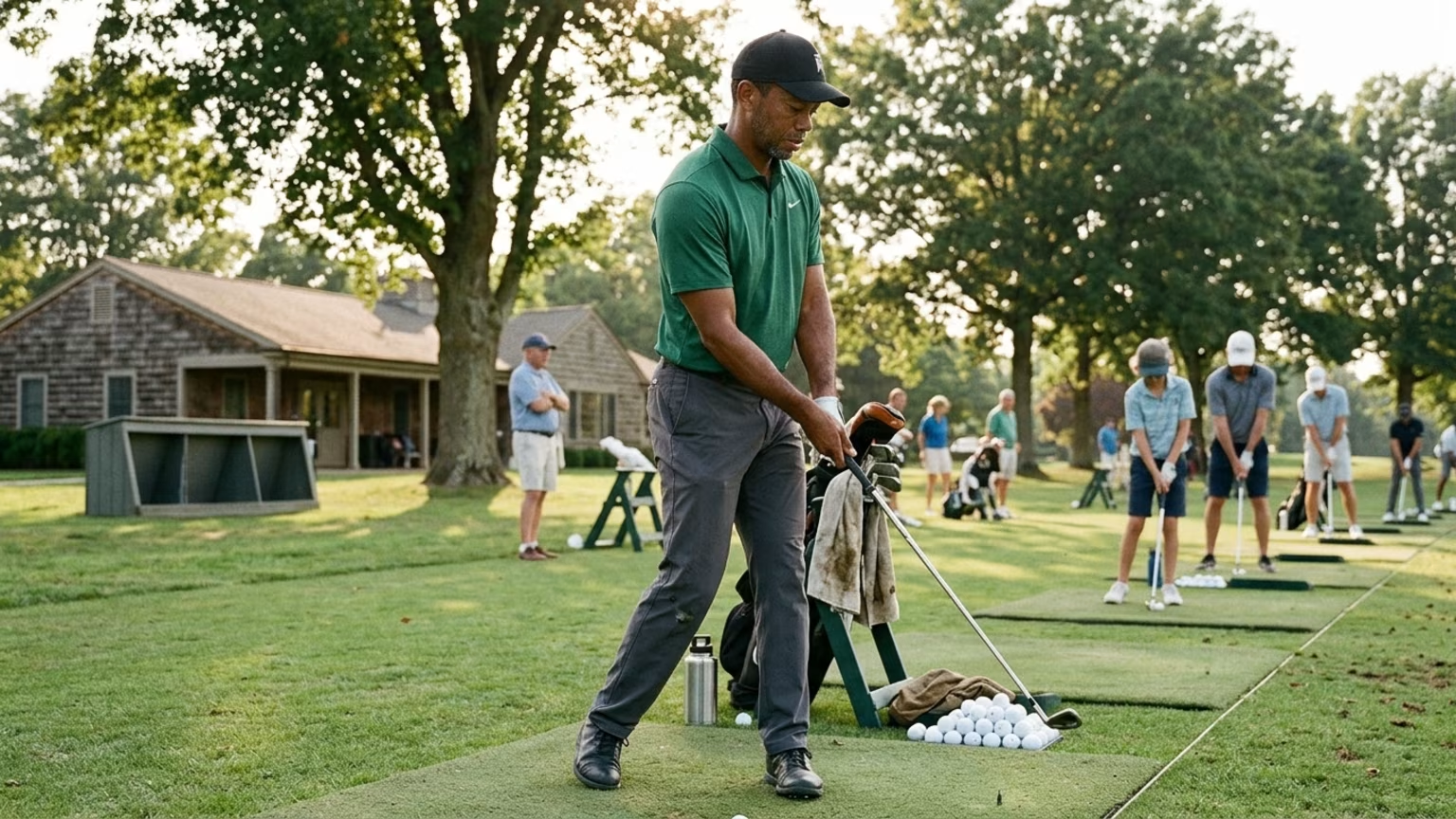
Tiger Woods returning to the practice range highlights the difference between hitting balls and full-round readiness. Learn why mature golfers must pace recovery.

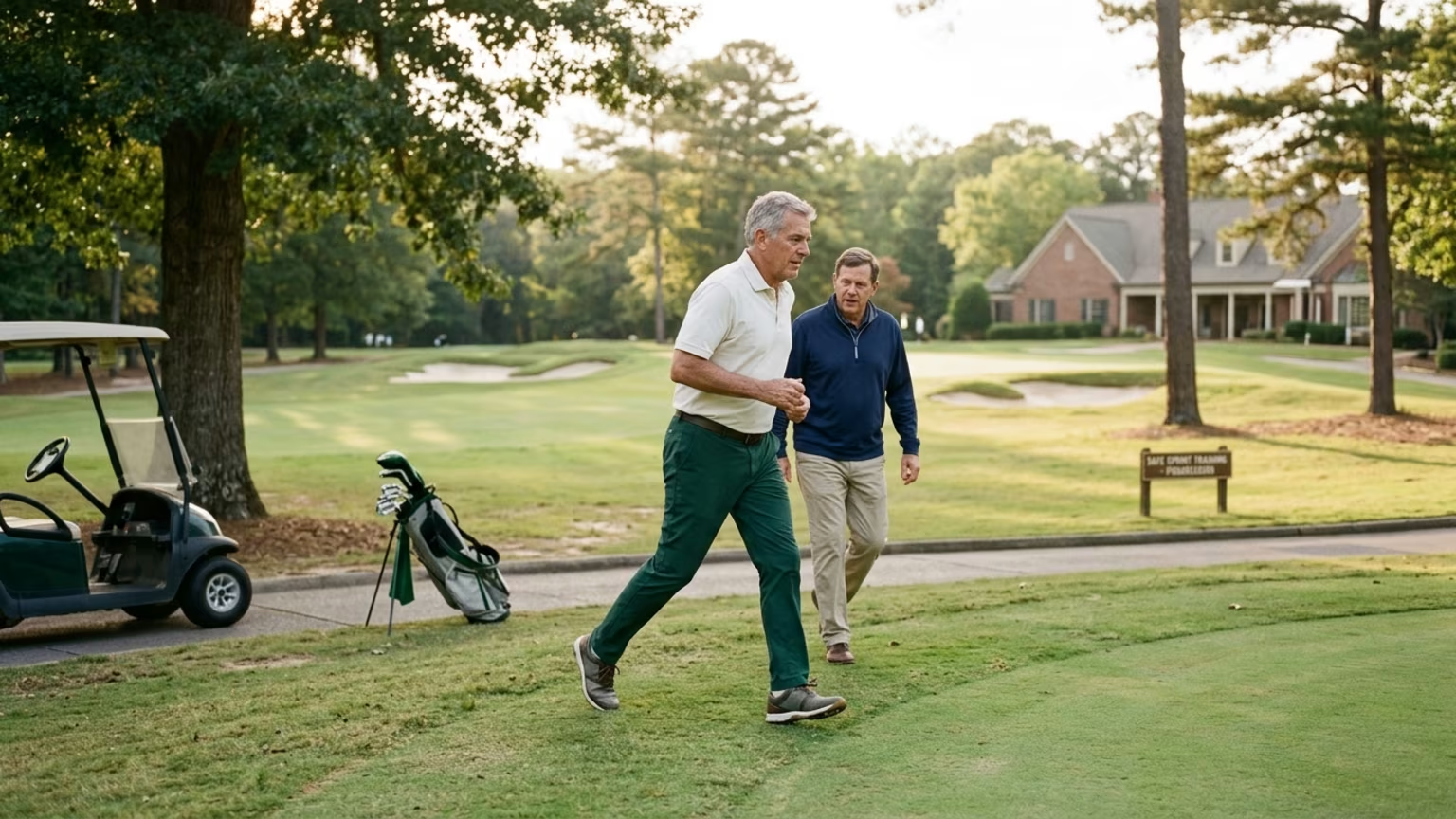
Older golfers can safely build explosive leg power using P4S Golf's guided sprint progressions, dynamic mobility routines, and lower-impact fan bike workouts.
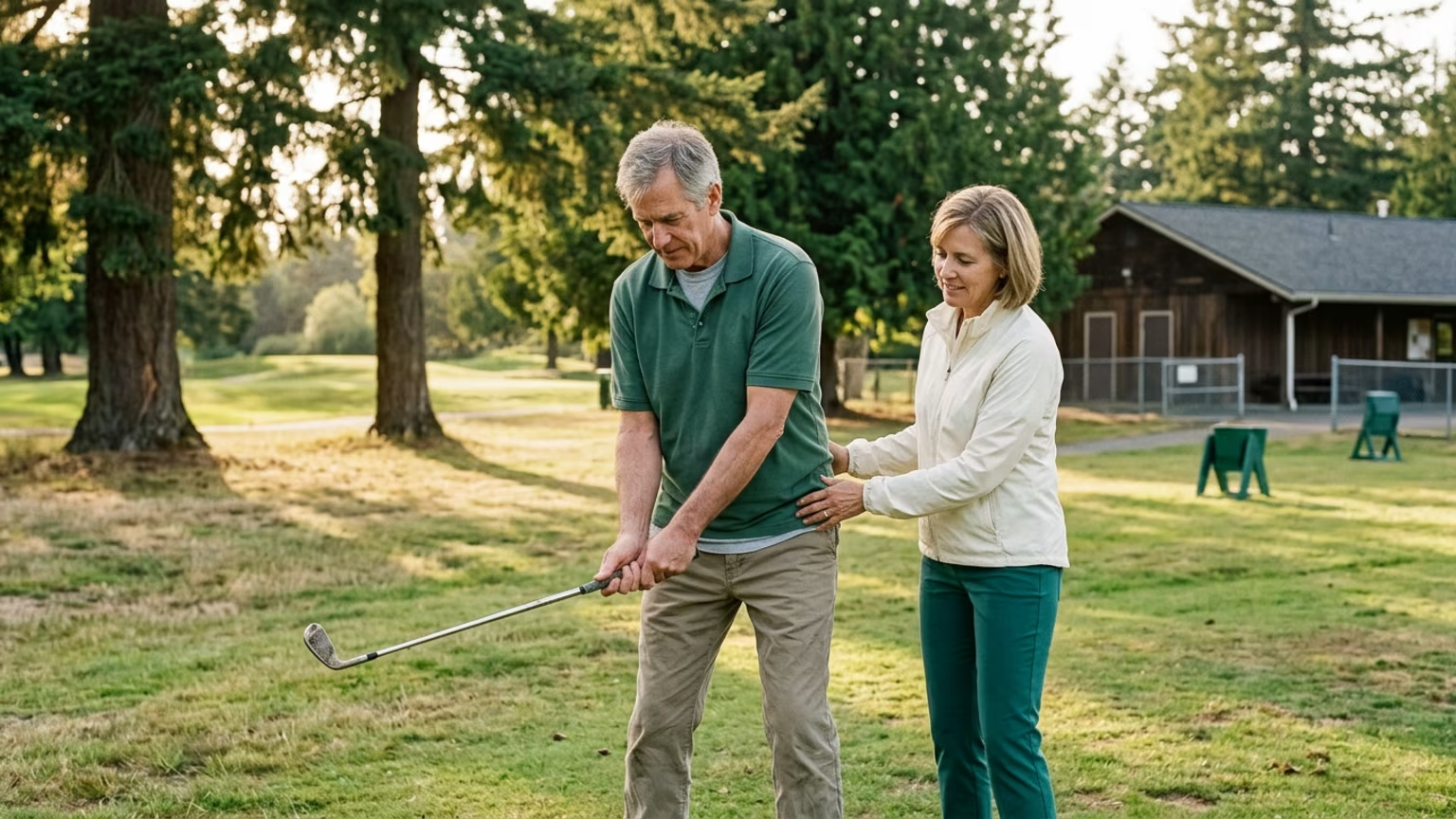
Learn how proper pelvic rotation can protect your back and knees. We review WatchItGolf's recent biomechanics data and share drills for a safer swing after 40.
Explore practical resources on performance, recovery, mobility and golf longevity.
Read the Blog