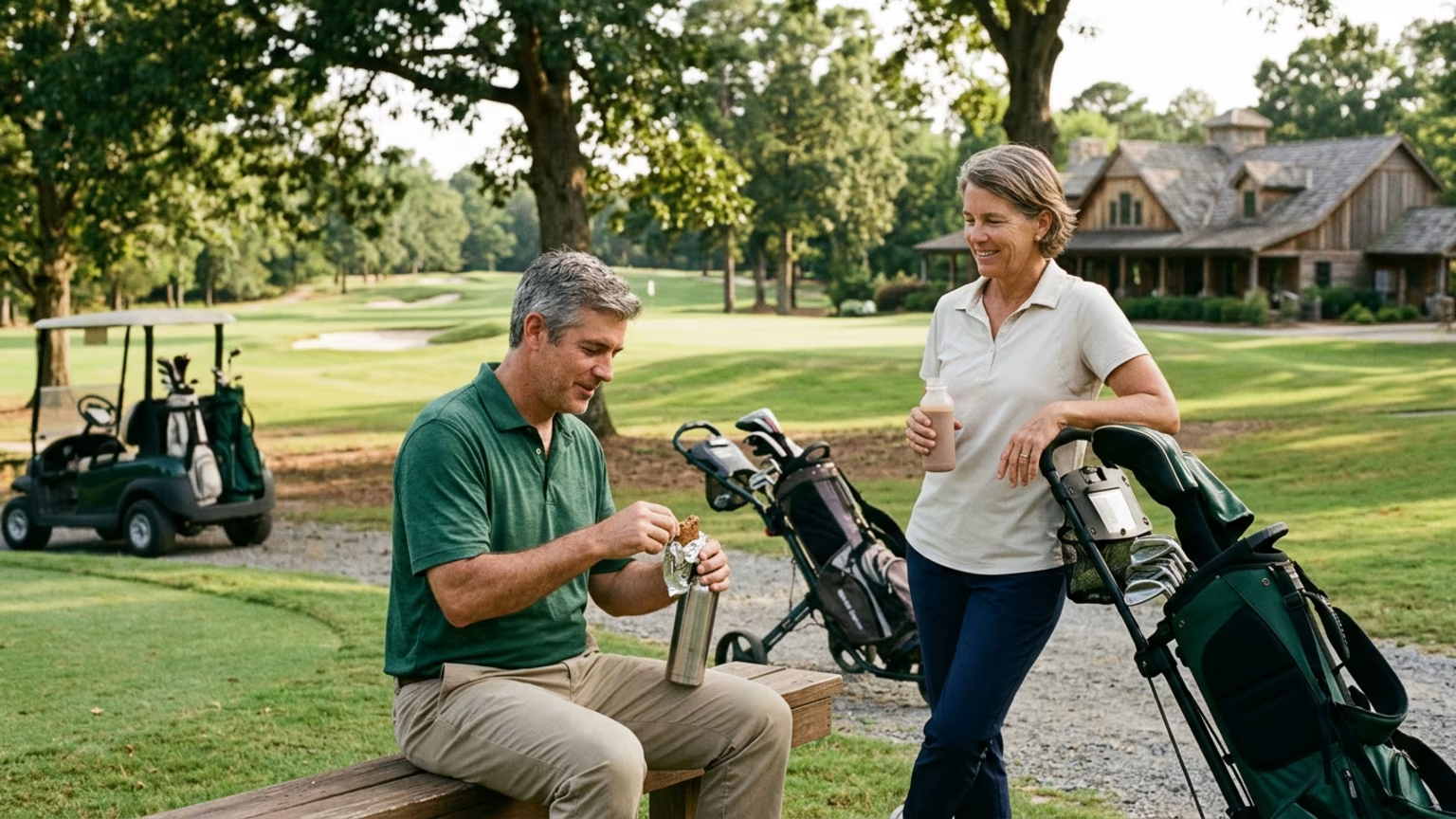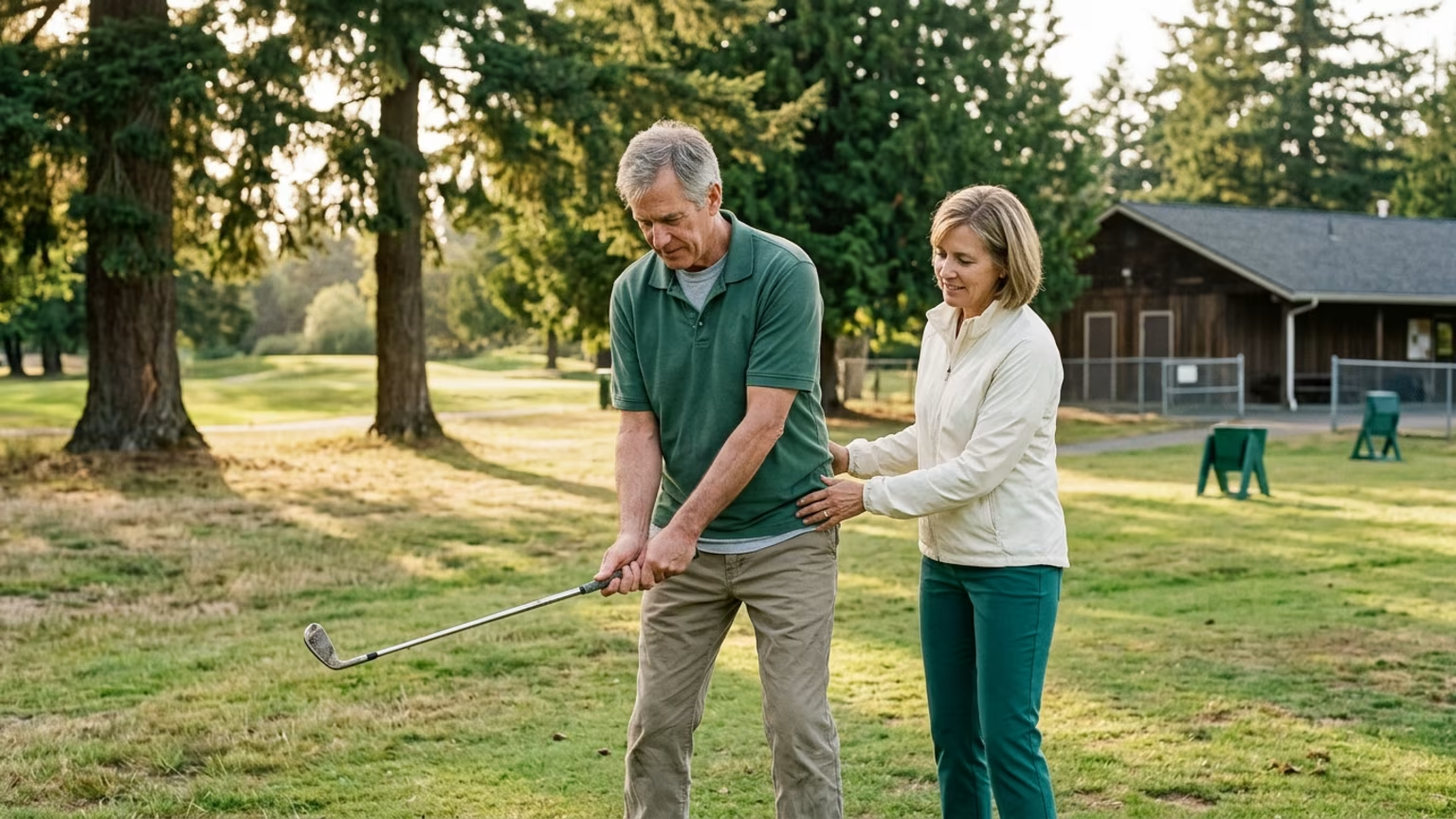

Learn how proper pelvic rotation can protect your back and knees. We review WatchItGolf's recent biomechanics data and share drills for a safer swing after 40.




On September 13, 2026, when WatchItGolf published "The Pelvis Paradox: Why Your Hips Are the Secret to Golf Power (and Why You’re Using Them Wrong)" on the eCoach360 website, the article sparked a fresh conversation about swing mechanics. The feature challenged the common advice to restrict the lower body to build tension. Instead, it presented the pelvis as a dynamic engine that should dictate the sequence of the swing. The piece focused on how proper rotation creates speed, but poor timing can easily lead to chaos.
WatchItGolf describes a common technical error known as the Pelvis Paradox. Many players believe a quiet lower body creates more torque by separating the hips from the shoulders. The article argues that excessive restriction actually limits a player's available rotation. The pelvis should instead function as a dynamic engine to power the entire motion.
The swing should follow a clear sequence of Turn Away, Change Direction, Open, and Rotate Through. WatchItGolf promotes a proximal-to-distal sequence where the lower body begins the movement, and the torso follows to transfer energy. The main instruction in the feature is simply to let the pelvis turn. This rotation must occur around a vertical axis through the center of the body.
Players often make the mistake of swaying laterally, sliding, or thrusting toward the golf ball. A stable turn transfers energy efficiently through the arms and club without requiring violent effort. During the downswing, the pelvis should initiate the movement, accelerate, and then begin to decelerate before impact. This deceleration transfers angular momentum to the arms and clubhead for maximum efficiency.
The WatchItGolf piece provides specific high-level swing data to illustrate this movement. It notes that the pelvis may reach approximately 48 degrees closed before the club reaches the top of the backswing. The lower body then moves back toward the target to roughly 45 degrees closed when the hands finish their path. This roughly three-degree change is a crucial timing marker showing that the lower body has started its transition.
At impact, the article reports tour-data averages of approximately 41 degrees open for men and 52 degrees open for women. Elite players often reach more than 100 degrees open at the finish line of the swing. These numbers show just how much rotational capacity professional golfers possess. The publication rejects the idea that a golfer should simply try to reproduce their address position at impact.
The article warns that a player's perceived feel and their measured movement can differ substantially. It gives the example that a golfer may feel a 45-degree turn while actually producing only 20 degrees of rotation. To catch these flaws, WatchItGolf recommends examining specific swing frames. Players should review their address, maximum backswing turn, the top of the swing, and their impact position.
Golfers over 40 face unique risks when trying to replicate these exact professional angles. The WatchItGolf article does not specifically address older golfers, age-related mobility loss, or medical history. Attempting to force the hips to an open impact position can easily strain the lower back or knees. Recreational players must balance the desire for power with the reality of an aging body.
A separate evidence summary discussing golf biomechanics notes that a 2023 systematic review found no conclusive evidence that low-back pain is associated with poor golf swing technique. An amateur study did show that players with existing back pain had roughly seven to ten degrees less lead-hip internal rotation. It is not clear whether the restricted motion caused the pain or was simply the body guarding an existing injury. Understanding this balance is critical for safely mastering pelvic tilt and rotation.
Pushing past your natural range of motion rarely translates to better scores on the scorecard. The WatchItGolf piece explicitly warns that poorly timed hip movement can create a disconnected swing and a chaotic club path. More speed does not help if the clubhead cannot find the ball efficiently. The goal is a comfortable turn rather than maximal spinning.
To build a safer motion, WatchItGolf recommends a simple exercise called the Horizontal Club Drill. Place a club horizontally across your pelvis and hold it firmly against your hip bones. Focus entirely on moving the trail hip back and around during your backswing. On the downswing, rehearse moving the lead hip back and around without sliding your weight laterally.
This low-speed awareness exercise helps separate clean rotation from poor lateral movement. Proper preparation before the first tee is equally vital for executing this movement safely. I used to stand on the first tee doing long, static hamstring stretches because I thought it was the right way to warm up. I would actually feel weaker on my first drive, and my hips felt incredibly sluggish.
While I used to think those static stretches primed my muscles, I now realize they did nothing to prepare my pelvis for rotation. Changing my five minute warmup to include dynamic hip turns completely transformed my opening tee shots. A sensible warm-up should raise your body temperature while moving the shoulders, thoracic spine, and hips comfortably. This gradual approach is critical for reversing the effects of sitting for better weekend rotation.
A common misconception is that a flawed swing directly causes all lower back pain. Many players try to push through soreness in pursuit of the perfect pelvic turn. Since the 2023 systematic review found no conclusive link between poor swing technique and back pain, chasing aesthetic perfection is an unnecessary risk. Pain is a clear warning signal rather than a technical hurdle to conquer.
If you are returning from a layoff, rushing back to full speed is a mistake. Taking a slow approach helps your body adapt to the demands of the golf swing again. Building better hip mobility to protect your swing and joints takes patience rather than forced effort. Modifying your practice sessions prevents unnecessary strain on an aging body.
The saddest thing I have seen in golf is watching lifelong playing partners slowly drop out of our weekend group. It usually starts with a nagging shoulder or knee issue they ignore until it requires surgery. That pattern is exactly why I became obsessed with golf longevity. We do not have to stop playing as we age, provided we do the right maintenance work between rounds.
What adjustments will you make to your mobility routine this season to steer clear of this hazard?
Follow Golfergy for practical insights on performance, mobility, recovery and healthy ageing. Stay connected for new articles, research-led guidance and ideas to help you play better for longer.



Compare static stretching against dynamic movement for older golfers. Learn why active motion prepares your golf swing while static holds belong post-round.

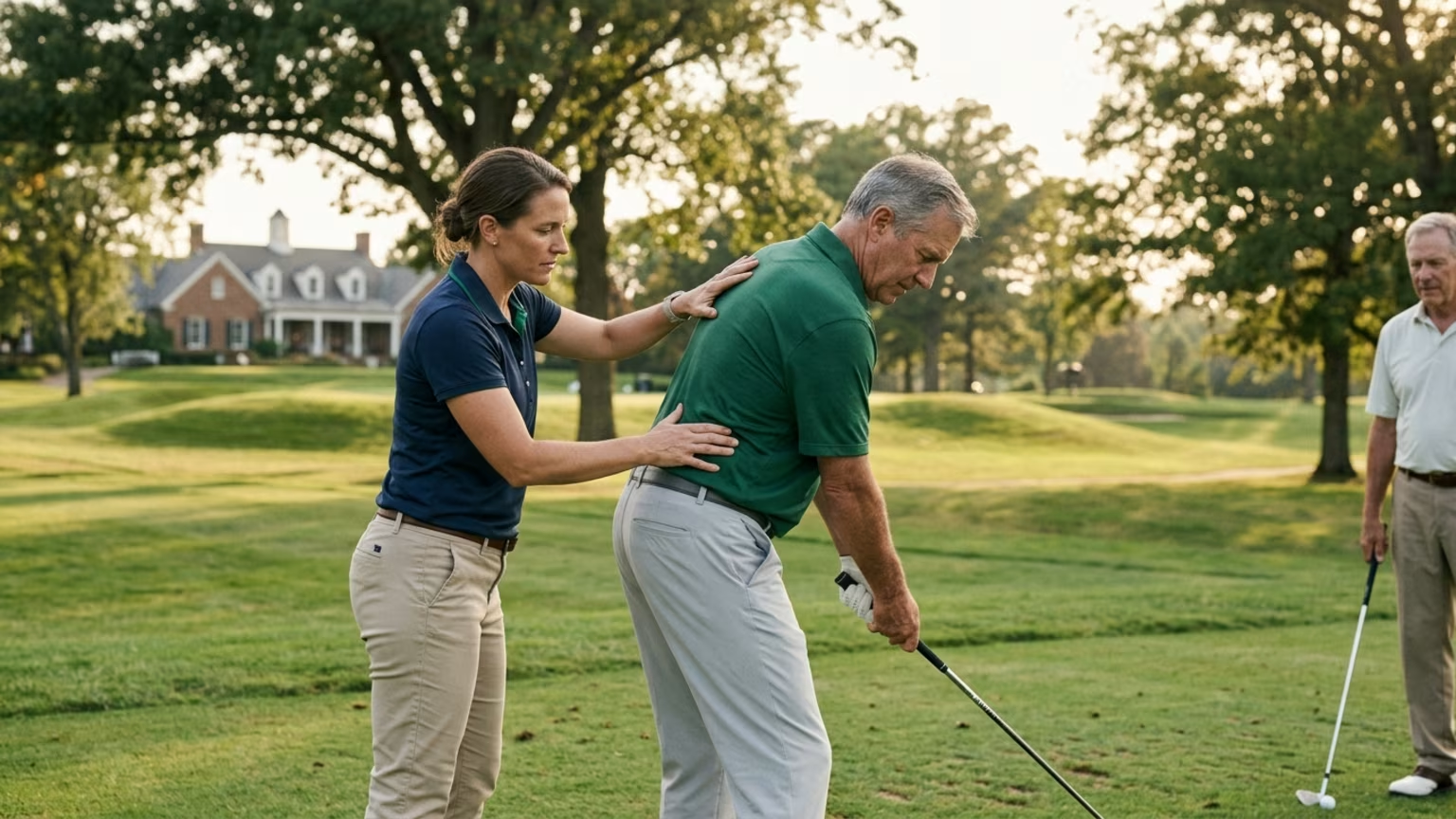
Learn how coordinating your hips, pelvis, thoracic spine and shoulders creates a safer golf rotation and protects your lower back as you age.
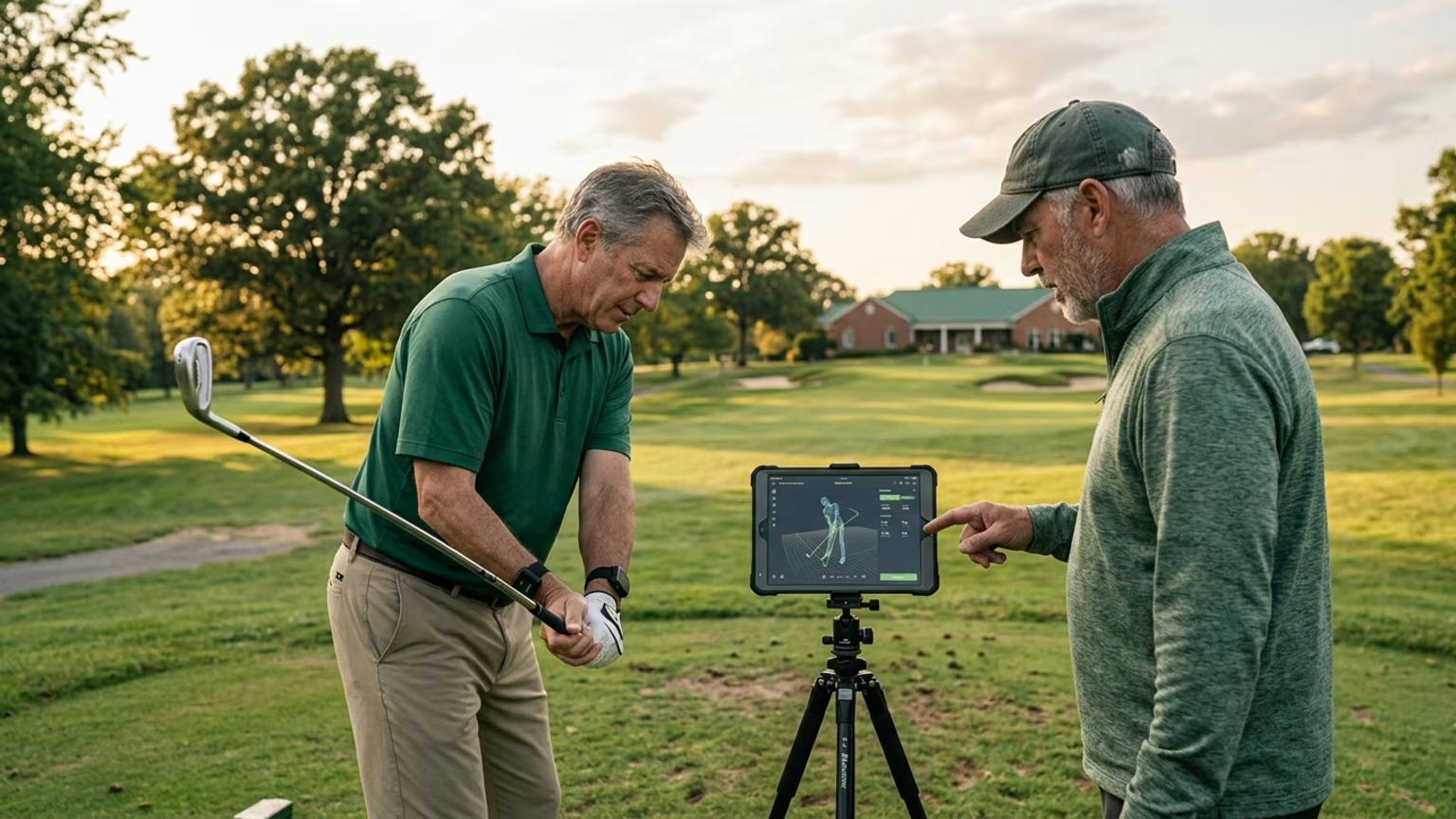
A new Alita and Fujitsu AI motion tracking system debuted at ISS 2026. Learn how camera-based analysis helps older golfers identify restricted swing mechanics.
Explore practical resources on performance, recovery, mobility and golf longevity.
Read the Blog