
Discover how physical activity fragmentation acts as a digital biomarker for functional decline in older golfers, and learn practical adjustments to stay active.




In 2026, researchers published article glag177 in volume 81, issue 9 of the Journals of Gerontology: Series A Biological Sciences and Medical Sciences. The paper examined physical activity fragmentation among older adults. It looked closely at the frequent transitions from active movement to sedentary periods. The goal was to see if these frequent stops are associated with physical function and subsequent functional decline over time.
Activity fragmentation describes how often a person stops moving and sits down. The study defined it as the probability of transitioning from an active bout to a sedentary bout. Researchers measured this pattern using wrist-worn actigraphy. In plain terms, it means taking many short trips instead of walking continuously for a longer duration.
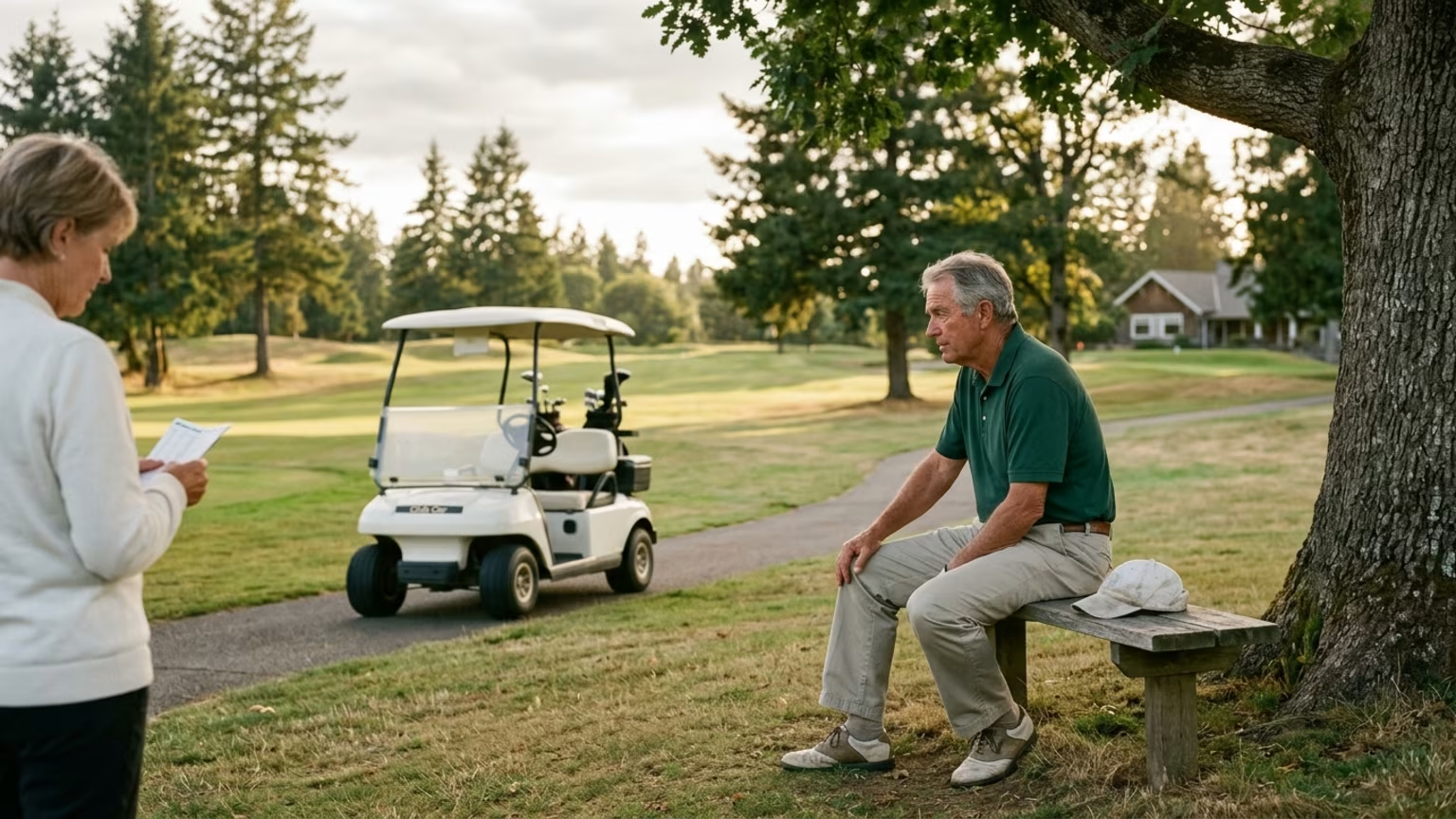
For a golfer, this pattern might look like walking to the cart, driving to the ball, and standing still. It is a very stop-and-start way of moving across the course. A continuous walk provides a different physical stimulus to the body. Frequent stops change the mechanical demands placed on your legs and cardiovascular system.
When you walk without stopping, your muscles and joints establish a steady rhythm. This rhythm requires muscular endurance and consistent joint lubrication. Breaking activity into tiny pieces removes the endurance requirement. It allows the body to complete physical tasks without maintaining a prolonged effort.
The analysis included 531 participants aged 70 or older. In this group, 55.4% were women. Physical function was assessed with the Short Physical Performance Battery. This is a commonly used measure of lower-extremity function and mobility.
The clearest prospective association involved participants with baseline scores of 6 or lower. In this group, higher baseline activity fragmentation was associated with poorer baseline function. For every 10% increase in baseline activity fragmentation, the adjusted odds of a one-year future decline were 1.32. The 95% confidence interval for this finding was 1.01 to 1.72.
The researchers also found a concurrent association for participants with baseline scores of 7 to 10. A one-year increase in activity fragmentation was associated with a greater likelihood of a concurrent decline in scores for this group. The odds ratio was 2.21, with a 95% confidence interval of 1.17 to 4.17.
These numbers offer a specific look at how movement patterns relate to physical capability. They suggest that the way we distribute our physical activity matters deeply. The authors described activity fragmentation as a possible digital biomarker rather than a proven cause of functional change. Monitoring this metric could help identify individuals who might benefit from earlier physical intervention.
As players age, they often face pain or fatigue that alters their movement habits. A player might start taking a cart more often or resting more between shots. These choices naturally increase the stop-and-start nature of a round. This shift makes mature amateurs highly vulnerable to changing movement patterns.
A 2026 study of sensor-based activity features adds context to this risk. The researchers reported that lower activity volume was associated with prefrailty or frailty. Lower cadence, sedentary accumulation, and lower inter-day stability showed different relationships depending on the frailty definition used. This shows that the total amount of movement is not the only factor in managing the aging shift in physical capacity.
Older adults lose functional mobility when they stop placing sustained demands on their bodies. Short bursts of walking do not require the same endurance as a continuous loop. Over time, relying entirely on fragmented movement can mask a slow loss of physical capability. This hidden loss leaves players less prepared for the physical stress of a full round.
Observing your own habits can help you spot early signs of physical trouble. You can use wearable devices to monitor whether your practice sessions are becoming shorter or more interrupted. If you notice a persistent change from your personal baseline, you can take action. Finding these patterns early gives you a chance to adjust your training routine.
The most practical adjustment is to preserve some continuous walking when appropriate. Try to maintain a continuous pace during your warm-up or while playing a few holes. Focus entirely on walking smoothly without stopping unnecessarily. This simple habit helps maintain your tolerance for sustained aerobic activity over the long term.
You should also complement your walking with specific exercises to maintain your functional physical capacities. For adults aged 65 and older, World Health Organization guidance recommends combining aerobic activity with muscle-strengthening exercises. They also recommend multicomponent activity emphasizing functional balance and strength. A walking round of golf can contribute to the aerobic component of this recommendation.
To support your golf game, add targeted movements off the course. Practice sit-to-stand exercises to make getting up from benches easier. Work on calf and ankle strength to handle uneven terrain safely. These exercises provide the physical foundation needed to keep playing well.
It is a mistake to assume that all short bouts of activity are harmful. The study evaluated a pattern associated with function, but it does not prescribe that all activity should be long or continuous. The one-year change in fragmentation was not associated with a score decline during the following year. For older players with pain or medical limitations, taking rest breaks might be the safest way to play.
Another misconception is that consumer fitness trackers provide flawless medical data. A recent wearable-validation study found that step-count error in one consumer device varied meaningfully. The accuracy changed according to walking-bout duration and gait speed. These tools should be viewed as trend monitors rather than precise diagnostic devices.
Finally, do not assume that a round of golf fulfills every fitness need on its own. A randomized crossover experiment involving 25 healthy older golfers compared an 18-hole walking round with a 3.7-mile Nordic walk and a 3.7-mile conventional walk. All three activities lowered systolic blood pressure immediately afterward in that study. The golf condition also produced favorable short-term differences in glucose and some lipid measures compared with the shorter walking conditions.
While these benefits are real, they are acute responses rather than long-term cures. Golf provides great aerobic exercise, but it does not replace the need for improving balance and staying steady on the course. You still need dedicated strength and mobility work to stay healthy.
Monitoring your activity habits is a practical way to take control of your physical health. Small changes in how you move can offer valuable clues about your current capabilities. Staying aware of these trends allows you to adapt your routine before small limitations become major hurdles. Taking action early keeps you moving smoothly across the fairways for years to come. What adjustments will you make to your mobility routine this season to steer clear of this hazard?
Follow Golfergy for practical insights on performance, mobility, recovery and healthy ageing. Stay connected for new articles, research-led guidance and ideas to help you play better for longer.


A flexible training framework for golfers over 40 that makes room for strength, balance, mobility and aerobic activity alongside play.


See how balance fits alongside strength and coordination in golf, with a supported practice example and a clear look at the evidence.

A practical strength framework for golfers over 40, built around everyday goals, sensible progression and a careful look at limited golf research.
Explore practical resources on performance, recovery, mobility and golf longevity.
Read the Blog