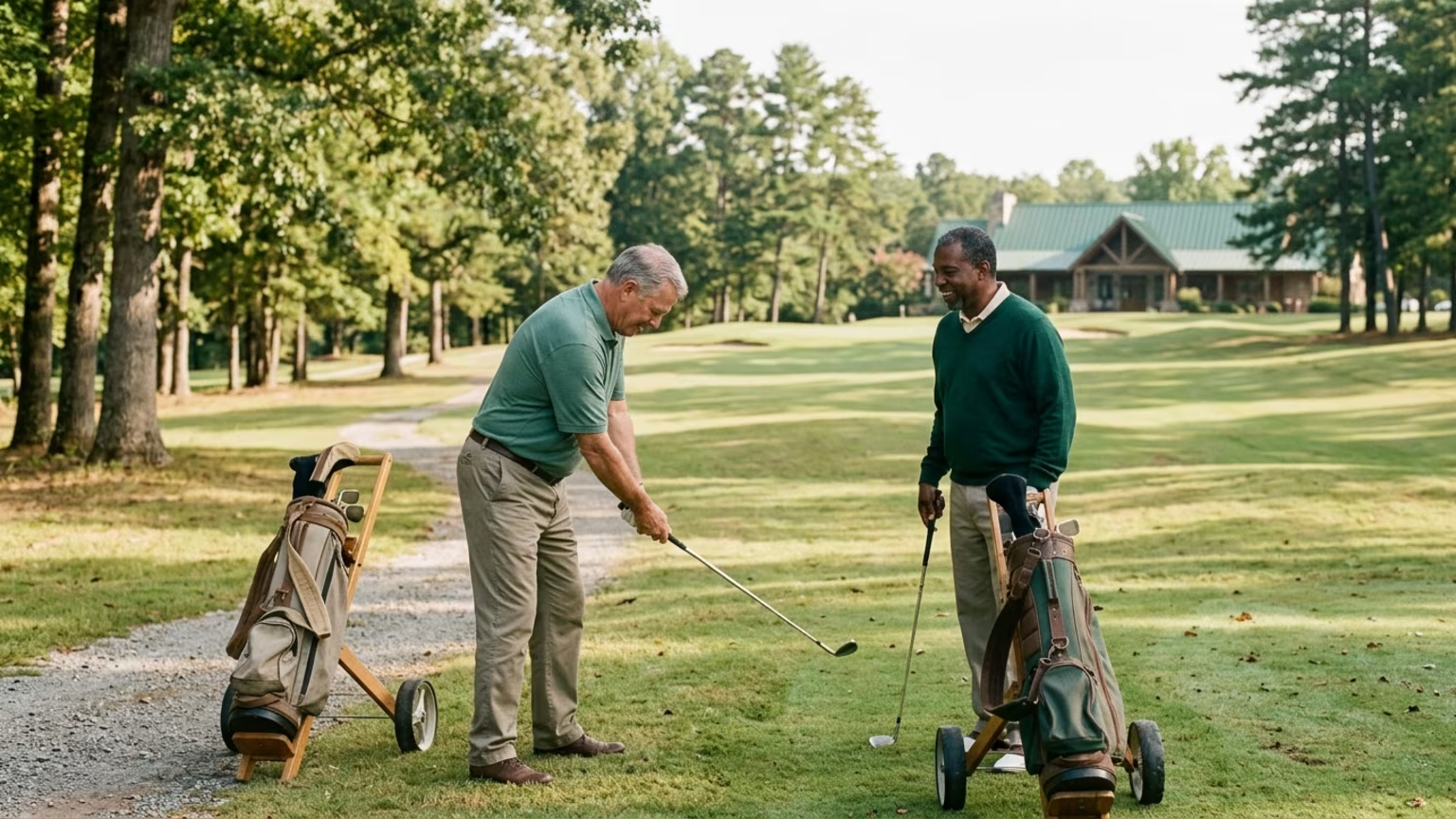
Learn how to apply GolfWRX's five pillars of fitness to protect your senior golf swing, improve mobility, and stay on the course longer without injury.




On September 10, 2026, GolfWRX published an article presenting golf fitness as a five-part framework. The article highlights flexibility alongside strength and power. It also names posture, core stability, and cardiovascular fitness as core pillars. Reading about this structured physical framework reminded me of a familiar pattern on the course. The saddest thing I have seen in golf is watching lifelong playing partners slowly drop out of our weekend group.
It usually starts with a nagging shoulder or knee issue they ignore until it requires surgery. That pattern is exactly why I became obsessed with golf longevity. We do not have to stop playing as we age, provided we do the right maintenance work between rounds. Golf fitness is not just for young athletes on television. It is the practical toolkit that keeps everyday players walking the fairways without wincing in pain.
The first pillar of the GolfWRX framework defines flexibility as the range of movement around a joint. The article links this directly to the ability of muscles and tendons to elongate. A repeatable golf swing requires more than just decent club path technique or perfect grip pressure. It relies heavily on usable movement across several major joint complexes. Golf-focused mobility guidance commonly identifies the hips, thoracic spine, and shoulders as key areas.
These specific regions contribute directly to rotation through the entire swing. Restricted movement in one part of your body will encourage compensation elsewhere. If your upper back cannot turn effectively during the backswing, your body will seek rotation in other places. One golf-flexibility source specifically warns that limited thoracic rotation can shift movement demands toward the lumbar spine.
Your lower back is built primarily for stability rather than deep twisting motions. When your lumbar spine takes on the rotational work of a stiff upper back, you risk severe strain. A performance-training source breaks down how these regions support the swinging motion. Hip mobility supports a smooth backswing and follow-through.
The biomechanics of golf demand extreme force production from a stable base. If you cannot rotate your hips completely, your arms must work harder to generate clubhead speed. This extra arm movement disrupts the natural sequence of the swing. The result is often a steep downswing and poor contact.
Thoracic and shoulder flexibility support a consistent swing plane. Core stability then helps transfer force safely between the lower and upper body. Clinical exercise guidance agrees that golf requires coordinated strength and mobility. The game also demands balance and control through your upper body, hips, core, and legs.
Many recreational players over 40 assume they are safe from injury because they swing slower than tour professionals. This is a dangerous misconception for everyday players wanting to enjoy the game. Older golfers face significant physical risks because they often lack the foundational strength to manage their swing safely. The GolfWRX framework shows that flexibility is only one single piece of a larger physical puzzle.
A mobility-only program might miss the strength, stability, balance, and endurance required to repeat a swing comfortably. A separate golf source provides a helpful way to distinguish flexibility from mobility. Flexibility is presented simply as your available range of motion. Mobility is defined as the ability to control movement through that available range.
You might have enough passive flexibility to reach the top of your backswing. But lacking the muscular strength to control that position during a fast swing can cause serious joint stress. Mature golfers without a robust core are vulnerable to injury on every single tee box. It takes substantial physical strength to decelerate the club safely after impact.
Assessing your strength and balance framework is a smart move before trying to add swing speed. Without control over your flexibility, your joints absorb forces they are not designed to handle. A slow swing with poor mechanics can be just as damaging as a fast swing over time.
Building a preventative routine means taking active steps to improve movement quality daily. A golf-mobility guide recommends targeting the thoracic spine, hips, and shoulders directly. Relying solely on a quick pre-round stretch on the first tee is simply not enough preparation. To protect your body, you should focus on regular, structured mobility work throughout the week.
Keep instructions focused on one small movement at a time, such as entirely on turning your trail hip. The same guide offers a practical weekly schedule for these critical areas. It proposes thoracic-rotation work three to four times per week. It also suggests doing hip-flexor mobility work daily for 10 minutes.
For your upper body, you can add shoulder and upper-back stretching for two to three sets three to four times weekly. After your round is complete, you should perform static stretches held for 20 to 30 seconds. These practical physical adjustments fit neatly into the physical pillars for a lifetime of golf.
Consistency is far more valuable than intensity when it comes to mobility. Doing ten minutes of targeted work daily yields better results than a single brutal workout once a week. Your body adapts to the positions it experiences most frequently. Give your joints regular exposure to healthy rotation.
You should always treat your physical flexibility as an active and mindful practice. The goal is to build strength and fine motor control within your new ranges of motion. Never force a painful range, and stop immediately if you feel sharp discomfort during practice. Moving better off the course translates directly to playing better on the course.
Many players spend considerable money on complex tools to recover from stiffness or soreness. The modern golf market features countless devices promising quick healing and better athletic performance. However, some of these promises lack strong clinical support in the scientific literature. A recent review of physical recovery modalities in competitive and elite sport examined several popular treatments.
The review reported that no evaluated recovery modality outperformed passive recovery across the outcomes examined. Passive recovery simply means resting and allowing your body to heal naturally without mechanical intervention. While this finding applies to broad competitive sport, it provides a valuable lesson for everyday recreational players. You cannot buy your way out of poor mobility with expensive recovery gadgets.
Focus instead on consistent sleep, daily hydration, and natural rest to support your body between rounds. Taking an active role in your golf mobility will always beat relying on a passive mechanical treatment. Quality movement training is the ultimate form of physical recovery.
Golf longevity requires treating your body as an integrated and connected physical system. Flexibility and cardiovascular fitness must work alongside strength, posture, and core stability. Ignoring any one of these pillars leaves your swing vulnerable to bad compensation and pain. You have the power to protect your joints by committing to controlled movement and regular maintenance.
Maintaining your range of motion takes steady effort, but the physical payoff is immense. A balanced approach to fitness keeps you on the golf course for years to come. What adjustments will you make to your mobility routine this season to steer clear of this hazard?
Follow Golfergy for practical insights on performance, mobility, recovery and healthy ageing. Stay connected for new articles, research-led guidance and ideas to help you play better for longer.


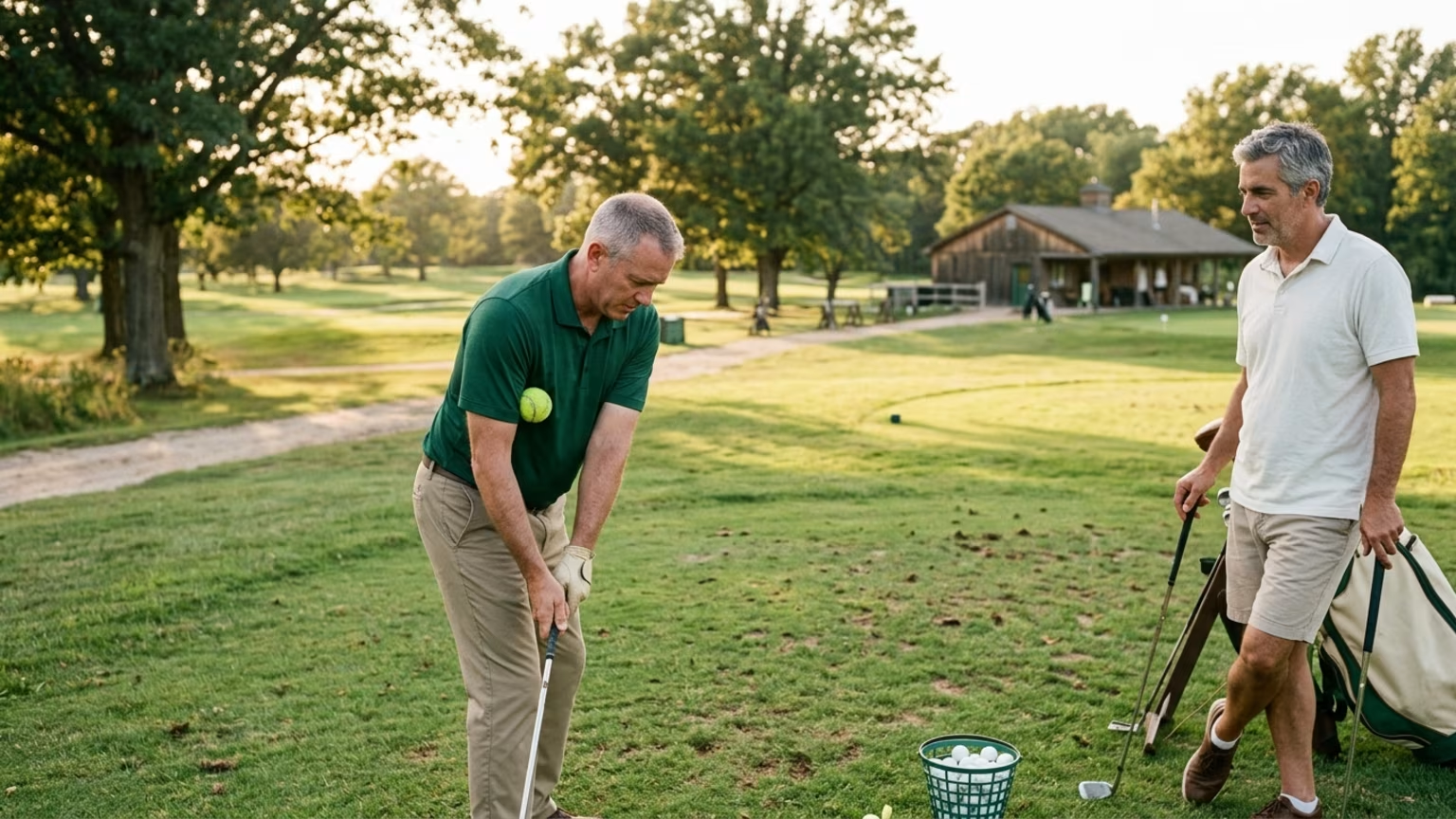
A review of the tennis ball transition drill from My Avid Golfer Magazine. Learn how this simple coaching constraint can improve lead-side balance and stability.


Meadowbrook Golf Club recently announced the addition of a standing-support adaptive golf wheelchair. Learn how equipment like this is helping limited-mobility players return to the course safely.
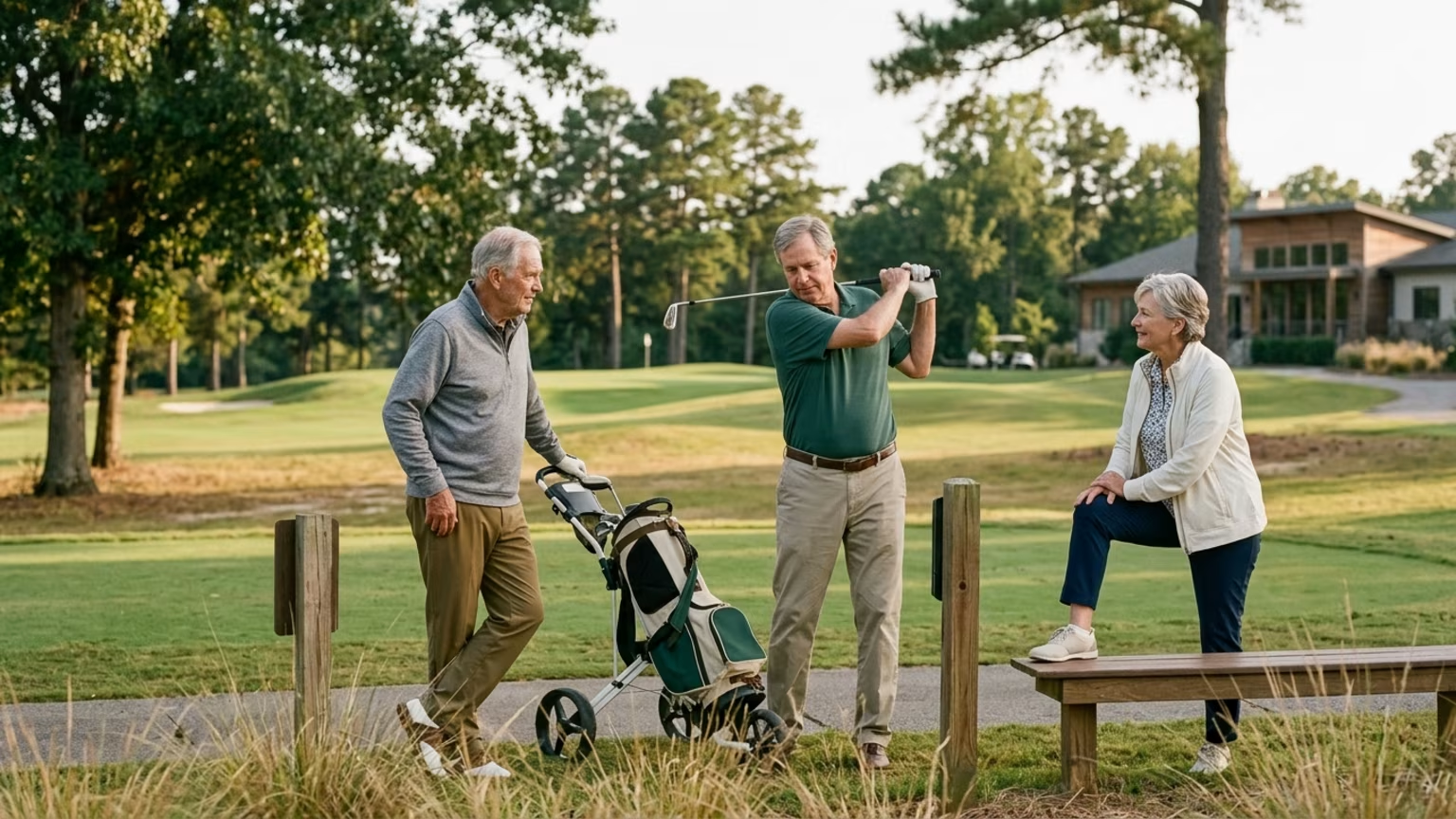
Learn a safe 10-minute mobility screen for older golfers. Use these simple home checks for thoracic rotation, ankle dorsiflexion, and single-leg balance.
Explore practical resources on performance, recovery, mobility and golf longevity.
Read the Blog