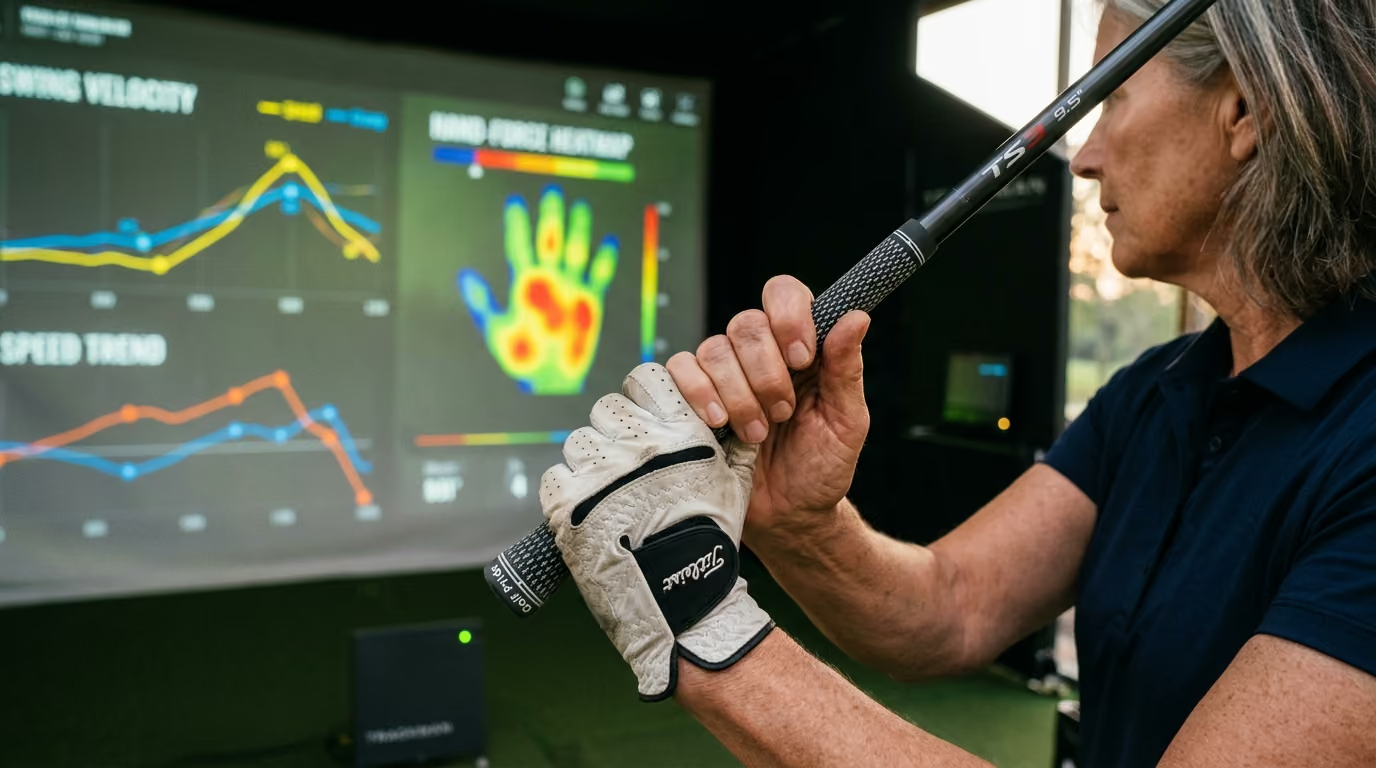

Pain-free swings and lasting endurance come from ten essential physical pillars designed to protect your joints for decades of healthy golf.




The afternoon sun is starting to lower. You are standing on the fifteenth tee box. Your lower back feels tight. Your lead hip is starting to pinch when you turn. You take a short practice swing. Your rotation stops halfway. You swing at the ball. The shot slices off into the right trees.
This is a common scene for mature players. It is not a failure of your swing path. It is your body protecting itself from strain. Your physical limits are changing your swing. This is late-round fatigue. Walking the course should feel good. Fatigue can change your game. You need a better way.
To play your best golf into your 80s, you must shift your focus. Raw power is no longer the main goal. You must focus on joint integrity, rotational efficiency, and metabolic endurance.
Regular golf can significantly increase your life expectancy. It improves your cardiovascular health. You must manage the physical demands of the sport through healthy habits. To do this, you can look to research-backed methods. The Titleist Performance Institute and sports medicine clinics offer clear guidance for senior golfers.
We have gathered ten physical pillars to help you play pain-free golf for decades. These pillars will help you protect your joints and keep your swing smooth. They will keep you on the course for years to come.
As the body ages, connective tissues naturally tighten. Golf coaches call this the leather jacket effect. Your muscles and joints feel like a stiff leather jacket. This stiffness limits how far your joints can move.
Research from the British Journal of Sports Medicine shows golf is great for older adults. It lowers the risk of death. It boosts heart health. The physical demands of the swing are still very high. The golf swing is a fast, one-way movement. It puts uneven pressure on your joints.
If your joints are tight, other parts of your body must twist. This compensation leads to injury. Senior golfers face a high rate of lower back, elbow, and shoulder injuries. Standard physical screens help spot these limits before pain starts. You do not need to swing like a teenager. You need to swing with your current body.
Developing consistent joint mobility helps you maintain a smooth turn. It protects your lower back. It keeps your swing consistent. Focusing on your golf longevity is the best way to extend your playing years.
Your thoracic spine is your mid-back. This area is designed for rotation. In a proper swing, your mid-back should provide the majority of your turn.
Many mature golfers lose this rotational range. The Titleist Performance Institute states that professional players have 80 degrees of mid-back rotation. Mature golfers often measure under 30 degrees. This is a massive loss of motion.
You need at least 45 to 60 degrees of rotation to swing safely. If your mid-back does not turn, your lower back will twist instead. Your lower back is meant for stability, not rotation. Twisting your lower back leads to herniated discs and muscle strains.
To protect your back, focus on turning your chest. Imagine your sternum is a flashlight. You want to shine that light behind you during the backswing. Keep your lower back quiet. Let your mid-back do the turning. This simple adjustment will keep your back happy.
Your pelvis must turn around a stable thigh bone. This is called hip rotational independence. During the backswing, your trail hip must rotate internally. During the downswing, your lead hip must do the same.
You need about 60 degrees of hip rotation. If your hips are stiff, your body will twist your knees. Knees are simple hinge joints. They do not tolerate twisting force.
Over time, this twist causes knee pain and wear. It can lead to joint replacement. If you have tight hips, your swing path will suffer. You will lose power.
To improve this, focus entirely on turning your trail hip. Keep your feet planted. Let your pelvis glide smoothly. This movement protects your knees from taking too much rotational force.
The pelvis is the engine of your swing. You must be able to tilt your pelvis forward and backward. Forward tilt is called anterior tilt. Backward tilt is posterior tilt.
This movement keeps your spine in a neutral position. If you cannot tilt your pelvis, you will experience early extension. This is when your hips push toward the ball during the downswing.
When this happens, your spine straightens up too early. This puts high pressure on your lower lumbar discs. It causes chronic back pain.
To practice this, stand in your golf posture. Tilt your pelvis forward, then tilt it backward. Keep your chest still. Learn to control this movement. It will stabilize your spine and prevent early extension.
Balance is how your brain knows where your body is in space. As we age, our balance naturally decreases. This makes a consistent swing difficult.
Research shows that golfers aged 65 to 79 have excellent dynamic balance. Playing golf regularly helps keep this skill sharp. Good balance allows you to shift weight from your trail foot to your lead foot.
If your balance is poor, you cannot transfer weight safely. You might fall or swing off-balance. This ruins your consistency.
Single-leg stability is key for a solid swing finish. When you finish your swing, most of your weight should be on your lead leg. You should be able to hold this position easily.
Your glute muscles are the king of the swing. They stabilize your pelvis. They also produce power from the ground.
An 8-week physical study of golfers aged 55 to 79 showed great results. A focus on leg strength increased clubhead speed. It also improved overall performance.
Strong glutes protect your lower back from taking too much load. If your glutes are weak, your back does all the work. This leads to fatigue.
Developing your physical strength is vital for long-term health. Keep your legs strong. It will pay off on the course.
Your core is more than your abdominal muscles. It includes the deep transverse abdominis muscle. This muscle acts like a corset around your spine.
A stiff core protects your lower back. The fast twisting of the swing can damage your spine. A strong core absorbs this force.
You do not need to do endless sit-ups. You need exercises that teach your spine to stay still while your limbs move.
Think of your core as a shield. It keeps your lower back safe during the downswing. A stable core means a more consistent shot.
Your lats are the large muscles on your back. If your lats are tight, you cannot raise your arms high. This shortens your backswing.
To compensate, you might bend your lead elbow. This is the classic chicken wing swing. It ruins your ball strike.
Tight shoulders also force your lower back to arch. Keeping your shoulders mobile preserves your swing arc.
Test your shoulder mobility. Raise your arms overhead without arching your back. If your back arches, your lats are tight.
Wrists are fragile joints. They take about 10 percent of senior golf injuries. Your wrists and forearms absorb the impact when the club hits the ground.
Thick rough can twist your club with great force. Strong wrists keep the club steady.
Flexible forearms prevent tennis elbow and golfer's elbow. This keeps your hands feeling comfortable.
Focusing on injury prevention in your wrists is key. Keep your grip light. Strengthen your forearms regularly.
Walking 18 holes is a serious physical effort. It covers 4 to 6 miles of walking.
The World Health Organization recommends moderate exercise for healthy aging. Golf fits this goal. Walking keeps your heart healthy.
It also prevents late-round fatigue. When you get tired, your posture collapses. This leads to poor swings and sudden injuries.
To build stamina, walk whenever you can. Use a pushcart instead of a riding cart. This builds endurance over time.
Many golfers walk to the first tee and swing hard. This is a recipe for muscle strains.
Static stretching before a round is not helpful. It makes your muscles too relaxed and slow. You need dynamic movement.
A 5 to 10-minute active warm-up prepares your nervous system. It lubricates your joints and warms your muscles.
Do simple movements like hip circles and arm swings. This wakes up your body. It reduces your injury risk immediately.
If you feel stiff today, do not force a perfect swing. You can make simple changes on the tee. These changes protect your joints.
If you have tight hips or knee pain, try the toe-out adjustment. Flare both of your feet outward by 20 to 30 degrees.
This simple change reduces the amount of hip rotation you need. It takes the twist off your knees.
It allows you to turn your hips more easily. This is a great tip for golfers with knee replacements or arthritis. It lets you swing without pain.
Many golfers try to keep their trail knee bent during the backswing. If your hips are tight, this puts massive stress on your lower back.
Instead, let your trail knee straighten slightly during your backswing. Do not lock the knee completely. Just let it relax.
This movement allows your pelvis to turn more freely. It gives you a fuller turn without straining your back. It is a simple way to find more distance.
To fix the root causes of stiffness, you need a regular routine. You can do these exercises at home. They only take a few minutes.
This movement improves thoracic spine mobility. It is a gentle way to open up your mid-back.
Do 10 repetitions on each side. Do this daily to loosen your back.
This exercise builds strength in your glutes. It protects your lower back.
Do 3 sets of 10 repetitions. This will build strength in your hips.
This exercise improves pelvic control. It helps prevent early extension.
Do this for 2 minutes. It teaches your brain how to control your hips.
Working on these movements will speed up your muscle recovery. It keeps your body fresh between rounds.
Many golfers make simple errors when trying to stay fit. These mistakes can cause more harm than good.
Many golfers are told to keep their head perfectly still. This is bad advice for mature players.
Forcing your head to stay still locks your neck. It prevents your mid-back from rotating. This puts immense pressure on your spine.
Instead, let your head rotate slightly during your backswing. Your head can move an inch or two to the right.
This movement allows a fuller shoulder turn. It reduces neck strain. It makes your swing feel much more natural.
Stretching is only half of the equation. Many players spend hours stretching but ignore strength.
If you make a joint more flexible, you must also make it strong. Unstable joints are prone to injury. You need muscle to control your new range of motion.
Combine your mobility work with simple strength training. Use light weights or resistance bands. This keeps your joints safe.
Do not try to swing like you did decades ago. Your body has changed.
Connective tissue naturally loses elasticity. Trying to create high torque can cause injury.
Instead, focus on a smooth, efficient swing. Use your body's natural momentum. A smooth swing is easier to repeat and hurts less.
Your gear has a massive impact on your body. The right equipment can prevent pain and joint wear.
Steel shafts are heavy. They transmit a lot of vibration to your hands, wrists, and elbows.
Switching to graphite shafts is a smart move. Graphite is lighter and absorbs shock.
This protects your joints from the jarring impact of hitting the turf. It can prevent tennis elbow and wrist pain.
Long irons are difficult to hit. They require a high clubhead speed to get the ball airborne. This forces you to swing harder.
Hybrids are much easier to swing. They have a wider sole and a lower center of gravity.
They sweep the ball off the turf with less effort. Using hybrids reduces the physical strain of your long game.
If you have arthritis in your hands, small grips are painful. You have to squeeze the club tightly to keep it stable.
Oversized or "arthritis" grips are thicker. They allow you to hold the club with less hand pressure.
This reduces the strain on your fingers, wrists, and forearms. It lets you swing with relaxed hands.
Revisit this resource when your swing starts to feel short, when you feel pain after a round, or before the start of a new season.
To play golf into your 80s, you must listen to your body and protect your joints through regular mobility and strength habits.
Follow Golfergy for practical insights on performance, mobility, recovery and healthy ageing. Stay connected for new articles, research-led guidance and ideas to help you play better for longer.


Explore practical resources on performance, recovery, mobility and golf longevity.
Read the Blog