
Yoga and Pilates offer distinct biomechanical benefits for golfers by improving rotational mobility and strengthening core stability to prevent lower back pain.




Have you ever searched online for how to get rid of a stiff lower back after playing eighteen holes? This is a frequent issue for golfers over forty. You might wonder whether yoga or Pilates is the right way to protect your body and maintain your yardage. This guide compares both disciplines to help you play without pain.
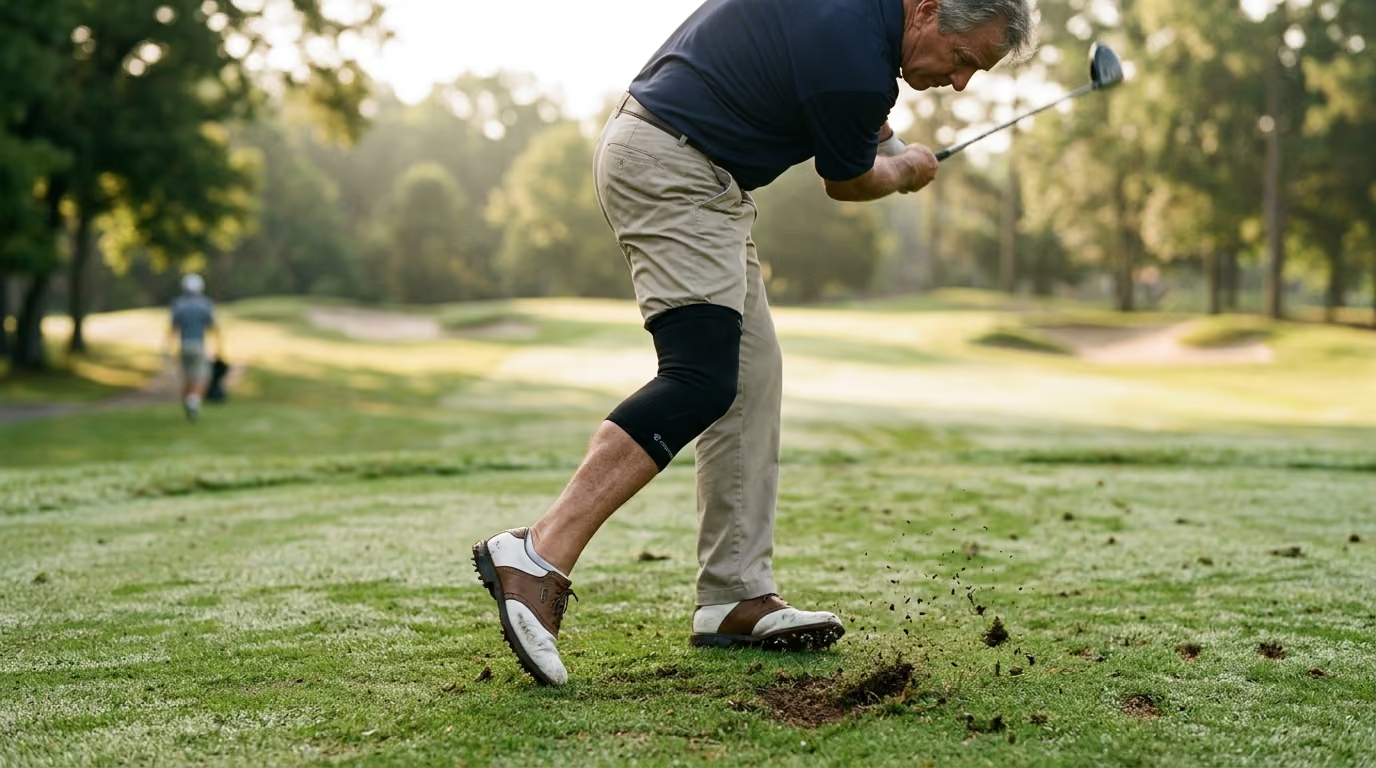
Imagine standing on the fourteenth tee box of a long par four. Your back feels tight from sitting in the golf cart between holes. You take your driver back, but your hips feel locked in place. You try to force a big turn to get extra distance on the ball.
This sudden twist sends a sharp, pinching sensation through your lower back. You block the ball wide right into the deep trees. Your body is telling you that something is wrong. You need a mix of joint movement and muscular control to prevent this breakdown on the course.
Your golf swing is a complex movement that requires different joints to perform different roles. This concept is known as the mobility-stability continuum. Some joints must move freely through a wide range, while others must remain steady to support that movement.
In your body, the ankles, hips, thoracic spine, and shoulders require high mobility. The knees, pelvic girdle, lumbar spine, and shoulder blades require stability. When a mobile joint becomes stiff, the nearest stable joint has to move instead.
For mature golfers, the hips and mid-back often tighten up over time. When your mid-back cannot turn, your lower back tries to twist to complete your backswing. Your lower back is not built to rotate more than a few degrees. Forcing it to twist puts massive pressure on your spinal discs.
Yoga primarily addresses functional flexibility and joint mobility. It helps loosen tight muscles in the hips, chest, and shoulders. Pilates focuses on stabilizing muscles, particularly in the deep core, lower back, and pelvis. Choosing between them depends on what your body lacks.
If you struggle to turn your shoulders, you may need the mobility of yoga. If you sway or slide during your swing, you likely need the stability of Pilates. Many players find that combining both disciplines provides the ultimate protection against injury.
To understand how these movement disciplines help your game, we must look at swing biomechanics. One of the most important concepts is the X-Factor. This is the difference in rotation between your hips and shoulders at the top of your backswing.
A larger X-Factor allows you to stretch your muscles like a rubber band. When you unwind, this stored energy creates high clubhead speed. You cannot achieve a large X-Factor if your mid-back or hips are locked.
Another key factor is segmental rotation, which means moving your spine one segment at a time. Your mid-back is designed for twisting, but your lower back is built for bending. Pilates teaches you to initiate rotation from your ribcage, which keeps your lower back safe.
[Hip Rotation] <--- X-Factor Gap ---> [Shoulder Rotation]
^ ^
| |
(Stable Base/Pilates) (Mobile Spine/Yoga)
During your swing, your lower spine faces huge forces. Medical studies show that the lumbar spine can experience compressive loads up to eight times your body weight. For an amateur golfer, this is about 6,100 Newtons of force. Professional golfers can experience even higher loads.
Both disciplines help you manage these forces. Pilates improves your smash factor, which is how efficiently you transfer energy to the ball. Yoga improves your joint range of motion, which prevents you from hitting physical roadblocks during your swing.
Yoga is an ancient practice that helps you stretch tight tissues and improve your balance. It uses postures called asanas to open up your joints. For golfers, the main goal is to improve hip and mid-back rotation.
This pose targets your mid-back and shoulders. It helps you turn your chest more fully during the backswing.
This movement improves the flexibility of your entire spine. It teaches you how to tilt your pelvis, which is crucial for a good golf posture.
This pose activates your glutes and builds a strong foundation for your lower body.
Warrior I and II build strength in your legs and stretch your hip flexors.
Integrating a focused routine is a great step toward [injury prevention] on the course.
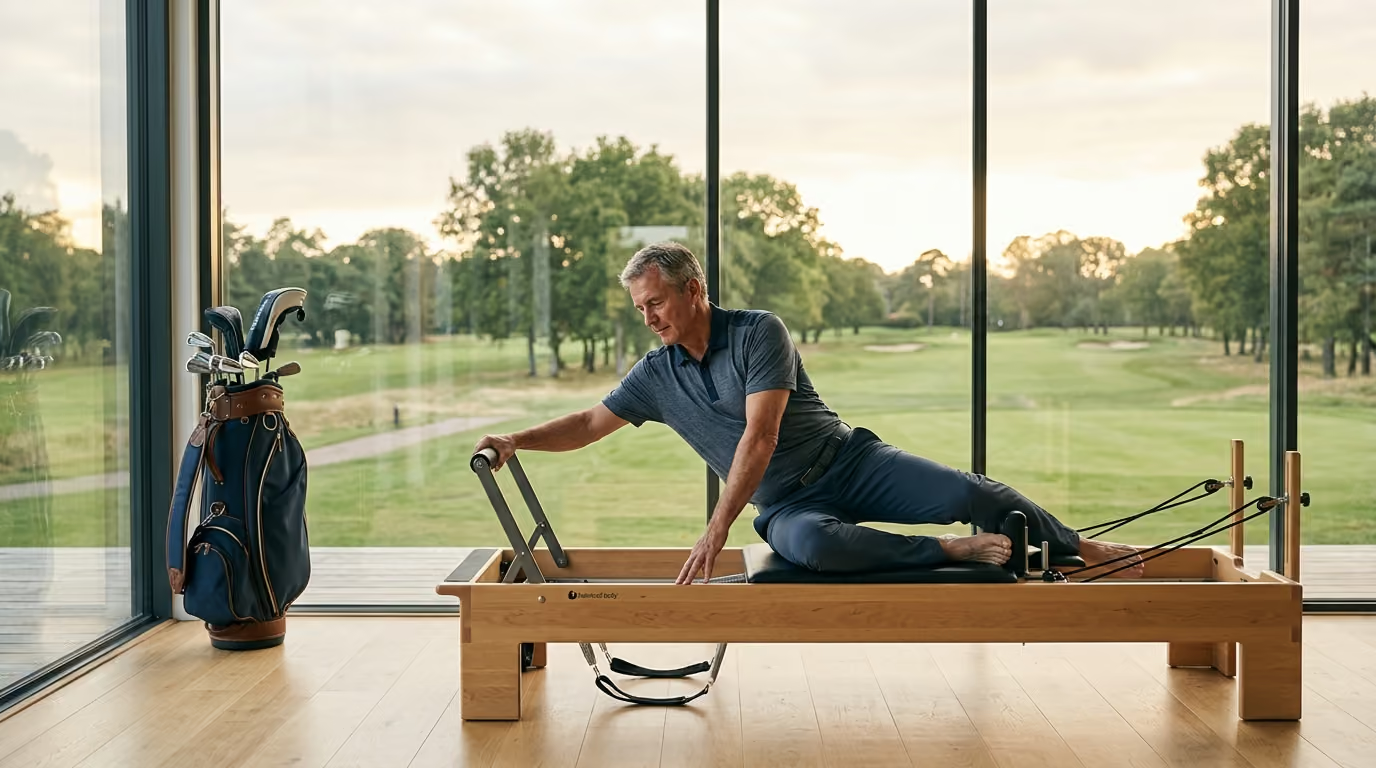
Pilates is a system of exercises designed by Joseph Pilates to build uniform strength. It focuses heavily on the powerhouse, which includes your abdominals, lower back, hips, and glutes. This discipline teaches you to control your body from your center.
This exercise teaches you to separate your upper body rotation from your lower body.
This exercise strengthens the side abdominal muscles that pull you through the downswing.
For those looking to build core [strength], these movements are highly effective.
This exercise strengthens the outer hips, which keep your lower body stable.
This is a classic Pilates exercise that builds deep abdominal endurance.
Many mature golfers deal with pre-existing back issues. If you have a specific back condition, some exercises can be dangerous. You must choose your movements carefully to avoid making your pain worse.
If you have a herniated disc, your spinal discs are bulging outward. Spinal flexion, which means bending forward and rounding your back, is very risky. Exercises like the Pilates Roll-Up, forward folds, or the Plow Pose put extreme pressure on the front of your vertebrae. This pressure can push the disc material further out, pinching your nerves.
For herniated discs, you should focus on keeping a neutral spine. When you bend forward, bend from your hips instead of your back. Keep a slight arch in your lower back to keep the pressure off your discs.
Spinal stenosis is a narrowing of the spaces within your spine. This condition is common in older golfers and often causes leg pain when walking. Spinal extension, which means arching your back backward, is dangerous for this condition. Poses like the Cobra, Upward-Facing Dog, or the Camel compress the back of your spine. This compression narrows the nerve pathways and increases your pain.
If you have stenosis, you will feel better with gentle spinal flexion. Keep your back neutral or slightly rounded during your exercises. Avoid deep backbends completely.
If you suffer from general, non-specific lower back pain, you must be careful with extreme twisting. Combining a deep twist with a forward bend is the easiest way to tear a disc. Advanced revolved poses in yoga can put too much shear force on your lower back.
Focus on rotating from your mid-back instead of your lumbar spine. Always engage your core muscles before you begin any twisting movement. If a twist pinch your back, stop the movement immediately.
To help you choose the right path, here is a comparison of how these conditions respond to different movements:
Every golfer has a unique physical profile. Your age, flexibility, and fitness level will dictate which discipline you should prioritize. Let's look at three common player profiles.
This player is over sixty and struggles with stiff hips and a tight back. They have lost distance over the years because they cannot turn their shoulders.
For this profile, a combination of both styles works best. They should use yoga to open their hips and shoulders. They can practice Thread the Needle and gentle Warrior poses to regain their range of motion.
If they have spinal stenosis, they must avoid deep backbends. They should focus on Pilates hip circles to keep their hip joints lubricated. This approach helps them maintain their swing speed without hurting their joints.
This player is in their forties or fifties. They are in decent shape but want to increase their clubhead speed. They feel like they are swinging with their arms instead of their body.
This player should focus heavily on Pilates. They need to build a strong connection between their hips and shoulders. Exercises like Oblique Curls and the Seated Spine Twist will help them develop a larger X-Factor.
By building deep core strength, they can transfer energy from the ground to the ball more efficiently. This increases their smash factor and gives them more distance with less effort.
This player has recently hurt their back and is trying to return to the game safely. They feel sharp pain when they twist or bend.
During this recovery phase, the first goal is to protect the spine. They must avoid all deep twists and forward bends. They should use props like yoga blocks or pillows under their stomach to keep their spine neutral.
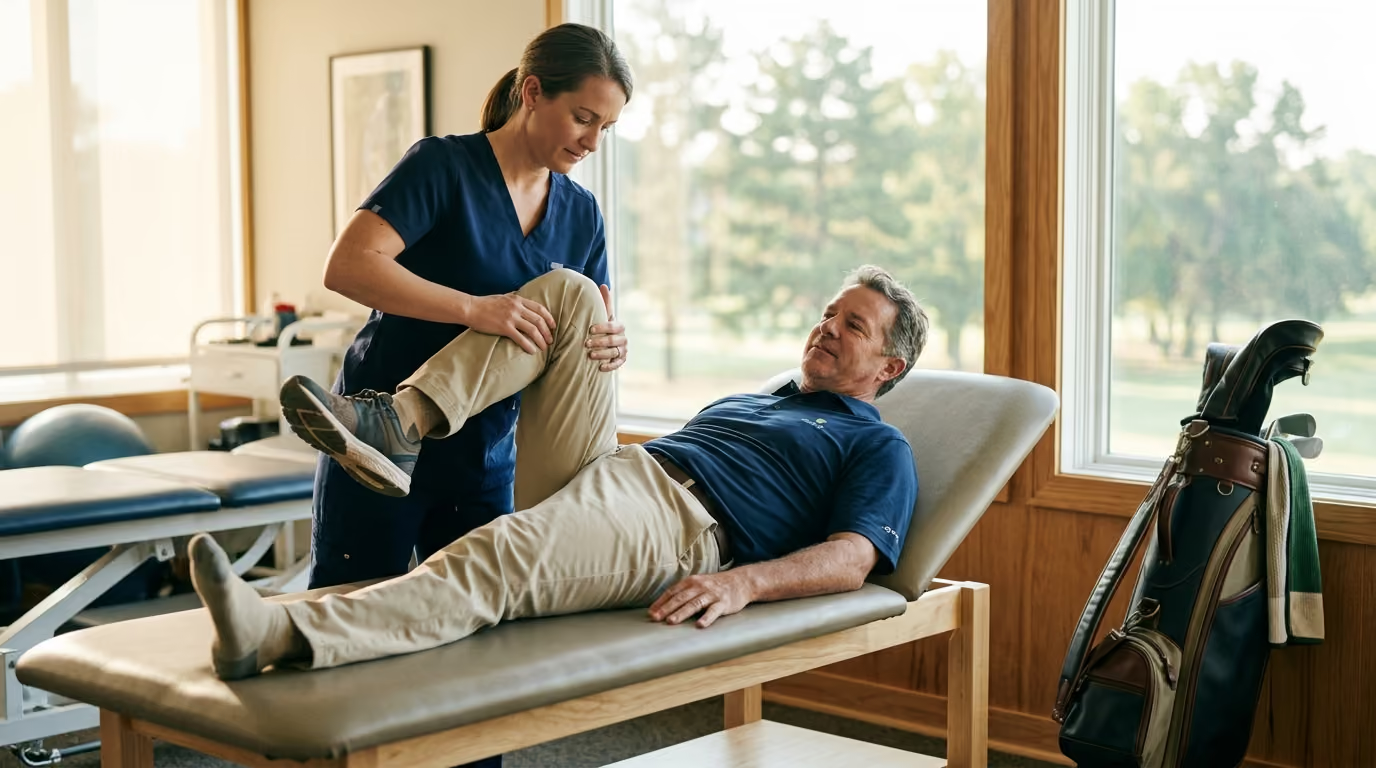
They can practice gentle hip bridges and pelvic tilts to wake up their muscles. This careful approach is a critical part of your [recovery] before you start hitting balls again.
When golfers start yoga or Pilates, they often make mistakes that can lead to injury. Knowing these pitfalls will help you get the most out of your training.
Many golfers believe they need to be as flexible as possible. They stretch their muscles until they are loose, but they do not build the strength to control that new movement. This leads to unstable joints.
An unstable joint is highly prone to injury during a fast golf swing. You must balance your flexibility training with strength training. If you increase your joint range, you must also train your muscles to control that range.
In Pilates, every movement should be slow and precise. Many golfers try to speed through the exercises, using momentum to lift their legs or twist their spine.
This defeats the purpose of the training. When you use momentum, your deep stabilizing muscles stop working. This puts extra stress on your spine and joints. Focus on moving slowly and feeling the target muscles work.
When trying to get a bigger turn, many players force their lower back to twist. This is a biomechanical error. Your lower back joints are shaped to allow bending, not twisting.
You must learn to keep your lower back stable while your mid-back and hips do the turning. If you feel a twist in your lower lumbar spine, you have gone too far. Focus entirely on turning your ribcage and your trail hip.
Golf is an asymmetrical sport. You swing the club thousands of times in one direction, which creates muscular imbalances. Your dominant side becomes strong and tight, while your non-dominant side becomes weak.
Many players only stretch the side that feels tight. You must train both sides of your body equally to restore balance. This helps prevent chronic pain and keeps your posture aligned.
The gear you use during your workouts and on the course can affect your movement quality. Making small adjustments to your equipment can make a big difference.
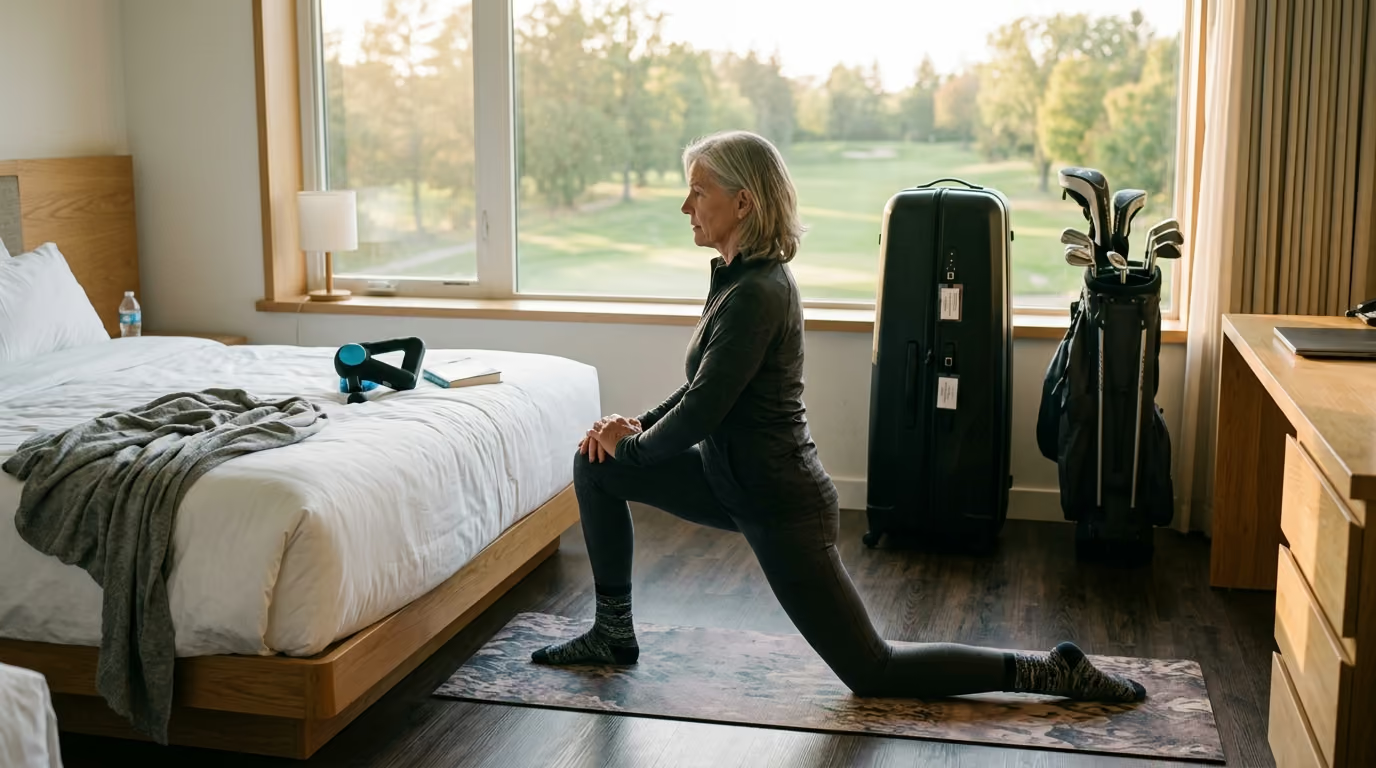
When practicing yoga or Pilates, use a thick mat to protect your joints. If you have tight hips, sit on a yoga block during seated exercises. This raises your hips and makes it easier to keep your spine straight.
You can also use a yoga strap to assist with stretches if your hamstrings are tight. Do not force your body into positions that cause strain. Props are not a sign of weakness; they are tools to help you move correctly.
Your golf gear also plays a role in your body mechanics. If you use golf shoes with massive traction spikes, your feet can get locked into the ground. This prevents your ankles and knees from rotating naturally, which puts extra stress on your hips and lower back.
Consider using spikeless golf shoes that allow for a small amount of foot rotation. Also, check your golf grips. If your grips are too small, you will squeeze the club too tightly. This tension travels up your arms into your shoulders and neck, limiting your shoulder turn.
Using slightly larger grips can help loosen your hands and shoulders, improving your [mobility] during the swing.
To get the benefits of these disciplines, you need a simple plan you can follow every week. You do not need to spend hours training. A short, consistent routine is much better than a long, occasional workout.
Use this simple template to balance your training throughout the week:
Before you head to the course this week, use this quick checklist to prepare your body:
If you want to read more about maintaining your body as you age, you can read our other articles on our [blog]. You can also learn more [about] our mission to help mature golfers play without pain. If you have questions about specific exercises, feel free to [contact] us.
Ultimately, your body is the most important piece of golf equipment you own. Taking care of your joints and muscles will let you enjoy the game for years to come.
Your golf swing relies on a stable lower back supported by mobile hips and a flexible mid-back, which you can build by combining the joint range of yoga with the core control of Pilates.
Follow Golfergy for practical insights on performance, mobility, recovery and healthy ageing. Stay connected for new articles, research-led guidance and ideas to help you play better for longer.


Explore practical resources on performance, recovery, mobility and golf longevity.
Read the Blog