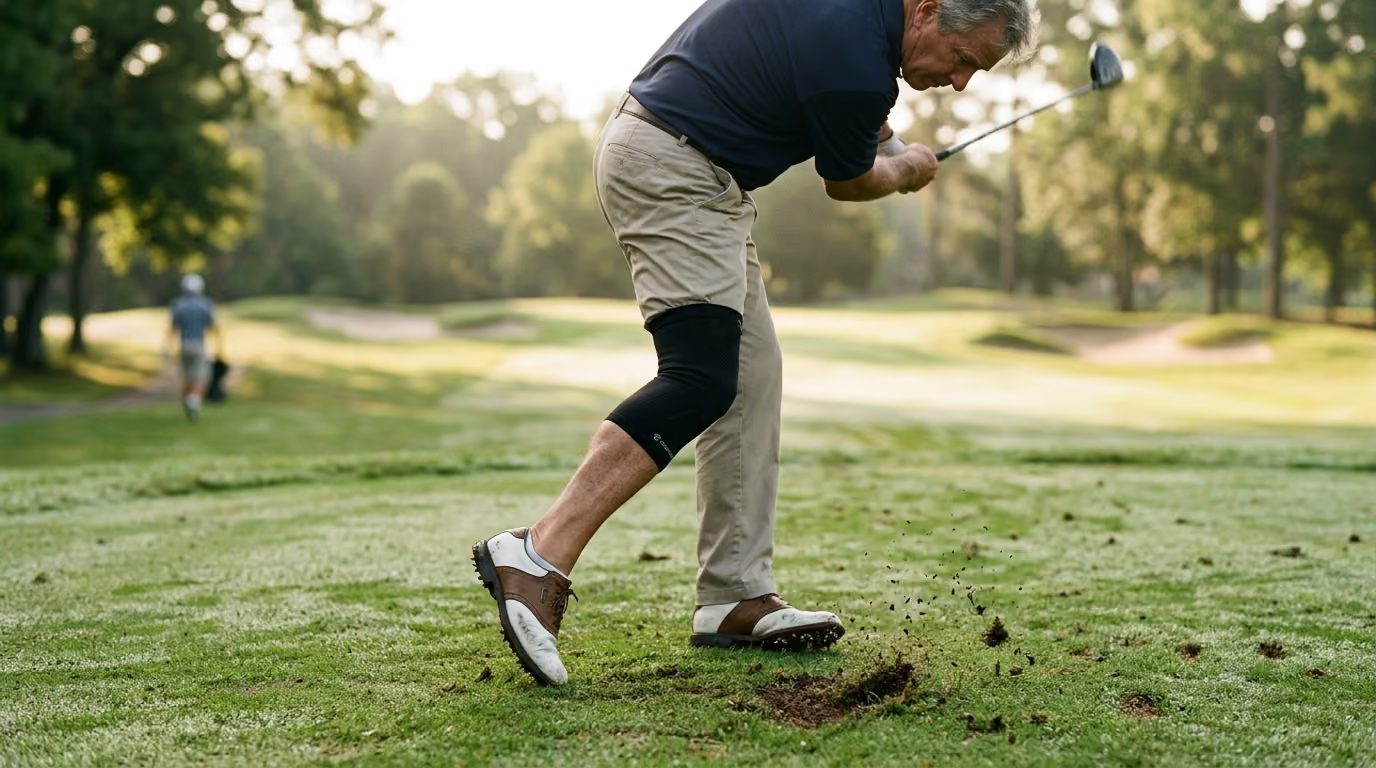

Golfers who push hard off the turf for extra distance often strain their knees and ankles because of heavy ground reaction forces.




If you have ever searched the internet for answers about knee pain after playing 18 holes, you are not alone. Many mature golfers find that their lower joints ache for days after a round. You might wonder why a sport that looks so gentle can leave your body feeling so beaten up. The answer lies in how your body interacts with the turf.
Modern golf instruction focuses heavily on using the ground to build swing speed. Young professionals on television seem to jump off the grass as they hit their drives. While this movement creates massive distance, it also places immense stress on your feet, ankles, and knees. If you are over the age of 40, your joints require a more balanced approach.
This guide will examine the physical science of how your feet interact with the turf. We will look at why excessive pushing can cause joint wear. You will learn how to protect your body while keeping your distance. Implementing these small adjustments will help you play pain-free for many years to come.
You are standing on the tee box of a long par four. The fairway looks tight, and a large bunker guards the landing zone. To carry the hazard, you know you need your best swing. You tee the ball up, take a deep breath, and prepare to swing with maximum effort.
In your downswing, you push your feet hard into the grass to gain extra power. Right at impact, a sharp pinch shoots through your lead knee. You watch your ball fly down the fairway, but your focus is entirely on the sudden ache in your leg. By the time you reach the green, your knee feels stiff and swollen.
This scenario is incredibly common on the golf course. The trail ankle and the lead knee bear the brunt of a powerful swing. When you try to force extra distance, your lower body joints absorb the excess pressure. This physical strain can turn a pleasant afternoon into a painful ordeal.
Many golfers try to play through this pain by taking anti-inflammatory pills before their rounds. Over time, ignoring these warning signs leads to chronic joint damage. The issue is not your desire for power. The issue is how you apply force to the turf.
To understand why your joints hurt, you must understand ground reaction forces. This concept is based on Newton's Third Law of Motion. The law states that for every action, there is an equal and opposite reaction. When you push down into the ground, the ground pushes back against your body with the exact same amount of force.
In golf, these ground reaction forces are the main source of your clubhead speed. If you do not push against the ground, you cannot swing the club quickly. Sports podiatry research shows that these forces travel from the turf up through your feet. From there, the energy moves through your legs, your pelvis, and your trunk before reaching the club.
Biomechanical scientists divide these ground forces into three distinct directions. The first is vertical force, which is the direct downward push and upward push. Peak vertical forces can reach up to 1.6 times your body weight with a driver. This means a 200-pound golfer can experience over 300 pounds of upward force during the swing.
The second component is horizontal or shear force. These are the side-to-side and front-to-back forces that help you shift your weight. They stabilize your body so you do not slide off balance. The third component is torque, which is the rotational force you generate against the ground to turn your body.
It is also helpful to know the difference between pressure and force. Weight distribution is measured by your center of pressure. This is simply where your weight sits on your feet. Force is the actual strength of the ground's resistance against your body.
When your golf club starts its downward journey, your feet must react. You press your soles into the grass to anchor yourself. The grass does not move, so it pushes back against your shoes. This push-back is what allows your pelvis to turn and clear out of the way.
Without this push-back, your feet would simply slip on the grass. You would lose all balance and fail to hit the ball cleanly. This is why playing on wet or slippery turf feels so difficult. Your feet cannot find the traction needed to trigger Newton's third law.
For younger players, this upward push is an avenue to extreme speed. They can squat deeply and jump up at the moment of impact. For mature players, however, this jump places a massive burden on older bones and tendons. We must find a way to use this force without causing joint wear.
The three forces work together to create a smooth, powerful movement. Vertical force is the power you get by pushing straight down. Shear force is the lateral glide that moves your weight from the back foot to the front foot. Rotational torque is the twisting force that helps you turn your torso.
Each of these forces peaks at a slightly different time in the swing. If these forces peak out of order, your swing will lose its efficiency. This breakdown forces your muscles to work harder to make up for the lost power. Overworking your muscles is a primary cause of back and shoulder injuries.
As we age, our ability to handle these three forces changes. Our bones become less dense, and our joint fluid thins out. This makes vertical forces especially tough on our knees and hips. Focusing on horizontal and rotational forces is often a safer path to speed.
The kinetic chain is the sequence of body segments moving one after another. It begins at the feet, which are your only contact with the earth. When your feet push against the ground, the force travels up into your ankles. From the ankles, it moves through the shin bones to the knees.
If any link in this chain is stiff or weak, the energy flow breaks down. The joint immediately above or below the weak link must work twice as hard. For example, if your ankles are stiff, your knees must twist to finish the turn. This twisting causes serious knee pain because the knee is not built to rotate deeply.
To keep the kinetic chain healthy, every joint must do its job. Your ankles must bend, your knees must stabilize, and your hips must turn. Protecting this chain is the secret to maintaining your clubhead speed as you get older. It also keeps you from feeling exhausted after nine holes.
Many golfers confuse center of pressure with ground force. Center of pressure is simply where your weight is balanced. You can feel this balance shift from your heels to your toes. You can also feel it shift from your trail foot to your lead foot.
Ground force is different because it measures the actual strength of your push. You can shift your weight to your front foot without pushing hard into the ground. Alternatively, you can push incredibly hard into the turf without shifting your weight very much. Strikers use both weight shift and active pushing to hit the ball far.
For mature golfers, focusing on a smooth weight shift is much safer than focusing on hard pushing. Shifting your weight relies on gravity and rhythm. Pushing hard relies on explosive muscle power and places high stress on your joints. A smooth shift keeps your swing graceful and protects your body.
While ground forces help you hit the ball farther, they place high loads on your lower body. Biomechanical studies published in the Journal of Biomechanics reveal the true scale of these joint loads. During a standard golf swing, the compression in your knees is incredibly high.
The force reaches up to 440 percent of your body weight in your lead knee. The trail knee experiences compression equal to 320 percent of your body weight. To put this in perspective, this load is equal to running at a speed of four meters per second. Every single swing you make puts a massive burden on your cartilage.
Research from Frontiers in Sports and Active Living highlights how older golfers move differently. In older adults, the ankle contributes heavily to the support of the swing. The ankle handles 34 percent of the work in the lead leg and 31 percent in the trail leg. Meanwhile, the knee handles 26 percent in the lead leg and 19 percent in the trail leg.
This means your ankles are doing a large portion of the heavy lifting. If your ankles are stiff, your knees must twist even more to compensate. The highest amount of joint loading occurs right near the moment of impact. At this instant, the knee joint can twist between 25 and 31 degrees.
The saddest thing I have seen in golf is watching lifelong playing partners slowly drop out of our weekend group. It usually starts with a nagging shoulder or knee issue they ignore until it requires surgery. That pattern is exactly why I became obsessed with golf longevity. We do not have to stop playing as we age, provided we do the right maintenance work between rounds.
By focusing on protecting your joints from swing injuries, we can keep our bodies moving smoothly. Understanding our commitment to lifelong playing health helps us focus on what really matters. We want to enjoy the game without damaging our joints.
The lead knee is the most vulnerable joint in the entire golf swing. As you swing down, your weight crashes into your lead leg. At the same time, your body is turning rapidly toward the target. This combination of heavy downward weight and twisting torque is highly destructive.
For a golfer who weighs 180 pounds, the lead knee can experience nearly 800 pounds of pressure. If you repeat this motion 80 to 100 times per round, the cartilage begins to wear down. This wear is why many older golfers develop osteoarthritis in their lead knee. The joint simply cannot handle decades of these high impact forces.
To protect this joint, you must reduce the amount of twisting it experiences. You must also find ways to soften the downward impact. Simple changes to your setup can accomplish both of these goals. These adjustments allow you to keep playing without needing knee injections or surgery.
The high contribution of the ankles in older players is a double-edged sword. On one hand, it shows how your body naturally adapts to protect your knees. Your ankles work harder to absorb the shock of the swing. On the other hand, it means your ankles are prone to fatigue and strain.
If your ankles are stiff, they cannot absorb this force. The shock travels straight up into your knees and lower back. This is why ankle mobility is so critical for older players. Keeping your ankles flexible ensures they can handle their share of the swing workload.
Many players ignore their ankles until they experience a major injury. However, simple calf stretches and ankle rolls can make a massive difference. Keeping these joints loose is one of the easiest ways to protect your knees from golf-related pain.
Timing is everything when it comes to joint safety. The maximum load on your knees and ankles occurs just before and during impact. This is the exact moment when the club is moving at its highest speed. Your body is twisting, and your front leg is trying to stop your forward slide.
At this split second, your knee joint rotates between 25 and 31 degrees. This twisting occurs while the joint is under hundreds of pounds of downward pressure. This combination is a perfect storm for meniscus tears and ligament strains. The joint is squeezed tightly and then forced to twist.
To make this moment safer, we must spread the twisting motion across other joints. Your hips are ball-and-socket joints, which are designed to rotate deeply. Your knees are hinge joints, which are only designed to bend forward and backward. If we can get your hips to do the turning, your knees will stay safe.
To swing a golf club efficiently, you must balance two physical actions. These actions are pushing and pulling. Pushing involves applying force away from your body, such as pushing off your trail foot. Pulling involves drawing the club toward your body during the downswing.
Many amateur golfers rely too much on pushing from their trail side. They try to shove their weight forward using their trail foot. This action often causes the body to slide toward the target. When you slide, your lead knee has to work extra hard to stop your forward momentum.
Elite players use a very different strategy to build speed. They transfer their weight to the lead side much earlier in the swing. Research shows that top ball strikers reach peak pressure on their lead foot when the club shaft is vertical in the downswing. They do not wait until impact to move their weight.
If you transfer your weight too late, you will reach peak force right at impact. This is a common pitfall for players who feel joint pain or hesitation. They are afraid to load their lead leg, so they stall their movement. This late force peaks when the knee is already twisting, which increases the risk of joint injury.
When you push too hard with your trail foot, you create a lateral slide. This slide shifts your hips toward the target instead of turning them. Your lead knee must then act as a brake to stop this sliding motion. This placing of the brakes under high speed causes extreme shear force on the joint.
This trail-side push also causes your upper body to tilt backward. This tilt can lead to fat shots and thin shots. It also forces your lower back into an arch, which can cause severe muscle spasms. A balanced swing relies on rotation, not lateral sliding.
To stop this dominant push, focus on a gentle transition. Think of sliding your weight smoothly onto your lead heel rather than shoving off your trail toe. This smooth transition keeps your hips turning and prevents the lead knee from taking a beating.
Elite golfers are masters of timing. They do not wait until the downswing is almost over to shift their weight. Instead, they begin moving their weight to the front foot before the backswing is even finished. By the time the club starts down, most of their weight is already on the lead side.
This early transfer allows the lead leg to accept the weight gradually. The muscles in the lead leg have time to turn on and protect the joints. It also means the peak force occurs when the body is in a stronger, more stable position. This timing reduces the sudden shock that occurs when you shift your weight too late.
If you shift your weight late, the impact is sudden and violent. Your lead leg must absorb a massive wave of energy in a fraction of a second. This sudden impact is what causes joint cartilage to crack and wear away over time. Learning to shift early is a shield for your joints.
It is natural to hesitate if your lead knee or hip is sore. Your brain knows that putting weight on a painful joint will hurt. As a result, you stay on your trail foot and try to swing with your arms. This hesitant movement actually makes your swing less consistent and can strain your shoulders.
Staying on your trail foot forces you to scoop the ball into the air. This scoop action can cause you to hit the turf behind the ball, sending a painful shock up your arms. It also prevents you from getting any help from the ground, making your swing feel weak.
To overcome this hesitation, you must make the lead leg transfer feel safe. You can do this by using setup adjustments that reduce the pain of loading that leg. Once your brain realizes that shifting weight does not have to hurt, your natural rhythm will return.
Fortunately, you do not have to rebuild your entire swing to protect your joints. You can make simple adjustments right on the tee box to reduce joint stress. These changes will help you maintain swing speed without overloading your cartilage.
The first adjustment is flaring your lead foot open. Many golfers set up with their feet perfectly square to the target line. This straight foot setup forces your lead knee to twist past its comfortable range of motion. Instead, turn your lead foot outward by 10 to 30 degrees toward the target.
This simple adjustment reduces rotational twisting on your knee by nine percent. It also lowers the compressive force on the joint by five percent. Flaring your foot gives your hips more room to turn. This takes the pressure off your lead knee and ankle during the downswing.
You can also adjust your setup based on where you feel pain. If you experience pain on the inner side of your lead knee, you have medial joint stress. Try standing a bit closer to the golf ball at address. Flare your lead foot open to a full 30 degrees to reduce the twisting strain.
If you feel pain on the outer side of your knee, you have lateral joint stress. To fix this, stand slightly farther away from the ball at address. This position reduces the outward pulling force on your lead knee during your swing.
If you suffer from arthritis in your knees, try moving your ball position. Place the ball slightly farther back in your stance, away from the target. This small change reduces the vertical ground force on your lead knee as you strike the ball. You can also try standing with straighter legs and less knee flex at address to reduce pressure on your kneecaps.
Flaring your feet is the easiest change you can make to protect your joints. When you turn your toes outward, you pre-rotate your hips. This means your hips do not have to turn as far during the actual swing to get the same result. It is like giving your joints a head start.
This setup is especially helpful for golfers with tight hips. If your hips cannot turn, your body will look for rotation elsewhere. It will force your lower back and knees to twist, which leads to injury. Flaring your feet unlocks your hips and keeps your other joints safe.
Try flaring both feet before you swing. Flare your trail foot by about 10 degrees to help your backswing turn. Flare your lead foot by 20 to 30 degrees to help your downswing finish. You will immediately feel more freedom in your hips and less pulling in your knees.
Not all knee pain is the same. Some golfers feel a dull ache on the inside of their knee after playing. Others feel a sharp pinch on the outside when they finish their swing. Understanding where your pain is located helps you make the right adjustment.
Inner knee pain often comes from the joint collapsing inward during the downswing. Standing closer to the ball helps keep your legs more upright. This position prevents the knee from bowing inward and pinching the medial meniscus. Flaring the foot wide also helps the knee trace a safer path.
Outer knee pain is often caused by the knee bowing outward as you try to rotate. Standing farther from the ball encourages a wider, flatter swing plane. This reduces the outward pull on your lead leg. These quick setup changes can make your next round much more comfortable.
Many older golfers are taught to flex their knees deeply at address. They are told this athletic stance helps them stay balanced. However, holding a deep squat places constant pressure on your kneecaps. This pressure can cause severe pain if you have arthritis under your kneecaps.
Instead, try standing with taller, straighter legs. You only need a very slight bend in your knees to stay balanced. This taller stance instantly reduces the stress on your patellofemoral joint. It also makes it easier to turn your hips during the swing.
Moving your ball position back slightly is another great tool. When the ball is farther back, you strike it earlier in the downswing circle. At this point, your lead knee has not yet reached its maximum loading phase. This timing difference can save your lead knee from the hardest forces of the swing.
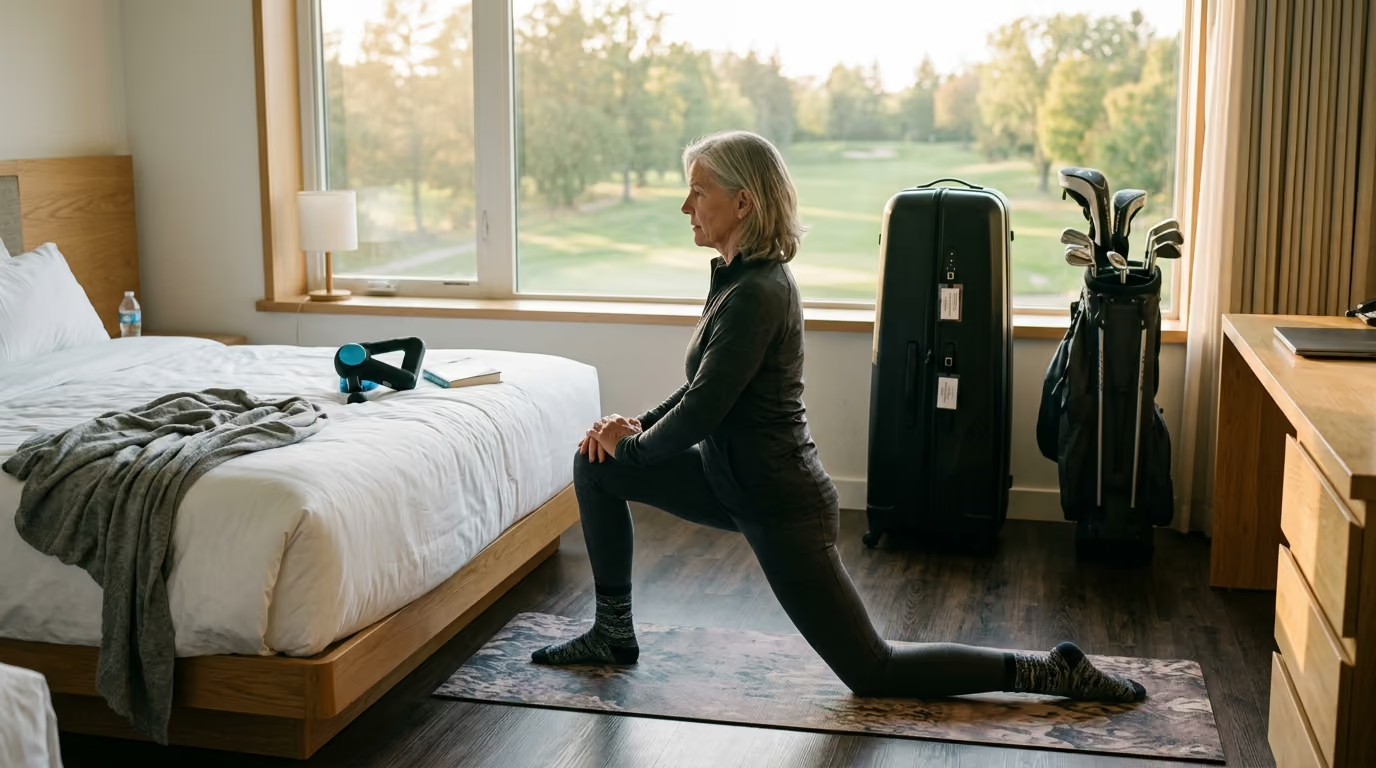
To keep your joints healthy for the long term, you must address the root causes of swing pain. This requires building a simple weekly routine at home. This routine should focus on ankle mobility and hip rotation to offload your knees.
Many mature players suffer from a physical issue called the limited ankle pattern. This occurs when you have poor ankle dorsiflexion, which is the ability to bend your foot upward toward your shin. This stiffness often comes from old ankle sprains or tight Achilles tendons. When your ankle cannot bend, your body cannot load the inside of your trail foot.
Instead of rotating, your body will sway outward during the backswing. This puts massive twisting pressure on your knees. To fix this issue, you can perform targeted mobility exercises for the mature swing twice a week.
Here is the first exercise to improve your ankle mobility. Stand facing a wall with your feet hip-width apart. Place your hands on the wall for balance. Step your trail foot back slightly, keeping your trail heel flat on the ground.
Slowly bend your trail knee forward toward the wall. Focus entirely on keeping your trail heel pinned to the floor. Hold this position for thirty seconds, then release. Repeat this stretch three times on each leg.
The second exercise improves your hip rotation so your knees do not have to twist. Sit upright on a sturdy chair with your feet flat on the floor. Place a golf club across the front of your shoulders. Keep your knees pointing straight ahead and do not let them move.
Slowly turn your shoulders to the right as far as you comfortably can. Focus entirely on turning your trail hip in the chair. Hold this turn for five seconds, then return to the center. Repeat this movement ten times on each side to build better hip rotation.
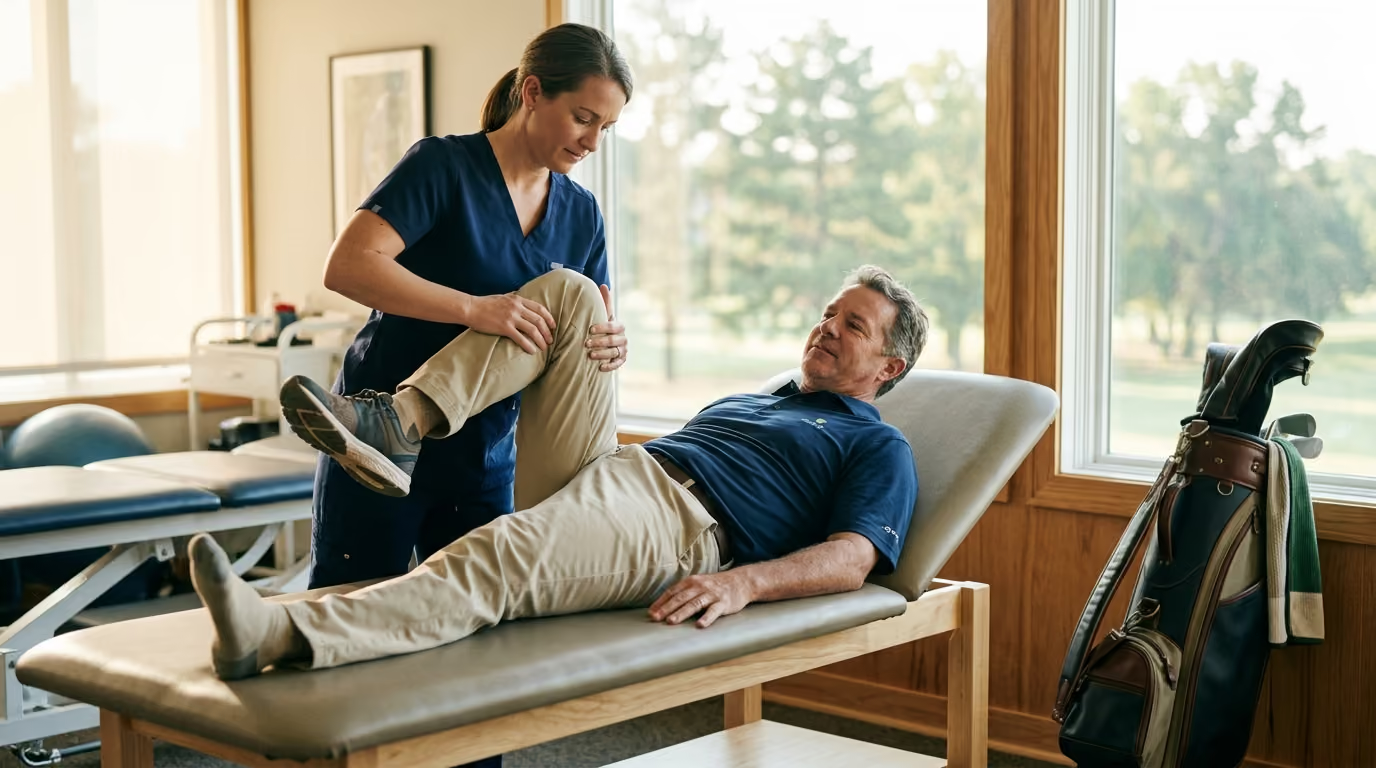
Adding some light strength training can also help protect your lower joints. By building lower body strength, you create a natural brace around your knees and ankles. Strong muscles absorb the shock of the swing so your cartilage does not have to.
The limited ankle pattern is a silent killer of golf swings. When your ankle joints are stiff, your feet cannot interact with the ground properly. You will find it hard to keep your balance throughout the swing. Your body will try to find stability by locking up your hips and knees.
This ankle stiffness often causes golfers to lift their heels too early in the downswing. Lifting your lead heel early forces all your weight onto the ball of your foot. This shift increases the shear force on your lead knee by a massive amount. Keeping your lead heel down longer is much safer for your joints.
You can test your ankle mobility at home. Stand five inches away from a wall and try to touch your knee to the wall without lifting your heel. If you cannot do this, your ankles are tight. This tightness is directly contributing to your knee pain on the course.
Improving your ankle mobility does not require hours of hard work. You can do simple stretches while watching television or waiting for dinner. The key is consistency rather than intensity. Mild, regular stretching is much better for mature tendons than occasional hard stretching.
Another great drill is the ankle circle. Sit on a chair and lift one foot off the floor. Slowly draw the largest circle you can with your big toe. Move slowly and try to make the circle as smooth as possible. Complete fifteen circles in each direction for both feet.
This exercise helps lubricate the ankle joint with synovial fluid. This fluid acts as a natural oil, reducing friction inside the joint. Doing this simple drill before you play can help your ankles move much more freely on the first tee.
Your hips are built to rotate, but they lose this ability if you sit too much. Stiff hips are a primary cause of lower back and knee pain in golfers. If your hips cannot turn, your body will force your knees and lower back to twist. Since these joints are not built for deep twisting, they quickly become injured.
To restore hip rotation, you must stretch the muscles around the hip joint. The seated figure-four stretch is an excellent option. Sit on a chair and cross your left ankle over your right knee. Gently press down on your left knee while leaning your torso forward with a straight back.
Hold this stretch for thirty seconds, then swap sides. You should feel a deep stretch in your hip and glute muscles. Doing this stretch daily will make it much easier to turn your hips during your swing. This extra turn will take the pressure off your lower back and knees.
Mobility is only half of the equation. You also need strength to support your joints during the swing. Without strong muscles, your joints must absorb all the impact forces on their own. This lack of support leads to rapid wear and tear on your cartilage.
You do not need to lift heavy weights to build golf strength. Simple bodyweight exercises like squats and lunges are highly effective. When performing squats, focus entirely on pushing your hips back like you are sitting in a chair. This focus keeps your knees from sliding too far forward, protecting the kneecaps.
Building strength in your glute muscles is especially important. Your glutes are the main power source for your swing and the primary stabilizers of your hips. Strong glutes help control the lateral slide of your pelvis, protecting your lead knee from shear forces.
Many golfers make common mistakes when they try to fix their lower body joint pain. One of the biggest errors is locking the lead knee straight too early in the downswing. Players see younger professionals snap their lead leg straight to gain speed. They try to copy this move to hit the ball farther.
When you lock your lead knee straight, you lose all your shock absorption. The massive force of your swing travels straight into your knee joint. This can wear down your cartilage very quickly. Instead, keep a slight flex in your lead knee through impact to distribute the energy.
Another common mistake is forcing a straight foot setup. Many players believe that keeping their feet square helps them aim better. This square position locks your joints and prevents your hips from turning fully. Flaring your feet is a much safer way to set up.
Some golfers also try to make a deep backswing that is too long for their body. They rotate their shoulders past their physical limits. This over-rotation forces the knees to twist inward to accommodate the movement. A shorter, controlled backswing is much safer for older joints and keeps your swing on plane.
Finally, hitting too many practice balls can lead to overuse injuries. Playing more than four rounds a week or hitting over 200 range balls increases your risk of joint damage. Your body needs time to recover between sessions. Focus on improving your muscle recovery after golf to keep your joints fresh.
The locked lead knee is a perfect example of a modern swing trend that is dangerous for mature players. Young professionals have the flexibility and joint strength to handle this sudden stop. Their muscles are strong enough to brace the joint as it snaps straight.
For a golfer over 40, this snap is a recipe for injury. When the knee locks, the femur slams down into the tibia. This impact crushes the meniscus, which acts as the shock absorber between these bones. Over time, this crushing leads to bone-on-bone pain and swelling.
To avoid this issue, focus on keeping your lead knee soft. Think of your lead leg as a shock absorber on a car. It should bend slightly to absorb the bumps, not lock up like a solid steel bar. This soft knee will make your swing feel much smoother and save your joint from impact damage.
The idea of the square foot setup has been taught for decades. Many instructional books show diagrams with feet perfectly perpendicular to the target line. While this setup looks neat, it does not match the anatomy of the human body.
Very few people have the hip flexibility required to rotate fully from a square stance. Forcing this position places high rotational stress on your knees and ankles. The joints are forced to twist past their safe limits to finish the swing.
Turning your toes out is not cheating. It is a smart anatomical adjustment that matches the natural shape of your hip sockets. Flaring your feet is the easiest way to gain instant flexibility and protect your joints at the same time.
Many mature golfers believe they need a massive backswing to hit the ball far. They try to turn their shoulders as far as they did in their twenties. To achieve this turn, they let their trail knee collapse inward and their hips sway.
This over-rotation does not actually create more speed. It simply gets the club out of position and ruins your balance. It also places high twisting torque on your trail knee and hip during the backswing.
A shorter, more compact backswing is much safer and more efficient. Focus on a controlled turn where your trail hip stays solid. You will find that you hit the ball more consistently from a shorter swing. You will also experience much less fatigue and soreness after your round.
Many golfers love spending hours on the practice range. They hit ball after ball, trying to perfect their swing. While practice is important, hitting too many balls is a major cause of joint injuries.
The repetitive motion of the swing places constant stress on the same joints. Without proper rest, your muscles become fatigued and stop supporting your bones. This leaves your cartilage to absorb all the force of the swing.
To prevent overuse injuries, limit your practice sessions to 100 balls or fewer. Focus on quality rather than quantity. Take a break between shots and practice your pre-shot routine. This slower pace is much better for your joints and matches the rhythm of real play.
Your choice of golf equipment can also affect the stress on your lower joints. Golf shoes are the only connection between your body and the ground. The traction pattern on your shoes determines how much rotational force your joints must absorb.
Many modern golf shoes feature aggressive, heavy plastic spikes. These spikes lock your feet securely into the grass. While this traction prevents slipping, it also stops your feet from releasing naturally. This creates high twisting torque on your knees and ankles during the downswing.
If you suffer from knee or ankle pain, consider switching to spikeless golf shoes. Spikeless shoes offer plenty of grip for most playing conditions. They also allow a tiny amount of natural rotational slip. This small release helps protect your lower joints from excessive torque.
You should also check the support inside your shoes. If your feet flatten out too much, your ankles will roll inward. This movement is called pronation, and it places extra stress on the inner side of your knees. Custom orthotics or supportive insoles can keep your feet aligned and reduce knee pain.
Even your golf club shafts can influence how hard you push against the ground. If your shafts are too stiff, you will feel the need to swing harder to launch the ball. This extra effort forces you to push off the turf with more violence. Switching to a lighter, more flexible shaft can help you generate speed with less physical strain.
The debate between spiked and spikeless shoes is highly relevant to joint health. Spiked shoes are great for wet, hilly courses where slipping is a major concern. However, they can lock your feet too tightly into the turf on dry days.
This tight lock means that any twisting force generated by your swing must be absorbed by your body. Since your feet cannot move, your knees and ankles take the brunt of this force. Spikeless shoes feature smaller, softer rubber nubs instead of hard plastic spikes.
These rubber nubs provide excellent grip while allowing your feet to release slightly at the end of your swing. This small release acts as a safety valve, releasing the twisting pressure before it reaches your knees. Many mature players find that switching to spikeless shoes provides immediate relief from post-round knee pain.
Your feet are the foundation of your entire swing. If your feet are not aligned properly, your whole body will suffer. Many people suffer from flat feet or overpronation, where the arches collapse inward.
During the golf swing, this collapse causes your ankles to roll inward. This inward roll forces your knees to bow inward as well, placing high stress on the medial joint compartment. It can also cause your hips to tilt, leading to lower back pain.
Supportive insoles or custom orthotics can correct this alignment issue. They support your arches and keep your ankles from rolling inward during the swing. This simple correction keeps your knees moving in a straight, safe line, reducing wear and tear on your cartilage.
Your choice of golf clubs can also influence how your body interacts with the ground. If your club shafts are too stiff, you will naturally try to swing harder to bend the shaft. This extra effort forces you to push off the turf with more violence, increasing joint stress.
Switching to a lighter, more flexible shaft can help you generate speed with less physical effort. The club does more of the work, allowing you to swing with a smoother, easier rhythm. You will get the same distance with much less strain on your lower body.
Even your grip size can make a difference. If your grips are too small, you will squeeze the club too tightly. This tension travels up your arms and into your shoulders, making your whole body tense. Larger grips promote a lighter grip pressure, which helps keep your entire swing smooth and relaxed.
To apply these lessons to your game this week, use this step-by-step checklist:
Protecting your knees and ankles through smart setup adjustments will allow you to play powerful, pain-free golf for decades.
Follow Golfergy for practical insights on performance, mobility, recovery and healthy ageing. Stay connected for new articles, research-led guidance and ideas to help you play better for longer.


Explore practical resources on performance, recovery, mobility and golf longevity.
Read the Blog