
Six hours of static travel locks down your joints, but targeted recovery strategies help golfers restore essential hip and spine mobility before teeing off.




Many golfers believe that sitting on a plane or in a car for six hours counts as rest. They think they are saving energy for the course. In reality, static sitting is a form of physical stress that locks down your joints and deactivates your core. To play your best on a long-awaited golf trip, you need a systematic plan to undo this damage. This guide outlines how to protect your body on the road.
We spend thousands of dollars on tee times, flights, and lodging. Yet we often step onto the first tee with a body that has been frozen in a seated position. This guide looks into the science of travel fatigue and offers a clear recovery plan. It is designed to keep you moving well so you can play your best.
You arrive at a bucket-list golf course after a five-hour flight. Your lower back feels like a tight band of steel. You stand on the first tee, look down the fairway, and try to take a practice swing. You feel an immediate restriction in your hips and shoulders.
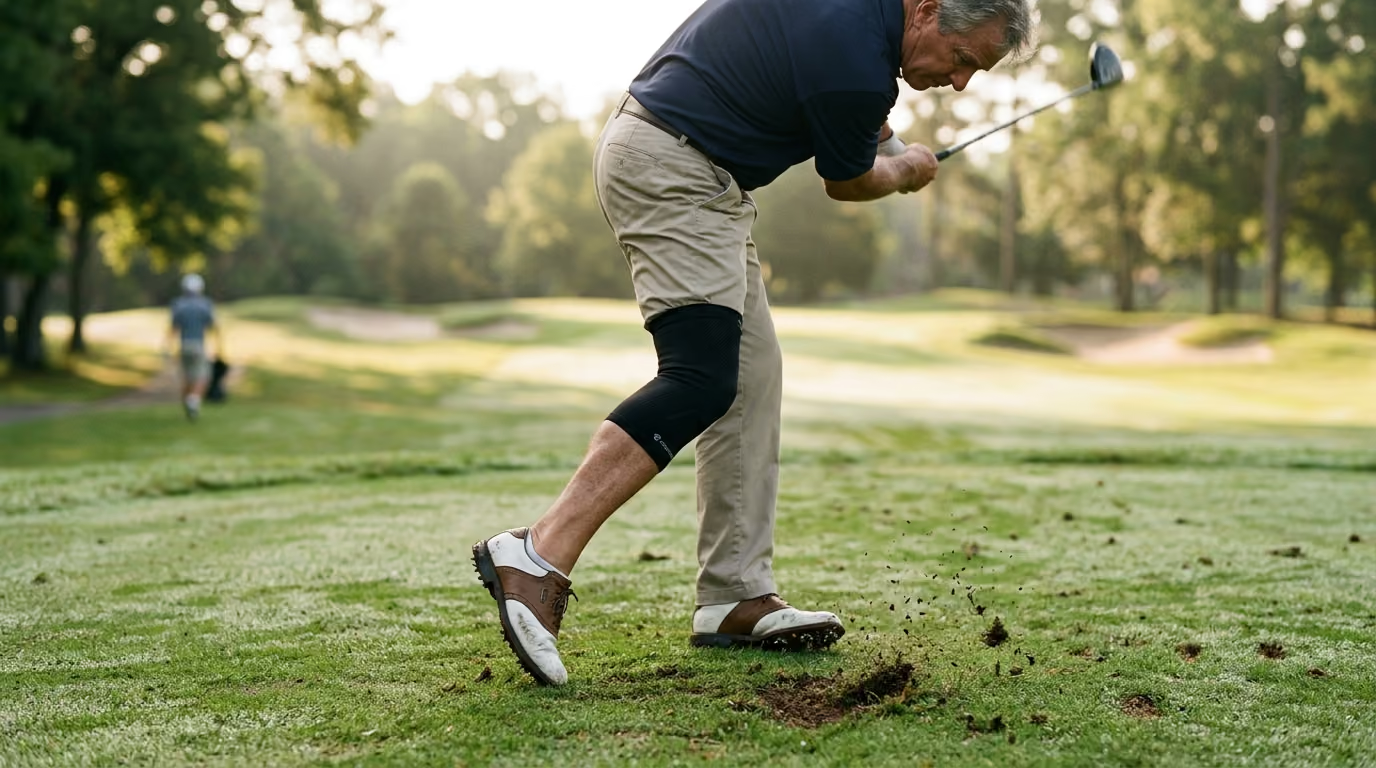
You cannot turn your shoulders fully. When you swing, your trail hip feels glued in place. Instead of a smooth rotation, you make a lifting motion with your arms. The result is a weak slice into the trees. Your back twinges on the follow-through.
This physical lockup is not a swing flaw. It is the direct consequence of sitting in a cramped seat. Your glutes have gone to sleep, and your hip flexors have shortened. If you force a full swing now, you risk a serious injury.
This is a common issue for golfers traveling to new courses. When your body is stiff, your swing compensations multiply. You end up fighting your body instead of playing the course. Understanding why this happens is the first step toward preventing it.
To recover quickly, we must understand the difference between travel fatigue and jet lag. According to the British Journal of Sports Medicine, travel fatigue happens after any long trip. It comes from noise, cramped spaces, and mild dehydration. It typically resolves after one good night of sleep.
Jet lag is different. It is circadian misalignment from crossing three or more time zones. It disrupts your sleep, your hormones, and your digestive system. Research shows that traveling east causes worse disruption than traveling west. This is because your body adjusts slower when you lose time.
To protect your body, you must follow the three Rs of post-travel recovery. These are rehydrate, repair, and restore.
First, we must rehydrate. Airplane cabin humidity is often below twenty percent, which dries out your muscles and joints. Drink plenty of water to counter this loss. Water keeps your spinal discs hydrated and cushioned.
Second, we must repair. Long static sitting causes micro-stiffness in muscle fibers. Consuming clean protein helps rebuild these areas. It reduces the soreness that builds up during transit.
Third, we must restore. Travel drains your glycogen stores due to low-grade physical stress. Eating healthy carbs replenishes your energy. This keeps you from feeling sluggish on the back nine.
We also need to distinguish flexibility from mobility. Flexibility is passive muscle length. Mobility is active control of a joint through its range of motion. Travel primarily locks up your mobility. It turns off the neurological signals to your glutes and core.
When these muscles turn off, your joints lose their active support. Your lower back has to work twice as hard. This is why focused injury prevention is so important after a long trip. You must wake up these sleeping muscles before you swing.
If you must play right after travel, do not stretch statically. Holding a static stretch actually relaxes your muscles and reduces swing speed. This is a common warning from the Titleist Performance Institute. It can make your joints feel unstable.
Instead, use a dynamic warm-up to wake up your nervous system. Start with simple standing pelvic tilts. Stand with your feet shoulder-width apart, bend your knees slightly, and slowly tuck your tailbone under. Then arch your lower back.
This movement restores the connection between your pelvis and your lower spine. Repeat this small movement ten times. Move slowly and feel the muscles in your lower stomach contract.
Next, perform Controlled Articular Rotations, or CARs. Focus entirely on turning your trail hip in a slow circle. Raise your knee, rotate it outward, sweep it back, and bring it down. This lubricates the joint socket and prepares the hip for the backswing.
Do five rotations on each side. Keep your upper body completely still during this movement. This teaches your brain to separate hip movement from spine movement.
Finish with some gentle arm swings and shoulder turns. Stand in your golf posture and let your arms hang loose. Slowly turn your shoulders back and through, letting your arms swing freely. This builds a natural rhythm before you touch a club.
If you have time before your round, use a structured three-day approach to restore your body. This protocol helps you transition from transit to the tee without injury. It gives your nervous system time to adapt.
On the day you land, focus on light activity. Spend fifteen minutes walking or riding a stationary exercise bike. This restores blood circulation to your stiff legs. It also pumps fresh fluid into your spinal discs.
Get immediate exposure to natural sunlight. Sunlight helps reset your body clock to the local time zone. Do not take a nap longer than thirty minutes. Long naps late in the day make night sleep much harder.
Drink plenty of water. A good metric is to drink one and a half liters of water for every kilogram of weight lost. If you do not have a scale, simply monitor your urine color. It should be pale yellow.
Focus on moving your thoracic spine, hips, and shoulders. Stand tall, place a golf club across your shoulders, and slowly turn your upper body. Focus entirely on turning your thoracic spine while keeping your hips stable. This restores your thoracic mobility which is vital for a full backswing.
Next, head to the short game area. Practice chipping and putting to regain your feel. This builds coordination without putting heavy stress on your body. It allows your brain to reconnect with your hands and feet.
Avoid hitting full-power drives on Day 1. Your muscles are still recovering from travel-induced cortisol spikes. Cortisol is a stress hormone that slows down muscle healing and increases injury risk. Keep your movements light and easy.
Now you can proceed to the driving range for a full-range practice session. Start with short irons and slowly work up to the driver. Focus on smooth tempos rather than high speed.
Take a light walkthrough of the golf course if possible. This prepares your mind and body for the terrain. It also helps you plan your strategy for the tournament or round.
By Day 2, your nervous system is ready for the speed of a full golf swing. This slow build-up helps you avoid injury. It guarantees that you step onto the first tee with confidence.
The saddest thing I have seen in golf is watching lifelong playing partners slowly drop out of our weekend group. It usually starts with a nagging shoulder or knee issue they ignore until it requires surgery. That pattern is exactly why I became obsessed with golf longevity. We do not have to stop playing as we age, provided we do the right maintenance work between rounds. Taking care of your body during travel is a major part of this work. Using a systematic plan ensures you can enjoy golf longevity for decades to come.
Many golfers fall into predictable traps when trying to recover from travel. These mistakes can actually increase your risk of injury. They can also ruin your performance on the course.
The first mistake is static stretching before the round. Many golfers try to stretch away tightness by holding deep, passive stretches. Research shows this temporarily weakens muscle fibers. It reduces your power and can lead to a sloppy swing.
Instead of stretching, focus on active muscle activation. You want your muscles to fire quickly and support your joints. Dynamic movements are always better than static holds before you play. Save the long stretches for the evening after your round.
The second mistake is the napping trap. Taking a long afternoon nap after arrival is highly tempting. However, long naps disrupt your circadian rhythm. You will find yourself awake at midnight, which delays your adaptation to the new time zone.
If you feel exhausted, limit your nap to twenty minutes. Set an alarm to prevent yourself from falling into deep sleep. A short nap provides a quick mental reset without ruining your night.
The third mistake is poor timing with alcohol and caffeine. Having a beer or a coffee right after arrival seems harmless. Yet, alcohol ruins the quality of your sleep and dehydrates your body. Caffeine consumed after midday delays your internal clock reset.
Stick to water and herbal teas on your arrival day. This allows your body to wind down naturally. You will wake up feeling refreshed and ready to play.
Your choice of equipment during travel affects how you feel on the first tee. Using the right gear can prevent stiffness before it starts. It makes the journey much easier on your joints.
First, use a lumbar roll during flights or car rides. You can use a rolled-up towel or a dedicated lumbar cushion. Place it in the small of your back to maintain your natural spinal curve. This simple step prevents your lower back from flattening out.
A flat lower back puts immense pressure on your spinal discs. It also causes the muscles in your hips to tighten up. Keeping the curve in your spine protects your back during long trips.
Second, wear graduated compression socks during travel. Compression socks improve blood flow back to your heart. This reduces swelling in your ankles and feet. It also lowers the risk of blood clots on long flights.
Swollen ankles make it hard to balance during your swing. They also make your golf shoes feel tight and uncomfortable. Compression socks are a simple way to keep your lower legs fresh.
Third, check your golf shoes. Make sure your shoes offer good arch support. When you play on a new course, you will walk several miles on uneven ground. Weak arch support can cause knee and hip pain after a long travel day.
Fourth, consider your golf club grips. If you have joint stiffness in your hands, midsize or jumbo grips can reduce the pressure needed to hold the club. This lowers the stress on your wrists and elbows. You can find more helpful advice on our resources page.
Travel-induced stiffness in the hips often leads to swing compensations. The most dangerous compensation is the reverse spine angle. This happens when your upper body tilts toward the target at the top of the backswing.
When your hips are stiff, you cannot rotate them fully. To make a full backswing, your upper body tilts to compensate. This places tremendous pressure on your lower back. It is a leading cause of travel-related back pain.
To avoid this, make a conscious swing change on your first round. Focus entirely on turning your trail hip during the backswing. Allow your trail knee to straighten slightly to help the hip turn.
Do not try to keep your hips completely still. Letting your hips turn freely reduces the twist on your spine. This keeps you safe from back spasms and strains.
Keep your swing smooth and controlled. Focus on solid contact rather than maximum distance. This approach protects your back while you regain full mobility.
You can also shorten your backswing slightly. A three-quarter swing is much safer when your body is recovering from travel. It still produces plenty of power if you make center contact.
As we age, our bodies take longer to recover from travel. Golfers over fifty face more significant sleep disruption. Our circadian rhythms become less flexible as the years pass.
Our bodies also produce less growth hormone during sleep. This slows down muscle recovery after long periods of sitting. Therefore, older players need a longer buffer period before their first round.
If possible, arrive at your destination forty-eight hours before your tee time. This gives your body time to lower its cortisol levels. High cortisol levels make your joints feel stiffer and increase pain sensitivity.
A longer buffer period also helps you adjust to local weather conditions. Playing in high heat or humidity requires extra physical adaptation. Giving your body time to adjust improves both safety and performance.
Pay close attention to your hydration. Older adults have a decreased sensation of thirst. Drink water even when you do not feel thirsty. This protects your muscles from cramping on the course.
You may also want to use joint supports if you have arthritis. A simple knee sleeve or wrist wrap can provide extra stability. It keeps the joint warm and improves blood circulation during play.
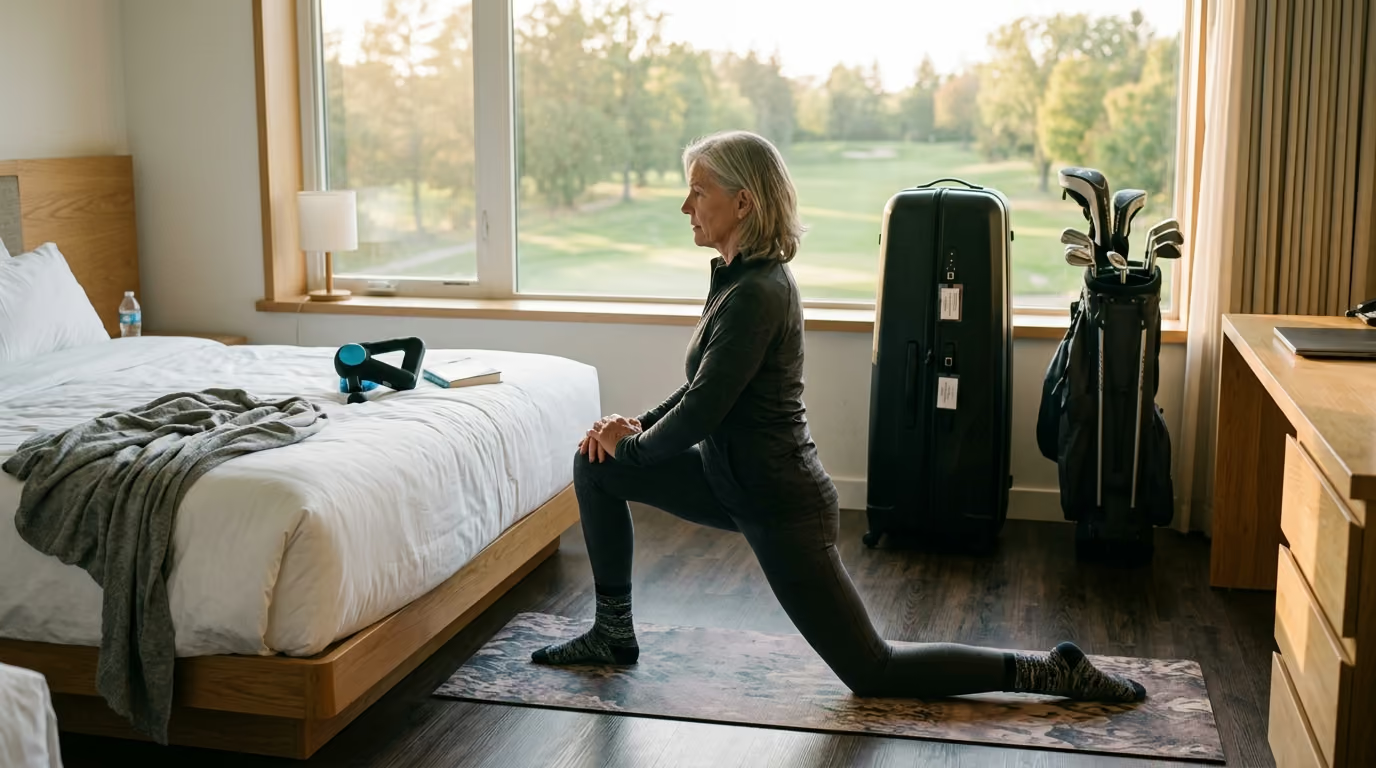
You do not have to wait until you arrive to start your recovery. You can perform small movements during your journey. These micro-movements prevent your body from locking up in the first place.
If you are driving, stop every sixty minutes. Get out of the car and walk for two minutes. This simple habit keeps your blood flowing and stops your glutes from deactivating.
While standing, perform gentle pelvic tilts. Focus entirely on tilting your pelvis forward and backward. This resets the position of your lower spine. It takes only thirty seconds but offers major benefits.
If you are on a plane, stand up and walk down the aisle every hour. While seated, perform ankle circles. Rotate your ankles ten times in each direction to improve circulation.
You can also perform seated shoulder rolls. Roll your shoulders backward in a slow circle. This relieves tension in your neck and upper back. It prevents the rounded posture that ruins your shoulder turn.
These micro-movements keep your joints lubricated. They prevent the severe stiffness that occurs when you sit completely still for hours. You will arrive at your destination feeling much more mobile.
What you put into your body during travel determines how your muscles perform. Avoid processed foods and high-sodium airport snacks. These foods cause inflammation and fluid retention, making your joints feel stiff.
Pack your own snacks, such as raw nuts and fresh fruit. These foods provide clean energy and essential nutrients. They help your body manage the physical stress of travel.
Focus on lean protein sources once you arrive. Protein provides the amino acids needed to repair muscle tissue. Combine your protein with complex carbohydrates like sweet potatoes or brown rice.
Carbohydrates replenish your muscle glycogen. This ensures you have plenty of energy for the back nine. Avoid heavy, greasy meals before you play, as they can make you feel lethargic.
Avoid drinking sugary sports drinks. They can cause rapid blood sugar spikes followed by energy crashes. Stick to pure water with a pinch of sea salt or an electrolyte tablet.
Electrolytes are vital for muscle function. They help prevent cramping and improve muscle communication. This is especially true when playing in warm climates.
Active travel recovery is the best way to protect your swing and your joints from the physical strain of long journeys.
Follow Golfergy for practical insights on performance, mobility, recovery and healthy ageing. Stay connected for new articles, research-led guidance and ideas to help you play better for longer.


Explore practical resources on performance, recovery, mobility and golf longevity.
Read the Blog