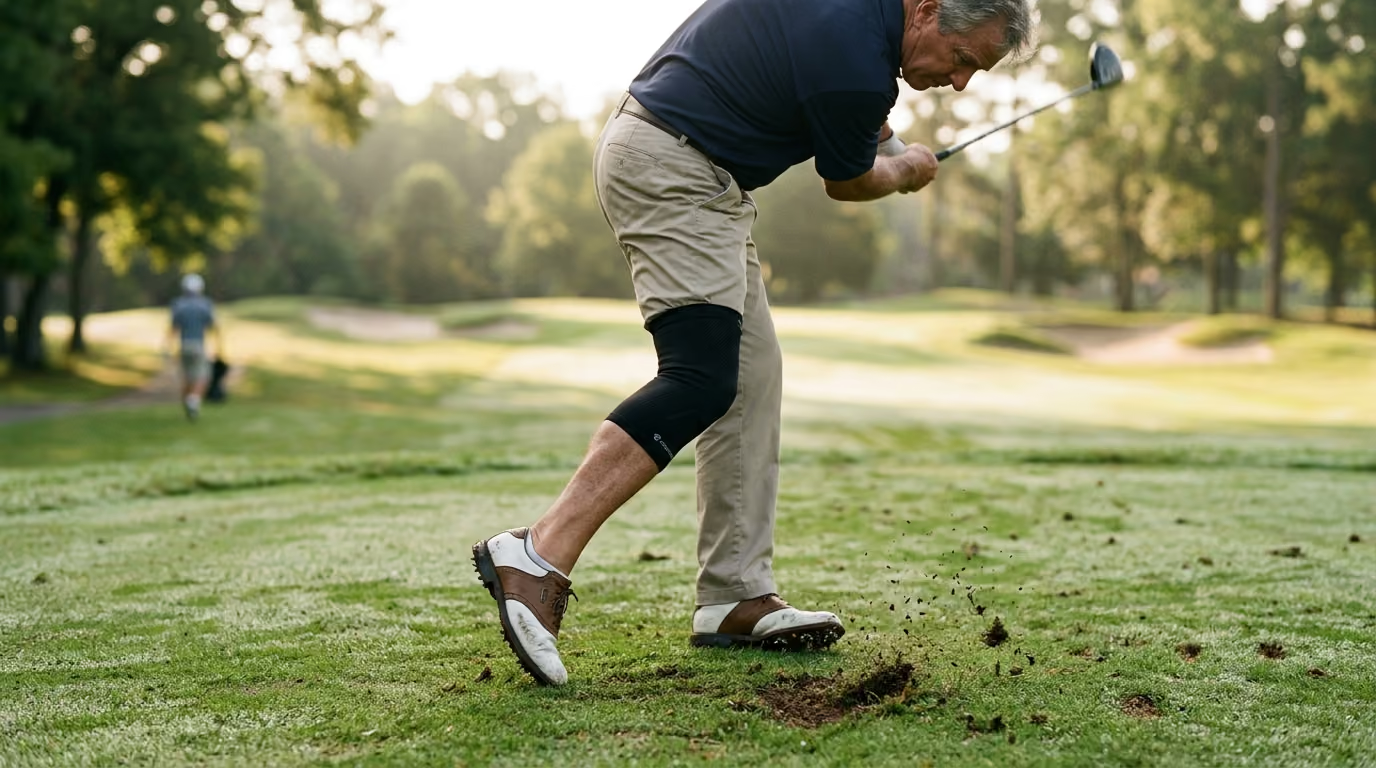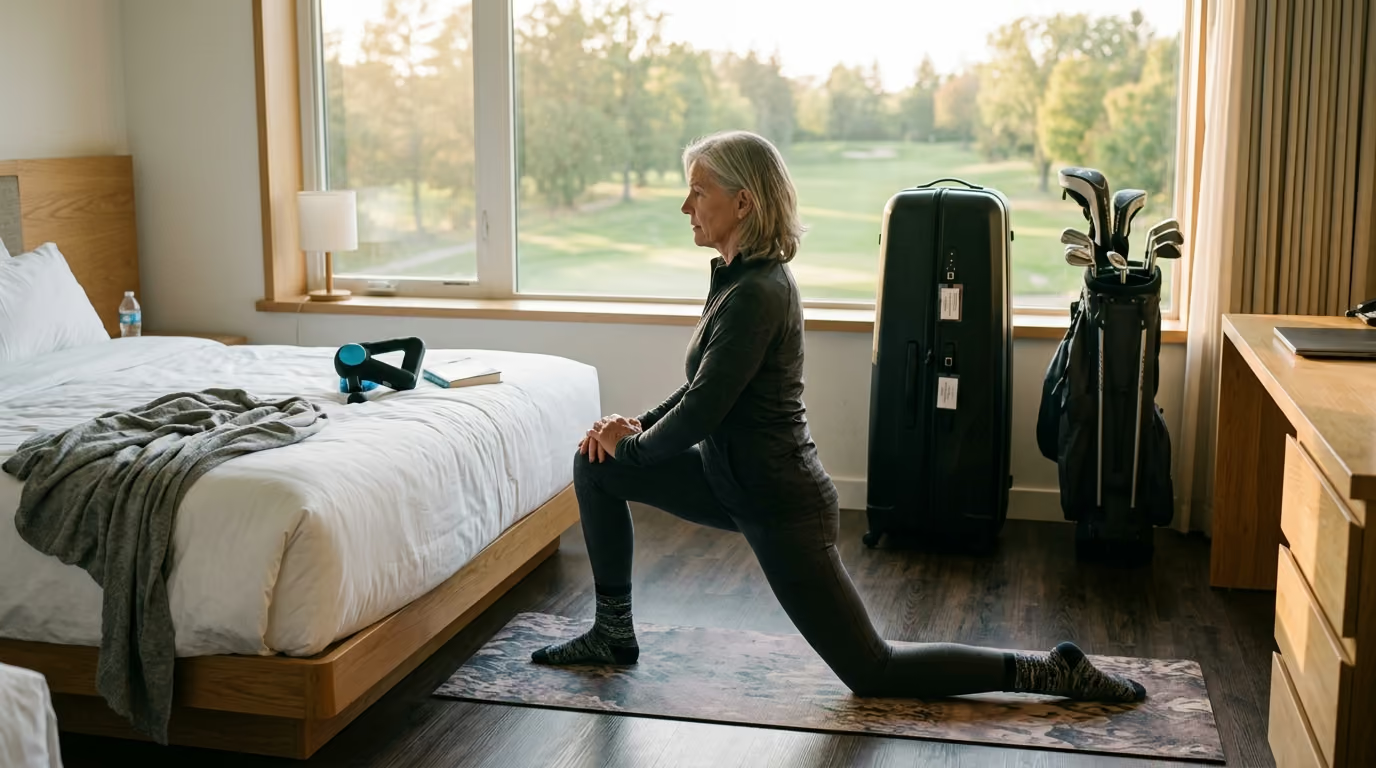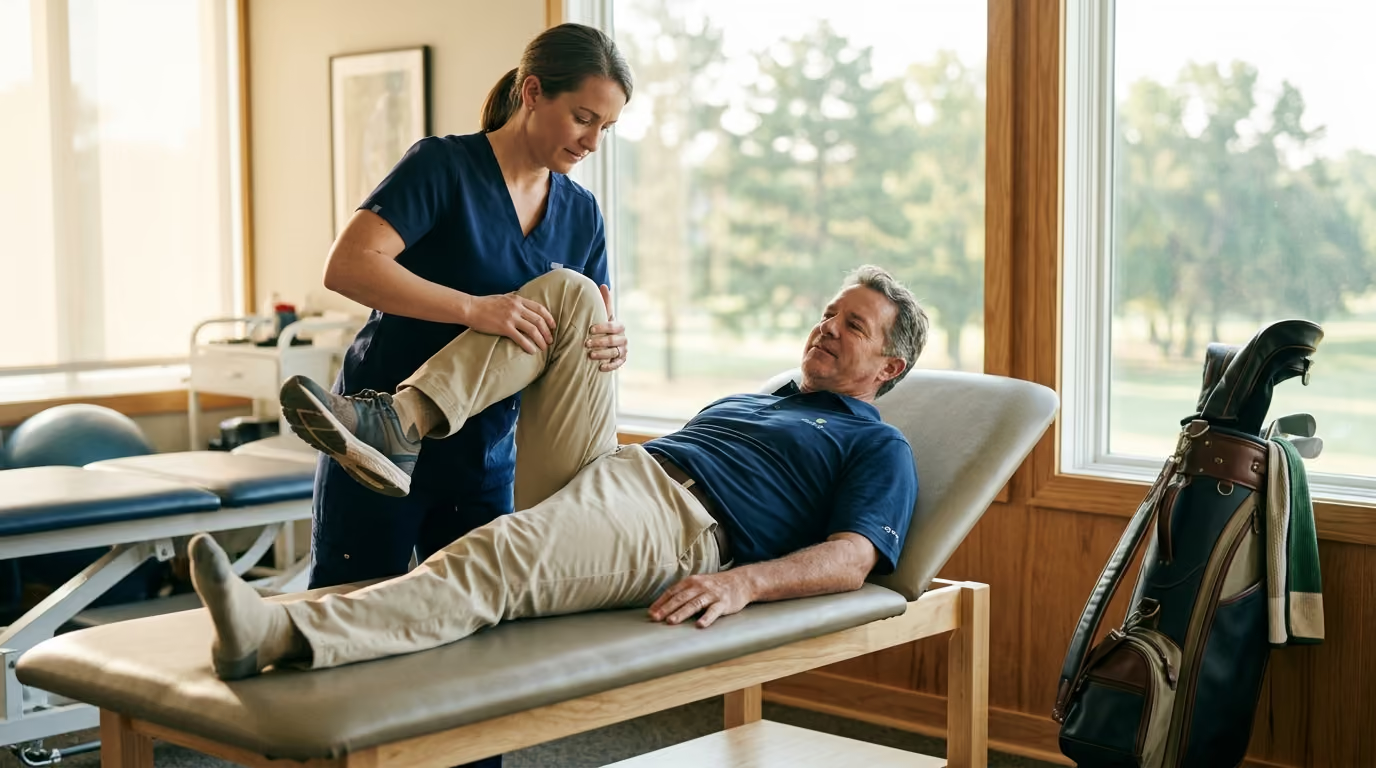

Rest alone cannot resolve persistent golf soreness, but combining physical therapy, chiropractic care, and massage actively protects your joints and restores rotational power.




Professional recovery is the structured application of clinical movement sciences to keep your body moving freely. It is not a temporary cover for a bad swing plane. It is a long-term strategy for physical maintenance that helps you play without pain. For golfers over forty, this physical maintenance becomes the most critical part of the game.
As we age, our tendons lose water content and our joints lose natural lubrication. This makes us more prone to stiffness and injury during a high-speed rotational movement. To combat these changes, we must look beyond basic stretching. We need to understand the professional recovery menu, which includes physical therapy, chiropractic care, and massage.
Each of these therapies targets a different physical system in your body. When you use them correctly, they work together to protect your joints. This guide explains how these therapies work, how they compare, and how to use them to extend your playing years. You can learn more about managing your physical longevity on our Golf Longevity, Performance & Recovery page.
You are standing on the fourteenth tee. The wind is blowing gently from the right, and you need a solid drive to clear the fairway bunkers. As you bend down to tee up your ball, you feel a sharp stiffness in your lower back. Your lead hip feels like cement when you try to turn. When you swing, your movement feels short and choppy, and you slice the ball into the rough.
This common situation is caused by a concept called regional interdependence. The Titleist Performance Institute popularized this concept in the golf world. It means that a physical limitation in one joint of your body causes pain or injury in another joint. Your body functions as a stack of joints that alternate between needing stability and mobility.
This joint-by-joint approach is easy to understand. Your thoracic spine, which is your upper back, needs to be mobile. Your hips also need to be mobile. By comparison, your lumbar spine, which is your lower back, needs to be stable. Your knees also need to be stable.
When your hips or upper back become stiff, your body must find rotation from another area. It forces your lower back to twist to complete your backswing. Your lower back is only designed to rotate about fifteen degrees. Forcing it to twist further creates micro-tears in the muscles and puts pressure on your spinal discs.
This rotational stress is why golf injuries are so common. Research published in Sports Health shows that over 50 percent of golfers will suffer a musculoskeletal injury during their lifetime. Annual injury rates for amateur players range from 15.8 percent to 40.9 percent. The lower back is the most common site of pain, representing up to 36.4 percent of amateur injuries. The elbow and wrist are the next most common areas.
Furthermore, injuries to your lead side are five times more frequent than injuries to your trail side. The lead side accounts for 84.5 percent of all golf-related injuries. This imbalance happens because your lead side must absorb massive forces to decelerate your club during the follow-through. If your lead hip cannot rotate, your lower back and knee must absorb those forces instead. You can read more about avoiding these issues on our Injury Prevention page.
Many golfers confuse these three treatment methods. They might ask a massage therapist to fix a joint restriction, or ask a chiropractor to solve a muscle weakness. Understanding the unique role of each professional helps you choose the right care.
Physical therapy focuses on rehabilitation, functional movement, and stability. A physical therapist analyzes how your muscles and joints work together during your swing. They use specific tests to find weak areas in your movement patterns.
Their primary goal is to restore normal joint mechanics and build golf-specific strength. They do this by prescribing targeted exercises that teach your body to move correctly. If you are recovering from a muscle strain or want to build a more stable base, a physical therapist is the right choice. You can find more details on building strength on our Strength page.
Chiropractic care focuses on the alignment of your spine and your nervous system. Chiropractors use spinal manipulative therapy to restore movement to joints that are restricted.
When a spinal joint is stuck, it limits your overall rotation. A chiropractor uses quick, controlled pressure to release these joint restrictions. This release helps improve your overall posture and makes sure your nerves can communicate clearly with your muscles. Chiropractic care is highly effective for golfers who feel a sudden block in their rotational movement.
Massage therapy targets the soft tissues of your body. This includes your muscles, tendons, ligaments, and fascia.
A massage therapist uses manual pressure to release muscle knots and improve local blood circulation. This reduces muscle tension and helps flush out metabolic waste. Massage is excellent for reducing muscle soreness and improving your passive range of motion. It helps your muscles relax so that they can stretch to their full length during your swing.
Physical therapy works by identifying and correcting the root cause of your physical limitations. A physical therapist who is trained in golf biomechanics will start with a full body screening. They will look at your hip rotation, your shoulder mobility, and your core stability.
They use this information to see how your body connects to your golf swing. For example, if you sway during your backswing, it often means your lead hip lacks lateral stability. The physical therapist will not just tell you to stop swaying. They will give you exercises to strengthen your gluteus medius muscle. This muscle holds your pelvis stable when you rotate.
This approach is vital during the remodeling phase of tissue healing. When you strain a muscle, your body repairs it by laying down collagen fibers in a messy, random pattern. If you do not guide this healing, the muscle becomes tight and weak.
A physical therapist uses progressive exercise loading to align these new tissue fibers. They use resistance bands, medicine balls, and balance boards to mimic the forces of a golf swing. This process makes sure your muscles can handle the speed of your downswing without tearing again. You can learn about restoring your movement on our Mobility page.
Physical therapy also focuses on your deceleration patterns. Many golfers spend all their time trying to swing faster. However, your brain will only let you swing as fast as your body can safely stop.
If your lead shoulder and hip cannot decelerate your body, your brain slows down your swing automatically. A physical therapist builds strength in your deceleration muscles, which are located in your back and hips. This keeps you safe and helps you maintain your clubhead speed late in your round.
Chiropractic care is often associated with simple back pain relief, but it also has a direct impact on your swing performance. To understand how, you must look at how your nervous system controls your muscles.
Every joint in your spine is filled with tiny sensors called mechanoreceptors. These sensors tell your brain where your body is in space. When a joint becomes restricted, these sensors stop working correctly.
Your brain senses this restriction as a threat. To protect your spine, your brain sends signals to tighten the surrounding muscles. This is called muscle guarding, and it acts like an emergency brake on your swing.
Spinal manipulative therapy releases the stuck joint. This stimulation resets the mechanoreceptors and tells your brain that the area is safe. The brain then stops the muscle guarding, which allows your muscles to contract with full speed and power.
This effect is backed by clinical research. A study published in the Journal of Chiropractic Medicine looked at two groups of golfers. Both groups performed a targeted stretching routine.
One group also received chiropractic adjustments before they swung. The group that received the adjustments along with stretching showed a significant increase in shot distance. The group that only stretched did not see the same performance gains.
Chiropractic care also helps restore spinal symmetry. Because we only swing the golf club in one direction, golf is an asymmetrical sport. Over time, this repetitive, one-way movement causes uneven wear on your spinal joints.
A chiropractor can locate these asymmetrical restrictions and correct them. This makes sure you can turn equally well on both your backswing and your follow-through.
Many golfers view massage as a luxury to enjoy on vacation, but it is actually a powerful clinical tool for recovery. When you perform a golf swing, your muscles experience microscopic damage. This damage leads to delayed onset muscle soreness, which peaks about 48 hours after your round.
Massage therapy helps reduce this soreness by physical manipulation. It squeezes metabolic waste products out of your muscle tissues and pulls in fresh, oxygenated blood. This speeds up the cellular repair process.
Massage also has a measurable effect on your range of motion. A pilot study conducted by the Massage Therapy Foundation investigated the effects of targeted neuromuscular massage on golfers.
The treatment focused specifically on the thoracic rotators, which are the muscles that turn your upper back. The results were impressive. The golfers showed an average increase of 12.02 degrees in their thoracic range of motion.
Even better, they experienced an average swing speed increase of 4.34 miles per hour. This speed increase is a direct result of having a wider, smoother turn.
However, we must understand what massage can and cannot do. There is a common myth that massage can directly build muscle strength or power.
A comprehensive meta-analysis of sports massage showed scarce evidence that massage improves raw strength, jump height, or sprint speed. Massage does not make your muscles stronger on its own.
Instead, it restores your natural muscle length and reduces pain. This allows you to perform your strength exercises and practice your swing with proper form. It is a vital tool for recovery, but it must be paired with active exercise. Discover more recovery methods on our Recovery page.
If you suffer a back injury, you must follow a structured return-to-play protocol. Returning to the course too quickly is the most common cause of re-injury. You should guide your recovery by using the three phases of tissue healing.
During this first week, your body is working to clear out damaged cells. You will feel pain, swelling, and muscle spasms.
Your primary goal is to reduce pain and protect the injured area. Do not try to stretch through the pain, and do not swing a club. Focus on gentle walking on flat surfaces, which keeps blood moving without straining your back.
During this phase, your body begins to lay down new collagen tissue. The acute pain will start to fade, but the tissue is still weak and disorganized.
This is the perfect time to begin light manual therapy. You can receive gentle massage or passive joint mobilization to guide the healing tissue. You can also start basic core stability exercises, like the bird-dog or dead-bug, to protect your spine.
During this final phase, the new tissue is strengthened. This is when you can begin a graduated return-to-play system.
Before you touch a club, you must pass a series of static hold tests. First, stand in your golf setup position and hold it for thirty seconds. Next, rotate to the top of your backswing and hold that position.
Then, move to your impact position, and finally to your full follow-through position. Hold each of these positions for thirty seconds. If you can perform these holds without any pain, you are ready to begin swinging.
[Static Hold Tests] ---> [Slow Swings] ---> [Chipping] ---> [Pitching] ---> [7-Iron] ---> [Full Play]
Start your swinging program with short chips. Hit ten short chips on day one, and then stop. Wait forty-eight hours to make sure your back does not react poorly.
If you feel fine, move to pitching wedges on day three. On day five, you can try hitting a 7-iron with a half-swing. Slowly progress through your bag over two weeks, leaving your driver for the very end.
Many golfers waste time and money on treatments because they make simple mistakes. Here are three common errors to avoid.
The most common mistake is using the absence of pain as your only measure of recovery. Pain is usually the first symptom to disappear during the healing process.
However, your functional stability and tissue strength take much longer to return. If you return to full swings as soon as the pain stops, you will likely reinjure yourself during the remodeling phase. Always complete your full physical therapy program, even after the pain is gone.
Many golfers try to improve their mobility by holding stretches for ten or fifteen seconds. This is too short to create any lasting change in your tissues.
Your muscles and fascia have viscoelastic properties. A short stretch only triggers a temporary nervous system relaxation.
To create actual physical changes in your connective tissues, you must hold your stretches for at least two minutes. This longer duration allows the collagen fibers to actually lengthen.
Some golfers use chiropractic adjustments or massages as a replacement for exercise. This passive care feels wonderful, but its effects are temporary.
If you do not strengthen the weak muscles that caused your joint to lock up, the restriction will return in a few days. You must use passive therapies to open a window of movement. Then, you must immediately perform active exercises to lock in that new range of motion.
You do not need to visit a clinic every day to maintain your body. You can use this simple home routine to keep your hips and upper back moving freely.
This is an excellent stretch to perform on the course when you feel your upper back tightening up. Stand behind your golf cart and place both hands on the roof.
Slowly step back until your upper body is parallel to the ground. Let your chest sink down toward the turf, keeping your knees slightly bent.
Hands on roof
\
| \ <-- Sink chest down
| \
Cart / \ <-- Keep knees bent
Turn your chest gently to the left, and then to the right. This immediately opens up your thoracic spine before you hit your next shot.
Perform this two-step routine at home every evening to build lasting mobility.
Step 1: The Trail Hip Internal Rotation Stretch. Sit on the floor with your knees bent at ninety degrees. Lower both of your knees to the right side so they rest on the floor.
Focus entirely on turning your trail hip inward. Hold this position for two minutes, breathing deeply into your belly. Repeat the process on the left side.
Step 2: The Sidelying Open Book. Lie on your left side with your knees bent at ninety degrees. Reach both of your arms straight out in front of you.
Slowly sweep your right arm open in a wide arc, trying to touch the floor behind you. Keep your hips pinned together and do not let them turn.
Follow your moving hand with your eyes. Hold this open position for five deep breaths, and then return to the start. Perform ten repetitions on each side.
Your equipment choices can either help or hurt your recovery efforts. If your gear does not match your physical abilities, your body must work harder to compensate.
If your grips are too small, you will naturally squeeze the club too tightly. This excess grip pressure travels up your forearms to your elbows.
Over time, this causes medial epicondylitis, which is commonly known as golfer's elbow. Upgrading to midsize or jumbo grips allows you to hold the club with less hand tension. This immediately reduces the strain on your elbows and wrists.
Many mature golfers continue to play shafts that are too heavy and stiff. A stiff steel shaft requires a very high swing speed to bend correctly.
If your body is slowing down, a stiff shaft forces you to use extra muscular effort to get the ball airborne. This extra effort puts massive strain on your lower back and shoulders.
Switching to a lighter, more flexible graphite shaft allows the club to do the work. This protects your joints from unnecessary force.
Spiked shoes provide great grip, but too much traction can lock your feet to the ground. If your lead foot cannot rotate at all during your follow-through, that twisting force must go somewhere.
It travels directly up into your lead knee and hip. Spikeless shoes allow for a very small amount of foot slide at the end of your swing. This tiny slide reduces the rotational stress on your lead knee.
It is best to get a massage after your round of golf. A deep tissue massage before your round can relax your muscles too much, which temporary reduces your explosive power.
If you do get a pre-round massage, make sure it is light and fast to stimulate blood flow. Post-round massage is ideal because it helps flush metabolic waste and starts the muscle recovery process.
Yes, these two therapies are highly complementary. A chiropractor can release joint restrictions to restore your potential range of motion.
Once the joint is free, a physical therapist can give you exercises to strengthen the surrounding muscles. This coordination makes sure your joints stay open and stable over the long term.
Muscular pain usually feels like a dull, aching sensation that improves as you warm up. Joint pain, such as hip osteoarthritis, often feels like a sharp pinch in your groin during deep rotation.
If you feel a sharp pinch or if your joint feels physically blocked, you should see a medical professional for a proper clinical assessment.
Consistent professional recovery is not about fixing a broken body, it is about keeping your joints moving so you can play the game you love for years to come.
Follow Golfergy for practical insights on performance, mobility, recovery and healthy ageing. Stay connected for new articles, research-led guidance and ideas to help you play better for longer.


Explore practical resources on performance, recovery, mobility and golf longevity.
Read the Blog