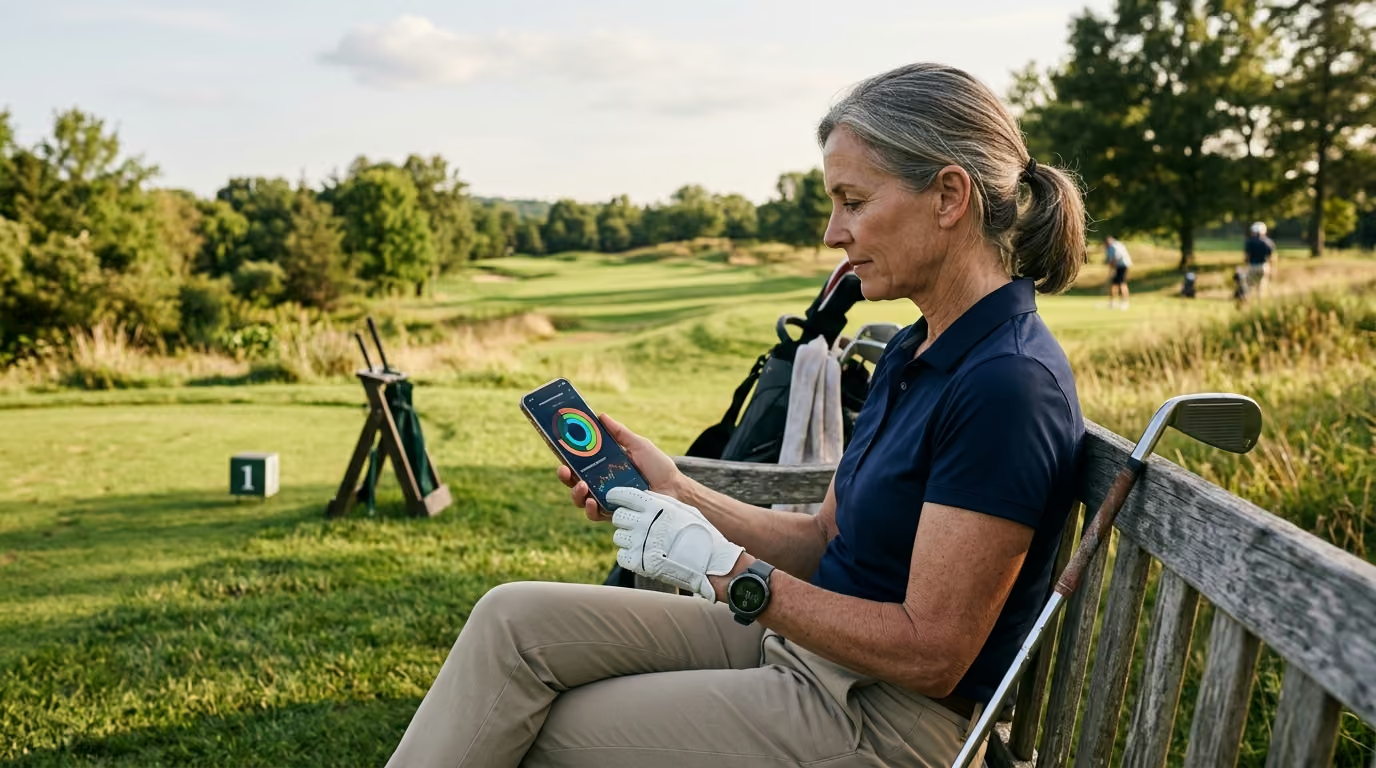

Wearable health data helps golfers manage fatigue and nervous system recovery to maintain swing speed across eighteen holes.




Many golfers search the internet for answers to why their golf shots fall apart on the back nine. They look for ways to keep their swing speed high and stop back stiffness after eighteen holes. The answer does not lie in a new swing tip or a different driver shaft. Instead, it lies in how you manage your physical energy and nervous system recovery. Modern wearable technology can help you track these factors, but only if you know how to read the data correctly.
This guide will show you how to use wearable data as a decision support system. You will learn to track cardiovascular strain and heart rate variability to make smart choices about your practice. We will show you how to adjust your training so you can play pain free golf for years to come.
You are walking up the fourteenth fairway and the wind is blowing hard. Your lower back feels stiff and your shoulders are tight. You try to make your normal backswing, but your trail hip refuses to turn fully. You block your drive into the right trees.
This on-course breakdown is not a swing flaw. It is a physical limitation caused by accumulated fatigue. When your muscles tire, your brain changes how it moves your body. This shift protects your joints, but it ruins your swing path.
As physical fatigue sets in, your clubhead speed begins to drop. You might try to swing harder to make up for this loss. This effort usually backfires.
You end up using your lower back to force the turn instead of your hips. This extra strain on your spine leads to soreness that lasts for days. Your wearable device can show you when this fatigue is building before you ever step onto the tee.
Your body reacts to walking and swinging by activating its stress response. This response is useful for short periods, but it becomes harmful when it lasts too long.
Your heart rate stays high, and your muscles cannot relax between shots. This silent stress robs you of your athletic coordination. Your wearable device tracks this stress through your cardiovascular data.
Physical fatigue also affects your brain. When you are tired, your decision-making skills decline. You might choose to hit a risky shot over water instead of playing safe.
You lose the focus needed to read greens and control your temper. Tracking your physical recovery helps you keep your mind sharp throughout the round.
Your autonomic nervous system controls your heart rate, digestion, and breathing. It has two main branches that act like an accelerator and a brake.
The sympathetic branch is the accelerator. It prepares your body for action, raises your heart rate, and tightens your muscles. The parasympathetic branch is the brake. It lowers your heart rate, helps you digest food, and allows your body to heal.
Heart rate variability, or HRV, is the variation in time between your successive heartbeats. Your heart does not beat at a perfectly steady rhythm. If your pulse is sixty beats per minute, your heart does not beat exactly once every second.
One gap might be nine-tenths of a second, and the next might be one and one-tenth seconds. A higher variation is generally a sign of a healthy, rested nervous system. It shows that your body is ready to adapt to new challenges.
Your HRV changes constantly based on your daily choices and stress levels. Hard exercise, poor sleep, and psychological stress can lower your HRV.
Alcohol consumption and travel also cause a sharp drop in your numbers. Conversely, good sleep and proper hydration help your HRV return to its normal baseline. It is a highly sensitive marker of how much total stress your body is absorbing.
Most consumer wearables track a metric called RMSSD to calculate your HRV. This is a mathematical formula that looks at the millisecond differences between your normal heartbeats.
RMSSD is highly sensitive to changes in your parasympathetic nervous system. It is the most reliable metric for golfers who want to monitor their daily recovery. You should track your own trend over time rather than comparing your numbers to other golfers.
When you feel tension rising on the course, you can use your breathing to slow your heart rate. Take a deep breath in through your nose for four seconds.
Hold it for two seconds, then exhale slowly through your mouth for six seconds. Repeat this pattern three times before you select your club. This simple breathing exercise activates your parasympathetic nervous system and calms your muscles.
The way you walk between shots can help you manage your physical strain. Avoid walking with hunched shoulders or a tucked chin.
Walk with an upright posture and let your arms swing naturally. To protect your joints, focus entirely on turning your trail hip with each step. This movement keeps your pelvis mobile and prevents your lower back from locking up.
Mental anxiety can spike your heart rate on the golf course. To counter this, simplify your pre-shot routine.
Pick one specific target in the distance and look at it twice. Take one practice swing to feel the rhythm of your body. Step up and hit the ball without letting your mind worry about the outcome.
Dehydration causes your heart rate to rise and your HRV to drop. Drink water on every single tee box, even if you do not feel thirsty.
Eat a small snack like nuts or fruit every four holes to keep your blood sugar stable. Keeping your energy levels constant protects your nervous system from sudden crashes on the back nine.
To make sense of your wearable data, you must establish a baseline. Wear your device every night for at least three weeks under normal conditions.
Standardize your measurements by wearing the device in the same position each night. Take your morning readings before you drink caffeine or start moving. Consistent data collection is the only way to find your true personal range.
Baseline Setup Period: 3 Weeks
Wear Position: Identical placement on wrist or finger
Standardization: Measure immediately upon waking, before caffeine
I used to stand on the first tee doing long, static hamstring stretches because I thought it was the right way to warm up. I would actually feel weaker on my first drive. Research later showed me that dynamic movements, like leg swings and torso twists, prime the nervous system much better. Changing my five minute warmup completely transformed my opening tee shots.
Your wearable data will show a better response when you prepare your body with movement. Dynamic exercises raise your body temperature and prepare your joints for the speed of the swing. They help your nervous system transition from a resting state to an athletic state without creating excess strain.
Do not panic when you see a single low HRV score in the morning. Your daily numbers will fluctuate naturally.
Instead, look at your seven-day rolling average to see your true recovery trend. This rolling average smooths out the daily noise and shows if you are truly burning out. You can find more detail on tracking these trends by looking at golf recovery methods.
Consistent sleep is the most powerful tool for your long-term recovery. Try to go to bed and wake up at the same time every day.
Even a one-hour shift in your sleep schedule can disrupt your autonomic nervous system. When you align your sleep times, your body can repair itself more efficiently. This consistency will show up as a higher baseline HRV and a lower resting heart rate.
To protect your body, you must understand the difference between internal and external training loads. External load is what you physically did on the course or in the gym.
This includes your steps, distance walked, and the number of swings you made. Internal load is how your body responded to that work. It is measured by your heart rate, your HRV, and your perceived level of effort.
Most consumer wearables estimate your daily strain based on your heart rate. This creates a major blind spot for golfers.
You can hit one hundred hard drives on the range and feel completely exhausted. Yet, your heart rate might stay relatively low during the session. Your wearable will report a low strain score, but your muscles and joints have taken a beating.
Because your watch misses swing strain, you must track your volume manually. Keep a simple log of how many full swings you make each day.
Write down your high-speed swings separately from your easy wedges. This practice helps you see the true mechanical stress on your body. You can use this log to plan your golf strength training without overloading your joints.
Walking eighteen holes is a fantastic way to build cardiovascular fitness. However, walking on a hilly course in hot weather creates a high internal load.
If you combine a long walk with high-speed swing practice, you risk overloading your tissues. You must learn to balance these two demands. This balance is a cornerstone of preventing golf injuries as you age.
Many golfers become obsessed with getting high readiness scores every day. They feel anxious when their wearable shows a yellow or red recovery rating.
This anxiety can actually lower your HRV further. Your body is not a machine, and you do not need perfect scores to play good golf. Use the data as a guide, not as a judgment of your athletic worth.
This is a dangerous mistake. Your wearable might show a green recovery score because your heart rate and sleep were excellent.
Yet, your lead shoulder might be throbbing from yesterday's practice. Never use a high wearable score to justify playing through physical pain. Your joint health and movement quality must always take priority over a digital screen.
A sudden drop in HRV can happen for many reasons. You might have had a late meal, or you might be slightly dehydrated.
Do not change your entire weekly training plan because of one bad morning reading. Wait to see if the drop continues for three or more days. A multi-day downward trend is a real signal; a single-day drop is usually just noise.
Most golfers wear a smartwatch or a fitness band on their wrist. These devices use light-based sensors to track your pulse.
While they are highly convenient, they can lose accuracy during a golf swing. The rapid movement of your wrist can cause the sensor to shift and record false data. For the most accurate HRV readings, rely on data collected while you are asleep and completely still.
Wearables love to tell you how much deep sleep and REM sleep you got last night. The truth is that consumer devices are not perfect at identifying these stages.
They often mistake quiet wakefulness for light sleep. Instead of obsessing over the exact minutes of deep sleep, focus on your total sleep time. Consistent bedtime routines will improve all stages of your sleep naturally.
To get clean data, your wearable must fit your body correctly. If the strap is too loose, light will leak in and distort the sensor readings.
If it is too tight, it can restrict blood flow and cause errors. Wear the device about two fingers above your wrist bone. Make sure the sensor has firm, flat contact with your skin at all times.
When your HRV is stable and your sleep is excellent, your body is ready for stress. This is the perfect time to work on your swing speed or do heavy gym work.
You can hit a full bucket of drivers without worrying about excessive wear and tear. You should also focus on your rotational mobility exercises on these days to build long-term flexibility.
Green Day Protocol:
A yellow day means your body is dealing with moderate stress. You do not need to sit on the couch, but you should modify your practice.
Skip the high-speed driver swings and focus on your short game instead. Work on your putting, chipping, and mid-iron accuracy. This approach keeps your skills sharp without overloading your nervous system, supporting healthy ageing on the course.
Yellow Day Protocol:
When you see a red recovery score paired with elevated resting heart rate and sore muscles, pay attention. Your nervous system is struggling to keep up with your lifestyle.
Avoid hard practice, speed work, and heavy lifting. Instead, go for a light walk, do some gentle stretching, or just rest. Taking a break today will prevent a multi-week injury or a major slump in your performance.
Red Day Protocol:
To begin using wearable data to protect your body and improve your golf game, follow this checklist this week:
Your wearable device is not a doctor or a coach, but it is a powerful tool to help you listen to your body and adjust your practice before fatigue turns into a chronic injury.
Follow Golfergy for practical insights on performance, mobility, recovery and healthy ageing. Stay connected for new articles, research-led guidance and ideas to help you play better for longer.


Explore practical resources on performance, recovery, mobility and golf longevity.
Read the Blog