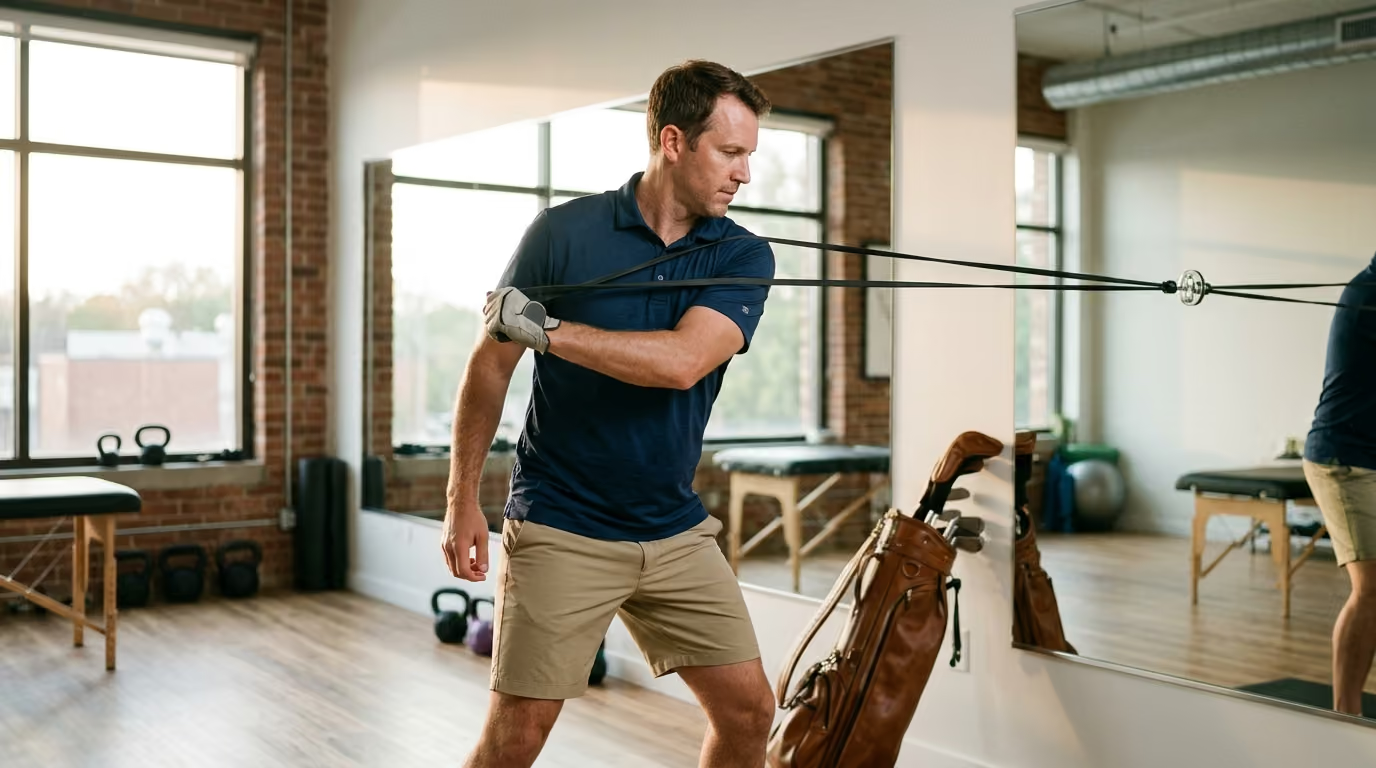
Extra driving range time seems like the key to lower golf scores, but proper overnight sleep is what truly locks in your swing mechanics.




Many golfers believe that extra practice is the only way to lower their scores. They hit bucket after bucket under the driving range lights. They search for the perfect swing thought to solve their issues. Yet research reveals that practicing without sleeping is like typing a long document and forgetting to save your work.
The real skill consolidation happens when your head hits the pillow. For the golfer over forty, quality sleep is the ultimate performance aid. It acts as a natural tool to restore your muscles and steady your mind. Without it, your swing will suffer regardless of how many hours you spend on the practice tee.
We often look at golf as a game of technical adjustments. We buy new clubs, take lessons, and study our swing videos. But we fail to look at how our biological systems recover. Physical performance depends on your nervous system.
When your nervous system is tired, your muscles cannot perform your swing patterns. This comprehensive guide will show you how sleep architecture controls your mechanics. You will learn why your body struggles to recover as you age. We will look at how a bad night of sleep adds actual strokes to your scorecard.
You stand on the tee box of the par-four fourteenth hole. Your front nine was excellent, and your swing felt easy. Now, your arms feel heavy and your timing is slightly off. You try to swing harder, but your drives are beginning to drift into the right rough.
Your lower back starts to ache as you walk toward your ball. Your focus begins to wander, and you make a poor decision on your next shot. You tell yourself that you just need to try harder. In reality, your body is shutting down from physical fatigue.
A few years ago, I noticed my swing falling apart around the 14th hole. My lower back would tighten up, and I started compensating with my arms. I spent months thinking it was a swing flaw. It was not until I started a simple evening hip mobility routine that I realized my glutes were just turning off from fatigue. Fixing that one physical limitation brought my back nine scores down drastically.
This fatigue often stems directly from poor recovery the night before. When you lack deep rest, your muscles lose their stamina early in the round. Your brain cannot coordinate the complex movements needed for a solid swing. The breakdown on the fourteenth hole is not a swing flaw. It is a physical warning that your body ran out of energy.
Sleep is not a single state of rest. It is a series of active stages that repair your body and program your brain. Each cycle lasts about ninety minutes. Your body repeats these cycles throughout the night.
For golfers, three specific stages of sleep control how you play. Understanding these stages will help you see why rest is vital.
Stage 2 Non-Rapid Eye Movement sleep is the lighter phase of rest. It occupies about half of your total night. This stage is where your brain processes physical skills.
When you practice a new swing path, your brain receives fresh physical information. But this information is only temporary. During Stage 2 sleep, your brain transfers these movements to your permanent memory. This process is like moving files from your computer desktop to a secure hard drive.
If you cut this stage short, you lose the benefits of your practice. The new hand path or hip turn will feel completely foreign the next day. Your brain simply did not have enough time to save the code.
Slow-Wave Sleep is also known as N3 or deep sleep. This stage happens mostly during the first half of the night. It is the period of deepest physical recovery.
During this stage, your brain triggers the release of daily growth hormones. These hormones travel through your bloodstream to repair micro-tears in your muscles. This process quietens systemic inflammation and restores your joint health. You can learn more about these processes by reading about specialized athletic recovery routines.
Deep sleep is necessary to rebuild your physical strength. Without enough deep sleep, your muscles remain tight and weak. You will wake up feeling stiff, and your rotation will be limited.
Rapid Eye Movement sleep occurs mostly in the early morning hours. This stage is where your brain processes emotions and complex ideas. It helps you handle stress and make smart decisions.
In golf, REM sleep keeps you calm after a bad shot. It allows you to forget a double bogey and focus on the next tee shot. It also helps you judge distances and read greens.
When you wake up early for a tee time, you cut off your longest REM cycles. This leaves you feeling mentally fragile. You are more likely to make poor choices on the course and lose your temper.
As we age, our sleep patterns change. Golfers over forty face unique biological challenges that affect their recovery. These shifts make sleep quality even more important for maintaining your playing years. You can read more about these physical shifts by looking at our guide on maintaining your physical longevity.
The most significant change in older adults is the loss of Slow-Wave Sleep. Research from the National Institutes of Health shows that deep sleep decreases by about two percent per decade. By the time you reach sixty, you have lost a large portion of this restorative phase.
This means your body has less time to repair muscles. Your recovery from eighteen holes will take much longer than it did in your twenties. You might feel sore for two days instead of one.
To combat this decline, mature golfers must prioritize sleep duration. Since your deep sleep is limited, you need to maximize your total sleep time. This gives your body more opportunities to enter the deep recovery phases.
Older golfers often experience sleep fragmentation. This means you wake up multiple times during the night. These micro-arousals prevent you from staying in deep sleep stages.
Minor noises, temperature changes, or slight joint pains can easily wake you. This fragile sleep leaves you feeling tired even if you spent eight hours in bed. Your actual sleep efficiency drops.
This fragmentation directly affects your muscle recovery on the course. If your sleep is constantly broken, your muscles will not receive a steady flow of growth hormones. Your body remains in a state of low-level physical stress.
Your internal biological clock naturally shifts earlier as you get older. This shift is known as the advanced sleep phase. You will feel tired earlier in the evening and wake up earlier in the morning.
This change can actually help with early morning tee times. But it becomes a problem if you try to maintain a late-night social schedule. If you go to bed late but still wake up early, you build a massive sleep debt.
This sleep debt accumulates over days and weeks. It slowly drains your physical energy and ruins your coordination. Managing this internal clock is vital for your long-term performance.
Many golfers believe they can play well on five hours of sleep. They use caffeine to wake up and head to the first tee. However, sports science shows that sleep deprivation hurts your numbers in very specific ways.
Putting requires fine motor precision and accurate depth perception. A study by Nishida et al. (2022) examined how sleep restriction affects putting. The results were clear and concerning for golfers.
Sleep-deprived golfers showed a significant increase in lateral misalignment. This means they struggled to start the ball on their intended line. They were far more likely to push or pull their putts.
The study also showed that tired players struggled with distance control. Their brains could not accurately judge the speed of the greens. This led to more three-putts and higher scores.
In contrast, increasing your sleep can improve your performance. A landmark study at Stanford University looked at the effects of sleep extension on athletes. The researchers had athletes increase their sleep to ten hours per night for several weeks.
The results were remarkable. The athletes improved their fine motor coordination by nine percent. Their reaction times improved by fifteen percent.
For golfers, this means better control over the clubface. Your swing timing becomes more consistent. Sleep extension was shown to be more effective for precision than adding extra hours of physical practice.
Sleep disorders can have a massive impact on your golf game. Research on golfers treated for sleep apnea revealed a surprising connection. After receiving treatment to improve their sleep, their golf scores dropped significantly.
The average player saw their Handicap Index drop by over eleven percent. For single-digit handicappers, the results were even better. These skilled players saw their handicaps drop by over thirty-one percent.
This shows that better sleep helps every level of golfer. When your brain is rested, your motor skills improve. Your consistency increases, and your scores decline.
Playing golf while tired increases your risk of getting hurt. Research shows that sleeping fewer than seven hours per night for two weeks is dangerous. It is associated with a 1.7 times greater risk of musculoskeletal injuries. You can protect your body by studying preventing common joint strains.
When you are tired, your stabilizing muscles stop working correctly. Your core fails to protect your spine during the high-speed rotation of the swing. This puts extra stress on your lower back and shoulders.
A slight loss of balance can cause you to swing off-plane. This puts your joints in weak positions. Over time, this leads to chronic pain that can keep you off the course for months.
Many golfers make mistakes when trying to improve their recovery. They use habits that actually destroy their sleep architecture. Here are three common pitfalls you must avoid.
It is common to have a few drinks after a round or the night before a game. Many golfers believe that alcohol helps them sleep. While alcohol acts as a sedative to help you fall asleep, it destroys your sleep quality.
Alcohol is a potent suppressor of REM sleep. It causes your sleep to become highly fragmented during the second half of the night. You will wake up frequently as the alcohol leaves your system.
You might sleep for eight hours, but you will wake up feeling mentally tired. Your coordination will be off, and your focus will be weak. Avoid alcohol for at least three hours before going to bed.
When you are sleep-deprived, your body experiences higher stress levels. This stress triggers an automatic fight-or-flight response. One major physical side effect is a massive increase in grip pressure.
Research shows that tired golfers use twelve to eighteen percent more grip pressure. They do this unconsciously to try and control the club. This extra tension is almost impossible to release through willpower.
This tension ruins your swing. It stops your wrists from releasing naturally, leading to slices and hooks. It also tires out your forearms and shoulders by the middle of the round.
Many golfers try to solve their fatigue with large cups of coffee. They drink caffeine before the round and continue drinking it on the course. While caffeine can make you feel awake, it does not restore your motor skills.
Caffeine blocks the chemicals in your brain that signal tiredness. It does not repair your muscles or restore your coordination. Your mind might feel sharp, but your body will still struggle to swing consistently.
Too much caffeine also increases your heart rate. This can ruin your putting touch and make your hands shake. Use caffeine moderately and avoid it late in your round.
To play your best golf, you must treat the night before as part of your round. This requires both immediate on-course adjustments and long-term habits.
If you find yourself on the course after a poor night of sleep, do not panic. You can minimize the damage by simplifying your mental focus.
Do not try to manage multiple technical swing thoughts. When your brain is tired, it cannot handle complex instructions. Instead, focus entirely on one small movement, such as turning your trail hip. You can learn more about managing your body during play by studying rotational joint flexibility.
This single focus prevents your tired brain from over-analyzing. It helps reduce your grip pressure and keeps your swing smooth. It is the easiest way to salvage a round when your energy is low.
For long-term success, you must build a consistent sleep schedule. Go to bed and wake up at the exact same time every day. This consistency is highly valuable for your score.
Data from golf analysts like Lou Stagner shows a clear trend. A ten-point improvement in sleep consistency is linked to 0.19 to 0.24 fewer strokes per round. This minor adjustment can save you multiple shots over a season.
To build this habit, create a wind-down routine every night. Turn off your television and phone one hour before bed. The blue light from these screens tricks your brain into thinking it is daytime.
Read a book or do some light stretching instead. Focus on deep breathing to relax your nervous system. This signals to your body that it is time for deep recovery.
Your gear can also help you manage the physical effects of poor sleep. You can adjust your equipment to reduce physical tension and protect your body.
Since sleep deprivation increases your grip pressure, look at your club grips. If you tend to grip the club too tightly when tired, try using softer grips. You can also use midsize or jumbo grips.
These larger grips make it physically harder to squeeze the club too tightly. They reduce the tension in your hands and forearms. This helps you maintain a smooth release even when your nervous system is tired.
When you are tired, your feet and ankles lose their stability. This ruins your balance and cuts down your power. Make sure you wear golf shoes with excellent arch support.
Avoid shoes that are too flexible or lack traction. A stable shoe helps your body stay balanced during your swing. This reduces the strain on your knees and lower back.
Your mattress and pillow must support your spine. If your neck or back is bent during the night, you will wake up with physical limitations. This stiffness ruins your ability to make a full turn.
Choose a pillow that keeps your head in a neutral position. If you sleep on your side, place a pillow between your knees to relieve lower back pressure. This simple setup keeps your joints healthy and ready for the course.
To learn more about optimizing your physical health for the game, visit Golfergy. We provide research-backed resources to help you play pain-free golf for years to come.
Before your next round, remember that your preparation starts the night before when your head hits the pillow.
Follow Golfergy for practical insights on performance, mobility, recovery and healthy ageing. Stay connected for new articles, research-led guidance and ideas to help you play better for longer.


Explore practical resources on performance, recovery, mobility and golf longevity.
Read the Blog