Motorized carts appear to prevent fatigue, but walking eighteen holes delivers the continuous movement your joints need for lasting health and recovery.




Many mature golfers search online to find out if walking the course or riding in a cart is better for their aging joints. You want to protect your knees and lower back while keeping your heart healthy. You might worry that walking eighteen holes will wear out your cartilage or ruin your swing on the back nine. You also might wonder if riding in a motorized cart actually saves your body or if it makes you stiff.
This resource provides a complete look at the physiological impacts of walking versus riding. We look closely at real data regarding joint stress, cardiovascular health, and score performance. You will learn how each choice affects your body as you age. This guide will help you make the best decision for your physical health and your scorecard.
The saddest thing I have seen in golf is watching lifelong playing partners slowly drop out of our weekend group. It usually starts with a nagging shoulder or knee issue they ignore until it requires surgery. That pattern is exactly why I became obsessed with golf longevity. We do not have to stop playing as we age, provided we do the right maintenance work between rounds.
To make a smart choice, you need to understand the physical demands of both options. This resource looks at the research on cardiovascular intensity, joint lubrication, and physical recovery. We will help you build a plan to keep playing this game for decades. You can find more about physical longevity on our Golf Longevity, Performance & Recovery homepage.
Imagine you are standing on the tee box of the par four fourteenth hole. You have been riding in a cart for nearly three hours. The afternoon air is starting to cool down. You step out of the plastic seat and feel a sudden tightness in your lower back.
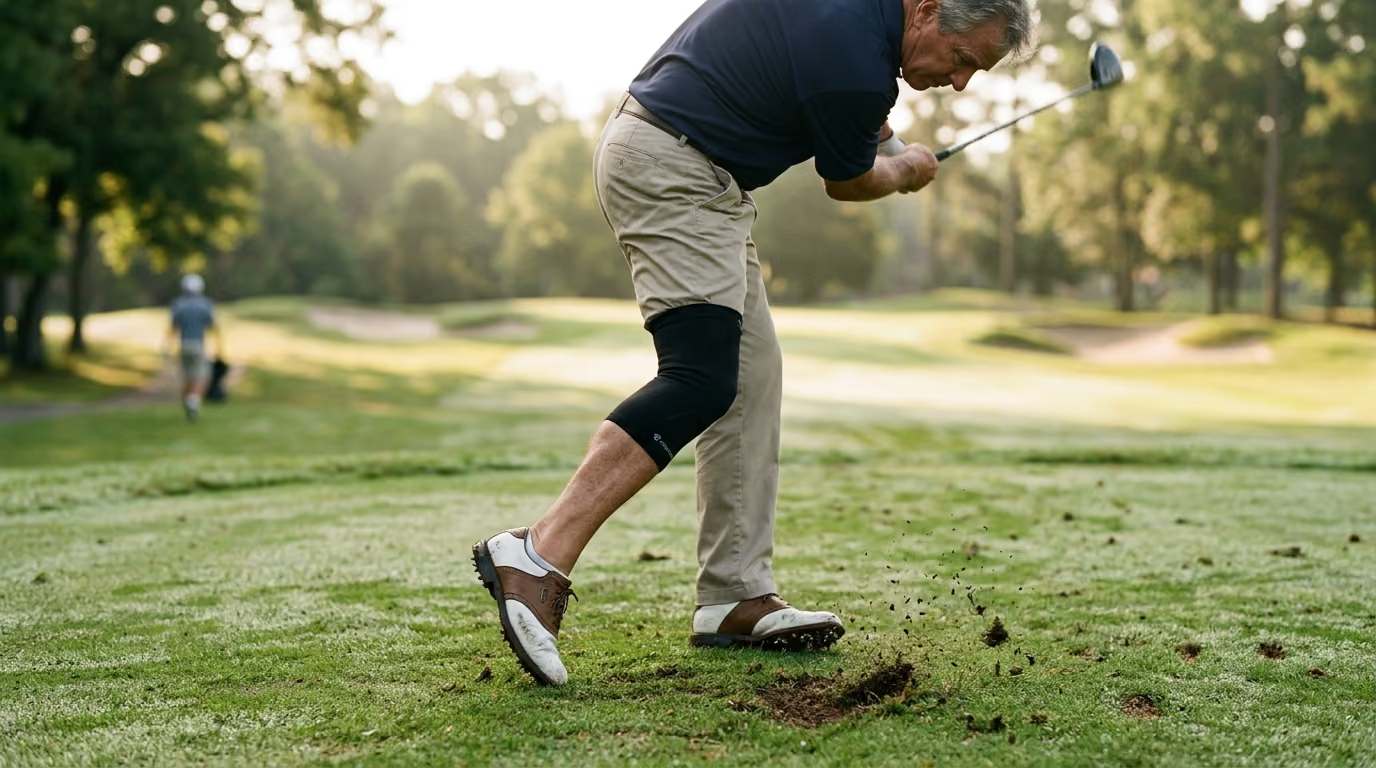
Your hips feel locked as you take a practice swing. When you swing at the ball, your body fails to rotate fully. You hit a weak slice into the right rough because your trail hip did not clear. This is a classic example of cart stiffness affecting your game.
Sitting in a cart between shots prevents your muscles from staying warm. Your joints do not get the constant movement they need to stay fluid. By the time you reach the back nine, your swing has changed to protect your stiff joints. This pattern leads to poor shots and increases your risk of injury.
Walking keeps your body in a state of continuous, low level activity. Your muscles remain warm, and your joints stay lubricated. This steady movement pattern helps you maintain your swing mechanics from the first tee to the eighteenth green. You can read more about managing physical strain in our guide on Golf Performance.
Let us break down the science of how walking and riding affect your heart and metabolism. Walking eighteen holes of golf is a classic moderate intensity aerobic exercise. It keeps your heart rate in a beneficial zone for an extended period. This steady cardiovascular load helps strengthen your heart muscle and blood vessels.
When you walk, your body uses large muscle groups like your glutes, hamstrings, and calves. These muscles require a steady supply of oxygen and fuel. To meet this demand, your heart beats faster and your lungs work harder. This process improves your body's ability to process blood sugar and control cholesterol.
Riding in a cart reduces this metabolic demand significantly. When you ride, your heart rate remains closer to its resting state. Your muscles do not have to work constantly to move your body weight across the hills. This means your cardiovascular system misses out on the training effect of moderate exercise.
Research shows that walkers spend about sixty to seventy two percent of their round in the moderate to vigorous heart rate zone. Riders spend only about thirty to thirty three percent of their round in that zone. Over a year of playing regular golf, this difference has a massive impact on your aerobic fitness. It can mean the difference between improving your heart health or simply sitting outdoors.
Let us look at the calorie burn data to understand the metabolic difference. Walking nine holes of golf burns approximately 624 calories. Riding in a cart for the same nine holes burns only about 336 calories. This difference becomes even more dramatic over a full eighteen hole round.
Walking eighteen holes burns between 600 and 1500 calories depending on whether you carry your bag or push a cart. Riding a cart for eighteen holes burns only 250 to 800 calories. The extra energy spent walking helps manage body weight and improves insulin sensitivity. This is especially valuable for mature golfers who want to manage their metabolic health.
A walking round of golf also helps you hit your daily movement goals easily. Walking eighteen holes covers between four and eight miles. This translates to 11245 to 16667 steps on your fitness tracker. Even riding a cart involves some walking, totaling nearly four miles and roughly 6280 steps per round.
These numbers show that golf is a powerful tool for Healthy Ageing. Regular movement helps protect your blood vessels and keeps your blood pressure stable. The consistent physical effort of walking also helps reduce your overall mortality risk.
A famous study by the Karolinska Institutet in Sweden looked at the health data of 300000 golfers. The researchers found that regular golfers had a forty percent lower mortality rate compared to non golfers of the same age. This lower risk of death translates to an average increase in life expectancy of five years.
This longevity benefit was strongest for players who walked the course regularly. The physical effort of walking several miles a week helps prevent chronic heart conditions. It also helps maintain muscle mass and joint function as you get older. This makes golf one of the most effective activities for senior health.
By choosing to walk, you turn your weekly round into a structured workout. Your heart rate stays elevated for several hours. This sustained, low impact cardio is exactly what doctors recommend for long term health. It helps keep your arteries flexible and your heart strong.
Many mature golfers believe that riding in a cart protects their joints. They think that walking miles of fairways will wear out their knees and hips. This is a common misconception that can actually lead to more joint stiffness. Your joints need movement to stay healthy and pain free.
To understand why, we must look at how joints get their nutrients. Unlike other tissues, joint cartilage does not have its own blood supply. It relies on a fluid called synovial fluid for nourishment and lubrication. Walking acts like a pump that circulates this fluid through your joints.
Every step you take compresses and releases the cartilage in your knees and hips. This squeezing action pushes waste products out and draws fresh, nutrient rich synovial fluid in. If you sit in a cart for hours, this pumping action stops. Your cartilage dries out slightly and becomes more vulnerable to friction.
This lubrication effect is especially vital for the lower back. The constant vibrations of a moving cart can irritate the spinal discs. Sitting in a slouched position on bumpy terrain causes muscle fatigue in your lumbar spine. Walking allows your spine to move through its natural, upright alignment, which helps keep your core muscles active.
Research from the Shirley Ryan AbilityLab and Northwestern Medicine has examined golf and knee osteoarthritis. The study found that walking the course does not increase cartilage breakdown or joint inflammation. Even golfers with mild knee arthritis did not experience worsened joint damage from walking.
While some walkers reported a slight increase in temporary pain, it was not clinically significant. The long term benefits of walking far outweighed the temporary discomfort. Walking helps strengthen the muscles around your knees, which actually reduces joint pressure over time.
Stronger quadriceps and hamstrings provide better support for your knee joints. This extra support reduces the daily wear and tear on your cartilage. If you avoid walking, these supporting muscles can weaken and worsen your joint pain. This is why keeping active is so critical for joint health.
Sitting in a cart can also cause your hip flexors to shorten and tighten. Tight hip flexors pull on your pelvis and increase the arch in your lower back. This posture causes lower back pain during your swing. Walking helps stretch your hip flexors and maintains your pelvic mobility.
While walking has massive health benefits, we must also look at how it affects your game. Walking the course increases your physical fatigue, which can impact your muscles. By the end of eighteen holes, your leg muscles and core will be more tired than if you rode in a cart.
This neuromuscular fatigue can lead to a slight decline in swing power on the final holes. Your body may find it harder to generate the same clubhead speed on the eighteenth tee. Your legs might feel slightly heavy as you set up for a crucial shot.
However, many golfers find that walking actually improves their overall performance. Walking creates a natural, slow rhythm between shots. It gives you time to process a bad shot and plan your next move. This physical transition helps calm your nervous system and improves your focus.
Riding in a cart can lead to a hurried, disjointed rhythm. You drive quickly to your ball, hop out, swing, and get back in the cart. This fast pace can keep your adrenaline high and disrupt your mental focus. Walking allows you to stay in the flow of the game.
Data shows that the way you transport your clubs can affect your score. Some studies have tracked the scores of golfers using different transport methods. Golfers using push carts or electronic carts often scored better than those using riding carts.
On average, these players finished more than a full shot better over nine holes. This improvement is likely due to the mental benefits of walking. The steady physical pace keeps your mind clear and your muscles ready to swing. It prevents the sudden stiffening that happens when you sit in a cart.
Using a push cart offers a fantastic middle ground for performance. It keeps you walking but removes the heavy load of carrying a bag on your shoulders. This setup preserves your physical energy for your swing while keeping your heart rate in the active zone. It helps you maintain your coordination through the entire round.
If you carry your bag, your body has to work much harder. Research shows that carrying a bag increases your heart rate and oxygen consumption significantly. This extra strain can cause your upper back and shoulders to fatigue. This muscle tiredness can directly ruin your posture and swing path.
For many golfers over fifty, the choice is not just between walking and riding a cart. There is a third option that has grown highly popular. Using a push cart, also known as a trolley, changes the physical demands of your round. It provides a strategic balance between cardiovascular exercise and muscle fatigue.
Carrying a heavy golf bag places a constant vertical load on your spine. This load compresses your spinal discs and forces your shoulder muscles to work overtime. Over eighteen holes, this carrying cost can lead to poor posture and early fatigue. Your shoulder turn becomes restricted, which limits your clubhead speed.
Using a push cart removes this heavy weight from your back and shoulders. You simply push your clubs forward using your core and lower body. This action uses larger, stronger muscle groups that are built for endurance. This reduces the risk of upper body strain and keeps your shoulders loose.
A study published in the British Journal of Sports Medicine looked at these different walking methods. The researchers found that using a push cart maintains the high cardiovascular benefits of walking. Your heart rate remains in the active aerobic zone, but your perceived exertion is lower. This means you get the same health benefits with less physical exhaustion.
Electronic push carts, or motorized trolleys, take this concept even further. These devices use electric motors to drive themselves forward. You simply steer them using a remote control or a handle sensor. This removes almost all the physical strain of moving your equipment.
Using an electronic cart reduces the physical load on your joints and muscles. You do not have to push a heavy cart up steep hills or through wet grass. This preserves your neuromuscular energy for your golf swing. Your legs stay fresher, and your core muscles do not get fatigued from pushing.
Yet, you are still walking the entire distance of the course. This means you still get the step count and the joint lubrication benefits. Your heart rate remains higher than if you were sitting in a motorized cart. This makes electronic carts an outstanding option for golfers wanting to balance health and performance.
In our experience, transition tools like electronic carts help players stay on their feet longer. Many golfers think they must choose between carrying their bag or riding in a cart. They do not realize that a push cart can solve their fatigue issues. It allows them to enjoy the benefits of walking without the physical toll.
If you want to read more about keeping your body strong for walking, check out our section on Strength. Strengthening your legs and core makes pushing a cart feel effortless. It also protects your lower back from injury during your swing.
Osteoarthritis is one of the most common physical challenges for golfers over fifty. It often affects the knees, hips, and lower back. Many players believe that a diagnosis of osteoarthritis means they must stop walking. They assume that riding in a cart is the only way to protect their joints.
However, medical research suggests a different approach. According to studies from the Shirley Ryan AbilityLab, walking is highly beneficial for arthritic joints. The joint needs movement to stimulate the production of synovial fluid. This fluid reduces friction and protects the remaining cartilage from wear.
If you sit in a cart, your arthritic joints can become stiff and painful. The sudden transitions from sitting to swinging can put extra stress on these cold joints. Walking provides a gentle, continuous warm up that keeps your joints moving through their full range of motion. This can actually reduce your overall pain levels during the round.
Of course, there are times when using a cart is necessary. If you are experiencing an acute flare up with severe pain and swelling, you should rest. Riding in a cart during these times allows you to stay active without overloading the joint. It is all about listening to your body and adapting your style of play.
Let us look at a common case pattern we call the Osteoarthritis Transitioner. This is a golfer in their late fifties with mild knee arthritis. They want to walk the course but are afraid of causing more damage. They often switch to a riding cart out of fear rather than necessity.
The data suggests this player should prioritize walking with a push cart. This setup keeps them moving without the weight of a heavy bag. They should aim to walk nine holes first to see how their knee responds. Over time, they can build up their endurance to walk the full eighteen holes.
Another common case is the Performance Optimizer. This golfer is concerned about losing swing power on the back nine. They notice their shots starting to fade or lose distance after the twelfth hole. They often blame this on their age and assume they must ride.
For this golfer, an electronic push cart is the perfect tool. It keeps them walking to get the health benefits but eliminates the fatigue of pushing. Their legs stay fresh, and their swing speed remains constant. This shows how technology can help you maintain both your health and your performance.
Finally, we have the Cardiovascular Patient. This is a golfer who has been advised by their doctor to get more exercise. They need to lower their blood pressure and manage their blood sugar. For this player, walking the course is a medical necessity rather than a personal choice.
Walking eighteen holes multiple times a week can dramatically improve their cardiovascular markers. It provides hours of steady, low impact exercise that is far more enjoyable than a treadmill. Riding in a cart simply does not provide the same therapeutic benefits. This golfer should make every effort to walk as much as possible.
Many mature golfers make simple mistakes when deciding how to move around the course. These errors can lead to unnecessary fatigue, joint stiffness, and poor performance. By identifying these pitfalls, you can protect your body and enjoy your game more.
The first common mistake is carrying a heavy bag when you should be walking with a push cart. Many golfers feel a sense of pride in carrying their own clubs. They view using a push cart as a sign of weakness or aging. However, carrying a bag puts immense pressure on your spine and shoulders.
This extra weight fatigues your upper body muscles long before the round is over. It leads to poor posture, a loss of rotational flexibility, and lower back pain. If you want to walk, use a push cart or an electronic trolley. This keeps your back healthy and your swing path consistent.
The second mistake is sitting in a riding cart without taking breaks to stand and stretch. Many players ride in a cart and stay seated until it is their turn to hit. They drive right up to their ball, step out of the cart, and immediately swing. This sudden transition from sitting to explosive movement is a major cause of injury.
The third mistake is avoiding walking altogether because of mild joint pain. Many players assume that any joint discomfort means they must ride. They do not realize that physical inactivity can make their joint stiffness worse. Over time, this lack of movement leads to muscle weakness and reduced mobility.
Unless you have severe pain or an acute injury, walking is usually the better choice. You can start by walking just a few holes and riding the rest of the time. This gradual approach allows your joints and muscles to adapt to the movement. It helps you maintain your mobility as you get older.
If you struggle with mobility, you can read our resources on Mobility. We provide simple drills to help you regain your range of motion. These exercises are designed specifically for mature golfers who want to stay on their feet. They can help you transition from riding to walking with confidence.
If you want to transition from riding to walking, you must prepare your body and your gear. Making sudden changes to your routine can lead to soreness or injury. By taking a systematic approach, you can make the switch safely and comfortably.
Let us start with a simple on-course action you can take right now. If you must ride in a cart, do not stay seated between shots. Whenever your partner is hitting, step out of the cart and stand on the grass. Spend thirty seconds gently turning your hips back and forth.
Focus entirely on turning your trail hip during these gentle rotations. This small movement keeps your hip joints loose and your core muscles active. It prevents the sudden lower back stiffness that comes from prolonged sitting. This quick fix can save your swing and protect your back on the back nine.
Your equipment also plays a massive role in how your body handles walking. You must pay close attention to your golf shoes. Mature golfers need shoes with excellent arch support and cushioning. Avoid stiff, heavy shoes that do not allow your feet to flex naturally.
Look for lightweight shoes with a wide toe box that lets your toes spread out. This design improves your balance and reduces the pressure on your knees. It also helps prevent blisters and foot fatigue during a long walking round. Spikeless shoes often offer more flexibility and comfort for walking on hard paths.
You should also evaluate your golf bag if you plan to walk. Even if you use a push cart, a heavy bag requires more effort to push. Choose a lightweight carry bag or stand bag with plenty of pockets. Remove any unnecessary gear, extra balls, or heavy items before you start your round.
If you use a push cart, make sure the handle is adjusted to the correct height. The handle should be at waist level, allowing your elbows to bend slightly. Pushing a cart with your arms too straight can strain your shoulders and neck. Keep your posture tall and use your legs to drive the cart forward.
Using larger grips on your clubs can also reduce tension in your hands and arms. This is especially helpful if you have arthritis in your fingers or wrists. Larger grips allow you to hold the club securely without squeezing too hard. This reduced tension helps you maintain a smooth swing even when you are tired.
To support your walking habit on the course, you must build strength and mobility off the course. A simple, consistent routine can prepare your body for the physical demands of eighteen holes. You do not need to spend hours in the gym to see significant improvements.
The most effective exercises for walking longevity focus on leg strength and hip mobility. Strong legs provide the power for your swing and the endurance for walking. Mobile hips protect your lower back and knees from excessive rotational stress. Here is a simple routine you can perform at home.
Start with the bodyweight squat to build strength in your thighs and glutes. Stand with your feet shoulder-width apart and your toes pointed slightly outward. Slowly lower your hips as if you are sitting back into a chair. Keep your chest up and make sure your knees do not cave inward.
Perform three sets of ten repetitions of these squats three times a week. This simple movement builds the endurance needed to climb hills on the course. It also strengthens the muscles that support your knees, reducing joint pain. You can read more about joint health in our guide on Injury Prevention.
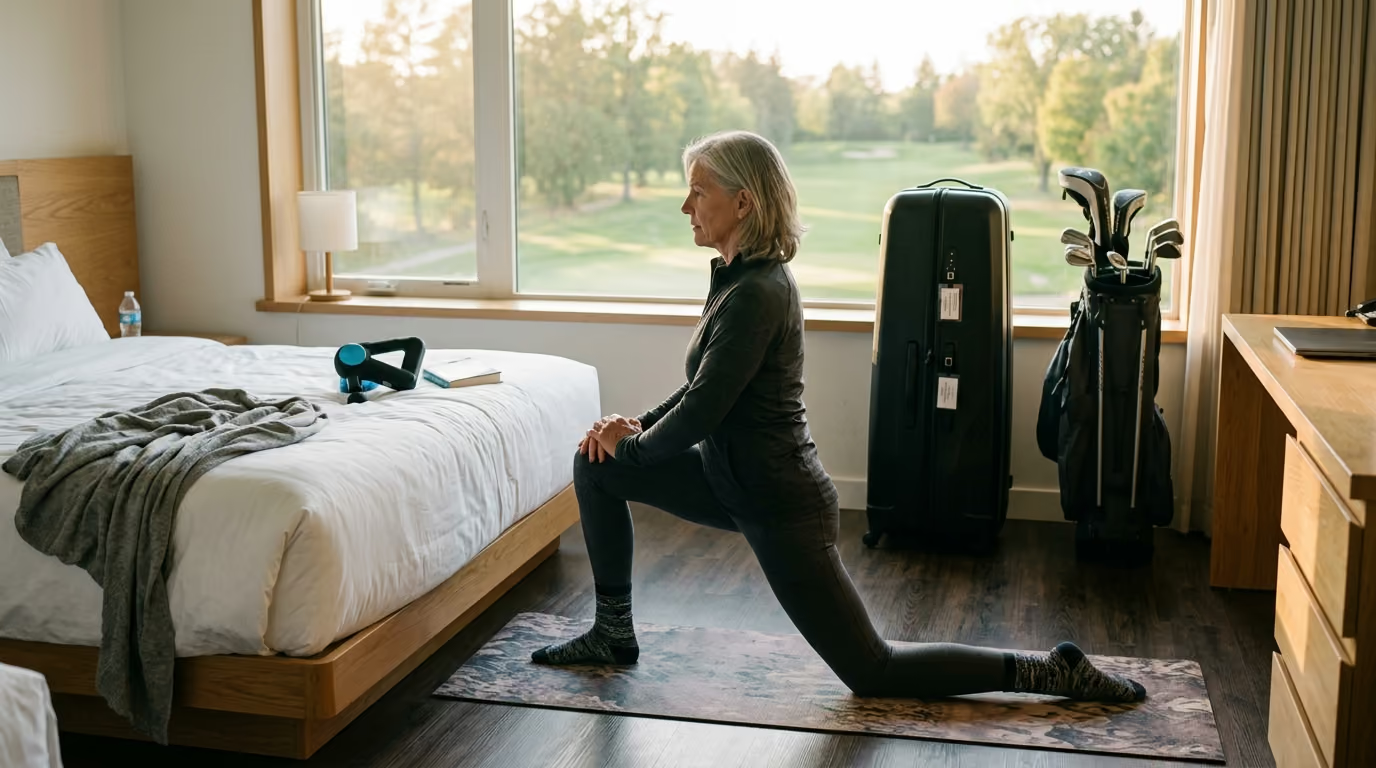
Next, perform a standing hip opener to maintain your rotational flexibility. Stand next to a wall or a sturdy chair for balance. Lift your right knee to waist height, then slowly rotate your knee outward in a circle. Focus entirely on turning your trail hip through its full range of motion.
Do this ten times on each side to keep your hips loose and mobile. This movement simulates the rotation of your golf swing and keeps your joints lubricated. It is a fantastic exercise to perform before you head to the course. It helps prevent the hip stiffness that can ruin your swing rhythm.
Finally, include some basic calf raises to protect your ankles and feet. Stand tall and slowly raise up onto your tiptoes, then lower back down. This movement strengthens your calves and improves your ankle stability. It helps you maintain a steady, powerful stance during your swing.
To build core stability, you can also practice the bird-dog exercise. Start on your hands and knees on a comfortable mat. Slowly extend your right arm forward and your left leg backward at the same time. Keep your body in a straight line and do not arch your lower back.
Hold this position for a few seconds, then return to the starting position. Repeat on the opposite side, extending your left arm and right leg. Perform ten repetitions on each side to build deep core strength. This exercise protects your spine from the rotational forces of your swing.
Another highly effective exercise is the glute bridge. Lie on your back with your knees bent and your feet flat on the floor. Squeeze your glutes and lift your hips toward the ceiling until your body forms a straight line. Hold for two seconds, then slowly lower your hips back to the floor.
This movement activates your glutes, which are your primary walking and swinging muscles. Many golfers have sleepy glutes from sitting too much during the day. Activating these muscles helps power your swing and protects your lower back from strain. You can find more targeted routines in our Recovery section.
When deciding between walking and riding, you must evaluate your personal health goals. There is no single answer that works for every golfer. Your choice should depend on your physical fitness, your joint health, and your longevity goals.
If your main goal is to improve your heart health, walking is the clear choice. The moderate cardiovascular load of walking helps lower your blood pressure and manage your weight. It provides a steady, low impact workout that is highly beneficial for your cardiovascular system. This is a great way to combine your favorite hobby with your fitness routine.
If you are recovering from an injury or surgery, riding in a cart is a valuable tool. It allows you to stay active and enjoy the social side of golf without overloading your body. You can gradually transition back to walking as your recovery progresses. This flexibility is one of the things that makes golf a lifetime sport.
You can also combine both methods to suit your physical needs on any given day. For example, you might choose to walk nine holes and ride the remaining nine. Or you could choose to walk on flat courses and ride on hillier, more demanding layouts. This balanced approach helps you get the benefits of walking without overtaxing your body.
We must also consider the mental health benefits of walking the course. Walking in nature has been shown to reduce stress levels and improve mood. The slow pace of walking allows you to enjoy the scenery and connect with your playing partners. This social connection is a vital part of healthy ageing.
Riding in a cart can sometimes feel rushed and isolating. You are often focused on driving the cart and keeping up with the pace of play. Walking allows you to slow down and enjoy the experience of being outdoors. This mental relaxation can have a profound impact on your overall well-being.
In our experience, golfers who walk the course often feel more satisfied with their round. They feel a sense of physical accomplishment that goes beyond their final score. They have spent hours moving their bodies and breathing fresh air, which improves their sleep quality. This holistic benefit is why walking is so highly recommended for senior golfers.
If you want to read more about the connection between physical activity and longevity, visit our Golf Performance, Recovery & Longevity Blog. We publish regular articles on how to optimize your lifestyle for a longer playing career. Our goal is to help you play the game you love for as long as possible.
Not all walking rounds are created equal. The physical impact of walking depends heavily on the terrain of the course. A flat, sandy course near the coast has very different physical demands than a hilly mountain course. Understanding these differences can help you plan your rounds and protect your joints.
Walking on flat terrain provides a steady, predictable workload for your muscles and joints. It keeps your heart rate stable and reduces the risk of sudden joint strain. This is the ideal starting point if you are transitioning from riding to walking. It allows you to build your endurance without overloading your joints.
Hilly terrain, by comparison, increases the physical demands on your body significantly. Walking uphill forces your calves, hamstrings, and glutes to work much harder. It raises your heart rate and increases your oxygen consumption, providing a tougher workout. This is excellent for cardiovascular fitness but can be demanding on your knees.
Walking downhill can actually be more stressful on your joints than walking uphill. Downhill walking requires your quadriceps to work eccentrically to slow your body down. This eccentric muscle contraction places high pressure on your knee joints and kneecaps. If you have knee osteoarthritis, walking downhill can sometimes trigger pain.
To manage these terrain challenges, you can adjust your walking technique. When walking uphill, lean your torso slightly forward from your hips. Take shorter steps and push off firmly with your entire foot rather than just your toes. This technique engages your glutes and reduces the strain on your lower back.
When walking downhill, keep your knees slightly bent to absorb the impact. Avoid taking long strides, which can jar your hips and lower back. Try to zig zag slightly across steep slopes rather than walking straight down. This simple adjustment reduces the direct pressure on your knees and keeps you balanced.
Wet or soft ground also increases the physical load of your round. Walking through wet grass or soft sand requires more effort from your stabilizer muscles. It can also make pushing a cart more difficult, increasing the strain on your upper body. If the course is very wet, using a riding cart might be a smart choice to prevent muscle strain.
By matching your transport choice to the terrain, you can manage your physical energy. If you are playing a very hilly course, do not hesitate to use a cart. You can save your walking rounds for flatter courses where the joint stress is lower. This smart strategy helps you get the benefits of walking while protecting your joints.
Walking several miles on the golf course requires proper fueling and hydration. Many mature golfers do not realize how much water and energy they lose during a walking round. Proper nutrition is critical for maintaining your energy levels and preventing late-round fatigue. It also plays a key role in your physical recovery after the round.
Dehydration is a common cause of muscle cramps, joint stiffness, and poor concentration. When you are dehydrated, your body cannot lubricate your joints as effectively. Your blood volume decreases, forcing your heart to work harder to deliver oxygen to your muscles. This can lead to early fatigue and a sudden drop in your swing performance.
To stay hydrated, you should drink water consistently throughout your round. Do not wait until you feel thirsty, as this is a sign that you are already slightly dehydrated. Aim to drink a few sips of water at every tee box. This steady intake keeps your hydration levels stable and your joints functioning smoothly.
For longer rounds or hot days, you may want to include an electrolyte drink. Electrolytes like sodium and potassium help maintain your fluid balance and muscle function. They prevent the muscle cramps that can ruin your swing on the back nine. Avoid sugary drinks, which can cause a rapid spike and drop in your energy levels.
Proper nutrition is also necessary for keeping your energy levels stable during a walking round. Walking eighteen holes burns a significant amount of calories, which need to be replaced. Eating a small, balanced snack every four to five holes can prevent physical and mental fatigue. This keeps your muscles fueled and your mind sharp for every shot.
Choose snacks that combine complex carbohydrates, healthy fats, and protein. Good options include nuts, seeds, whole-grain energy bars, or a piece of fruit. These foods provide a slow, steady release of energy rather than a quick sugar rush. This prevents the sudden energy crashes that can lead to poor swing mechanics.
After your round, your body needs the right nutrients to repair muscle tissue and restore energy. Eating a meal rich in protein and carbohydrates within two hours of finishing is highly beneficial. This meal supports the muscle recovery process and reduces soreness the next day. It helps you bounce back quickly and prepare for your next round.
If you want to learn more about nutrition and recovery, visit our Recovery category page. We offer practical tips on how to fuel your body for peak performance and longevity. These simple habits can make a massive difference in how you feel both on and off the course.
Transitioning to a more active walking routine is one of the best choices you can make for your longevity. By understanding your physical limits and using the right equipment, you can protect your joints and keep your heart strong. This balanced approach helps you play the game you love for many years to come.
Here is your simple checklist of next steps to apply this week:
Keep moving to keep playing, because a body in motion stays in motion on the fairway.
Follow Golfergy for practical insights on performance, mobility, recovery and healthy ageing. Stay connected for new articles, research-led guidance and ideas to help you play better for longer.


Explore practical resources on performance, recovery, mobility and golf longevity.
Read the Blog