Better cardiovascular health and extended playing longevity come from choosing to walk the golf course instead of riding in a motorized cart.




You stand on the fourteenth tee. The afternoon sun is starting to dip. Your lower back feels a familiar, dull ache. Your knees feel a bit stiff from sitting in the motorized cart. You look at your playing partner. He is walking up the fairway with a push cart. His stride looks smooth and steady. He does not look stiff or tired.
This scenario is common for golfers over forty. The choice between walking and riding seems simple. Many players think the cart saves their energy. They believe it keeps them fresh for the final holes.
Yet, by the end of the round, cart riders often feel stiffer than walkers. Their joints feel locked. Their backs feel tight. This physical fatigue affects more than just their comfort. It also affects their performance on the greens.
In our experience, the saddest thing we have seen in golf is watching lifelong playing partners slowly drop out of our weekend group. It usually starts with a nagging shoulder or knee issue they ignore until it requires surgery. That pattern is exactly why we became obsessed with golf longevity. We do not have to stop playing as we age, provided we do the right maintenance work between rounds.
We want to maintain our physical performance for decades. This means we must make smart choices about how we navigate the course. Choosing between walking and riding is one of the most important decisions we make. It shapes our cardiovascular health over time.
It also determines how long our knees and hips can handle the golf swing. Many golfers assume that riding is the safe choice. They believe they are preventing common golf injuries by staying in the cart. Science, however, points in the opposite direction.
To play this game for a lifetime, we need to base our decisions on facts. Sports science has studied the golf swing and course navigation extensively. Researchers have measured heart rates, calorie burn, joint forces, and mental focus.
The data shows that walking provides unique benefits. It protects our bodies in ways that a cart simply cannot match. It keeps our cardiovascular systems young. It also helps our joints stay mobile and resilient.
This guide will break down the science of walking versus riding. We will look at how each choice affects your heart, joints, and mind. We will also provide practical ways to transition back to walking safely.
The most famous piece of research on golf and health comes from Sweden. Researchers at the Karolinska Institutet conducted a massive study. They analyzed the health records of over 300,000 Swedish golfers.
They compared these golfers to non-golfers of the same age and background. The findings were clear. Golfers had a 40% lower mortality rate than non-golfers.
This difference is huge. It translates to an average of five extra years of life. The researchers noted that walking was the main reason for this benefit. The steady, low-impact exercise keeps the blood vessels healthy. It builds healthy ageing strategies directly into your weekly routine.
Aerobic energy expenditure is the total energy your body uses during exercise. Walking 18 holes provides a perfect aerobic workout. It keeps your heart rate in a steady, moderate zone for several hours.
This sustained activity strengthens the heart muscle. It improves blood flow throughout your entire body. It also helps lower blood pressure and cholesterol levels.
Riding in a cart does not offer these same benefits. The physical exertion is too low. The heart rate stays close to resting levels. This means cart riders miss out on the vital cardiovascular training that extends life.
Step counts are an easy way to understand the physical difference. Walking a full 18-hole round is a long journey. A walking golfer takes about 17,000 steps.
This distance covers approximately five to six miles. It easily surpasses the daily physical activity goals recommended by doctors. It builds a strong foundation of physical fitness.
Riding in a cart reduces this movement dramatically. A cart rider takes only about 6,000 steps during a round. Most of these steps are just walking from the cart to the tee box or green. You lose more than 10,000 steps of healthy movement. Over a season, this gap becomes massive.
Your heart rate determines the intensity of your exercise. Walkers maintain an average heart rate of about 99 beats per minute. This rate keeps them in a light to moderate aerobic training zone.
It is high enough to stimulate cardiovascular improvement. Yet, it is low enough to prevent excessive strain. It is a very safe zone for older adults.
Cart riders average only about 83 beats per minute. This rate is barely above a normal walking pace on flat ground. It does not challenge the heart enough to trigger positive adaptations. It does not help your body build aerobic capacity.
Scientists use a unit called the Metabolic Equivalent of Task to measure exercise. We call this MET for short. One MET is the energy you use when you sit quietly on a chair.
An activity with a value of two METs requires twice that energy. Activities with higher MET values are more intense. They burn more calories and require more effort from your heart.
Doctors use METs to prescribe exercise for patients. It helps them recommend safe levels of physical activity. It is a standard way to compare different sports.
Walking golf is classified as a moderate-intensity activity. It measures between 4.4 and 4.8 METs. This intensity is ideal for maintaining physical health as we age.
It provides enough stimulus to keep the metabolism active. It helps control blood sugar levels. It also helps maintain muscle mass in the lower body.
Riding in a cart drops this intensity to 3.5 METs. This level is on the lower end of physical activity. It does not provide the same metabolic benefits. It does not help you burn fat or improve your fitness levels.
For golfers with heart disease, golf can be a great rehabilitation tool. It offers a safe way to exercise outdoors. It provides a social environment that helps mental health.
Studies show that walking golf reaches about 46% of a patient's peak MET capacity. This level is perfect for rebuilding heart strength after an illness. It is safe yet effective.
However, researchers suggest these players must walk to get these benefits. Riding in a cart does not raise the heart rate enough. It does not provide the necessary therapeutic stimulus for the heart muscle.
Consistent moderate exercise is the key to preventing heart disease. Walking golf twice a week provides hours of this exercise. It helps keep the arteries flexible and clean.
It reduces the risk of stroke and heart attack. This long-term protection is crucial for golfers over forty. It allows them to stay active and healthy for decades.
Riding in a cart does not offer this same protection. The intervals of sitting and standing do not keep the heart rate elevated. The body does not adapt or grow stronger.
Many golfers choose to ride because they have knee pain. They believe walking four miles will damage their joints. This is a common concern for players with knee osteoarthritis.
They assume the cart is the only way to keep playing. However, research shows this assumption is wrong. A study from the Shirley Ryan AbilityLab investigated this exact issue.
They tracked golfers with knee osteoarthritis during their rounds. They compared the effects of walking versus riding. The results surprised many traditionalists. Walking did not cause a significant increase in knee pain.
To understand why walking is safe, we must look at joint biology. Your joints do not have a direct blood supply. They rely on joint fluid for nutrients and lubrication.
This fluid is called synovial fluid. It acts like oil in an engine. It protects the cartilage from friction and wear.
Movement is what circulates this fluid. The pressure of walking pumps synovial fluid through the joint. This process keeps the cartilage healthy and moist. It helps prevent stiffness and pain.
Sitting in a cart can actually make joint pain worse. When you sit, your joints remain inactive for several minutes. The synovial fluid settles and thickens.
This process is called joint gelling. When you step out of the cart, your knees are cold and stiff. You then swing the club with high speed and force.
This sudden movement can cause shear stress on the joint. Constant walking keeps the joints warm and lubricated. It prepares the knees to handle the forces of the swing.
You can protect your joints further by using proper swing mechanics. Avoid twisting your knees during the turn. Instead, focus on using your hips for rotation.
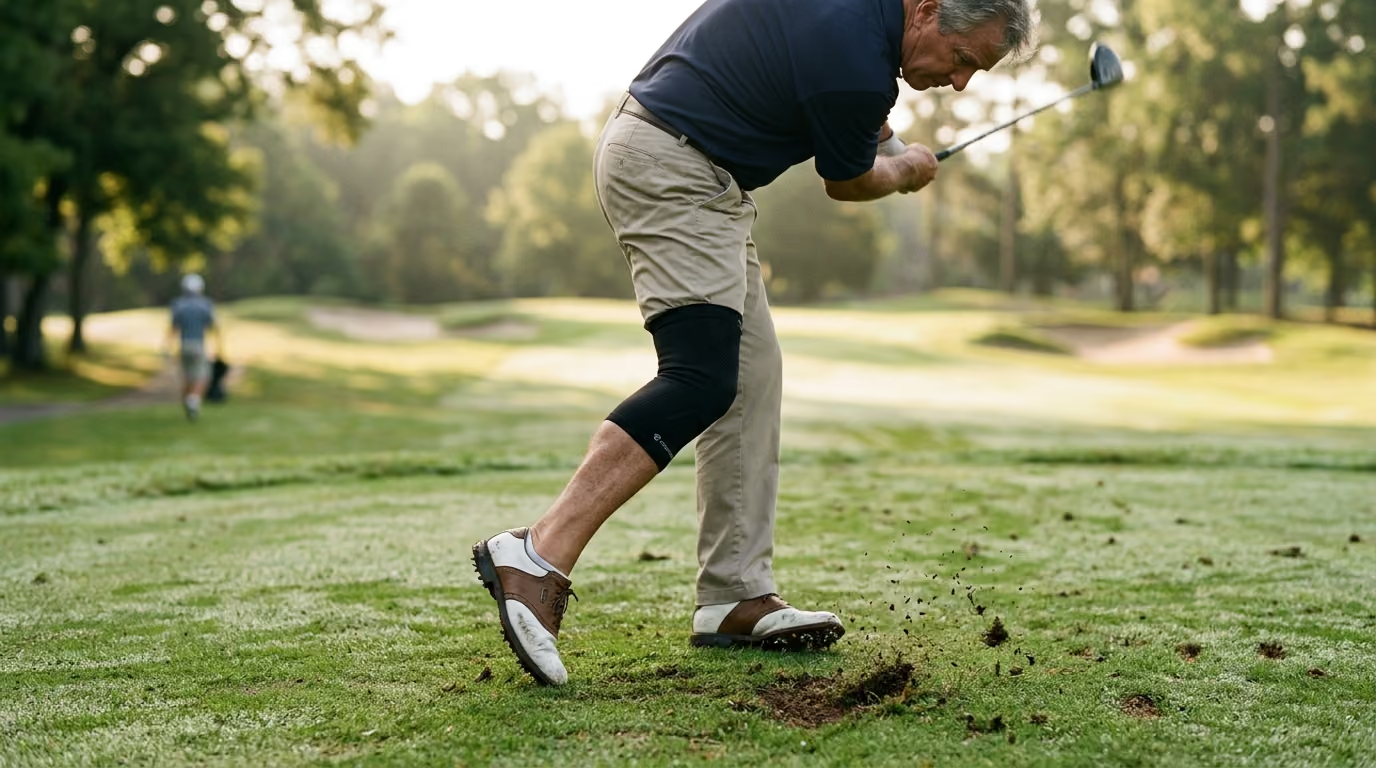
When you set up to hit your ball, focus entirely on turning your trail hip. This focus keeps your pelvis moving correctly. It prevents your lead knee from taking too much rotational stress.
This small adjustment is a great way to improve improving your rotational mobility without pain. It allows you to walk and swing with confidence.
Managing weight becomes harder as we age. Our metabolism naturally slows down. Walking golf is a highly effective way to burn extra calories.
A study from the Colorado Center for Health & Sports Science looked at calorie burn during nine holes. They compared different ways of playing.
Golfers who walked and carried their bags burned 721 calories. Those who used a push cart burned 718 calories. Pushing a cart requires almost the same energy as carrying.
Many players are surprised that push carts burn so many calories. Pushing a cart requires constant muscle engagement. You must push the weight up hills and through thick grass.
Your legs and core must work hard to keep the cart moving. This constant effort keeps your metabolic rate high.
Walking with a caddy burned 613 calories. This option is easier on your back. Yet, it still provides a great metabolic workout. Riding in a cart burned only 411 calories.
The calorie differences between walking and riding are significant. Over 18 holes, a walker burns about 1,400 calories. A cart rider burns only about 800 calories.
This is a difference of 600 calories per round. If you play twice a week, that is 1,200 extra calories burned.
Over a six-month season, this adds up to nearly 30,000 calories. This difference can help you lose or maintain weight. It prevents the slow weight gain that often occurs in middle age.
Sustained moderate exercise is great for burning visceral fat. This is the dangerous fat that stores around your organs. It contributes to heart disease and diabetes.
Walking golf helps reduce this fat. It keeps your insulin sensitivity high. This means your body processes sugar more effectively.
Riding in a cart does not provide enough sustained effort to burn visceral fat. The short bursts of walking are not enough. You need the continuous movement of the walk to trigger fat loss.
The benefits of walking extend to your mind. Walking improves your mental focus on the course. The Colorado Center study measured focus ratings among players.
Walkers scored an average of 6.63 out of 10 on focus tests. Cart riders scored significantly lower, averaging 5.01 out of 10.
This difference can affect your decision-making. It can lead to poor club selection or alignment mistakes. Walking keeps your brain active and alert.
The walk between shots provides a valuable mental transition. It gives you time to process your last shot. You can let go of frustration before you reach your ball.
This physical distance helps you stay calm. It prevents emotional decisions that can ruin your scorecard.
Cart riding is often rushed. You drive quickly to your ball, hop out, and swing. This sudden transition does not allow your mind to settle. It can lead to rushed swings and poor shots.
Bad shots are a part of golf. How you react to them determines your score. Walking gives you time for emotional recovery.
You can walk off the adrenaline from a bad shot. You can take deep breaths as you walk up the fairway. This steady movement helps lower your heart rate.
It restores your nervous system to a calm state. By the time you reach your ball, you are ready to focus. Cart riders often carry their frustration directly to the next shot.
These mental benefits translate to better scores. The Colorado Center study tracked the scores of walkers and riders.
Walkers finished more than a full shot better per nine holes. They averaged 10.4 over par. Cart riders averaged 11.5 over par.
This is a two-stroke difference over 18 holes. Walking helps you establish a physical and mental rhythm. This rhythm leads to more consistent swings and better scoring.
Many golfers assume that riding in a cart is the safest option. They worry about tripping or falling while walking. However, carts carry significant safety risks.
Data from the Consumer Product Safety Commission is eye-opening. Every year, between 15,000 and 23,000 people are treated in emergency rooms for cart-related injuries.
These are not minor issues. They often involve broken bones, concussions, or severe cuts. This is a much higher injury rate than most golfers realize.
Golf carts are heavier and faster than they look. They can reach speeds of 15 miles per hour. They lack the safety features of regular cars.
Most carts do not have seatbelts, doors, or airbags. They have a high center of gravity. This design makes them unstable on uneven ground.
When a cart turns sharply, the passengers can be thrown out. This is especially true on wet grass or steep slopes.
Ejection is the leading cause of cart injuries. It accounts for 88% of all reported cases. These injuries often happen during simple turns.
They can occur at speeds as low as 11 miles per hour. Rollovers account for 10% to 20% of injuries.
A rollover can trap a passenger underneath the heavy vehicle. This can lead to life-threatening crush injuries. Walking eliminates these high-impact risks entirely.
Walking the course is a much safer physical activity. The risks are limited to minor slips or trips. These are easily avoided by staying alert and wearing good shoes.
Walking builds balance and coordination. It strengthens the stabilizing muscles in your ankles and feet.
This improved balance protects you from falls both on and off the course. Riding in a cart does not build these protective physical skills.
While walking is healthier, it does cause more physical fatigue. Scientists call this neuromuscular fatigue. It is a temporary decline in your muscle performance.
Your muscles cannot produce force as quickly. Your coordination may decline slightly.
This fatigue is a normal response to exercise. Your body needs rest to recover and grow stronger. However, it can affect your play if you are not prepared.
Neuromuscular fatigue can affect your swing speed. Walkers often show a slight drop in clubhead speed on the final holes.
This is because their legs and core are tired from walking five miles. Their turn may feel a bit slower.
This fatigue can lead to shorter drives on the back nine. It can also affect your ball striking. You must have a baseline of physical fitness to maintain your swing speed while walking.
Walking in extreme heat adds extra physical stress. It raises your core body temperature. Your body must work harder to cool itself down.
This process requires energy. It can lead to dehydration and exhaustion.
In very hot or humid weather, walking can cause a late-round physical collapse. Your focus will drop, and your score may suffer. You must pay attention to weather conditions.
To prevent this fatigue, you must prepare your body. You need to build walking endurance off the course. You also need to focus on recovery.
Proper hydration and nutrition during the round are vital. You should also dedicate time to post-round muscle recovery to bounce back quickly.
This preparation allows you to enjoy the benefits of walking without sacrificing your performance. It keeps you strong through the final green.
If you have been riding for years, do not try to walk 18 holes tomorrow. Your body is not prepared for the sudden load.
Your tendons, ligaments, and muscles need time to adapt. A sudden change can lead to overuse injuries like plantar fasciitis or tendonitis.
A slow transition is the safest way to return to walking. It allows your tissues to grow stronger without breaking down. It keeps you on the course without pain.
A great way to start is by walking only nine holes. Many courses allow you to walk nine and ride nine.
This method cuts the physical demand in half. It is a manageable goal for most golfers.
Do this for three to four weeks. Let your joints and muscles get used to the movement. Once you can walk nine holes without stiffness the next day, you are ready to progress.
Another option is the cart-to-ball method. Share a cart with a partner. Let them drive the cart from the tee.
You walk from the tee box to your ball. After your shot, walk to the green. This method allows you to walk most of the distance.
However, you can sit in the cart on steep hills or when you feel tired. It is a highly flexible way to build your endurance.
Listen to your body during this transition. Some muscle soreness is normal. Joint pain, however, is a warning sign.
If your knees or lower back start to ache, take a break. Return to the cart for a round or two.
Gradually increase your walking volume over several weeks. This slow approach will protect your body. It will build the stamina you need for a lifetime of walking golf.
To walk 18 holes comfortably, you should train your muscles off the course. You need exercises that build core stability and leg strength. This preparation helps you building lower body strength for your swing.
The loaded carry is one of the best exercises for walkers. Grab a pair of light dumbbells or kettlebells. Hold them at your sides like suitcases.
Walk slowly for 50 yards. Keep your spine tall and your shoulders back. This exercise strengthens your core and grip. It prepares your body to carry or push a cart.
Step-ups build strength in your glutes and quadriceps. These muscles power your walk up steep fairways.
Find a stable step or bench. Step up with your right foot and press through your heel.
Drive your left knee up. Step back down slowly. Perform ten repetitions on each side. This exercise builds the single-leg strength needed for a steady walk.
Your feet and calves take a lot of abuse during a walking round. They need to be strong and flexible.
Stand near a wall for balance. Raise up onto your toes. Hold for one second, then lower down slowly.
Perform fifteen repetitions. This movement strengthens your ankles and arches. It helps prevent foot fatigue and injury on the course.
A strong walk requires good hip movement. You must keep your pelvis mobile.
Stand with your feet shoulder-width apart. Cross your arms over your chest.
Turn your hips to the right, then to the left. Keep your chest facing forward. As you practice this turn, focus entirely on turning your trail hip.
This simple movement cue improves your rotation. It prevents you from twisting your knees or lower back. It is a great way to prepare for both walking and swinging.
The biggest mistake is choosing to ride to protect your knees. As we discussed, sitting in a cart does not save your joints.
It actually deprives them of vital lubrication. It leads to stiffness and sudden stress during the swing.
If you have knee osteoarthritis, walking is your best medicine. It keeps the joint fluid circulating. It strengthens the muscles that support your knees. Pushing a cart is far better than sitting in a buggy.
Another common mistake is carrying your bag on one shoulder. This practice is very damaging to your spine.
It places a heavy, uneven load on one side of your body. Your spine must curve to compensate.
This posture can cause muscle spasms in your lower back. It can also ruin your swing alignment.
If you want to carry, use a double strap. Adjust the straps so the bag sits high and tight against your back. Better yet, use a push cart to remove the weight from your spine.
Walking burns twice as many calories as riding. Many golfers forget to replace this energy.
They walk 18 holes without eating or drinking enough. By the twelfth hole, they are exhausted.
This fatigue leads to poor swings and bad decisions. It also increases the risk of injury.
Sip water every two holes. Eat a small snack like nuts or fruit on the ninth tee. This simple habit keeps your energy steady.
The right equipment makes walking a pleasure. A high-quality push cart is a vital investment.
Look for a cart with three or four large wheels. These wheels roll easily over thick rough.
Choose a model that folds down easily. It should fit comfortably in your trunk. A good push cart reduces the physical effort of your walk. It keeps your back and shoulders fresh.
Electric trolleys are the ultimate walking accessory. These motorized carts carry your bag for you.
Some models follow you automatically. Others are controlled by a remote.
They eliminate the effort of pushing a cart up hills. Yet, they still allow you to walk the course.
You get all the cardiovascular benefits of walking. You burn 36% more calories than riding in a buggy. This is the perfect compromise for older golfers who want to preserve their energy.
Your shoes are your only connection to the ground. They are crucial for your comfort and safety.
Choose shoes with generous cushioning in the midsole. Walkers need more support than cart riders.
Make sure the shoe fits well and does not slip. Spikeless shoes can be very comfortable for walking.
However, make sure they offer good traction on wet grass. A supportive shoe protects your feet, knees, and lower back.
If you choose to carry, keep your bag light. Clean out your bag before every round.
Remove extra balls, heavy jackets, and unnecessary gear. Your bag should weigh less than twenty pounds.
A heavy bag places unnecessary stress on your joints. It increases the physical fatigue of your walk. Keeping it light protects your body and saves your energy.
Choosing to walk or ride is a major decision for your golf longevity. The science shows that walking offers superior health benefits. It strengthens your heart and keeps your joints lubricated. It also improves your focus and lowers your scores.
Transition slowly if you are used to riding. Use a push cart or electric trolley to protect your back. Train your lower body off the course to build endurance. These habits will keep you on the fairways for decades.
When to revisit this resource: Revisit this guide before the start of the spring season or whenever you feel chronic lower body fatigue setting in after nine holes.
The single best thing you can do for your heart, your joints, and your scorecard is to push a trolley instead of riding in a cart.
Follow Golfergy for practical insights on performance, mobility, recovery and healthy ageing. Stay connected for new articles, research-led guidance and ideas to help you play better for longer.


Explore practical resources on performance, recovery, mobility and golf longevity.
Read the Blog