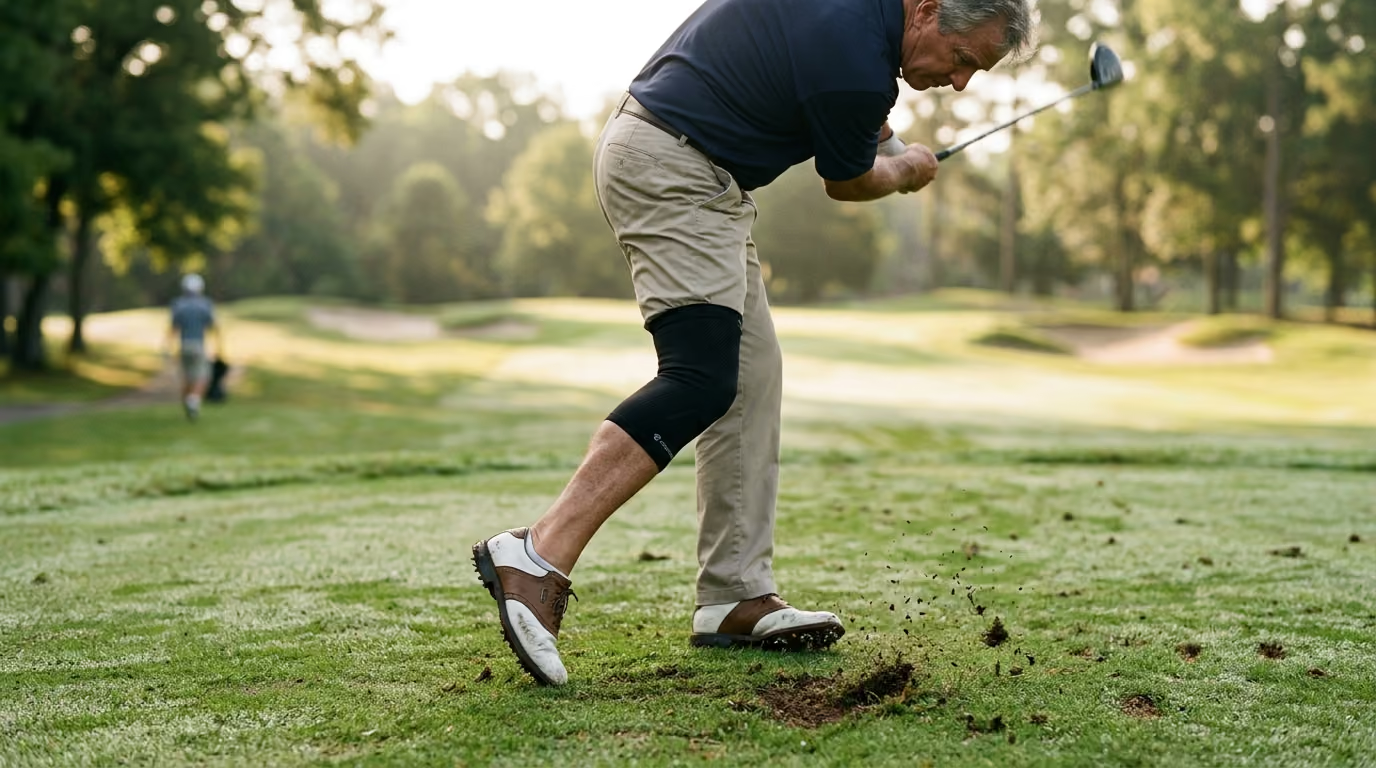

Golf injuries seem like random accidents, but predictable biomechanical strain causes most course-related physical problems.




Many golfers search online for solutions to nagging physical issues. They type terms like "sore lower back after golf" or "elbow pain on the golf swing" into search bars late at night. They look for quick fixes, stretching videos, or braces to wear on the course. The truth is that golf-related physical issues are predictable and structured. This guide serves as a reference to help you detect these issues early and take practical action.
The saddest thing I have seen in golf is watching lifelong playing partners slowly drop out of our weekend group. It usually starts with a nagging shoulder or knee issue they ignore until it requires surgery. That pattern is exactly why I became obsessed with golf longevity. We do not have to stop playing as we age, provided we do the right maintenance work between rounds.
By understanding the specific injuries that affect different age groups, you can protect your body. You can make simple adjustments to your swing, your routine, and your gear. This proactive approach keeps you on the course for decades. It turns a frustrating cycle of pain into a long, enjoyable playing career.
To prevent pain, you must understand how the golf swing affects your body. The swing is a highly complex movement that requires coordination from your feet to your neck. Unlike swimming or running, golf is a highly asymmetrical sport. This asymmetry means one side of your body experiences completely different forces than the other side.
Right-handed golfers use their left side as the lead side and their right side as the trail side. Left-handed golfers experience the exact opposite. The lead side is responsible for decelerating the club and absorbing the impact of the ground. This constant deceleration puts high stress on the lead wrist, lead shoulder, and lead knee.
In contrast, the trail side is the generator of power and lateral movement. The trail side experiences high amounts of side bend and rapid rotation during the downswing. This motion can strain the trail-side muscles and joints if your body is not properly prepared. Knowing which side is which helps you pinpoint why a specific joint hurts.
In golf biomechanics, the painful area is rarely the source of the trouble. We call the painful area the victim, while the stiff or weak joint elsewhere is the culprit. For example, a golfer might feel intense pain in their lower back after a round. The lower back is simply the victim of a lack of rotation in the hips or the upper spine.
When your hips cannot turn, your lower back is forced to twist to complete the swing. The lower back is designed for stability, not rotation. It quickly becomes irritated by this extra movement. To fix the lower back pain, you must address the stiff hips. Our team focus is on training the culprits so the victims can heal.
The way you stand over the ball dictates how your body moves during the swing. The Titleist Performance Institute identifies three primary postural archetypes that lead to pain. The first is S-Posture, which is marked by an excessive arch in your lower back. This posture deactivates your abdominal muscles and puts massive pressure on your lumbar spine.
The second archetype is C-Posture, which is characterized by slumped shoulders and a rounded upper back. This rounded position makes it very difficult for your thoracic spine to rotate. As a result, you will likely sway or tilt to get the club back. This compensation strains your neck, shoulders, and lower back.
The third archetype is the Reverse Spine Angle. This happens when you lean your spine toward your target at the top of your backswing. During the downswing, you must quickly bend your spine in the opposite direction. This rapid change in angle places extreme rotational and compressive forces on your lower back.
Golf-related physical issues do not affect everyone in the same way. Research shows these issues follow a U-shaped curve across different age groups. The youngest and oldest players experience the highest rates of injury, though the causes are very different. Understanding where you fall in this taxonomy helps you customize your injury prevention strategies.
Junior golfers aged 10 to 19 account for about 11 to 13 percent of all golf injuries. Many of these issues are acute, resulting from trauma. Juniors are often struck by clubs or balls, leading to head and neck injuries. According to sports medicine data, these traumatic events occur at a rate of 22.1 per 10,000 players.
When juniors do experience repetitive injuries, they usually occur in the lower back. Their growing bones and growth plates are highly sensitive to repetitive twisting. If they practice for hours without rest, they can develop stress fractures in their vertebrae. Young players must balance their practice time with general athletic development.
Adult golfers between the ages of 18 and 60 face a different set of challenges. Amateurs in this bracket are five times more likely than juniors to suffer from overuse injuries. This group often balances a busy work life with weekend golf. Sitting at a desk for forty hours a week creates tightness that directly affects the swing.
Professional golfers in this age bracket have different injury rates than amateurs. Professionals have three times the risk of wrist injuries and three times the risk of back injuries. This is due to the sheer volume of balls they hit every day. For the average adult amateur, the primary injury sites are the lower back, the elbows, and the shoulders.
Seniors aged 60 and older are the most frequently injured group. They account for 49 percent of all recorded golf injury cases. Furthermore, their hospital admission rate for golf injuries is five times higher than younger players. This high rate is due to natural age-related changes in joint tissue and bone density.
As we age, our joints naturally lose some of their elasticity and range of motion. This loss makes us more vulnerable to chronic conditions like osteoarthritis. The primary injury sites for senior golfers include the lower back, shoulders, knees, and hips. To maintain longevity, senior golfers must prioritize healthy ageing strategies.
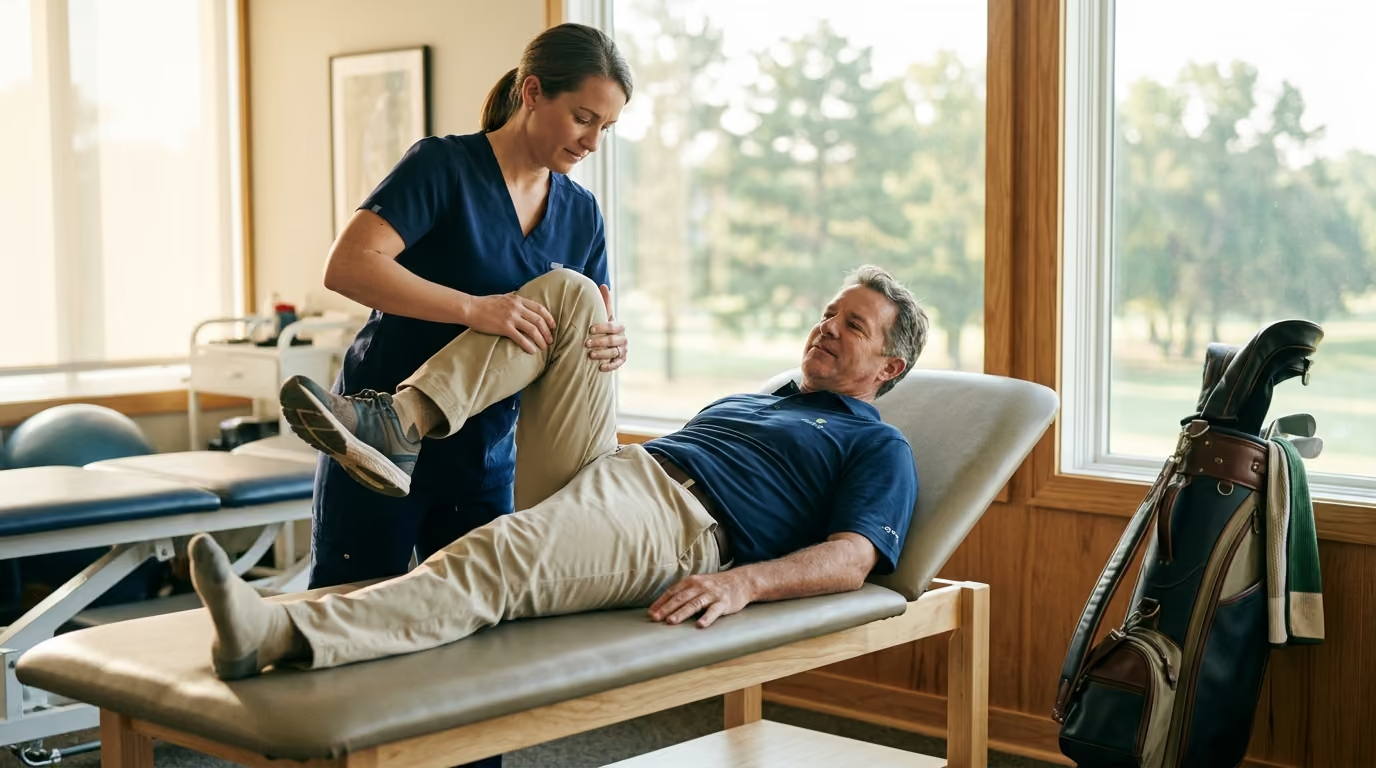
You do not have to wait for a major injury to take action. Your body provides subtle warning signs long before a muscle tears or a joint fails. Learning to recognize these signs can save you from months of rehabilitation and missed rounds.
This condition is commonly known as golfer's elbow. It involves inflammation of the tendons that connect your forearm muscles to the inside of your elbow. The earliest symptom is a dull ache or tenderness on the bony bump on the inside of your elbow. This pain often flares up when you try to flex your wrist or squeeze a club.
Another common early sign is a mild tingling sensation in your ring and pinky fingers. This tingling occurs because the ulnar nerve runs very close to the inflamed tendon. If you feel this tingling, your body is telling you to rest. Ignoring this sign can lead to chronic tendon weakness.
Commonly called tennis elbow, this condition affects the outside of your elbow. In golf, it is highly common in the lead arm of players who grip the club too tightly. You will feel tenderness on the bony bump on the outer side of the joint. Simple daily activities can trigger this pain.
For example, you might feel a sharp ache when lifting a coffee cup or shaking hands with a friend. This indicates that the extensor tendons in your forearm are overloaded. In our experience, addressing this early with rest and grip adjustments prevents long-term damage.
Lower back issues often start as simple fatigue at the end of a round. You might notice that standing up straight feels difficult after the fourteenth hole. Or you might feel stiff the morning after a long practice session on the driving range. This stiffness is a warning sign that your posture is breaking down.
This pain is often caused by a Reverse C follow-through or an S-posture at address. When your core muscles tire, they stop supporting your spine. Your lower back then absorbs all the force of your swing. Paying attention to late-round stiffness is key to protecting your lumbar spine.
Lead shoulder impingement causes pain at the top of your backswing or during the finish. You might feel a pinching sensation in the front or top of your shoulder joint. This occurs when the rotator cuff tendons are squeezed against the shoulder bone. This issue is highly common in golfers who use a modern swing.
The modern swing restricts hip turn to build up power. This restriction forces the lead shoulder to over-rotate to get the club back. Over time, this repetitive pinching inflames the tendons. A simple shift in swing style can ease this pressure.
Imagine you are playing the fourteenth hole of your local course. You have walked several miles, and your legs are starting to feel heavy. You face a long carry over a water hazard to reach the green. You decide to swing a little harder to make sure your ball clears the water.
You take your stance, but your tired hips do not rotate fully. Your lower back arches into an S-posture as you try to find extra power. You swing the club back, but your thoracic spine is stiff from sitting all week. To compensate, you tilt your upper body toward the target, creating a reverse spine angle.
As you transition into the downswing, you throw your arms at the ball. The club strikes the turf slightly behind the ball, hitting a hidden tree root. A massive vibration travels up the steel shaft, through your hands, and straight into your lead elbow. You feel a sharp pinch in your shoulder and a dull ache in your lower back.
This moment is where physical limitations and swing mechanics collide. Your tired muscles can no longer protect your joints from the impact. You manage to finish the round, but the damage is already done. This scenario happens to thousands of recreational golfers every single weekend.
To protect your body, you need to understand the physical forces at play. The golf swing is a rotational movement that generates high amounts of torque. Torque is the force that causes rotation, and your body must transfer this force efficiently. When certain joints are stiff, this rotational force turns into harmful spinal shear.
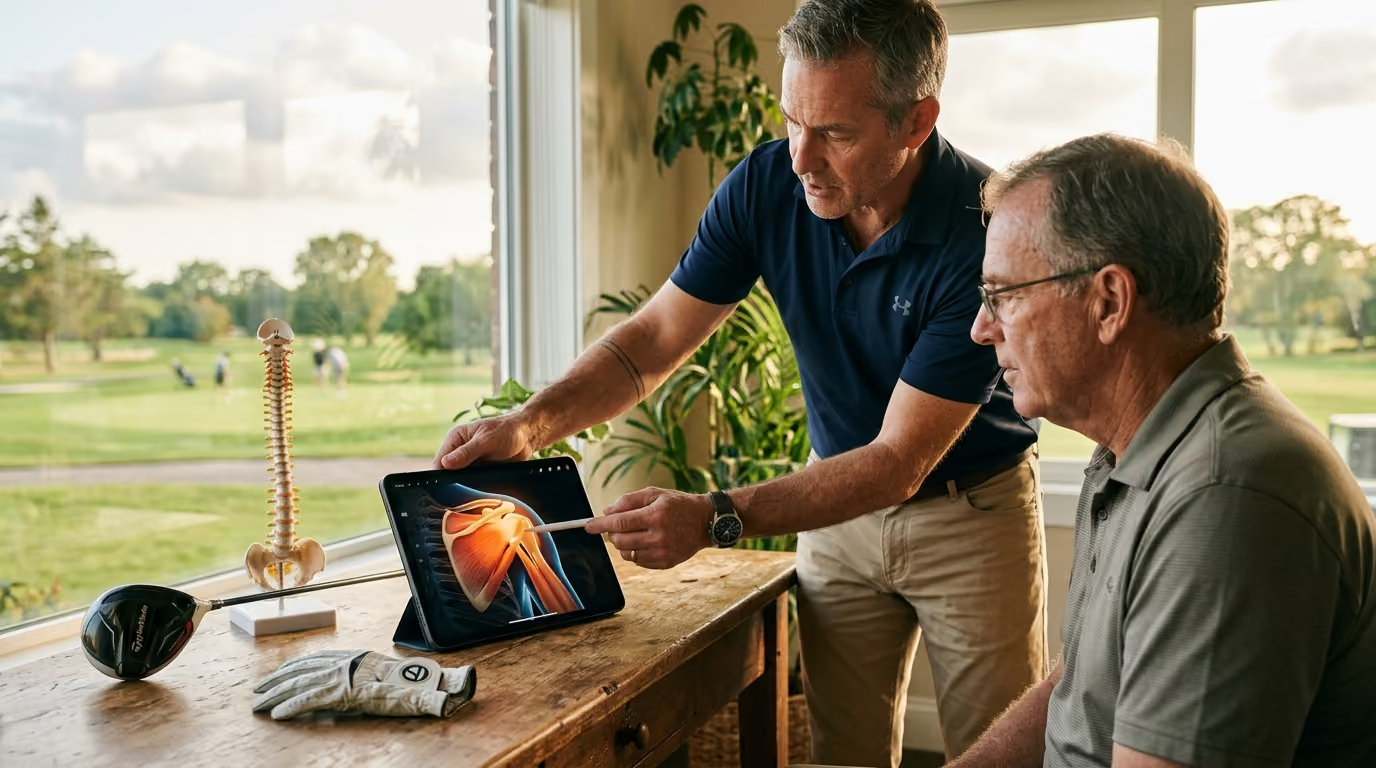
Your spine is divided into different sections, each with a specific job. The lumbar spine, or lower back, is built for stability and support. Its joints allow for very little rotation, only about one degree per vertebra. In contrast, the thoracic spine, or upper back, is built for rotation.
If your thoracic spine is stiff, your body still needs to find rotation to swing the club. It forces your lumbar spine to twist beyond its safe limits. This twisting action creates shear force, which slides one vertebra over another. This shear force can wear down your spinal discs and lead to painful herniations.
Furthermore, your hips are large, powerful joints designed for deep rotation. If your hips are tight, your lower back must compensate for them as well. The combination of tight hips and a stiff upper back is the main cause of lower back pain. Improving your mobility in these key areas is the best way to protect your spine.
If you feel stiffness during a round, there are quick actions you can take. You do not have to suffer through eighteen holes of discomfort. Simple adjustments to your setup and equipment can immediately reduce stress on your body.
A very effective on-course adjustment is to flare your feet outward at address. Instead of keeping your feet square, turn both toes outward about twenty to thirty degrees. This simple change opens up your hip joints. It allows your pelvis to rotate much more freely during both the backswing and follow-through.
Flaring your feet immediately reduces the torque on your knees and lower back. It is especially helpful for older golfers who have limited hip mobility. Try this on the tee box of the next hole if you feel your lower back tightening. It is a simple, legal adjustment that can save your round.
The gear you use has a direct impact on how much vibration your joints absorb. Heavy steel shafts transmit a high amount of shock to your hands, wrists, and elbows. Switching from steel to graphite shafts can reduce these impact vibrations by fifteen to twenty percent. This reduction significantly lowers your risk of developing golfer's elbow.
Graphite shafts are lighter, which also helps you generate clubhead speed with less effort. This reduction in effort means you do not have to swing as hard. Your muscles will experience less fatigue over eighteen holes. This simple change is a great investment in your physical longevity.
Many golfers use grips that are too small for their hands. A small grip forces your fingers to squeeze tightly to keep the club from slipping. This constant tension overworks the forearm muscles, leading to elbow pain. Installing midsize or oversize grips can solve this issue.
Larger grips allow you to hold the club securely with much lighter grip pressure. This reduction in tension protects your wrists and elbows from repetitive strain. Softer, shock-absorbing grip materials also help cushion the impact of off-center hits. If you suffer from arthritis, this adjustment can make a world of difference.
Long irons require a high clubhead speed and a steep angle of attack to launch the ball. This steep swing often leads to hard contact with the turf, sending shockwaves up your arms. Replacing your three-iron and four-iron with hybrid clubs is a smart physical choice.
Hybrids have a wider sole and a lower center of gravity. They are designed to sweep the ball off the turf rather than dig into it. This design reduces the force of impact, protecting your wrists, elbows, and shoulders. It also makes the game much easier and more enjoyable.
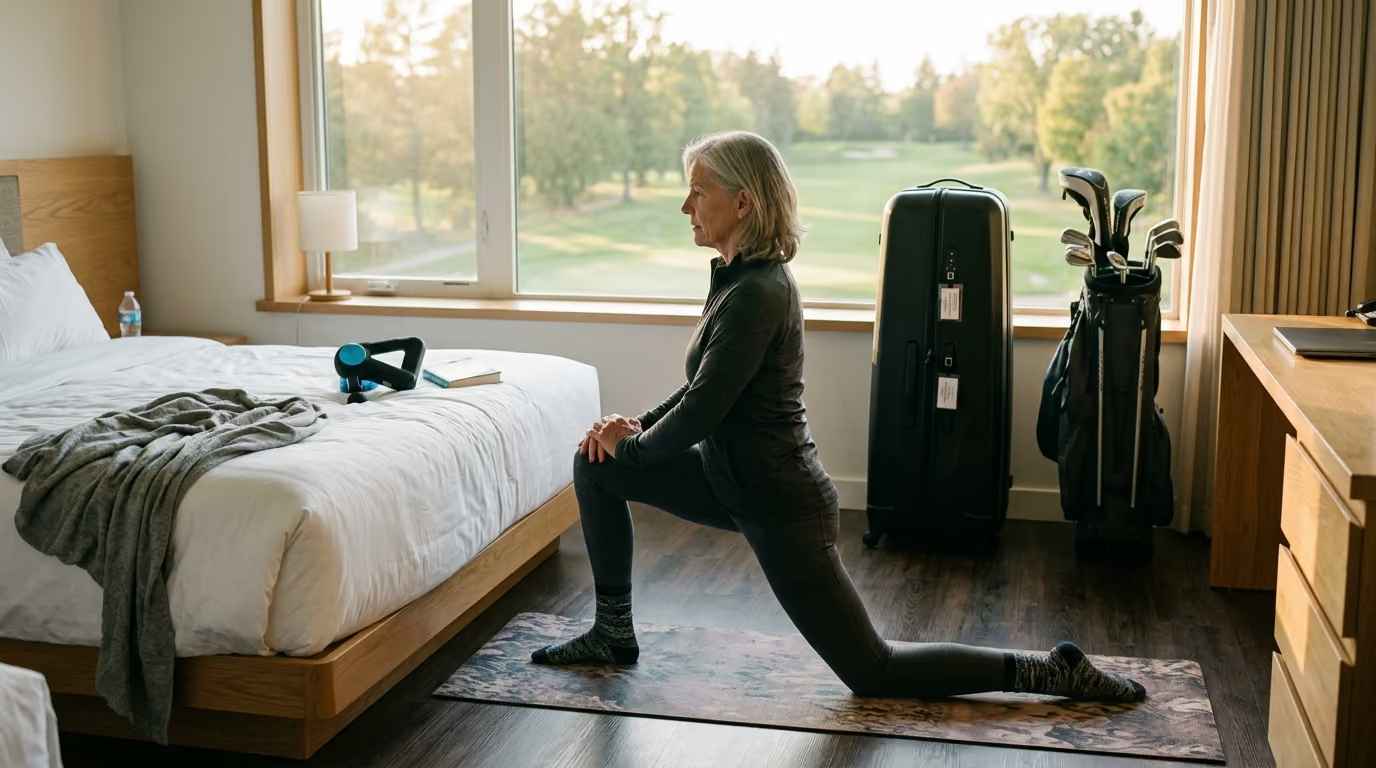
On-course fixes are helpful, but long-term health requires a consistent routine. To build a durable body, you must address the root causes of stiffness and weakness. This does not require hours in the gym, but it does require regular, focused movement.
To improve your hip rotation, practice the trail hip turn exercise daily. Stand with your feet hip-width apart, holding a golf club across your chest. Keep your knees slightly bent, simulating your golf address posture. Focus entirely on turning your trail hip backward while keeping your lead knee stable.
Do not let your hips sway side to side. Hold this turned position for two seconds, feeling the stretch in your glute and hip socket. Return to the starting position and repeat this movement ten times. This simple exercise trains your hip to rotate, reducing the need for your lower back to twist.
To free up your upper back, perform thoracic spine rotations on your hands and knees. Place one hand behind your head, keeping your elbow pointed out to the side. Slowly rotate your chest and elbow upward toward the ceiling, keeping your lower back still. Hold the stretch at the top for one deep breath, then return to the start.
Perform ten repetitions on each side. This movement helps restore the natural rotational capacity of your upper back. It directly reduces the shear forces applied to your lower back during your swing. Consistent practice of this exercise will make your swing feel much smoother.
A strong core is essential for protecting your spine, but not in the way most golfers think. You do not need to do hundreds of sit-ups, which can actually strain your neck and back. Instead, focus on static hold exercises like the plank or the bird-dog. These movements train your core to resist movement, which is its true job in the golf swing.
When your core can resist unwanted twisting, your spine stays in a safe, neutral position. Incorporate a five-minute core routine into your morning three times a week. This habit builds the endurance your muscles need to support you through all eighteen holes. For more structured ideas, explore our resources on strength training.
When golfers try to fix their physical issues, they often make mistakes that make things worse. These errors stem from common misconceptions about fitness and swing mechanics. Avoiding these pitfalls is crucial for protecting your body.
Many players believe that if they just perfect their swing technique, they will never feel pain. They spend thousands of dollars on swing coaches to fix a reverse spine angle or an over-the-top move. While good technique helps, it is not a cure-all. Pain is often a combination of movement patterns, swing volume, and physical conditioning.
If your hip is physically locked, no amount of coaching will make it rotate. Your body will find a way to make the swing, usually by stressing another joint. You must combine swing instruction with physical conditioning to stay healthy. Addressing both the body and the swing is the key to longevity.
A very common mistake is bracing or stiffening your stomach muscles during the swing. Many golfers think that squeezing their abs as hard as possible protects their lower back. In reality, over-contracting these muscles locks up your entire torso. This stiffness prevents your hips and shoulders from turning naturally.
When you cannot turn, you cannot generate power. You end up forcing the swing with your arms, which strains your shoulders and elbows. True core stability is dynamic, meaning the muscles contract and relax in a fluid sequence. They should support you without locking your joints in place.
Many passionate golfers hate to miss a day on the course. They play four or five rounds a week, ignoring the deep fatigue in their legs and back. Research shows that playing through fatigue is a major cause of injury. When your muscles are tired, your swing mechanics break down.
Your body can no longer absorb the forces of the swing, transferring that stress directly to your joints. If you feel exhausted, it is better to take a rest day or focus on recovery work. Giving your body time to heal will keep you playing for many more years.
To help you apply these concepts, here is a step-by-step checklist for this week. Use these steps to prepare your body, protect your joints, and play pain-free.
Your body is the most important piece of golf equipment you own, and keeping its joints moving freely is the ultimate secret to a lifetime of painless swings.
Follow Golfergy for practical insights on performance, mobility, recovery and healthy ageing. Stay connected for new articles, research-led guidance and ideas to help you play better for longer.


Explore practical resources on performance, recovery, mobility and golf longevity.
Read the Blog