
Eighty-four percent of golf injuries occur on the lead side due to muscle imbalances that players can easily correct with balanced physical training.




You are standing on the fourteenth tee box. Your lower back feels stiff. Your lead shoulder feels like concrete. You take a practice swing. The movement feels tight and restricted.
You step up to the ball. You swing your driver. Instead of rotating your hips, you slide them forward. Your ball slices into the right trees. Your lower back feels a sudden pinch.
This is a familiar feeling for many mature golfers. The body is tired. The muscles are out of balance. The lead side is taking a beating.
This moment is not just a swing fault. It is a physical warning sign. Your body is struggling with muscle asymmetry. This guide will show you how to fix it.
Golf is a unilateral sport. You swing the club in one direction thousands of times. This repetitive motion creates natural imbalances. One side of your body becomes the accelerator. The other side becomes the brake.
In a right-handed golfer, the trail side is the right side. The trail side acts as the primary engine. It generates the rotational force.
The lead side is the left side. The lead side acts as the stabilizer. It acts as the brake to slow the body down after impact.
Because of these different roles, the lead side suffers more wear. Research from the Aspetar Sports Medicine Journal shows a startling statistic. Lead side injuries are five times more frequent than trail side injuries.
In fact, lead side injuries account for about eighty-four percent of all reported golf injuries. The lead shoulder and lead hip are highly vulnerable. The left side of the lower back is also at risk.
This high injury rate is caused by rapid physical loading. During the downswing, your lead leg makes contact first. It absorbs a massive amount of vertical force.
This force is called ground reaction force. Your lead leg must handle up to twice your body weight in force. This happens in a fraction of a second.
Despite these forces, golf is a safe sport. The overall injury rate is low. Research shows an injury rate of zero point twenty-eight to zero point sixty per one thousand hours played.
However, when injuries do happen, they are highly localized. This is why balancing your muscle development is vital. It keeps you on the course for years to come.
You can read more about preventing golf injuries to understand these forces.
The downswing is incredibly fast. Your body must accelerate the club to high speeds. But it must also slow the club down after impact.
This deceleration is the job of the lead side. The muscles on the left side of your body contract to absorb the momentum. If these muscles are weak, the joints take the force.
This leads to chronic micro-trauma in the tendons. Over time, this causes tendinitis in the lead shoulder and lead elbow.
Your lead hip is the center of the swing. During the downswing, your pelvis rotates around this joint. The lead hip must withstand both rotational force and downward pressure.
If the muscles around the lead hip are weak, the joint becomes unstable. This instability forces the lower back to work harder.
The lower back is not built for this type of stress. The result is muscle spasms and joint inflammation.
The modern golf swing places a high demand on the body. It emphasizes a large turn of the shoulders against a quiet hip line. This creates a high amount of torque.
This torque places extreme stress on the spine. Research shows significantly higher erector spinae activity during the follow-through of the modern swing.
The classic swing allowed the lead heel to lift. This reduced the strain on the lower back and hips. For golfers over forty, restoring muscular balance is key to surviving the demands of the modern swing.
To prevent injury, you must maintain joint mobility. Your body needs to rotate freely in four key areas. These areas are the four rotary centers.
The first rotary center is neck rotation. Your neck must turn easily. This allows you to keep your eyes on the ball. It prevents stress on your cervical spine.
The second rotary center is shoulder external rotation. Your trail shoulder must rotate backward during the backswing. Your lead shoulder must rotate backward during the follow-through.
If your shoulders are tight, your swing path will suffer. You will compensate by using your lower back. This increases your risk of injury.
The third rotary center is lead hip internal rotation. This is critical for the downswing. As you swing through the ball, your lead hip must rotate inward.
If your lead hip cannot rotate, you will slide your hips forward. This swing fault is called early extension. Your hips thrust toward the ball. This motion forces your spine to straighten up.
Early extension puts massive pressure on your lower back. It also leads to inconsistent ball striking. Keeping your hips mobile is a key part of hip and thoracic mobility training.
The fourth rotary center is thoracic spine rotation. Your thoracic spine is your upper and middle back. It is built for rotation.
Your lumbar spine is your lower back. Your lumbar spine is built for stability. It does not rotate well.
If your thoracic spine is tight, you will force your lower back to rotate. This causes a swing fault called Reverse Spine Angle. Your spine tilts toward the target at the top of the backswing.
This tilt places immense stress on your spinal discs. It often leads to muscle strains and facet joint pain. Keeping the thoracic spine mobile protects your lower back.
The cervical spine consists of seven small vertebrae. The top two vertebrae allow for most of your head rotation.
If the muscles around these vertebrae are tight, your head will tilt during the swing. This tilt changes your eye line.
It makes consistent contact very difficult. It also strains the neck muscles during high-speed swings.
The rotator cuff is a group of four muscles. These muscles stabilize the shoulder joint.
During the backswing, the infraspinatus and teres minor must contract. This pulls the trail shoulder into external rotation.
If these muscles are weak, the shoulder joint can slide forward. This causes impingement and chronic shoulder pain.
The hip is a ball-and-socket joint. It requires a deep pocket of movement.
The gluteus medius and tensor fasciae latae control internal rotation. These muscles must be both strong and flexible.
When they are tight, the hip joint cannot glide properly. The femur pinches against the pelvis. This leads to labral tears and arthritis.
The thoracic spine has twelve vertebrae. Each vertebra is connected to a rib.
This structure allows for about thirty-five degrees of rotation to each side. The lower back only allows for about fifteen degrees.
If you lack thoracic mobility, your body will seek rotation elsewhere. It will force the lower back to twist. This is the primary cause of lower back pain in mature golfers.
How do you know if your imbalances are dangerous? Sports scientists have studied this question.
Research from the Journal of Strength and Conditioning Research provides clear answers. They have identified specific risk thresholds.
A difference of more than ten percent in strength between your sides is a warning sign. This level of asymmetry is a significant injury predictor.
The risk is even higher for the rate of force development. This is how fast your muscles can produce force. An asymmetry of more than twelve percent in this area is highly dangerous.
Landing load asymmetry is another critical marker. If your legs absorb force differently by more than fifteen percent, your knee risk rises. Your risk of an ACL injury increases by two point four times.
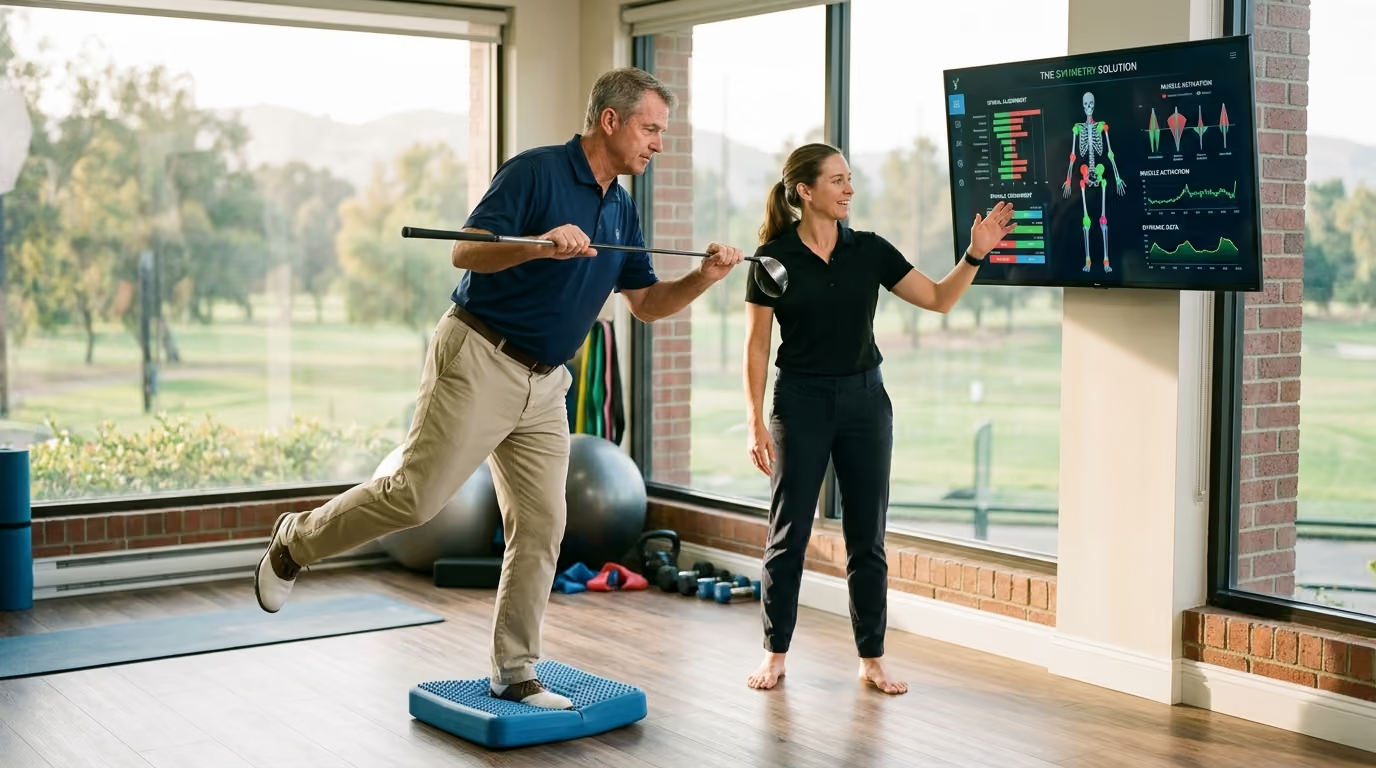
You can measure your physical balance at home. Two simple diagnostic tests can help you.
The first test is the Single Leg Hop Test. To perform this, place a piece of tape on the floor. Stand on your right leg. Jump forward as far as you can.
Land softly on your right leg and hold your balance. Measure the distance from the tape. Repeat this test on your left leg.
Compare the two distances. If one leg jumps ten percent shorter, you have a strength deficit. You must address this in your training.
The second test is the TPI ninety-ninety hip rotation test. Sit on the edge of a sturdy chair. Keep your thighs parallel to each other.
Keep your pelvis completely still. Swing your right foot outward as far as you can. This movement measures your right hip internal rotation.
Now, swing your right foot inward across your body. This measures your right hip external rotation. Repeat these movements with your left foot.
Note any differences in range of motion. A restriction on your lead side will limit your follow-through. A restriction on your trail side will limit your backswing.
While measuring, avoid the zero asymmetry trap. You do not need perfect balance. Humans are naturally asymmetrical.
A five to seven percent difference between sides is normal. It is also completely healthy.
Trying to reach zero percent asymmetry is counterproductive. It can actually stall your overall strength gains. Your goal is to stay below the ten percent danger zone.
Why is ten percent the magic number? In biomechanics, a ten percent difference represents a structural shift.
When one side is ten percent stronger, the brain changes how it moves. It begins to favor the stronger side during complex movements.
This favoring is called compensation. Compensation leads to uneven wear on your joints.
Rate of force development is about speed. It is not just how much weight you can lift. It is how fast you can lift it.
Golf is an explosive sport. The swing takes less than two seconds.
If one side of your body reacts slower than the other, your timing will be off. This lag causes a loss of power. It also forces the faster side to pull the slower side, causing strain.
When you swing, you shift your weight. In the downswing, you plant your lead foot hard.
This movement is like landing from a jump. If your lead leg cannot absorb this force, the shock travels up the leg.
It hits the knee joint first. If the knee cannot handle it, the force hits the hip and lower back. This causes chronic joint pain.
Many golfers use traditional gym workouts. They perform bilateral exercises like squats and deadlifts. These exercises use both legs at the same time.
Bilateral training is useful for building general power. However, it has a major drawback. It can hide significant side-to-side imbalances.
This issue is called bilateral masking. Your stronger leg will naturally do more work. Your weaker leg will continue to lag behind.
To fix this, you must change your training ratio. Use the thirty-seventy strength training framework.
Make thirty percent of your training bilateral. Make seventy percent of your training unilateral.
Unilateral exercises target one side of the body at a time. Examples include split squats and single-arm dumbbell rows.
These exercises force each limb to work independently. The stronger side cannot help the weaker side. This is the most effective way to correct imbalances.
Unilateral training also helps correct physical dominance issues. Golfers typically fall into two categories.
The first category is upper-body dominant. These players are strong in the chest and shoulders. They are weak in the hips and glutes.
Upper-body dominant golfers tend to pull the club down with their arms. This causes an over-the-top swing. It leads to casting and a loss of distance.
The second category is lower-body dominant. These players have very powerful hips. However, they have weak upper bodies.
In these players, the lower body rotates too fast. The arms get stuck behind the body. This causes early extension and blocked shots.
Using unilateral strength training helps balance these areas. It connects your upper body and lower body. This creates a smooth and powerful swing.
The brain is efficient. It wants to complete a movement with the least effort.
If you do a barbell squat, the brain does not care if the legs work equally. It only cares about standing up.
If your right leg is stronger, the brain will shift your weight to the right. You might not even notice the shift. The barbell stays level.
But your right leg gets stronger, and your left leg stays weak. This increases your risk of injury on the golf course. Unilateral exercises prevent this hiding.
The split squat is a prime unilateral exercise. It mimics the stance of the golf swing.
It requires single-leg stability and balance. It also reduces the load on your spine.
A heavy back squat compresses your spine. A split squat targets your leg muscles without the heavy spinal load. This is a critical benefit for golfers over forty.
If you are upper-body dominant, your arms control the swing. This leads to a steep swing plane.
To fix this, you must strengthen your lower body. Focus on exercises that target the glutes and hamstrings.
Building strong legs provides a solid foundation. It allows you to generate power from the ground up. This reduces the strain on your shoulders and neck.
If you are lower-body dominant, your hips turn too fast. Your upper body cannot keep up.
To fix this, you must strengthen your core and upper back. Focus on single-arm rowing exercises.
These movements build the strength needed to control the rotation of your rib cage. They keep your upper body in sync with your hips.
You can use simple movements on the course. These movements provide immediate relief during a round. They help wake up tight muscles.
When you feel stiff, focus on one small movement. Focus entirely on turning your trail hip. This simple focus can prevent early extension.
You can perform a quick trail hip mobilization drill. Stand next to your golf cart or bag. Place one hand on it for balance.
Lift your trail leg slightly. Gently swing your trail hip in a circle. Move it outward five times.
Move it inward five times. This movement lubricates the hip joint. It prepares the joint for the rotational demands of the swing.
Next, place your driver behind your shoulders. Hold it with both hands. Keep your feet planted in your golf setup.
Slowly turn your shoulders to the right. Focus on rotating through your thoracic spine. Do not let your lower back arch.
Hold the turn for three seconds. Return to the center. Repeat this movement five times.
This simple routine wakes up your nervous system. It helps restore your natural turn. It protects your lower back before your next shot.
Joints do not have a direct blood supply. They rely on movement to stay healthy.
Movement pumps synovial fluid into the joint capsule. This fluid acts as a lubricant. It also delivers nutrients to the cartilage.
When you sit in a golf cart, your joints lose this lubrication. They become stiff and dry. Doing a quick mobilization drill restores this fluid.
Long walks or sitting in a cart can deactivate your glutes. When the glutes are asleep, the lower back must work harder.
To wake up your glutes, perform a simple isometric hold. Stand with your feet shoulder-width apart.
Squeeze your glutes as hard as you can for ten seconds. Release and repeat three times. This tells your brain to use these powerful muscles during your swing.
Golfers often slouch between shots. This slouched posture limits thoracic rotation.
To fix this, stand tall and look up at the sky. Reach your arms overhead and stretch.
Hold this position for ten seconds. This movement opens up your chest. It allows for a deeper and safer shoulder turn.
To make lasting changes, you need a regular routine. A sustainable habit will address the root causes of asymmetry.
Research shows that unilateral training is highly effective. An eight to twelve week program can work wonders. It can reduce average asymmetry from over fourteen percent down to under seven percent.
This routine will make your body more resilient. It will also improve your golf performance and longevity on the course.
When performing unilateral exercises, use the weak side first rule. Always start your sets with your weaker limb.
Count the number of repetitions you can perform. Then, perform the exact same number of reps on your stronger side.
Do not perform extra repetitions on your strong side. This rule prevents the gap from widening. It allows the weaker side to catch up.
Perform this routine two to three times per week. Focus on quality movement over heavy weights.
This routine builds stability and mobility where you need it most. It is an excellent way to support post-round muscle recovery.
Golfers often make mistakes when trying to fix imbalances. These mistakes can lead to further injury.
The first mistake is the non-dominant swing myth. Many golfers believe they should practice swinging from the opposite side.
They think swinging left-handed will balance their muscles. However, research suggests this has low efficacy.
Swinging from the opposite side does not fix the underlying physical limits. It is much better to train the four rotary centers. General unilateral strength training is far more effective.
The second mistake is chasing zero asymmetry. You might think perfect balance is the ultimate goal.
This is a trap. Every human has a dominant side. A small asymmetry of five to seven percent is normal.
If you try to eliminate this, you will stall your strength progress. Focus on staying within a safe range instead. Do not obsess over absolute perfection.
The third mistake is the S-Posture setup. This is a common setup fault. Golfers arch their lower back excessively at address.
This posture turns off the glutes and abdominal muscles. It puts massive pressure on the spinal facet joints.
To fix this, tuck your tailbone slightly at setup. This creates a neutral spine. It allows your core and glutes to work properly.
Your swing is a highly coordinated movement. Your brain has spent years building this motor pattern.
Swinging from the opposite side can confuse this pattern. It can ruin your coordination.
It is better to build strength and mobility in the gym. Let your natural swing adapt to your new physical capabilities. This protects your swing mechanics while keeping you safe.
Trying to balance both sides perfectly takes too much energy. Your dominant side will always want to lead.
If you limit your dominant side, you limit your overall power. Accept a small difference.
As long as you are under the ten percent risk threshold, you are safe. Use your natural dominance to generate power. Use your weaker side to provide stable support.
S-Posture is often caused by a physical condition called Lower Crossed Syndrome. This condition involves tight hip flexors and a tight lower back.
It also involves weak glutes and weak abdominal muscles. This muscle imbalance tilts the pelvis forward.
To correct this, you must stretch your hip flexors. You must also strengthen your glutes and core. This restores a neutral pelvis at setup and protects your spine.
Your equipment can also impact your physical symmetry. Small changes in your gear can reduce stress on your body.
First, look at your footwear. Golf shoes must provide good lateral support.
Soft, running-style golf shoes are comfortable. However, they often lack stability.
This lack of support can increase your landing load asymmetry. Choose a shoe with a wider base and firm lateral support. This helps balance the forces during the swing.
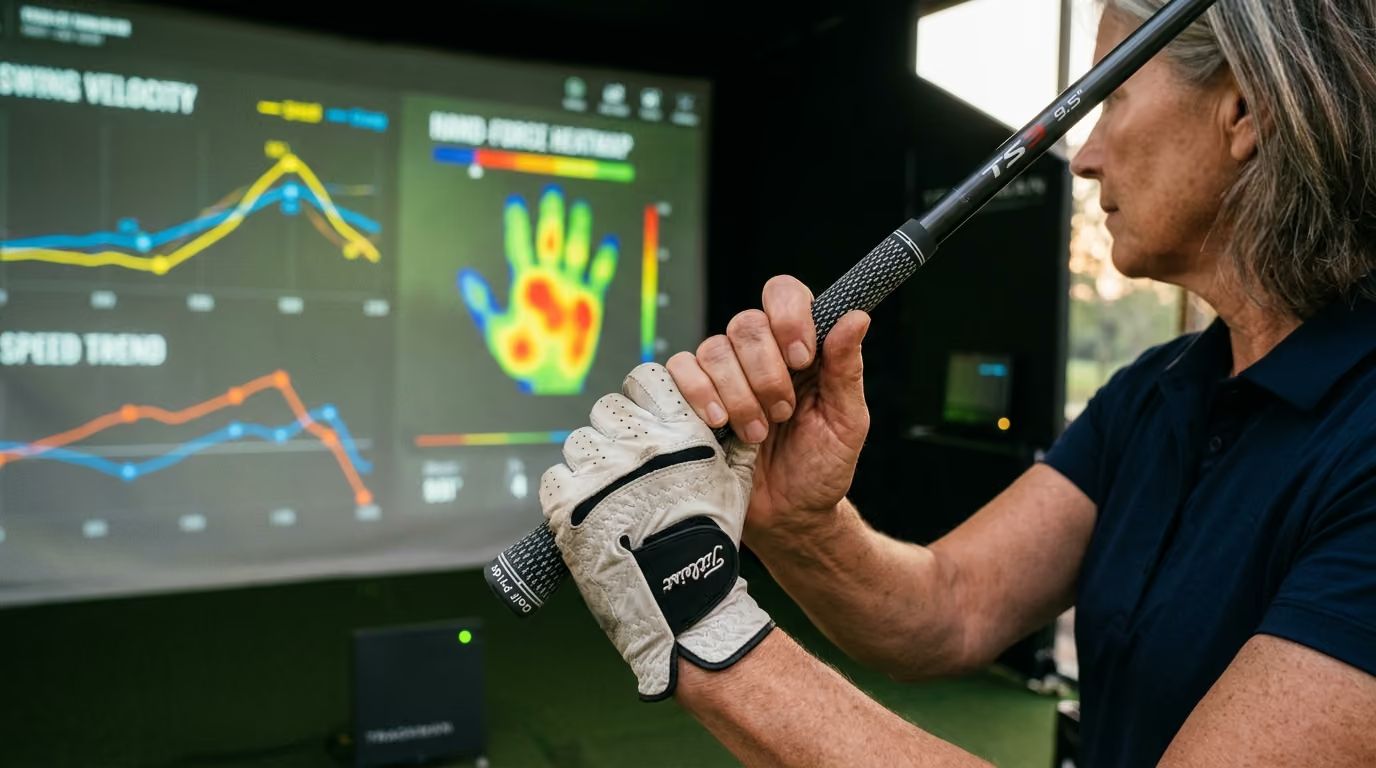
Second, check your grip size. If your grips are too small, your hands will squeeze too tightly.
This excessive tension travels up your arms. It can cause your trail hand to dominate the downswing. This leads to casting and wrist strain.
Consider using midsize or jumbo grips. They reduce hand tension. This helps create a smoother, more balanced release.
Third, evaluate your shaft weight. Heavy steel shafts require a lot of physical effort.
As you age, heavy shafts can fatigue your muscles quickly. This forces your lead side to work harder to slow the club down.
Switching to lighter graphite shafts can help. Lighter shafts reduce the physical demand on your body. They help prevent lead shoulder and elbow strain.
A good golf shoe acts as a foundation. It should have a stiff sole.
The heel counter should be firm. This prevents your foot from sliding inside the shoe.
A stable shoe allows your lead foot to plant securely. This helps distribute the vertical forces evenly. It reduces the strain on your knee and hip joints.
Your hands are the only connection to the club. Tension in your hands travels quickly.
It tightens your forearms, biceps, and shoulders. This tension prevents your shoulders from rotating fully.
Using larger grips allows you to hold the club with less pressure. This relaxed grip keeps your shoulders loose. It allows for a freer and safer swing.
Graphite shafts are lighter than steel shafts. They also absorb more vibration.
This dampening effect is highly beneficial for mature joints. It reduces the shock that travels up your arms upon impact.
Switching to graphite can relieve chronic elbow and shoulder pain. It allows you to play more holes with less fatigue.
Your body is an asymmetrical machine, but keeping your side-to-side strength difference under ten percent through unilateral training is the ultimate key to playing pain-free golf as you age.
When to revisit this resource: Return to these guidelines if you experience persistent stiffness in your lead hip, notice a loss of swing rotation, or feel lower back soreness after eighteen holes.
Follow Golfergy for practical insights on performance, mobility, recovery and healthy ageing. Stay connected for new articles, research-led guidance and ideas to help you play better for longer.


Explore practical resources on performance, recovery, mobility and golf longevity.
Read the Blog