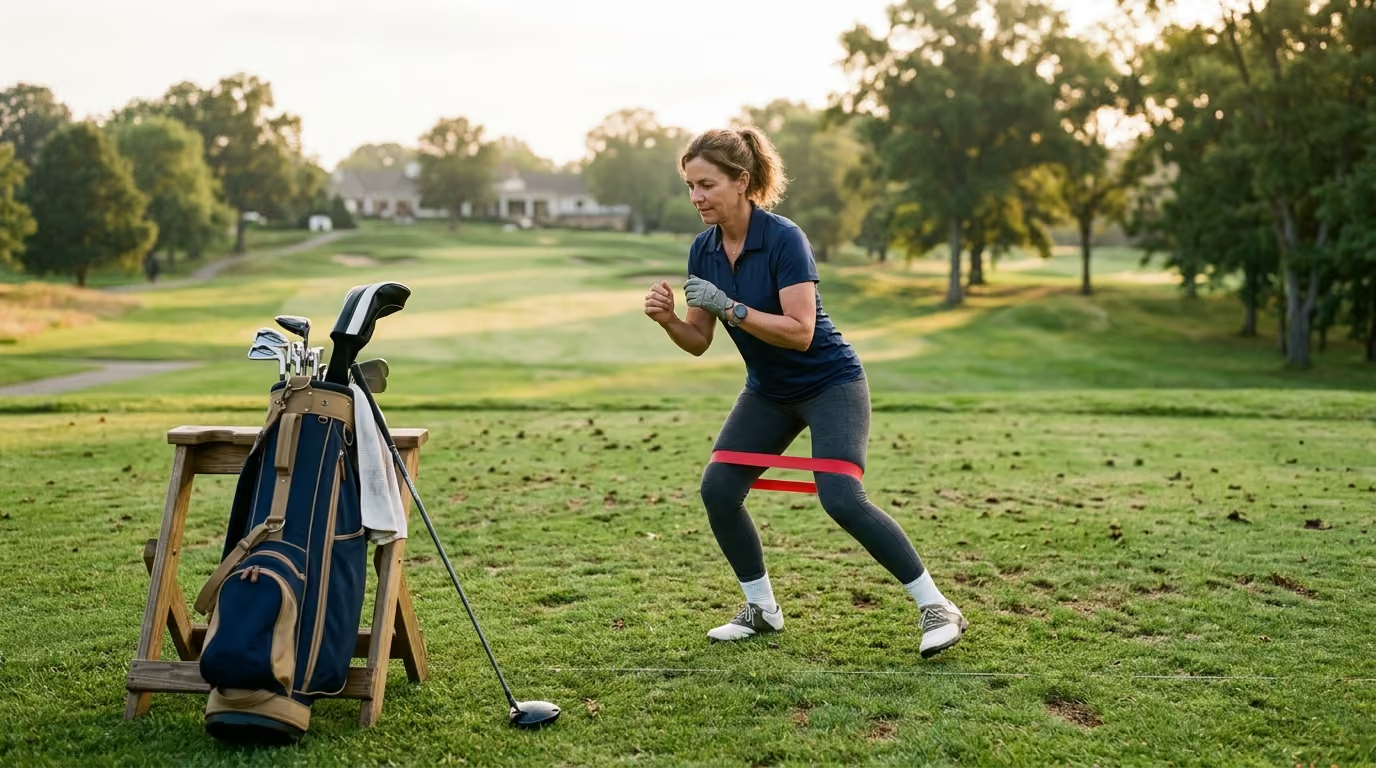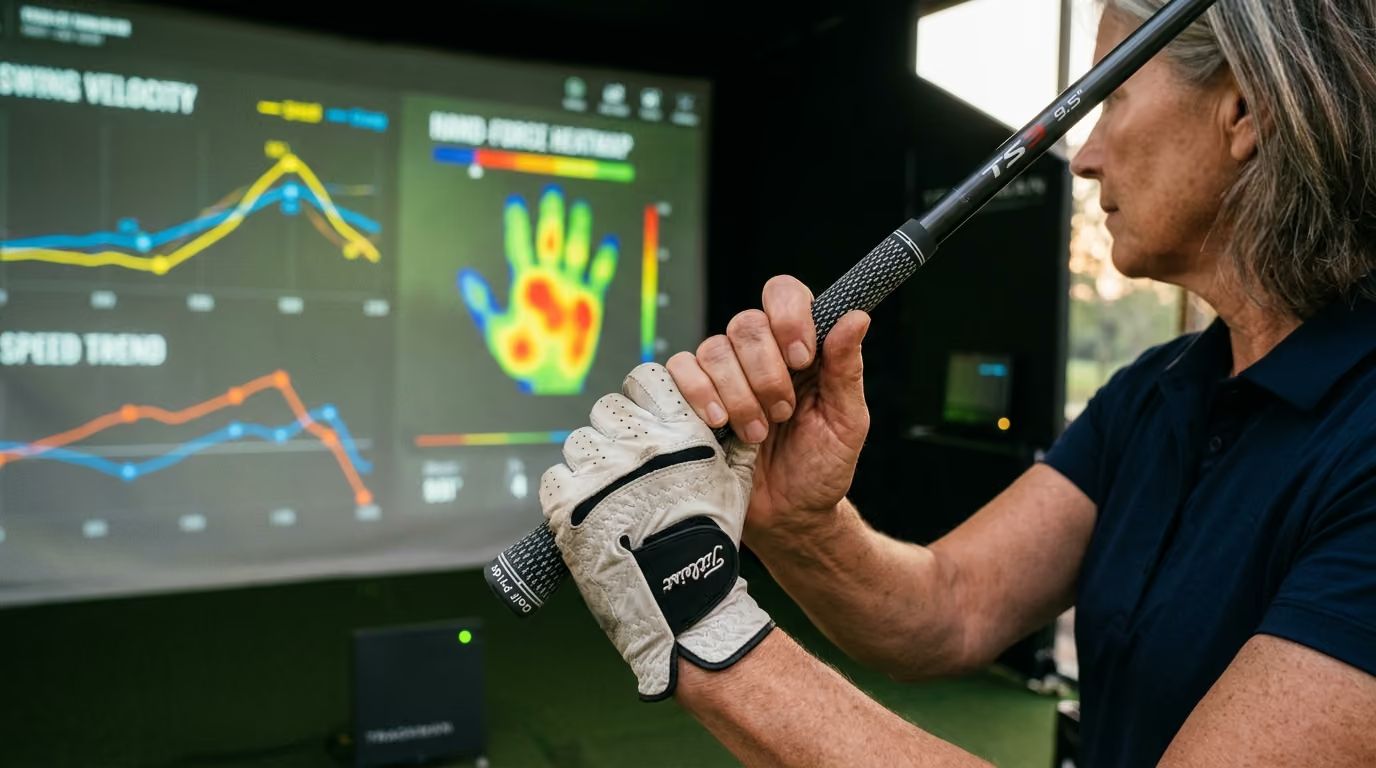

Grip strength directly influences swing velocity and clubface control by ensuring efficient energy transfer from the body to the golf club.




To build a reliable swing, you must understand your physical connection to the club. Grip strength in golf is not merely about holding on during your swing. It is the physical bridge that transfers your body's energy into the ball. We will examine how this mechanical link determines your swing velocity. We will also look at how it protects your joints over decades of play.
This resource is not a list of quick fixes. Instead, we look at the deep biomechanics of your hands. Many experienced players focus entirely on their shoulders and hips. They spend hours trying to turn faster. They try to get more rotation in their backswing. Yet, they overlook the only part of their body that actually touches the golf club.
If your hands cannot handle the speed you generate, your swing will suffer. This guide will provide clear, research-backed training methods. You can read more about keeping your body strong as you age in our guide to healthy ageing. Grip strength is not just about raw squeezing power. It is about control, stability, and endurance.
It is about keeping your clubface square at impact. It is about preventing the club from twisting in heavy grass. When your hands are strong, your entire swing becomes more efficient. You do not have to fight the club. You can let your body move naturally. We will cover the specific data that links hand health to clubhead speed.
We will look at how your brain slows down your swing when your hands are weak. We will also provide a clear, easy routine to build lasting hand strength. This knowledge is vital for any golfer over forty who wants to maintain distance. It is also vital for those who want to avoid joint pain. You can find more information about physical training on our Golf Performance, Recovery & Longevity Blog.
Let us look at a common situation on the golf course. You are standing on the tee box of a long par four. Your shoulders feel loose. Your hips feel ready. You make a great backswing and release the club with full power. But at the top of your swing, you feel a tiny slip. Your lead wrist collapses slightly under the weight of the club.
This tiny slip changes your entire shot. To make up for the slip, your brain forces your arms to tense up. You pull your hands down too fast. The clubface open-faces at impact. Your ball flies weak and high into the right rough. This is not a swing path issue. This is a failure of your physical bridge to the club.
Now you are standing in the deep rough. Your ball is sitting down in thick, heavy grass. You know you need a firm hold to get the ball back to the fairway. As you swing, the heavy grass grabs the clubhead. Because your hands lack raw holding power, the club twists instantly. The ball squirts out only a few yards. Your wrists feel sore and strained.
This experience is common for golfers as they get older. As hand strength naturally declines, these problems happen more often. You might think you need a new driver. You might think you need to change your swing plane. Often, you simply need to build a more robust hold. You can read about other physical swing barriers in our section on golf performance.
When your hands lack strength, your body tries to compensate. You might begin to swing with your shoulders instead of your hips. This movement is called casting the club. It leads to a massive loss of power. It also places extreme stress on your lower back. The root cause of this swing flaw is often weak hands.
Your forearm muscles also get tired quickly during a long round. By the fourteenth hole, your fingers may feel fatigued. You lose the ability to feel the position of the clubhead. This sensory loss makes it very hard to control your ball flight. Your shots become inconsistent as the round comes to an end.
A weak grip also makes you vulnerable to injury. Every time the club hits the turf, a shock travels up the shaft. If your hand muscles are not strong enough to absorb this shock, your joints take the blow. This leads to soreness in your elbows and wrists. Over time, it can cause chronic joint inflammation.
To understand why hand strength matters, we must look at how the body transfers power. The golf swing relies on a proximal-to-distal sequence. This means energy starts in the ground. It moves up through your legs. Then it travels through your torso, your arms, and finally your hands. Your hands are the final exit point for all this speed.
If your hands are weak, this energy chain breaks. The energy you built up in your hips and shoulders leaks out. You cannot transfer that force to the clubhead. Biomechanists call this a broken link in the kinetic chain. No matter how fast your body turns, your ball speed will drop. Your hands must be strong enough to anchor that force.
There is also a concept known as active wrist torque. Research shows that applying force with your wrists late in the downswing is critical. This action can increase your clubhead speed by roughly 9 percent. Weak wrists cannot apply this late force. Instead, they release the club too early. This causes you to lose your lag and lose your distance.
Finally, we must look at how your brain protects your body. Your brain has a natural safety switch. If your hand strength is low, your brain knows your wrists could get hurt. It triggers a process called neuromuscular braking. Your brain actively slows down your arm speed during the downswing. It does this to make sure you can safely hold onto the club.
This braking system is completely automatic. You cannot override it with mental effort. If your brain senses danger, it will cut your speed. This is why some players struggle to swing faster despite doing speed training. Their hands are simply not strong enough to handle more speed. Building stronger hands releases this physical brake.
The muscles in your forearms are responsible for this stabilization. These muscles control your fingers and your wrists. They must work together to keep the club on the correct path. When these muscles are strong, they can resist the high forces of a fast swing. This resistance is what allows you to release the club with full confidence.
You can learn more about how your body moves by checking out our Golf Performance & Longevity Resources. Understanding these physical concepts is the first step to improving your game. It helps you focus your training on the areas that yield the greatest benefit. Strong hands are the foundation of a powerful and injury-free swing.
Grip strength is not a single muscle contraction. It is a complex physical system. Scientists divide hand strength into three distinct categories. Each category plays a different role in your golf swing. Understanding these categories helps you train more effectively.
The first category is the crush grip. This is the power of your fingers and palm closing around an object. This is what you use when you hold your golf club. A strong crush grip keeps the club stable. It prevents the handle from moving during your swing. It also allows you to swing without tensing your shoulders.
The second category is the pinch grip. This is the strength between your thumb and your fingers. It is less about raw power and more about control. The pinch grip helps you make fine adjustments to the clubface. It helps you feel the weight of the clubhead. It is critical for short game touch and putting.
The third category is the support grip. This is your ability to hold a load for a long time. In golf, support grip helps you through high-impact moments. It keeps your hands stable when hitting out of deep rough. It also prevents fatigue over an eighteen-hole round. You can read more about building support grip in our articles on injury prevention.
Let us look at the data surrounding hand strength in golf. Research from the Titleist Performance Institute shows a strong link between hand strength and performance. Studies show a correlation coefficient of 0.60 to 0.70 between grip power and swing speed. This means stronger hands are directly tied to faster swings. It is one of the strongest physical predictors of distance.
The data also shows a clear physical threshold. For male amateur golfers, a grip strength below 40 kilograms is a major speed limit. For female amateur golfers, this threshold is about 30 kilograms. If you fall below these numbers, you cannot swing at your full potential. Your body will simply block you from doing so.
In contrast, professional golfers have much higher baselines. PGA Tour players average a grip strength of 60 to 62 kilograms. Yet, they do not squeeze the club at full force. During a swing, pros use only about 50 percent of their maximum hand power. This leaves them with 25 to 30 kilograms of headroom. This headroom allows them to swing fast while keeping their forearms relaxed.
This data explains why the classic advice to hold the club like a bird often fails. If your maximum grip strength is only 35 kilograms, you must squeeze hard just to hold the club. You are using almost all your strength. This creates massive tension in your arms. If your maximum strength is 60 kilograms, you can hold the club firmly with ease. Your arms stay relaxed, and your swing stays smooth.
There are some interesting gender differences in the research. Studies on elite female players show a weaker link between raw hand power and speed. For these players, technique and flexibility play a larger role. However, for the average recreational female golfer, hand strength remains vital. It keeps the joints safe from the repetitive shock of impact.
We also see this link in young players. Research shows that left-hand grip strength is a major predictor of performance in junior golfers. It explains about 30.9 percent of the variance in their handicap scores. Stronger hands allow young players to develop better swing habits early. It prevents them from using bad movements to make up for weak hands.
To build this kind of hand strength, you must target the correct muscles. The muscles that close your hand are located on the palm side of your forearm. The muscles that open your hand are on the back side of your forearm. Both muscle groups must be strong and balanced. This balance is what gives you a functional and pain-free grip.
If you feel your hands tiring during a round, you need a quick fix. You cannot build muscle in the middle of a game. But you can use a few physical adjustments to save your score. These steps will help you maintain control without causing extra tension.
First, dry your hands and your golf grips completely. Use a clean towel after every shot. If your hands sweat a lot, use a small amount of grip powder. A fresh glove can also make a big difference. These simple steps increase friction. This means your hands do not have to squeeze as hard to keep hold of the club.
Second, change how you hold the club. Many golfers let the handle slip up into their palms. This position reduces your control. It also puts more stress on your wrists. Instead, make sure the club sits across the base of your fingers. This allows your fingers to wrap around the handle naturally. It gives you more leverage with less effort.
Third, adjust your swing focus. If your hands feel weak, do not try to squeeze tighter. Instead, focus entirely on turning your trail hip during the backswing. A full hip turn helps create clubhead speed naturally. It reduces the need to force the club down with your hands. It keeps your swing fluid even when your hands are tired.
Finally, perform a quick physical reset between holes. Lightly tap your fingers together for ten seconds. This action stimulates the nerves in your hands. It helps restore sensation and control. You can also perform a gentle forearm stretch. Gently pull your fingers back toward your wrist to release tension.
These on-course adjustments are helpful in the moment. However, they are only temporary solutions. They do not address the root cause of your grip issues. To make lasting improvements, you need a dedicated training routine. You can learn more about physical preparation on the Golfergy Homepage.
To make lasting changes, you need a regular training routine. This routine should focus on both strength and balance. It should not take hours of your time. You can do most of these exercises at home. They will help you build a solid physical foundation for your game. You can find more exercise ideas in our strength category.
The dead hang is one of the best exercises for support grip. It strengthens your fingers, hands, and forearms. It also helps stretch your shoulders and spine. This stretch is great for older golfers who feel stiff.
To do a dead hang, find a sturdy pull-up bar. Grasp the bar with an overhand grip. Your hands should be about shoulder-width apart. Let your body hang freely. Keep your feet off the ground if possible.
Focus on keeping your shoulders packed. This means pulling your shoulder blades down and back. Do not let your shoulders pinch your ears. Hold this position for 30 to 60 seconds. Repeat this for 3 sets.
If a full hang is too hard, keep your feet on the ground. Use your legs to support some of your weight. As your hands get stronger, put more weight on your hands. Aim to do this exercise three times per week.
The farmer's carry builds great crushing and support strength. It also improves your posture and core stability. It is a highly functional movement for everyday life.
To start, pick up a heavy dumbbell in each hand. Keep your chest tall and your shoulders back. Stand with your feet hip-width apart. Walk forward in a straight line with slow, controlled steps.
Keep your arms straight at your sides. Do not let the weights bounce against your legs. Focus entirely on keeping your grip firm and your body upright. Walk for 30 to 60 seconds per set.
Perform 3 sets of this exercise. Use a weight that feels heavy but allows you to keep good posture. For an advanced goal, try to carry half your body weight. Divide this weight between your two hands.
This protocol is a targeted training method for golfers. It is designed to build rapid hand power. Research shows it can produce quick results in swing speed.
To do this, you need a hand gripper or a squeeze ball. Squeeze the device as hard as you can for 5 seconds. Relax for 5 seconds. Repeat this squeeze 10 times.
Perform this sequence three times per week. A study showed that golfers who followed this protocol for four weeks gained speed. They saw an average increase of 1.5 miles per hour in driver speed. They also saw a 5 to 6 percent increase in grip strength.
Make sure to track your progress. If the gripper becomes easy, increase the resistance. Consistent effort is the key to seeing these speed gains.
A common mistake in grip training is ignoring the muscles that open your hand. If you only train your closing muscles, you create an imbalance. This imbalance can lead to golfer's elbow. This pain is also known as medial epicondylitis.
To prevent this, you must train your extensor muscles. You can use a simple rubber band or a finger band. Place the band around the outside of your fingers and thumb.
Slowly open your hand against the resistance of the band. Spread your fingers as wide as possible. Hold the open position for 2 seconds. Then slowly close your hand.
Focus entirely on opening your fingers against the band's resistance. Perform 3 sets of 15 repetitions on each hand. This exercise keeps your forearm muscles balanced. It reduces joint strain and keeps your elbows healthy. You can read more about joint care in our mobility section.
When golfers try to improve their hand strength, they often make key errors. These errors can lead to injury. They can also ruin your swing rhythm. Avoiding these pitfalls will keep you on the right path.
The first mistake is relying on the bird squeeze advice. As we discussed, holding the club too softly is counterproductive. If your hands are weak, trying to hold the club softly causes slips. This slip makes you squeeze tighter at impact. It creates sudden, jerky tension. You must build raw strength so you can hold the club firmly with low effort.
The second mistake is ignoring your extensor muscles. Many players buy heavy grip squeezers and use them constantly. They never train the muscles that open the hand. This leads to muscle imbalance. It causes tension in the tendons of the elbow. This tension often results in painful tendonitis.
The third mistake is progression that is too rapid. Golfers often want quick results. They start doing long dead hangs with heavy weights immediately. This sudden load can strain the small joints in your fingers. It can also irritate the carpal tunnel in your wrist. You must start slowly and build up your strength over weeks.
Another common mistake is training with poor form. When doing farmer's carries, some players let their shoulders roll forward. This posture places stress on your neck and upper back. It can cause muscle spasms and nerve irritation. Always keep your chest tall and your spine neutral during grip exercises.
Many golfers also fail to rest their hands. Your hands are used in almost every daily task. Squeezing heavy weights requires recovery time. If you do not rest, your muscles will become chronically tight. This tightness reduces your hand mobility and ruins your feel. Limit your grip training to three days per week to allow for proper muscle repair.
Finally, some golfers try to train through joint pain. Squeezing exercises should challenge your muscles, not your joints. If you feel sharp pain in your fingers or wrists, stop the exercise. You may need to use lighter weights or seek professional advice. Training through pain will only lead to longer layoffs from the game.
Your equipment has a major impact on how hard you have to squeeze. The right gear can reduce joint stress. It can help you maintain speed even with hand pain.
First, look at your grip size. Many senior golfers or players with arthritis benefit from midsize grips. Some even use jumbo grips. A larger grip means your fingers do not have to close as tightly. This reduces the strain on your hand joints. It allows you to hold the club firmly with less pain.
Second, consider the material of your grips. Soft, tacky grips require less squeezing power to hold. They also absorb more shock at impact. This shock absorption protects your wrists and elbows. Avoid worn, hard grips. They slip easily, which forces you to squeeze too hard.
Third, check your club weight. Heavy steel shafts require more grip strength to control. If your hands feel weak or sore, consider lighter graphite shafts. Lighter shafts reduce the overall demand on your hands. They help you maintain your swing speed with less physical effort.
You should also check your glove fit. A glove that is too loose will slip. This slip forces your hand to work harder. Make sure your glove fits tightly across your palm and fingers. Replace your glove when it starts to lose its tackiness.
Many modern clubs also feature shock-absorbing systems in the shafts. These systems use special inserts to dampen vibrations. This technology can be very helpful for golfers with joint issues. It prevents the harsh shock of impact from traveling into your hands and wrists. This protection allows you to practice longer without discomfort.
Finally, pay attention to how you store your clubs. Dirt and oil from your hands build up on your grips over time. This buildup makes the grips slick. Wash your grips regularly with warm water and mild soap. This simple maintenance keeps them tacky and secure. It reduces the amount of force needed to hold the club.
If you have questions about equipment adjustments, feel free to reach out. You can contact us through our contact page. We can help you find resources to customize your gear for better hand health.
Yes, hand strength naturally declines as we age. Research shows that people lose grip strength after age forty. This loss can make it harder to control the golf club. However, you can stop this decline with regular training. Exercises like dead hangs and farmer's carries keep your hands strong. They help you maintain your swing speed for many years.
You should train your grip two to three times per week. Your hands use many small muscles and tendons. These tissues need time to recover. Do not train your grip every day. If your hands feel sore, take a break. Balanced training is the best way to avoid injury and build lasting strength.
Yes, larger grips are very helpful for players with arthritis. Midsize or jumbo grips do not require your fingers to close as tightly. This position reduces the stress on your finger joints. It allows you to swing with less pain. Many golfers find they can play more holes when they switch to larger grips.
You should train both hands equally. However, your lead hand plays a critical role in controlling the clubface. Research shows that lead-hand strength is a major factor in swing velocity. Make sure to perform your exercises with both hands. This balance keeps your swing symmetrical and prevents muscle imbalances.
Building raw hand strength allows you to hold the club with relaxed control, which keeps your swing fast and your joints healthy.
Follow Golfergy for practical insights on performance, mobility, recovery and healthy ageing. Stay connected for new articles, research-led guidance and ideas to help you play better for longer.


Explore practical resources on performance, recovery, mobility and golf longevity.
Read the Blog