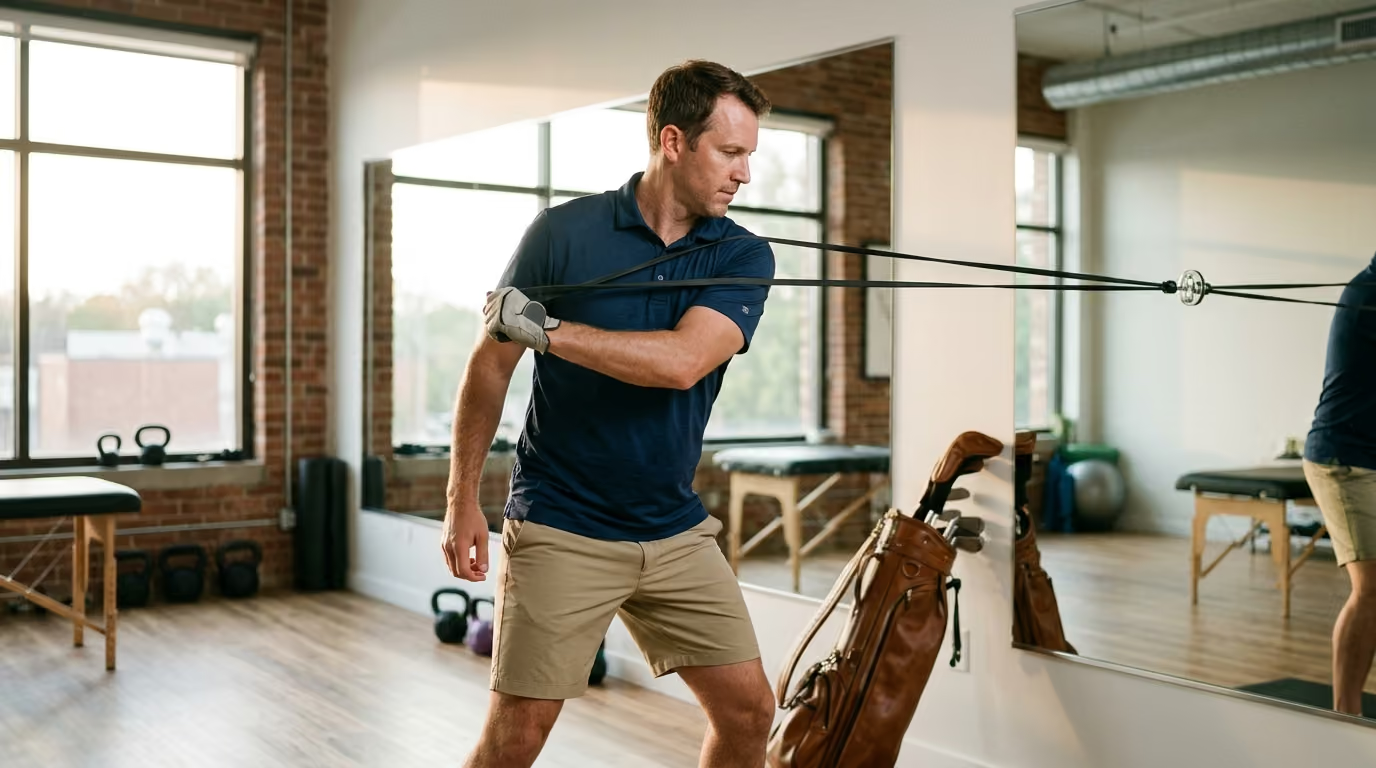

Pain-free swings and long-term joint health come from targeted shoulder stability exercises designed specifically for rotational athletes.




Why does my lead shoulder pinch at the top of my backswing? If you have typed this question into a search engine after a frustrating round, you are far from alone. Many experienced players search for terms like front shoulder pain from golf or shoulder impingement after golf because they want a clear, sustainable way to protect their joints. This manual provides the definitive answers and practical steps you need to keep your body moving smoothly.
You stand on the sixteenth tee box of a long, breezy afternoon. You pull a five-iron, expecting a smooth draw to find the front of the green. As you reach the peak of your backswing, a familiar, sharp pinch bites into the front of your left shoulder. This is not a sudden, dramatic tear, but rather a grinding, dull ache that has been growing for several weeks.
You try to ignore the discomfort, but it alters your transition. You pull the shot left into a deep greenside bunker, frustrated and holding your upper arm.
Many mature players find themselves searching online for terms like golf shoulder pain or front shoulder impingement after golf. They want a clear, permanent solution that does not involve quitting the game they love. This manual provides that definitive path to help you play pain-free for decades to come.
In a classic right-handed golf swing, your two shoulders experience entirely different physical forces. The lead shoulder, which is the left side for a right-handed player, bears the heavy burden of the movement. Research published by the National Institutes of Health reveals that the lead shoulder is injured three times more often than the trail shoulder. In fact, studies show that over ninety percent of all chronic golf shoulder issues occur in this single arm.
During the backswing, your lead arm must cross your chest in a motion called horizontal adduction. On average, a golfer moves their lead arm across their chest at an angle of 126 degrees. This deep movement is paired with internal rotation and flexion of the joint. When you reach the top of your swing, this combination compresses the delicate soft tissues beneath the acromion bone.
Within this tight subacromial space lie your rotator cuff tendons and the protective bursa sacs. When you repeat this deep cross-body movement hundreds of times per week, the space narrows even further. The constant friction irritates the supraspinatus tendon. Over time, this mechanical rubbing causes micro-tears, chronic inflammation, and persistent discomfort.
Scapular dyskinesis is the medical term for abnormal movement of your shoulder blade. Your shoulder blade is the foundation for your arm bone. If the shoulder blade does not slide, tilt, and rotate correctly, your arm bone cannot move freely. This mechanical breakdown is present in sixty-seven to one hundred percent of all shoulder injuries.
Smooth shoulder movement relies on a coordinated partnership between several key muscles. The serratus anterior, trapezius, and rhomboid muscles must work in perfect harmony. They pull the shoulder blade upward and outward to make space for the rotating arm. When these muscles lose their synchronization, the arm bone crashes directly into the roof of the joint.
The serratus anterior muscle sits along your rib cage, right beneath your armpit. It is responsible for keeping the shoulder blade flat against your back during rotational movements. In the golf swing, this muscle remains highly active from the takeaway through the follow-through. When it weakens, the shoulder blade wing tips outward, which closes the joint space and pinches the rotator cuff.
This muscular imbalance is particularly dangerous during the high-velocity downswing. As you pull the club down, the trail shoulder relies on the serratus anterior to stabilize the shoulder blade and produce power safely. If the shoulder blade is unstable, the brain will often limit your power output to protect the joint. This muscle fatigue is a primary driver of posterior glenohumeral instability, leading to a weaker swing and more pain.
The physical demands of golf change as our bodies mature. Research from The Open Orthopaedics Journal highlights a clear divide between younger and older golfers. Younger players typically suffer from hypermobility, loose joints, or posterior instability from over-swinging. Mature golfers, often defined as those over thirty-five with a mean injury age of sixty-three, face a different set of challenges.
For the veteran golfer, the primary threats are arthritic changes and wear in the connective tissues. Years of overhead movement and rotational stress lead to bony growths and thin cartilage. The tendons naturally lose their elasticity and water content as we age. This makes the tissue more brittle and far less tolerant of sudden, violent forces during the swing.
Clinical studies of low-handicap golfers with shoulder pain show that Acromioclavicular joint disease is the most common diagnosis. This wear on the joint where the collarbone meets the shoulder blade accounts for fifty-three percent of all cases in this group. Rotator cuff tendinitis and general subacromial impingement follow at twenty-six percent. Knowing this distinction is vital, because treating a bone-on-bone joint issue requires a different strategy than treating a muscular strain.
To manage these changes, mature athletes must focus on joint longevity. You cannot train the same way you did in your twenties without risking serious injury. Your physical preparation must evolve to prioritize joint stability, tendon health, and smart recovery. Embracing this shift is the cornerstone of healthy ageing for athletes who want to stay on the course.
Your shoulder has a specific capacity for work before it begins to break down. Sports medicine data shows that your risk of a shoulder injury rises sharply once you cross certain volume thresholds. Playing four or more rounds of golf per week significantly elevates your risk. Similarly, hitting more than two hundred practice balls a week puts immense strain on your connective tissues.
Because the lead-side serratus anterior is active throughout the entire swing, it is highly susceptible to muscular fatigue. When this muscle tires out, it fails to stabilize the scapula against the powerful internal rotational forces of the swing. This failure allows the arm bone to slip slightly out of its ideal socket alignment. The resulting instability leads to micro-trauma in the surrounding tendons.
You do not have to wait for a severe tear to know your shoulder is struggling. Early indicators include a dull ache after practicing on the range or mild stiffness when reaching for the seatbelt. You might also notice a loss of clubhead speed or a tendency to shorten your backswing. Paying attention to these early physical cues is a core part of injury prevention on and off the course.
To manage your volume, keep a simple training log of your rounds and practice sessions. If you plan to hit a large bucket of balls, break the session into smaller segments with frequent rests. Focus on quality swings rather than rapid-fire hitting. This mindful approach preserves your muscular endurance and protects your joints from fatigue-induced breakdown.
When shoulder pain strikes, many players decide to take three or four weeks completely off. They sit on the couch, wait for the pain to fade, and then return to the first tee. This strategy is a major mistake because it does not address the weakness that caused the pain. The resting tissue actually becomes weaker, stiffer, and less prepared for the demands of the swing.
Another common error is relying on anti-inflammatory pills or ice packs to get through a round. While these tools can temporarily dull the ache, they mask the warning signals your body is sending. By turning off the pain alarm, you are likely to swing with excessive force. This leads to further micro-damage in the rotator cuff tendons and accelerates joint wear.
Many mature golfers believe that stretching a painful joint is the ultimate cure. They pull their lead arm across their chest in a deep stretch, trying to force more mobility. If your shoulder is already unstable or impinged, deep passive stretching can actually worsen the irritation. What your joint truly needs is loading capacity, which you can only build through systematic resistance training.
To truly heal a damaged tendon, you must apply a controlled physical load. Tendons require tension to rebuild their collagen fibers in a neat, strong pattern. Resting completely causes the fibers to heal in a chaotic, weak clump. By using smart active recovery methods that feature light, progressive resistance, you can guide the tissue back to full strength.
If you feel your shoulder pinching during a round, you need an instant way to create joint space. The easiest method is to slightly limit how far your lead arm travels across your chest. You can do this by focusing entirely on turning your trail hip deeper into the backswing. A fuller hip turn rotates your entire torso, which means your arm does not have to pull as far across your body.
Your setup posture directly dictates how much space your shoulder blades have to glide. If you slouch over the ball with rounded shoulders, you pre-impinge the joint before you even swing. Before your next shot, stand up tall, roll your shoulders back, and settle into your posture from your hips. This simple shift instantly opens the subacromial space, reducing the risk of a painful pinch.
During stability movements on the course, watch the position of your elbows. Allowing your lead elbow to flare outward, often called a chicken wing, indicates a lack of shoulder stabilization. Keep your lead elbow pointing down toward your hip during the takeaway. This simple adjustment keeps the rotator cuff engaged and protects the front of the joint.
When pain is present, every extra swing you take on the course adds to the inflammatory bucket. Cut down your pre-shot routine to a single, smooth practice swing focused on rhythm rather than power. Avoid taking deep, heavy divots, as the sudden impact with the turf sends a harsh shockwave up the shaft. Keep your physical energy focused on the shots that actually count on your scorecard.
To build long-term joint health, you must train the muscles that govern your shoulder blade. This is how you address the root cause of scapular dyskinesis. You do not need heavy weights to achieve this; instead, you need focused, low-intensity movements. Performing these exercises two to three times a week will dramatically improve your swing mechanics and build lasting focused strength training.
Stand with your back flat against a wall, making sure your heels, glutes, upper back, and head make light contact. Raise your arms up into a Y position, keeping the backs of your hands and elbows touching the wall. Slowly slide your elbows down toward your ribs to form a W shape, squeezing your lower shoulder blades together. Hold this bottom position for three seconds, then slide your hands back out to form an L and return to the start. Focus entirely on sliding your shoulder blades down your back during the downward movement. Repeat this controlled motion for ten repetitions to activate your lower trapezius muscle.
Lie flat on your back on a firm mat, holding a very light dumbbell or a resistance band in your lead hand. Extend your arm straight up toward the ceiling, keeping your elbow locked. Without bending your arm, push your hand higher toward the ceiling by lifting your shoulder blade off the floor. Hold this top position for two seconds, then slowly lower your shoulder blade back flat against the mat. This movement isolates the serratus anterior, which is the exact muscle that stabilizes your lead shoulder during the swing. Complete three sets of twelve slow repetitions on each side.
Stand tall with a light resistance band anchored under your feet, holding the ends in your hands. Raise your arms up to shoulder height, but do not raise them straight out to the side or straight in front. Instead, move your arms forward at a thirty-degree angle, which matches the natural plane of your shoulder blade. Keep your thumbs pointing toward the ceiling throughout the entire movement. This specific angle strengthens the supraspinatus tendon without pinching it against the bone. Perform fifteen slow, controlled repetitions, focusing on a smooth lowering phase to build better shoulder mobility.
Hold a looped resistance band between your hands with your palms facing each other. Bend your elbows to ninety degrees and tuck them tightly against your ribs. Keeping your elbows pinned to your sides, slowly push your hands outward against the resistance of the band. Hold this outward tension for ten seconds while breathing deeply through your nose. This isometric hold builds endurance in your external rotators, preventing your elbows from flaring out during your swing. Repeat this hold five times, focusing on keeping your shoulders relaxed and down away from your ears.
The size of your golf grips has a direct, cascading effect on your entire upper body. If your grips are too small, you will naturally squeeze the club with excessive hand tension. This intense grip pressure radiates up your forearm, through your elbow, and directly into your shoulder rotators. Switching to midsize or jumbo grips can instantly reduce this tension, allowing your shoulder muscles to remain relaxed.
The material and flex of your shafts play a major role in joint longevity. Heavy, stiff steel shafts transmit a massive amount of shock directly into your lead arm upon impact. If you suffer from chronic shoulder pain, transitioning to graphite shafts can make a profound difference. Modern graphite shafts are exceptionally light, stable, and designed to absorb high-frequency vibrations before they reach your joints.
It might seem strange to look at your shoes when trying to fix a shoulder issue. However, your swing is built from the ground up, and any instability in your feet must be compensated for higher up the chain. If your golf shoes lack lateral support, your hips cannot rotate efficiently. To make up for this lack of lower-body rotation, you will tend to pull your lead arm excessively across your chest, causing impingement. Invest in structured, supportive shoes to keep your lower body stable and active.
Finally, consider the wear on your golf glove. A worn, slippery glove forces your lead hand to squeeze the club harder to maintain control. This extra tension locks up the wrist and prevents the lead shoulder from rotating naturally. Replace your glove regularly to maintain a light, relaxed grip throughout your entire round.
To keep your shoulders healthy for a lifetime of golf, you must trade passive rest for active, progressive loading. Taking care of your joints off the course ensures you have the strength and mobility to perform on it. For more detailed training and recovery strategies, check out the Golfergy resources page.
Your action plan for this week:
Follow Golfergy for practical insights on performance, mobility, recovery and healthy ageing. Stay connected for new articles, research-led guidance and ideas to help you play better for longer.


Explore practical resources on performance, recovery, mobility and golf longevity.
Read the Blog


