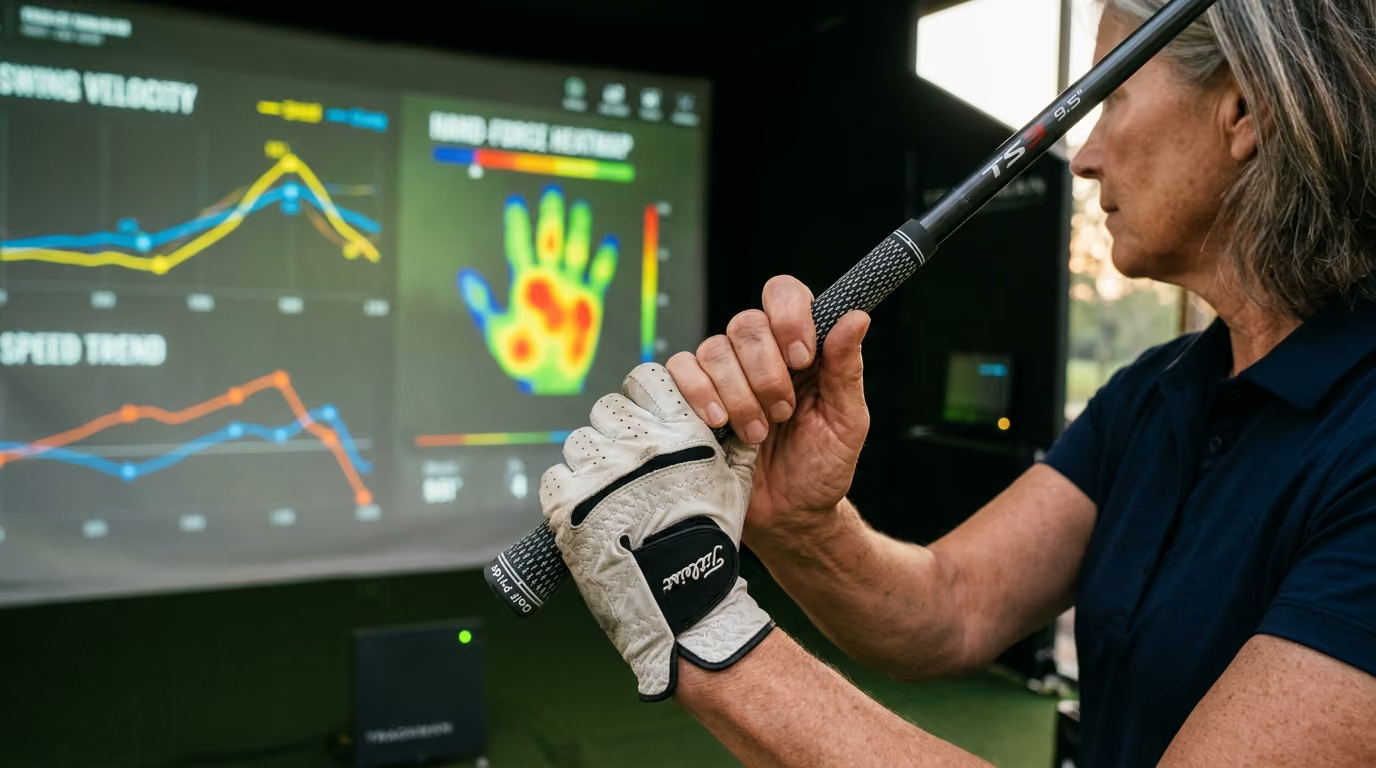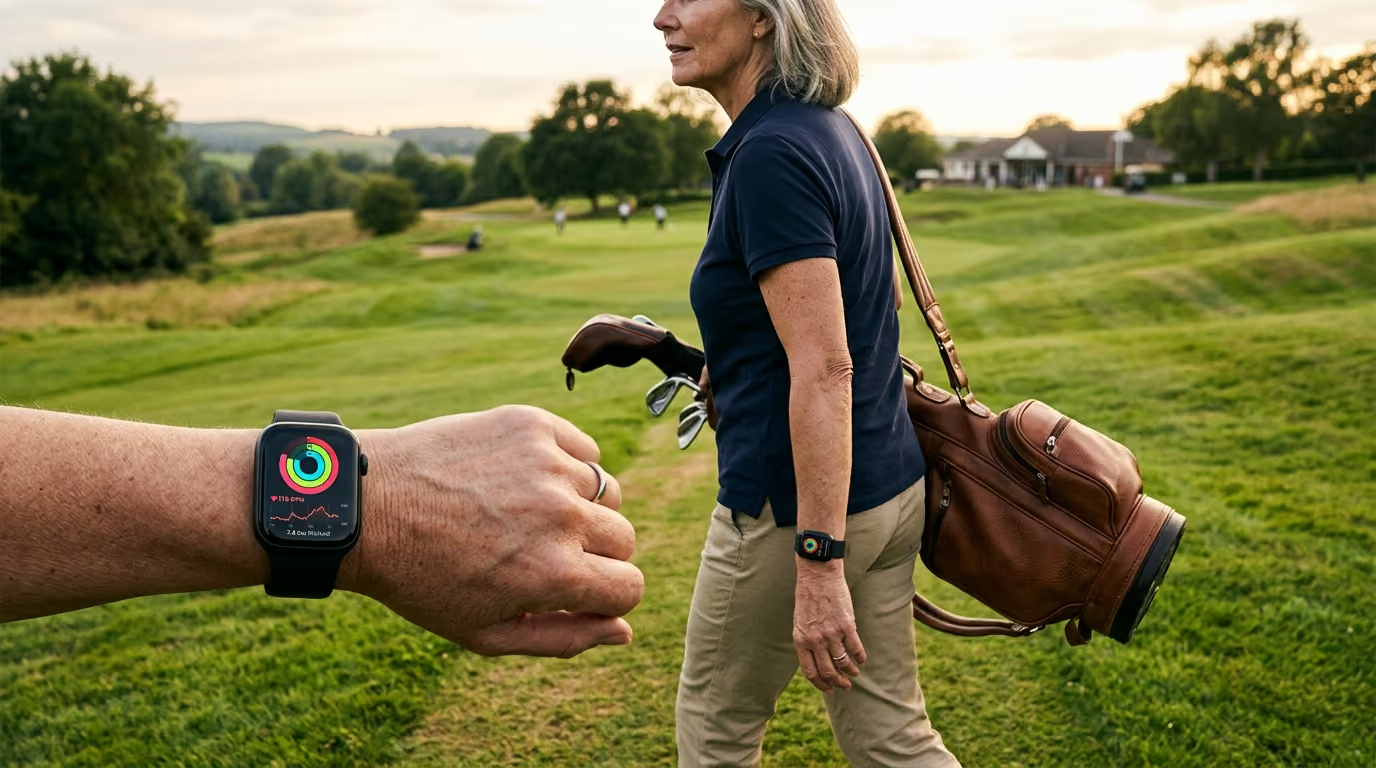

Golf is often dismissed as a gentle leisure pastime, but walking eighteen holes delivers essential cardiovascular exercise and metabolic benefits for long-term health.




Walking the golf course is a topic that sits at the intersection of sport and medicine. It is not just a way to navigate from the tee box to the green. It is also not a high-intensity workout that leaves your heart pounding at its maximum limit. Instead, walking is a unique form of low-impact, moderate-intensity physical training. This definitive guide will detail the physiological and cognitive impacts of walking eighteen holes. We will analyze how this activity shapes your long-term health.
To understand the benefits of walking, we must first look at what golf is not. It is not a passive activity where you simply stand and swing. It is also not a sport that requires extreme cardiovascular exertion. Golf is an intermittent endurance sport. It combines long periods of walking with short bursts of explosive power. This combination makes it a highly effective tool for health preservation.
For mature golfers, this distinction is critical. Many sports become too demanding for the joints as we age. Running can cause joint damage in the knees and hips. Heavy weightlifting can strain vulnerable tendons. Golf, when walked, provides a perfect middle ground. It offers the cardiovascular benefits of aerobic exercise without the high-impact stress on your skeletal system.
In this resource, we will examine the scientific evidence behind walking the course. We will look at calorie consumption, muscle activation, and brain function. We will also address the physical challenges that walking can present to your swing. You will learn how to prepare your body for the physical demands of walking. This preparation will help you enjoy the game for many years to come.
Imagine standing on the fourteenth tee box of a long par five. The afternoon sun is beginning to drop. You have already walked nearly five miles over rolling hills. Your feet feel slightly heavy inside your shoes. Your lower back has a dull, persistent ache that makes it difficult to stand up completely straight. You take a practice swing. Your trail hip feels stiff. It does not want to rotate fully.
You step up to the ball. You swing with your normal effort. Because of the fatigue in your legs, your hips stall halfway through your downswing. Your hands try to compensate for the lack of lower body rotation. You hit the ball thin. It flies low and offline, landing in a deep bunker. This is a common situation for walking golfers. It is not a sudden loss of swing technique. It is a physical reaction to walking fatigue.
Over a five-mile walk, your body performs thousands of small stabilizing contractions. Your core muscles work constantly to keep you balanced on uneven lies. When these muscles tire, your body protects itself by limiting your range of motion. The stiffness you feel is a defensive mechanism. Your nervous system is trying to keep your spine safe.
By restricting your hip turn, your brain prevents you from overextending your joints. Unfortunately, this protective reaction destroys your swing speed and your accuracy. Understanding this cycle is the first step toward overcoming it. If you can manage your fatigue, you can protect both your body and your scorecard.
To understand how walking impacts your body, we must look at energy measurement. Scientists use a metric called Metabolic Equivalents. This is commonly abbreviated as METs. One MET represents the energy you expend while sitting quietly. Activities with higher MET values require more physical effort from your cardiorespiratory system.
According to sports science research, walking a golf course requires 4.3 to 4.8 METs. This level of effort places golf in the moderate-intensity exercise category. It is comparable to walking at a very brisk pace. Riding in a motorized golf cart only requires 2.5 to 2.8 METs. This is considered a low-intensity activity.
This difference in intensity translates to a massive gap in energy expenditure. Walking an eighteen-hole round burns between 1,200 and 2,500 calories. The exact number depends on your body weight and the steepness of the terrain. If you ride in a cart, you only burn 500 to 1,300 calories. Riding reduces your total caloric expenditure by thirty to sixty percent.
Activity Intensity Comparison (MET values):
Some golfers think riding means they do not walk at all. This is a common misconception. Riding golfers still take about 6,000 steps per round. They walk from the cart path to their ball and move around the greens. Walking the entire course produces 12,000 to 17,000 steps. This satisfies your physical activity needs for several days.
When you walk, your body uses fat as its primary fuel source. This slow, continuous fat burning is excellent for metabolic health. It helps improve your body's sensitivity to insulin. This sensitivity makes it easier for your muscles to absorb glucose from your blood. Consequently, walking helps stabilize your blood sugar levels long after your round is finished.
The high caloric burn of walking can help with weight management. However, you must be careful with your nutrition. A five-hour round of golf can trigger a strong appetite. If you eat a large, heavy meal after playing, you can easily replace the calories you burned. To lose weight, you must pair walking with sensible post-round eating habits.
A major study examined 300,000 Swedish golfers over several years. The researchers published their findings in the Annals of Internal Medicine. The results were highly encouraging for active players. Golfers had a 40 percent lower mortality rate than non-golfers of the same age.
This lower mortality rate translates to an extra five years of life. This longevity benefit applies to all age groups and socioeconomic backgrounds. It is not about elite fitness. It is about consistent, low-impact aerobic movement over several hours.
The primary driver of this longevity is disease prevention. Regular golf helps prevent and treat forty major chronic conditions. These include cardiovascular disease, stroke, and Type 2 diabetes. The continuous physical demand strengthens your heart muscle and improves blood flow.
We can explain this through the walk-swing-recovery cycle. Unlike running, golf is not a steady cardiovascular strain. Your heart rate rises during the swing and when walking up hills. It drops when you stand over your ball or wait on the tee. This undulating heart rate pattern trains your heart to recover quickly.
Walk-Swing-Recovery Cycle:
Staying active is a major part of healthy ageing for golfers over forty. Walking the course provides a safe way to keep your joints moving. It lubricates your hips and knees without the hard pounding of running. This gentle movement keeps you supple and pain-free.
Walking also helps lower your resting blood pressure. The prolonged physical activity dilates your blood vessels, which reduces the resistance to blood flow. Over time, your blood vessels become more elastic and healthy. This changes your cardiovascular risk profile in a very positive way.
Regular walking also stimulates your lymphatic system. This system is responsible for removing waste products from your tissues. Unlike your cardiovascular system, the lymphatic system does not have a pump. It relies entirely on muscle movement to push fluid through your body. Walking for four hours provides a massive boost to this natural detoxification process.
The physical benefits of walking are only half the story. Walking 18 holes also has a profound impact on your brain. When you walk, your brain releases a protein called Brain-Derived Neurotrophic Factor. This protein is commonly referred to as BDNF.
BDNF acts like a fertilizer for your brain cells. It supports the survival of existing neurons and helps grow new ones. This process is essential for maintaining cognitive plasticity as you age. Research shows that walking eighteen holes significantly increases BDNF levels.
This neurological boost directly improves what scientists call executive functions. These functions include your ability to plan, focus, and switch between tasks. A study published in PubMed by Kettinen and colleagues analyzed older golfers. The researchers found notable improvements in cognitive speed and visual searching after walking.
Walking also provides a unique mental benefit between your shots. When you ride in a cart, you arrive at your ball very quickly. You have little time to process a poor shot or calm your nerves. Walking provides a natural transition period of several minutes.
This slow walk acts as an emotional buffer. It allows your nervous system to transition from a stressed state back to a calm state. You can let go of your frustration before you reach your ball. This mental reset is a powerful tool for shooting lower scores.
Older adults who participate in regular walking programs show improved balance. They also show faster walking speeds and better memory recall. These changes can reduce the risk of cognitive decline and dementia. Walking the course keeps your mind as sharp as your short game.
When you walk, you also spend more time in nature. This exposure to green spaces has been shown to lower cortisol levels. Cortisol is the primary stress hormone in your body. High cortisol levels can damage your brain and immune system over time. Walking the fairways is an excellent way to reduce daily stress.
While walking has clear health benefits, it does present a challenge. That challenge is physical fatigue. As you walk, your body slowly drains its energy reserves. This drainage can affect your golf swing during the final holes of your round.
Studies from the American College of Sports Medicine show a clear trend. Golfers often experience a two to two point five percent reduction in clubhead speed late in a round. This speed drop is caused by neuromuscular fatigue. Your muscles simply cannot contract quite as fast as they did on the first tee.
This fatigue also alters your motor control. Your brain struggles to coordinate your muscles with the same precision. This subtle shift can lead to poor ball striking and a decrease in holed putts. You might find yourself hitting fat shots or missing short putts.
To stop this drop in speed, you must train your body for endurance. Improving your golf performance is not just about swing mechanics. It is about building a body that resists fatigue. When you are physically fit, your swing remains stable even on the final hole.
Impact of Fatigue on Swing Metrics:
Fatigue also impacts your decision-making abilities. When your body is tired, your brain looks for shortcuts. You might choose riskier shots because you do not have the patience to play conservatively. You might rush your pre-shot routine just to get the shot over with. These mental mistakes can easily add several strokes to your score.
Fortunately, you can combat this fatigue with proper preparation. Building physical stamina is the best defense against late-round swing decay. You do not need to become an elite athlete to see results. Simple changes to your daily habits can make a dramatic difference on the course.
By improving your physical capacity, you protect your body from injury. You also maintain your competitive edge during the crucial closing holes. Walking the course becomes a source of strength rather than a source of fatigue. This is how you achieve true longevity in the game.
If you decide to walk, you must choose how to transport your clubs. The three main options are carrying, using a push cart, or hiring a caddie. Each option has a different impact on your body.
Carrying your bag burns the most calories. Research indicates that carrying burns about 720 calories per nine holes. Using a push cart burns slightly less, coming in at 618 calories. While carrying seems like the better workout, it comes with a physical cost.
Carrying a heavy bag puts a massive load on your spine. This load is often asymmetrical because most golfers carry their bag on one shoulder. This uneven weight distribution causes your muscles to compensate. Over eighteen holes, this compensation can lead to severe muscle spasms in your lower back.
A push cart keeps your spine in a neutral position. It distributes the weight of your clubs evenly through both arms. This reduces the risk of muscle strain and joint wear. For most mature golfers, using a push cart is the smartest way to preserve your body.
Carrying vs. Push Cart Comparison:
Think about the motion of picking up your bag. You must bend down and twist to lift it dozens of times. This repetitive twisting under load is a common cause of disc injuries. A push cart eliminates this repetitive strain entirely.
Pushing a cart also allows you to maintain a better walking posture. When you carry a bag, you tend to lean forward to balance the weight. This forward lean compresses your chest and limits your breathing. Pushing a cart allows you to walk tall and take deep breaths.
Pull carts, which you drag behind you with one hand, are not as beneficial. Dragging a cart forces your shoulder into a rotated position. This constant pulling can strain your shoulder joint and your upper back. If you use a cart, a three or four-wheeled push model is much better.
If you feel your energy fading on the fourteenth hole, do not panic. There is an immediate action you can take to restore your posture. Stand tall and place your hands on your lower back. Gently push your hips forward while arching your spine backward. Hold this position for five seconds.
This simple stretch reverses the forward slump caused by walking and carrying clubs. It opens up your chest and allows you to breathe deeper. Deep breathing increases the oxygen delivery to your tired muscles. It also helps calm an overactive nervous system.
Next, adjust your walking speed. Golfers often walk faster when they get tired because they want to finish. This rapid pace raises your heart rate and increases your fatigue. Intentionally slow your walk down by ten percent. Focus on taking long, relaxed strides.
Finally, drink water and eat a small snack. Do not wait until you feel thirsty or hungry. Consuming a small handful of nuts or a piece of fruit will stabilize your blood sugar. This quick fuel injection will keep your brain focused and your muscles firing.
Another quick fix is to release tension in your shoulders. Shrug your shoulders up to your ears, hold for three seconds, and let them drop. Repeat this three times to release the tightness that builds up from carrying clubs. This release will make it easier to make a full shoulder turn on your next swing.
You can also perform a quick ankle stretch on the tee box. Place the ball of your foot on the edge of the tee marker and let your heel drop down. Hold this for fifteen seconds on each side to stretch your calves. This stretch improves your balance and keeps your feet feeling fresh.
To walk eighteen holes comfortably, you must build a strong physical foundation. This requires a regular exercise routine designed for golfers. You do not need to lift extremely heavy weights. You simply need to build endurance in your legs and core.
Let's focus on a specific movement pattern. To protect your lower back, you must train your hips to move freely. A great exercise for this is the standing hip rotation. This exercise teaches your hips to turn independently of your spine.
To perform this exercise, stand with your feet hip-width apart. Cross your arms over your chest. Keep your feet flat on the floor throughout the movement. Now, focus entirely on turning your trail hip.
Standing Hip Rotation Drill:
Rotate your trail hip backward as far as you can without moving your shoulders. Hold this position for two seconds, then return to the start. Perform ten repetitions on each side. This simple movement patterns your brain to use your hips instead of your lower back during your swing.
Next, build strength in your glutes. Your glutes are the primary muscles that power your walk and your swing. A weak set of glutes forces your lower back to do extra work. Perform basic bodyweight squats twice a week to strengthen these muscles.
Lower your hips back as if you are sitting in a chair. Keep your chest up and your knees tracking over your toes. Push through your heels to return to a standing position. Aim for three sets of twelve repetitions.
Consistent training will build your lower body strength. It will also help maintain your joint mobility over time. You will notice that your back feels looser during the final holes. Your swing will feel just as powerful on the eighteenth tee as it did on the first.
To complete your routine, add a core stability exercise. The bird-dog exercise is excellent for this purpose. Start on your hands and knees on a soft mat. Slowly extend your right arm forward and your left leg backward. Hold for three seconds, then switch sides.
Perform ten repetitions on each side to strengthen your deep abdominal muscles. This core strength stabilizes your spine while walking over uneven terrain. It also provides a solid foundation for a powerful and repeatable golf swing.
The first common mistake is trying to walk eighteen holes without any preparation. Many golfers transition from riding all winter to walking eighteen holes in the spring. This sudden increase in volume is a recipe for injury. Your joints and muscles need time to adapt to the workload.
Instead, start by walking nine holes once a week. Gradually increase your volume over a month. This slow progression gives your tendons and ligaments time to strengthen. It helps you avoid common overuse injuries like plantar fasciitis or Achilles tendonitis.
The second mistake is poor bag carrying technique. Golfers who carry their bags often let the straps hang too loose. This causes the bag to bounce against their lower back with every step. This constant impact irritates your spine and fatigues your core.
Adjust your straps so the bag sits high on your back. The bottom of the bag should rest just above your belt line. This position keeps the weight close to your center of gravity. It minimizes the twisting forces on your spine.
The third mistake is ignoring foot pain. Many golfers believe that sore feet are just a normal part of the game. They continue to wear worn-out shoes that offer no arch support. This neglect can lead to chronic knee and hip pain over time.
Your feet are your only point of contact with the ground. If your feet are not supported, your entire skeletal alignment suffers. Invest in high-quality shoes with good arch support and cushioning. Replace them as soon as you notice the cushioning starting to break down.
A fourth mistake is walking with a hurried stride. Golfers who are playing poorly often walk faster because they are frustrated. This fast pace increases their heart rate and compromises their swing balance. Walking with a deliberate, steady pace is much better for both your health and your performance.
Your gear has a massive impact on your walking experience. The most important piece of equipment is your footwear. Look for golf shoes that offer a balance of traction and cushioning. Spikeless shoes are often more comfortable for walking long distances.
Make sure your shoes have a wide toe box. Your feet naturally swell and expand as you walk miles in the heat. A tight toe box will cause blisters and restrict blood flow. This restriction leads to early fatigue and discomfort.
Next, evaluate your golf bag. If you choose to carry, select a bag that weighs under four pounds when empty. Look for dual-strap systems that distribute weight across both shoulders. Avoid carrying unnecessary items like extra balls or heavy rain gear.
If you use a push cart, choose a model with large wheels. Large wheels roll easier over tall grass and rough terrain. Look for a cart with an adjustable handle height. This allows you to push the cart while keeping your wrists and elbows relaxed.
Choosing the right equipment is a key aspect of injury prevention on the course. The right shoes and carts protect your joints from unnecessary wear. They allow you to focus on your game instead of your pain. Your body will thank you for making these smart gear choices.
Do not overlook the impact of your socks. Wear performance socks made from synthetic materials that wick moisture away from your skin. Cotton socks absorb sweat and stay damp, which leads to painful blisters. A good pair of socks can keep your feet dry and comfortable for all eighteen holes.
Finally, consider using an umbrella on sunny days. Many push carts have attachments that hold an umbrella above your head. This shade keeps you cool and reduces the fatigue caused by heat exposure. Protecting yourself from the sun helps maintain your energy level throughout the round.
Yes, many golfers with mild joint pain can walk the course safely. The key is to use a push cart and wear highly cushioned shoes. Walking is a low-impact activity that helps lubricate the joints. It is often much better for arthritis than sitting in a cart for hours.
Walking can help with weight loss because it burns a significant number of calories. However, you must manage your post-round nutrition. The long duration of a round can trigger a strong appetite. If you eat a large meal after playing, you may negate the caloric deficit.
Walking nine holes is often better for your health than riding eighteen. It provides a moderate-intensity workout that engages your core and legs. It also takes less time, which fits better into a busy schedule. Do not feel like you have to play eighteen holes to get the health benefits.
Spikeless shoes are typically better for walking long distances. They are lighter and offer more flexible soles than traditional spiked shoes. This flexibility allows your foot to move naturally through your stride. However, spikes may be necessary if you play on very wet or hilly courses.
Before your next round, remember that walking the course is not just a way to play golf, but a scientifically proven pathway to five extra years of life and a sharper mind.
Follow Golfergy for practical insights on performance, mobility, recovery and healthy ageing. Stay connected for new articles, research-led guidance and ideas to help you play better for longer.


Explore practical resources on performance, recovery, mobility and golf longevity.
Read the Blog