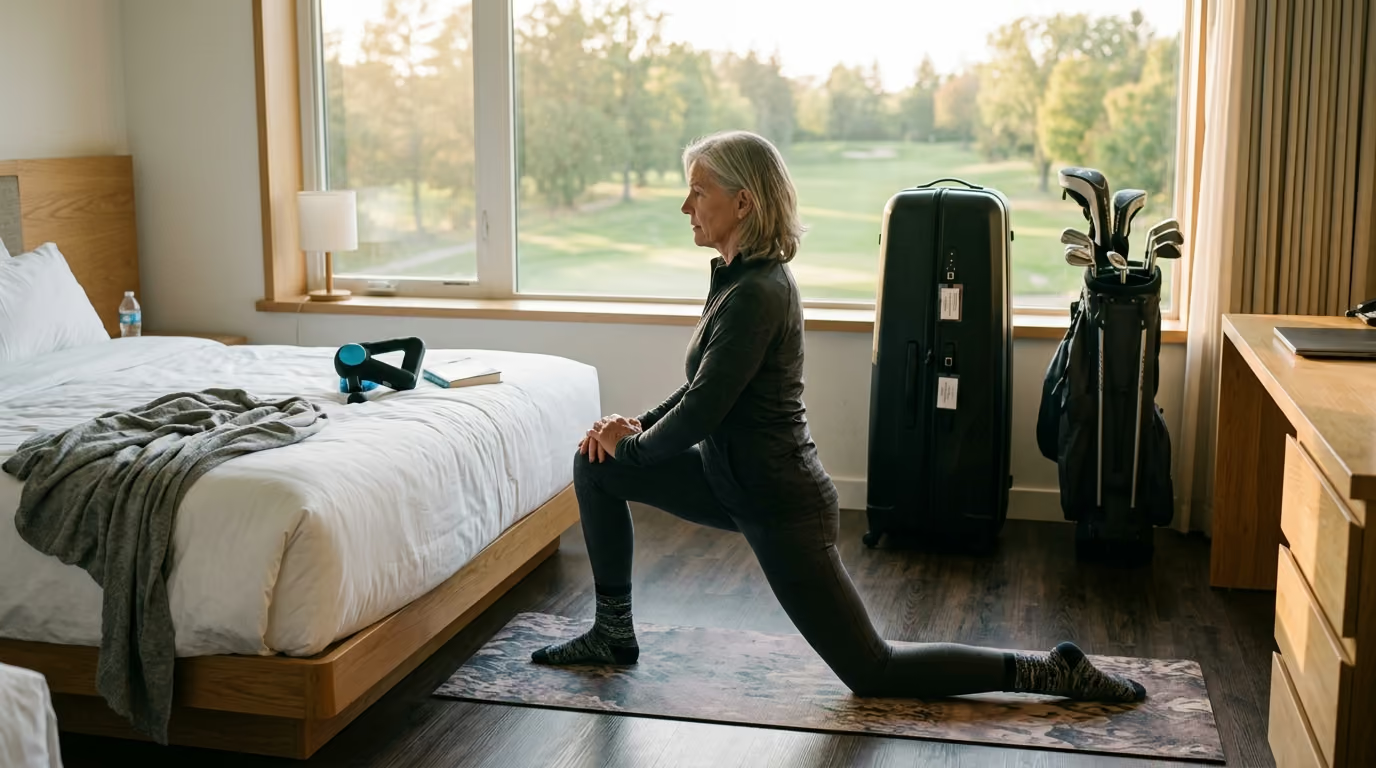
Faster clubhead speed and longer drives become possible without joint pain through a safe neurological training routine designed for mature golfers.




Overspeed training is a neurological exercise program designed to train your brain to allow faster movement. It is not a heavy weightlifting routine. It does not focus on building bulky muscle fibers. It targets the communication network between your brain and your muscle tissue.
This training uses specialized sticks that are slightly lighter or heavier than your normal club. It is not a brute force method to build big muscles. Instead, it targets your central nervous system. It helps your brain release its natural speed limits safely.
In our experience, many players believe that getting older means accepting a shorter drive. They think their physical peak has passed. We want to show you that this is not true. Your muscles can still contract fast if you train your brain.
The saddest thing I have seen in golf is watching lifelong playing partners slowly drop out of our weekend group. It usually starts with a nagging shoulder or knee issue they ignore until it requires surgery. That pattern is exactly why I became obsessed with golf longevity. We do not have to stop playing as we age, provided we do the right maintenance work between rounds.
At Golfergy, we focus on helping mature golfers play better for longer. This guide will show you how to increase your clubhead speed safely. We will examine the science of joint protection. We will provide a step-by-step weekly routine that respects your body.
Imagine you are standing on the fourteenth tee during a close match. You need a big drive to carry a fairway bunker. Your lower back has been tight for the last three holes. Your shoulders feel heavy, and your legs feel fatigued.
You swing hard to find extra yards. Your body stops turning before you reach the top of your backswing. Your swing loses its rhythm. You hit a weak slice into the trees and feel a sharp pain in your back.
This loss of speed happens because your nervous system is trying to protect you. Your brain detects muscle fatigue on the back nine. It recognizes that your joints cannot support high-speed movements in this state. It actively slows your movements down to prevent muscle tears.
When you try to force speed through a tired body, your swing mechanics collapse. Your trail hip stops rotating fully. Your lower back tries to make up for this lost turn. This compensation causes pain and reduces your power. Understanding this physical shutdown is the first step toward preventing it.
Your brain has a built-in safety governor. This governor acts like the speed limiter on a passenger car. It monitors your joints, ligaments, and tendons. If your brain feels that a fast swing will cause damage, it limits your muscle contractions.
Overspeed training works by bypassing this neurological governor. The protocol uses a series of weighted training sticks. These sticks are typically ten percent lighter or heavier than your standard driver. When you swing a light stick, your brain registers a fast speed.
Your nervous system learns that your body can move at this speed safely. This experience resets your neurological speed ceiling. It teaches your brain to allow faster muscle contractions. This process is supported by Post-Activation Performance Enhancement.
This is a temporary state where your muscles can produce more force. When you swing a heavy stick, your muscles contract with maximum effort. When you immediately switch to a lighter stick, your muscles remember that high force. They apply that force to the lighter object, which creates high speed.
However, you must use the correct weights. Research from Par4Success shows that using incorrect weights can harm your speed. If a stick is twenty percent lighter or five percent heavier than your driver, your speed can decrease. Your brain gets confused by the extreme weights and shuts down the fast contraction patterns.
You must also respect physical rest requirements. High-speed training drains your nervous system quickly. Research shows you need two to three minutes of rest for every ten swings.
If you swing without resting, fatigue sets in. Your swing mechanics will break down, which increases your risk of joint damage. Rest allows your nervous system to recover between sets. This recovery keeps your swing quality high. This is the foundation of safe injury prevention protocols on our site.
You can activate your nervous system right before you play. You do not need a gym or special weights on the first tee. You only need to prime your muscles for speed. This quick fix uses the concept of muscle priming.
Start by taking your standard driver. Place a headcover on the clubhead to create wind resistance. Or, hold two clubs together. Make three slow, controlled practice swings.
Focus entirely on turning your trail hip during these swings. Feel your glutes and core muscles activate. This heavy, resisted movement tells your brain that a high load is coming.
Immediately remove the headcover or drop the extra club. Take your standard driver. Make three fast practice swings with high intent. Swing as fast as you can while keeping your balance.
Your brain will feel the sudden lightness of the single club. It will allow your muscles to contract much faster. This quick sequence prepares your nervous system for your first drive. It helps you find your natural rhythm while protecting your joints.
To build lasting speed, you must follow a structured routine. This routine must prioritize joint health. We use the RAMP protocol to prepare the body. This protocol is the industry standard for athletic preparation.
The first phase is the Raise phase. You must increase your heart rate and body temperature. Walk briskly around the parking lot for two minutes. Perform ten light bodyweight squats. This warms your muscles and joints.
The second phase is the Activate phase. You need to turn on your core and glutes. These muscles stabilize your spine during a fast swing. Perform a bird-dog exercise on each side. Lie on your back and perform ten glute bridges. Focus entirely on turning your trail hip and squeezing your glutes.
The third phase is the Mobilize phase. This phase targets your rotary centers. These centers are your ankles, hips, thoracic spine, and neck. Perform five slow torso twists to each side. Perform five deep hip hinges. These movements prepare your joints for high-speed rotation. Look at our articles on dynamic joint mobility for more hip drills.
The final phase is the Potentiate phase. This is where you build speed. You will perform a low-volume overspeed session.
Research shows that low-volume training is highly effective. A study by Par4Success compared thirty swings per session to one hundred swings. The study showed no statistical difference in speed gains between the two groups. Older golfers who did fewer swings got the same results without joint wear. This is a critical finding for golf longevity.
You will perform thirty total swings per session. Use three different clubs: light, medium, and heavy. Perform five swings with the light club. Rest for one minute.
Perform five swings with the medium club. Rest for one minute. Perform five swings with the heavy club. Rest for one minute. Repeat this sequence one more time to reach thirty swings.
You must include non-dominant balancing swings. If you are a right-handed golfer, you must swing left-handed. Perform five left-handed swings for every fifteen right-handed swings. This balances the muscles on both sides of your spine.
This balancing protects your lower back from repetitive twisting forces. It keeps your posture symmetrical. It prevents the muscle imbalances that lead to chronic pain. Perform this entire routine two to three times per week. Never perform speed training on consecutive days. Your nervous system needs forty-eight hours to recover.
Not all older golfers have the same physical needs. We must categorize players to provide safe advice. Your physical limitations determine how you should train. Here are four common profiles.
This golfer has good strength but low swing speed. Their muscles are tight. Their lower back feels sore after only five speed swings. This player lacks the physical range of motion to swing fast safely.
If you fit this profile, you must prioritize mobility over speed. Your joints cannot handle high-speed forces if they cannot move. Focus entirely on turning your trail hip during your warm-up. Limit your speed swings to twelve total swings per session.
Do not perform max-effort swings until your mobility improves. Spend twice as much time on hip and thoracic spine stretches. Your speed will increase as your joints open up.
This golfer has great flexibility but low swing speed. They can twist their body easily, but the club moves slowly. Their muscles lack explosive power. They need to teach their nervous system to produce force quickly.
If you fit this profile, you should focus on power-building movements. Use light medicine ball throws before your overspeed work. Perform three medicine ball chest passes against a wall.
Use a blended protocol for your overspeed work. Perform two warm-up sets with a light stick. Then, perform three speed sets. Finally, perform two blend sets with your actual driver. This helps transfer your power gains directly to your real club. To support this work, read about foundational golf strength.
This golfer already swings fast but experiences pain. They often have sore shoulders or elbows. They try to swing at one hundred and ten percent effort on every shot. They ignore the body's warning signs.
If you fit this profile, you must manage your training volume. Mandate a deload week every fourth week of training. During this week, do not perform any speed training.
Focus on recovery and light mobility work. Never skip your non-dominant balancing swings. These swings are vital for protecting your spine from one-sided wear. Keep your intent level at ninety percent during your sessions. This keeps your mechanics clean and protects your joints.
Many players return to golf after a hip or knee replacement. Most surgeons approve of returning to the game. However, overspeed training adds significant rotational torque to these new joints. You must take extra precautions.
Wait for full clearance from your doctor before starting any speed program. Focus on smooth, balanced swings. Avoid kneeling speed drills, as they place too much pressure on the knees.
Focus on balanced foot pressure throughout your swing. Do not try to jump or slide your hips aggressively. A smooth, well-sequenced swing is safer and more effective for artificial joints.
The first common mistake is the intent trap. Many golfers believe they must swing with absolute maximum effort during speed training. They swing at one hundred and ten percent capacity. This causes their swing mechanics to break down.
For masters athletes, this extreme effort is dangerous. It leads to muscle strains and joint damage. We recommend maintaining ninety to ninety-five percent intent. This speed is fast enough to train your brain. It is slow enough to keep your mechanics clean.
The second mistake is ignoring your trail-hip limit. A common cause of back pain in older golfers is a lack of internal rotation in the trail hip. When you swing back, your trail hip must turn.
If your trail hip cannot rotate, the turning force does not stop. It transfers directly to your lumbar spine. Your lumbar spine is not designed to twist. This repetitive twisting leads to traumatic discopathy, according to research in the Journal of Neurosurgery: Spine. Keep your trail hip mobile to protect your lower back.
The third mistake is volume overload. Performing speed training more than three days per week is counterproductive. Your central nervous system takes time to rebuild.
If you train on consecutive days, fatigue accumulates. This fatigue slows your muscle reactions. When your muscles react slowly, your joints take the force of the swing. This leads to acute injuries like herniated discs and labrum tears. Rest is just as important as training.
Your golf gear plays a big role in your physical health. Grip thickness is often overlooked. If your grips are too thin, you will squeeze the club too hard.
This extra grip pressure creates tension in your forearms and shoulders. Forearm tension limits your wrist release. This slows your swing speed. Use midsize or jumbo grips if you have arthritis or hand pain.
Shaft flex is another important factor. A shaft that is too stiff requires immense effort to bend. This forces you to swing harder than your body can handle. This extra effort strains your shoulders and lower back.
Your shoes must provide stable traction. If your feet slip during a high-speed swing, your body loses its foundation. This sudden slip can cause severe groin or hamstring strains. Wear shoes with spikes or deep traction patterns during speed sessions.
Make sure your training sticks are the correct weight. Avoid improvised heavy clubs. These home-made weights are often too heavy. They ruin your swing sequencing and strain your joints. Use sticks designed for overspeed training.
Real swing speed is built by teaching your brain to release its physical limits, not by forcing an unprepared body to swing harder.
This simple truth should guide every speed session you perform. Do not chase speed at the expense of your physical health. A healthy, mobile body will always swing faster than a stiff, injured one. Focus on movement quality, respect your rest days, and let your nervous system do the work. Your long-term enjoyment of the game depends on this balance. For more tips on longevity, read our golf performance blog.
No, you should not perform speed training if you have active back pain. Speed training places immense rotational force on your spine. If you have pain, your body is already using a protective muscle spasm to guard the area. Adding high-velocity movements will make the injury worse. Focus on gentle mobility and core stability exercises first. Wait until you are completely pain-free before starting a speed program.
Most older golfers see initial speed gains of three miles per hour within six to eight weeks. These early gains are neurological. Your brain is learning to let your muscles contract faster. To make these gains permanent, you must stay consistent. A low-volume maintenance program of one session per week will help you keep your speed. This speed translates to about ten to fifteen extra yards on your drives.
Yes, speed training is safe for golfers over sixty if they follow a structured protocol. Older golfers often lose speed because their fast-twitch muscle fibers go dormant. Overspeed training is the best way to wake up these fibers. You must prioritize the warm-up and limit your training volume. Do not skip the non-dominant swings. If you keep your effort at ninety percent, your joints will remain safe.
You should not perform a full speed training session right before or after a round. A full session drains your nervous system and fatigues your muscles. This fatigue will ruin your performance on the course and increase your risk of injury. Instead, do your speed training on non-golf days. You can use a very brief muscle-priming sequence before you play. Save the main training for your rest days.
Follow Golfergy for practical insights on performance, mobility, recovery and healthy ageing. Stay connected for new articles, research-led guidance and ideas to help you play better for longer.


Explore practical resources on performance, recovery, mobility and golf longevity.
Read the Blog