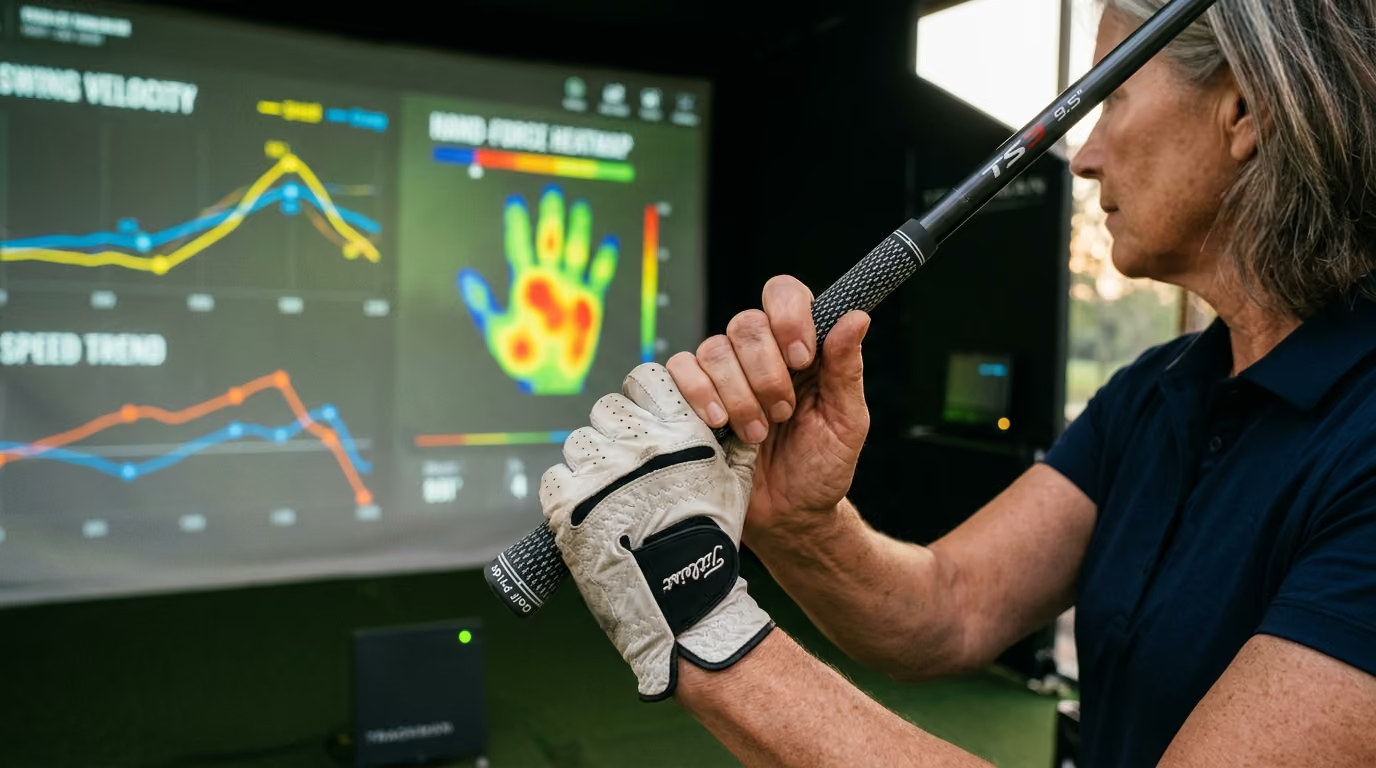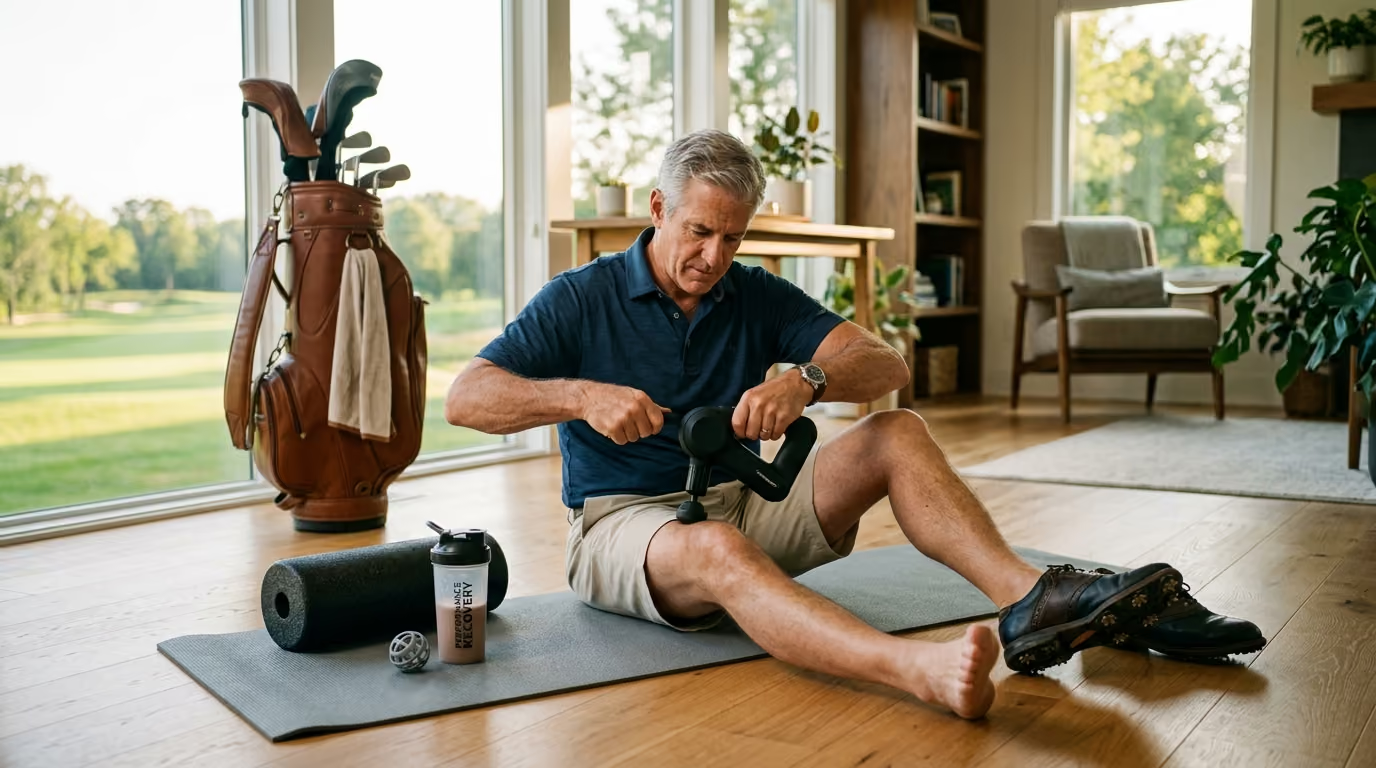

Science-backed recovery strategies help golfers eliminate muscle stiffness, restore energy, and maintain their full swing speed during consecutive weekend rounds.




Are you searching for a way to cure Sunday morning stiffness after playing eighteen holes on Saturday? Many mature players look for solutions to muscle pain that ruins their weekend tournaments. The physical toll of back-to-back rounds can destroy your swing by the tenth hole on Sunday. This guide provides a definitive recovery plan to keep your body moving freely and preserve your swing speed.
You do not need complex medical equipment or expensive therapy sessions. You can restore your physical energy by using basic, science-backed recovery habits. By focusing on sleep, nutrition, and strategic physical therapy, you can play thirty-six holes without pain. Let us examine the exact steps to keep your body performing at its highest level all weekend.
Let us look at a common situation on the golf course. You played a great round on Saturday morning. You walked eighteen holes and felt excellent during the post-round lunch.
By Sunday morning, your body feels completely different. You stand on the first tee and try to take a practice swing. Your lower back feels like a cold piece of iron.
As you reach the top of your backswing, your hips refuse to turn. Your lead shoulder cannot get past your chin. You make a lunging swing to compensate for this tightness. The ball slices into the right trees, and you realize it will be a very long day.
This physical limitation happens because muscle fatigue changes how your joints move under pressure. Your body is trying to protect itself from further strain. When your muscles are tight, they restrict your natural movement patterns. Understanding how to manage this physical decline is the key to playing great golf on Sunday.
When you push through fatigue, your body makes subconscious adjustments. If your hips cannot rotate, your lower back must twist more to complete the swing. This extra twisting causes irritation in your spinal joints and muscle spasms.
By the back nine on Sunday, you are no longer playing golf. You are simply trying to survive the round without injuring yourself. This guide will show you how to break this cycle of fatigue and pain.
With the right recovery habits, your body will feel as loose on Sunday morning as it did on Saturday. You can maintain your posture, protect your joints, and keep your swing speed constant.
Walking a golf course requires far more energy than most people realize. When you walk eighteen holes while carrying your golf bag, you burn between 1200 and 1500 calories. If you play thirty-six holes over a single weekend, your energy expenditure can easily exceed 3000 extra calories.
This physical effort is equal to running two half-marathons back-to-back. Your body drains its energy stores to keep your muscles functioning. If you do not replace these calories, your brain will slow down your muscle contractions. This drop in energy directly reduces your clubhead speed during your second round.
To prevent this drop, you must feed your body fuel throughout the weekend. Think of your body as an engine that requires constant fueling. Skipping meals or eating poor food will starve your muscles of the energy they need.
When your body runs out of glucose, it begins to break down muscle tissue for energy. This process increases your recovery time and causes deeper muscle soreness. You must consume balanced meals to protect your hard-earned muscle tissue.
You also cover a massive distance during a standard round. Walking eighteen holes typically covers five to seven miles. This distance translates to 12000 to 16000 individual steps.
Every step sends impact forces up through your feet, ankles, knees, and hips. Over thirty-six holes, your joints absorb thousands of pounds of cumulative force. This constant impact wears down the cartilage and tightens the surrounding muscles.
Your feet bear the brunt of this physical stress. If your feet become fatigued, your entire kinetic chain suffers. This fatigue is why many players feel pain in their lower back after walking a long course.
Your gait changes when your feet and ankles get tired. You may start to roll your feet inward, which places extra stress on your knees. This misalignment travels up your legs and causes your hips to tighten.
The golf swing itself places massive rotational stress on your spine. During a single swing, your hips turn rapidly while your shoulders turn even further. This movement creates a high amount of torque in your lower back.
When you repeat this motion one hundred times per round, your muscles suffer microscopic tears. These tiny tears lead to delayed onset muscle soreness. This soreness is what makes your body feel stiff and weak on Sunday morning.
The lumbar spine is built for stability, not rotation. It only rotates about twelve degrees in total. The thoracic spine and the hips are designed to handle the rotation of the swing.
When your hips and upper back tighten from walking, your lower back is forced to rotate. This extra rotation causes micro-trauma to the spinal discs and muscles. Keeping your hips and upper back mobile is your best defense against lower back pain.
To survive a long weekend of golf, you must understand how your body rebuilds itself. Many players focus on expensive tools like massage guns or cold tubs first. These tools are secondary additions to your routine.
We call these secondary tools the garnish. The real foundation of recovery consists of sleep and nutrition. These two elements make up eighty percent of your physical restoration.
Without proper sleep, your body cannot produce the hormones needed to repair muscle tissue. You can spend hours in an ice bath, but it will not fix a lack of sleep. To recover, you must treat sleep as your primary performance tool.
Deep sleep is when your pituitary gland releases growth hormone. This hormone is responsible for repairing the microscopic tears in your muscles. If you cut your sleep short, you halt this natural healing process.
Many players think that sitting on the couch is the best way to recover on Saturday night. This passive rest can actually make your stiffness worse. When you sit for long periods, your hip flexors tighten and your glutes turn off.
Active recovery is a much better choice for managing lower back strain. Light movement helps pump blood through your muscles. This circulation carries fresh oxygen and nutrients to your damaged tissues.
Instead of lying down, spend ten minutes walking slowly after your round. You can also perform some gentle dynamic movements. This light activity keeps your joints lubricated and prevents your muscles from locking up.
Active recovery also helps clear lactic acid and other metabolic waste from your limbs. This process reduces the severity of your muscle soreness the next day. A little bit of movement goes a long way in keeping your body loose.
To learn more about restoring your body after a round, read our guide on active recovery methods.
Sleep is not just a period of inactivity; it is an active biological process. Your sleep is divided into cycles of light sleep, deep sleep, and REM sleep. Each cycle plays a specific role in your physical and mental recovery.
Deep sleep, also known as slow-wave sleep, is when your body does most of its physical repair work. During this stage, blood flow to your muscles increases, delivering oxygen and nutrients. This extra blood flow helps heal micro-tears caused by walking and swinging.
If your sleep is interrupted, you will spend less time in deep sleep. This reduction in deep sleep means your muscles will still be sore the next morning. Your nervous system will also remain fatigued, affecting your hand-eye coordination.
Aim for seven to nine hours of continuous sleep on Saturday night. This duration guarantees that your body completes enough sleep cycles to repair itself. Proper sleep is the most effective performance enhancer available to golfers.
After you finish your first eighteen holes, your body is in a state of dehydration. You lose significant fluids through sweat, even on cool days. Dehydration makes your muscles less pliable and more prone to cramping.
To fix this, you must replace your fluids systematically. Try to drink 1.5 liters of water for every kilogram of weight you lost during the round. If you do not have a scale, monitor the color of your urine to guide your drinking.
Your goal is a pale yellow color, which indicates balanced hydration. Adding electrolytes to your water is highly beneficial. Sodium and potassium help your body absorb fluid much faster than plain water.
Avoid sugary sports drinks and choose clean electrolyte powders instead. Drinking plain water in large amounts can dilute the sodium in your blood. This dilution can actually make you feel more fatigued and weak.
Your muscles suffer micro-tears during the rotational movement of the swing. To fix these tears, your body needs amino acids from protein. Consuming protein quickly after your round is vital.
Aim to eat twenty to forty grams of high-quality protein within two hours of finishing your round. This timing window is when your muscles are most receptive to nutrients. Excellent sources include lean chicken, fish, eggs, or a high-quality whey protein shake.
If you fail to get enough protein, your body will take longer to rebuild. This delay leads directly to the weakness you feel on Sunday morning. Proper protein intake is the foundation of structural repair.
Protein also helps stabilize your blood sugar levels after exercise. This stability prevents the energy crashes that lead to overeating later in the evening. Keep a protein shaker in your golf bag for a quick post-round drink.
Your muscles store energy in the form of glycogen. Walking miles and swinging clubs drains these glycogen reserves. If you do not refill these energy tanks, you will run out of gas on Sunday.
Eat complex carbohydrates during your Saturday evening meal. Sweet potatoes, brown rice, and quinoa are excellent choices. These foods release energy slowly into your bloodstream.
Avoid simple sugars like white bread or candy after your round. These simple carbohydrates cause a quick spike in blood sugar followed by a crash. Complex carbohydrates keep your energy stable for the next morning.
Your body stores glycogen along with water molecules. For every gram of glycogen you store, your body holds about three grams of water. This connection is why proper hydration is necessary for restoring your energy levels.
Compression garments are tight sleeves or pants that support your limbs. Research shows these garments improve blood flow back to your heart. This increased circulation helps remove metabolic waste from your muscles.
Wearing compression garments can reduce muscle soreness for up to ninety-six hours. You can wear compression socks during your drive home from the course. You can also wear compression tights under your pants during your Sunday round.
This constant, gentle pressure keeps fluid from pooling in your lower legs. Many players notice their legs feel lighter and more energetic when using compression. It is a simple tool that requires very little effort.
By improving venous return, compression garments help your cardiovascular system work more efficiently. This reduction in physical stress allows your body to focus on muscle repair. You can find compression gear designed specifically for athletes at most sporting goods stores.
Many professional golfers use pneumatic compression boots after their rounds. These devices use air chambers that inflate and deflate in a specific pattern. This pulsing pressure starts at your feet and moves up to your thighs.
This movement mimics the natural muscle pump of your legs, pushing fluids back toward your heart. It helps clear metabolic waste and reduces swelling in your lower limbs. You can use these boots for twenty to thirty minutes while relaxing on Saturday evening.
While these devices can be expensive, they are highly effective for rapid recovery. They provide a deeper level of compression than standard socks. If you play in many weekend tournaments, they are a valuable tool to own.
Many golfers ignore their feet when thinking about recovery. Your feet are your only connection to the golf course. The tissue on the bottom of your foot is called the plantar fascia.
When this tissue gets tight, it restricts how your ankles move. Poor ankle mobility prevents you from transferring your weight correctly during the swing. This restriction forces your knees and lower back to work harder.
Use a lacrosse ball or a golf ball to roll the bottom of your feet. Place the ball under your foot and apply gentle pressure. Roll the ball from your heel to your toes for two minutes on each foot. This release improves your balance and keeps your feet feeling fresh.
Your feet contain thousands of nerve endings that communicate with your brain. Stimulating these nerves with a ball helps wake up your balance system. This quick drill can instantly improve your stability on Sunday morning.
For a deeper look at foot and leg stability, see our resources on hip rotation and joint health.
Your hips are the engine of your golf swing. The gluteus maximus, medius, and minimus work together to rotate and stabilize your pelvis. When these muscles get tight, they limit your backswing and downswing.
You can use a foam roller to perform self-myofascial release on your hips. Sit on the roller and cross one ankle over your opposite knee. Tilt your body slightly toward the side of the crossed leg and roll back and forth.
Focus entirely on rolling the tightest spots in your glutes. When you find a tender spot, hold your position for thirty seconds while breathing deeply. This pressure tells your nervous system to relax the muscle fibers.
This simple routine can instantly restore your hip rotation. It is an excellent way to prepare your body for a second round of golf. Spend five minutes on each hip before you go to bed.
Cold water immersion is an excellent tool for reducing acute inflammation. When you submerge your body in cold water, your blood vessels constrict. This constriction limits swelling in your joints and muscles.
To get the best results, use the correct time and temperature. Spend ten to twelve minutes in water that is between ten and fifteen degrees Celsius. This range is equal to fifty to fifty-nine degrees Fahrenheit.
Do not stay in the cold water longer than fifteen minutes. Longer exposure does not provide extra benefits and can stress your nervous system. Always warm up slowly after your cold plunge.
Cold therapy also helps desensitize painful nerve endings in your muscles. This effect can provide immediate relief from post-round soreness. It is a powerful tool to use when you have a quick turnaround between rounds.
When you step into cold water, your body experiences a mild shock. This cold temperature causes your blood vessels to narrow, a process called vasoconstriction. This narrowing reduces the flow of blood to your limbs.
This reduction in blood flow limits the inflammatory response in your muscles. While some inflammation is necessary for long-term muscle growth, too much swelling causes pain and stiffness. Cold water helps keep this swelling under control.
When you step out of the cold plunge, your blood vessels dilate quickly, a process called vasodilation. This dilation sends a rush of fresh, oxygenated blood back to your muscles. This flushing effect helps clean out cellular waste products.
Cold water also slows down the conduction velocity of your nerves. This change reduces the pain signals sent to your brain, providing a natural numbing effect. It is a highly effective way to relieve muscle soreness after a long day of golf.
Heat therapy works differently than cold therapy. While cold reduces inflammation, heat relaxes tight muscles and increases blood flow. Heat is perfect for managing chronic stiffness in your lower back.
Use a heating pad or take a warm bath on Saturday night. Apply heat to your lower back for fifteen to twenty minutes. This warmth increases the elasticity of your muscle fibers.
Do not use heat if you have an acute injury like a sprained ankle. Heat can increase swelling in a freshly injured joint. Use heat only for general muscle tightness and stiffness.
Heat therapy helps calm your nervous system, which promotes deeper sleep. It encourages your muscles to let go of the tension they held during the day. This relaxation is critical for waking up with a mobile spine.
While static heat can relax muscles, combining heat with gentle movement is even better. Apply a heating pad to your lower back while performing gentle pelvis tilts. This combination helps mobilize your spinal joints while warming the surrounding tissues.
You can also take a warm shower and perform gentle shoulder rolls under the running water. The warmth of the water combined with movement helps loosen your upper back. This routine is highly effective for reducing morning stiffness before your round.
Never use heat immediately after a fall or a joint sprain. Heat increases blood flow, which can make a fresh injury swell even more. Save heat for chronic muscle tension and general stiffness.
Your bedroom environment plays a huge role in how well you sleep. To get deep, restorative sleep, keep your room cool. The optimal temperature for recovery is between fifteen and nineteen degrees Celsius. This range is equal to fifty-nine to sixty-six degrees Fahrenheit.
Use dark curtains to block out all light. A dark room triggers the release of melatonin, which helps you fall asleep. Avoid looking at your phone or television for one hour before bed.
The blue light from screens tells your brain that it is still daytime. This light delays your sleep cycle and reduces sleep quality. Read a book or listen to quiet music to wind down instead.
High-quality sleep is the ultimate recovery tool for mature golfers. During deep sleep, your body repairs tissue and consolidates physical skills learned during the day. Creating a sleep sanctuary is the best investment you can make for your game.
Many elite athletes drink tart cherry juice to improve their recovery. Tart cherries are rich in antioxidants and anti-inflammatory compounds. These nutrients help reduce muscle soreness and joint pain after intense exercise.
Tart cherries also contain high amounts of natural melatonin. Melatonin is the hormone that regulates your sleep-wake cycle. Drinking a glass of tart cherry juice on Saturday night can help you fall asleep faster.
Mix the juice with a little bit of water or drink it straight. Avoid brands with added sugar, as extra sugar can disrupt your sleep. This natural sleep aid is a great alternative to sleeping pills or alcohol.
Before bed, spend ten minutes doing gentle mobility work. Focus on your hips and upper back. Avoid intense or painful stretches at night.
Start with a gentle chest opener on a foam roller. Lie down with the roller supporting your spine from your head to your tailbone. Let your arms fall out to the sides with your elbows bent. Hold this position for two minutes to reverse the posture of driving and swinging.
Next, move to a half-kneeling hip flexor stretch. Kneel on one knee with your other foot flat on the floor. Focus entirely on squeezing your glutes to push your hips forward. This movement releases the front of your hips after hours of walking.
Protecting your spine during these movements is crucial for avoiding lower back strain.
To stretch your upper back, perform the cat-cow stretch on your hands and knees. Slowly arch your back toward the ceiling, then let your belly sink toward the floor. Focus entirely on moving one spinal segment at a time. This gentle mobilization helps restore fluid to your spinal discs.
To get the most out of your foam roller, follow a specific sequence. Start with your calves, as they accumulate significant tension from walking. Roll from your ankle to just below your knee, spending two minutes on each leg.
Next, move to your hamstrings and quads. Roll slowly, looking for tight areas or tender spots. Keep your breathing deep and relaxed during the entire process.
Move to your upper back, avoiding your lower back. Place the roller under your shoulder blades and support your head with your hands. Gently roll up and down to open up your thoracic spine.
This sequence helps release tension throughout your entire kinetic chain. It prepares your body for the evening stretches and promotes deeper sleep. Spend ten minutes on this routine every Saturday night.
Many golfers arrive at the course and immediately start stretching. They hold long, static stretches for their hamstrings and shoulders. This approach is actually counterproductive before you play.
Static stretching before a round can decrease your muscle power. It relaxes the muscles too much, reducing their ability to contract quickly. This change can lead to a loss of swing speed on the first tee.
Your muscles need to be active and responsive, not completely relaxed. You want to warm them up with movement rather than holding them still. Save the long, static holds for the end of the day.
Holding a stretch for more than thirty seconds can temporarily reduce your muscle's strength. This reduction happens because the stretch decreases the responsiveness of your nervous system. You want your nervous system to be sharp and fast before you swing a club.
Instead of static holds, use dynamic movements to prepare your body. Dynamic warm-ups raise your body temperature and lubricate your joints. This preparation allows you to swing with full power from the start.
Start with simple arm circles to warm up your shoulders. Make ten small circles forward, then ten large circles backward. Keep your core tight and your chest tall during this movement.
Next, perform bodyweight squats to wake up your glutes and thighs. Stand with your feet shoulder-width apart and lower your hips. Keep your chest up and push through your heels to stand. Perform ten slow repetitions to get blood flowing to your legs.
Building this kind of movement quality is essential for building golf-specific power.
Finish with gentle torso rotations to prepare your spine. Stand in your golf posture and cross your arms over your chest. Slowly turn your shoulders from side to side, keeping your hips stable. Focus entirely on turning your trail hip during the backswing portion.
Your glutes are the most important muscles in your golf swing. They rotate your hips, stabilize your pelvis, and generate swing power. If your glutes are not active, other muscles must work harder to compensate.
After a night of sleep, your glutes can be slow to wake up. This delay is often called glute amnesia. You must perform specific exercises to turn these muscles on before you swing.
Perform single-leg glute bridges to target each side individually. Lie on your back with your knees bent and feet flat on the floor. Lift one foot off the ground and push through your other heel to lift your hips.
Focus entirely on squeezing your glute at the top of the movement. Hold for two seconds, then lower your hips slowly. Perform ten repetitions on each side to activate these critical power generators.
Your upper back, or thoracic spine, must rotate freely to create a wide backswing. If your thoracic spine is stiff, your lower back will twist to compensate. This compensation leads directly to lower back pain.
To prepare your upper back, perform the thread-the-needle stretch. Start on your hands and knees in a tabletop position. Reach one arm under your body, sliding the back of your hand along the floor.
Let your shoulder and temple rest gently on the ground. Hold this position for three deep breaths, then return to the start. Switch sides and repeat the movement to open up your upper back.
This exercise restores the rotational capacity of your thoracic spine. It allows you to make a full turn on your backswing without straining your lower back. Perform five repetitions on each side before heading to the course.
When you feel your back tightening on the back nine, you need an immediate solution. Do not try to stretch your back by bending forward to touch your toes. Instead, focus entirely on turning your trail hip.
Stand with your feet wide apart and hold your driver across your chest. Slowly turn your hips to the right until you feel a gentle stretch in your trail glute. Hold this position for five seconds while breathing deeply. This simple turn activates the deep hip stabilizers and releases tension in your lower back.
It is common to enjoy a cold beer after a round of golf. Many players believe alcohol helps them relax and sleep better. In reality, alcohol is one of the worst things for your recovery.
Alcohol impairs your body's ability to repair muscle tissue. It blocks the synthesis of protein and drains your hydration levels. This delay means your muscles stay damaged for longer.
Alcohol also ruins the quality of your sleep. It disrupts your REM sleep, which is when your brain restores your energy. Skip the post-round beer on Saturday if you want to play well on Sunday.
Even a single drink can raise your resting heart rate during the night. This elevation indicates that your body is working hard to process the toxin rather than recovering. Swap the alcohol for tart cherry juice, which contains natural melatonin.
When you feel tight after a round, your first instinct is to stretch hard. You might pull on your hamstrings or twist your spine aggressively. Stretching cold, fatigued muscles can cause minor muscle tears.
Your muscles are already tired and vulnerable after eighteen holes. Aggressive stretching can cause a protective reflex that makes your muscles tighter. Always warm up your body with light walking before stretching.
Keep your post-round stretches gentle and comfortable. Never push a stretch to the point of pain or shaking. Gentle movement is always safer than forceful stretching.
Your nervous system will resist aggressive stretching by contracting the muscle. This tension is the opposite of what you want to achieve. Focus on slow, rhythmic movements to encourage relaxation.
Most players focus all their recovery efforts on their lower back. While back pain is common, the root cause often starts in your feet. Your feet must absorb the force of your walk and provide a stable base for your swing.
If your ankles are stiff, your body will find mobility elsewhere. This compensation usually happens in your knees or your lower back. Over time, this extra movement leads to pain and injury.
Spend time caring for your feet after every round. Use a ball to roll the arches, and stretch your calves regularly. Keeping your feet mobile will protect your joints all the way up your body.
Many recreational golfers take pain relievers before their round to prevent stiffness. They swallow ibuprofen or other non-steroidal anti-inflammatory drugs with their morning coffee. This habit can be dangerous for your long-term health.
These medications work by blocking the enzymes that cause pain and inflammation. While this mask can make you feel better, it also blocks the natural healing process. Your body needs some inflammation to repair damaged tissues.
Taking these drugs regularly can also irritate your stomach lining and stress your kidneys. This risk is higher when you are dehydrated from walking a golf course. Try to avoid these medications unless they are prescribed by a doctor.
Instead, rely on natural anti-inflammatory methods like cold therapy and tart cherry juice. These tools support your body's natural healing pathways without side effects. Protect your health while you protect your swing.
Your golf shoes have a major impact on how your body feels. Wearing shoes that lack support can cause pain in your feet and knees. This pain travels up your body and affects your lower back.
Choose shoes with a wide toe box. This design allows your toes to spread naturally as you walk. It improves your balance and reduces pressure on your joints.
Replace your shoes once they lose their cushioning. Worn-out shoes do not absorb the impact of walking miles on hard ground. Investing in supportive shoes is an investment in your physical longevity.
Consider using custom orthotic insoles if you have flat feet or high arches. These inserts provide extra support where your feet need it most. They can significantly reduce the physical wear and tear of a thirty-six-hole weekend.
Carrying your golf bag for thirty-six holes places massive stress on your spine. The constant lifting and carrying wears down your shoulder and back muscles. This fatigue makes it harder to maintain your swing posture.
Using a push cart is a much better choice for your body. A push cart removes the weight of the bag from your shoulders. It allows you to walk with a more natural, upright posture.
If you must carry, make sure your bag has dual straps. Adjust the straps so the bag sits high on your back. This position distributes the weight more evenly across your shoulders and hips.
Using an electric push cart is another excellent option. These motorized carts carry your heavy bag and navigate hills with ease. You simply guide the cart using a remote control or a handle sensor.
Electric carts remove all the physical strain of pushing or carrying. They allow you to walk with your arms free and your shoulders relaxed. This preservation of energy can make a massive difference on the back nine of your second round.
While electric carts are an investment, they are highly beneficial for mature players. They allow you to enjoy the health benefits of walking without the physical toll. It is a great way to protect your back and extend your golf career.
Your connection to the golf club is just as important as your connection to the ground. If your grips are too small, you must squeeze the club tightly to control it. This extra grip pressure creates tension in your forearms and elbows.
This tension can travel up your arms and cause stiffness in your shoulders and neck. Over time, this constant gripping leads to conditions like golfer's elbow. Upgrading to midsize or jumbo grips can reduce this physical strain.
Larger grips allow you to hold the club securely with less hand pressure. This reduction in tension keeps your forearms and shoulders relaxed during the swing. It is a simple equipment change that can protect your upper body joints.
Verify your grip size next time you visit a golf shop. Many mature players find that larger grips instantly reduce hand fatigue and elbow pain. It is an easy way to extend your playing years.
Use this checklist to prepare for your next back-to-back golf weekend. These steps will help you maintain your energy and protect your body.
Protect your swing by focusing on hydration and sleep on Saturday night so your body can deliver full power on Sunday morning.
Follow Golfergy for practical insights on performance, mobility, recovery and healthy ageing. Stay connected for new articles, research-led guidance and ideas to help you play better for longer.


Explore practical resources on performance, recovery, mobility and golf longevity.
Read the Blog