
Better joint health and extended playing years come from practical adjustments that reduce repetitive strain and turf shock during high-volume range sessions.




Have you ever Googled why your lead wrist hurts after hitting off range mats or how to stop elbow pain from golf practice? If you spend your evenings searching for relief from nagging joint aches, you are not alone. Many passionate players face these physical hurdles. This guide provides a definitive answer to managing joint health while maintaining a high-volume practice schedule.
The desire to improve often leads to hours spent on the practice tee. For the golfer over forty, this dedication can come at a steep physical cost. Repetitive swings on unforgiving surfaces can gradually damage your joints. We will examine how different practice surfaces impact your body.
You will learn how to protect your joints, save your golf clubs, and extend your playing years. We will focus on simple adjustments that produce massive benefits for your health. You can keep practicing your game without destroying your body. Let us break down the physical realities of the range rat lifestyle.
You are standing on the sixteenth tee box of a beautiful Saturday round. Your score is respectable, and you feel good about your swing. You pull your favorite seven iron for a crucial approach shot. As you initiate the downswing, a sudden sharp twinge flares in your lead wrist.
This sudden pain causes you to decelerate before impact. The ball comes up short, buried in the front bunker. Your playing partners watch as you immediately shake out your left hand. The joint feels stiff, tender, and weak.
This is not the result of a single poor swing on this specific hole. This pain is the direct consequence of your mid-week practice routine. Earlier that week, you hit three large buckets of balls off hard driving range mats. You felt great during the session, hitting high, straight shots.
However, your wrists and elbows were quietly absorbing heavy vibrations with every swing. Now, under the true stress of a real round, your fatigued joints are failing you. The damage done on the synthetic mat has migrated to the natural turf of the course. Your ability to turn your trail hip suffers when your upper body is compensating for pain.
You might start to pick the club up with your hands. This adjustment ruins your swing path and contact. The joy of the final holes disappears as you focus entirely on managing your discomfort. You realize that your practice habits are actively hurting your playing performance.
Natural turf is a complex, living system. Soil, root networks, and grass blades work together to absorb kinetic energy. When a clubhead strikes natural ground, the earth displaces and shifts. This natural movement dissipates a large portion of the swing's downward force.
Your joints do not have to carry the entire burden of the impact. Synthetic range mats do not offer this natural displacement. Many standard mats consist of a thin layer of plastic turf glued to a hard rubber pad. This pad often sits directly on a solid concrete base.
When your club strikes this surface, the kinetic energy has nowhere to go. The force is immediately reflected back up the shaft of your golf club. This sudden return of force is known as turf shock. The energy travels straight into your hands, wrists, elbows, and shoulders.
Studies on artificial turf versus natural grass show peak ground reaction forces can be up to 43 percent higher on artificial surfaces. In golf, these forces are most intense when using irons. Shorter clubs require a downward strike, which increases the pressure on the hitting surface. If you are hitting 100 irons per session, your lead arm is absorbing 100 high-velocity collisions.
Over time, these small shocks cause micro-tears in your tendon attachments. This process leads to chronic inflammation, joint stiffness, and deep muscle fatigue. The joints simply cannot handle this repetitive pounding without suffering structural wear. This is why practicing on cheap mats is so dangerous for mature players.
Synthetic mats do not just hurt your joints, they also deceive your senses. When you hit a fat shot on natural grass, the club digs into the dirt. The ball travels only a few yards, giving you instant physical and visual feedback. You immediately know that your contact was poor.
On a range mat, the clubhead behaves very differently. The hard surface allows the sole of the club to slide forward without digging. Even if you strike the mat two inches behind the ball, the club glides into the ball. The ball still flies relatively high and straight.
This is known as the masking effect. Because the ball flight looks acceptable, you believe you are making good swings. You continue to repeat this steep, downward motion. Each swing drives the club hard into the unyielding mat.
You are reinforcing a bad habit while subjecting your joints to extreme impact forces. This false feedback prevents you from making necessary swing corrections. It keeps you locked in a cycle of high-impact practice that damages your tissues.
Your muscles act as natural shock absorbers for your skeletal system. When your muscles are fresh, they contract quickly to stabilize your joints. This stabilization protects your ligaments and cartilage from excess movement. However, repetitive practice quickly drains this muscular energy.
As you reach the end of a long practice session, your forearm muscles fatigue. They lose their ability to contract with speed and strength. Without active muscle support, the shock of club impact goes directly into your joint structures. The cartilage in your wrists and the tendons in your elbows bear the brunt of the force.
This explains why the risk of injury rises near the end of a long practice session. Hitting balls when you are tired is highly risky. Your body lacks the muscular defense needed to handle turf shock. Practicing past the point of physical fatigue can cause lasting joint damage.
Many recreational golfers believe that injuries are caused by a single traumatic event. They worry about taking a massive divot or hitting a hidden tree root. While these accidents do happen, they are not the main threat. The vast majority of golf injuries develop slowly over time.
Research from the British Journal of Sports Medicine shows that 82.6 percent of golf injuries are overuse injuries. These are repetitive strain issues caused by high volume. For the dedicated practitioner, the threat is cumulative micro-trauma. Every swing adds a tiny amount of stress to your tissues.
If your body does not have time to heal between sessions, these small stresses compile. What starts as a mild ache in your elbow can quickly become a serious case of medial epicondylitis. This condition is commonly known as golfer's elbow. It can sideline you for months if left unaddressed.
Understanding this cumulative risk is crucial for improving your golf performance safely. You must view your practice volume as a finite resource. Every ball you hit uses a portion of your physical reserve. Managing this reserve is the key to playing golf without pain.
The numbers paint a clear picture of the physical demands of golf. Over half of amateur golfers, specifically 56.6 percent, will sustain a significant golf-related injury in their lifetime. This rate is even higher for professional players. Nearly three-quarters of professionals, about 73.5 percent, experience significant injuries.
These statistics challenge the idea that golf is a low-risk sport. The repetitive nature of the swing creates unique physical challenges. The rotational forces combined with sudden impacts put immense strain on the body. This is why having a proactive strategy for golf injury prevention is so important.
The mature golfer must be especially careful. As we age, our tendons lose elasticity and our joints have less natural lubrication. Hitting hundreds of balls off hard surfaces accelerates the wear on these tissues. Protecting your body should always be your top priority on the range.
The lower back remains the most common injury site across all golfers. In a study of 1,100 male golfers, 37 percent had experienced low back pain within the previous seven days. The rotational torque of the swing can compress and twist the spine. This stress is amplified when practicing on uneven or hard range bays.
The lead wrist and hand are also highly vulnerable. Research shows that professional golfers are 3.33 times more likely to suffer hand and wrist injuries than amateurs. This difference is directly linked to their high practice volume. If you practice like a professional, your wrists will face professional levels of stress.
The lead elbow is another primary trouble spot. The constant pulling motion of the lead arm puts tension on the forearm muscles. When these muscles pull repeatedly on their bony attachments, inflammation occurs. This creates a painful burning sensation on the inside or outside of the elbow joint.
To protect your body, you must establish clear limits on your practice. Serious practice sessions do not require hundreds of swings. Golf performance experts recommend a limit of 100 to 200 balls per day. This range is plenty for making meaningful swing changes.
If you are doing speed work, your volume must be even lower. High-effort driver swings put extreme stress on your core and lower back. Limit these maximum-effort swings to 20 or 30 per session. Always balance these high-intensity swings with light, smooth wedges.
Quality of practice is always superior to quantity. Hitting 50 balls with deep focus is better than hitting 200 balls rapidly. You will learn faster and protect your joints at the same time. Slow down your pace to give your body a chance to recover.
You do not need to wait for joint pain to diagnose a bad practice habit. You can use a simple, immediate test on the driving range. This test will show you exactly how clean your contact is. It will help you avoid the high-impact fat shots that damage your joints on artificial mats.
This test is called the spray test. Purchase a cheap can of dry shampoo or white foot powder spray. Before your practice session, spray a thin, even coat onto the face of your iron. Let it dry for a few seconds until it forms a white, chalky film.
Now, place your ball on the mat and take your normal swing. After you hit, look closely at the clubface. The ball will leave a clear mark in the white powder. This mark shows you exactly where the ball made contact with the club.
If the mark is high on the face or covers the bottom grooves, you are likely hitting behind the ball. The club is striking the mat first and then sliding into the ball. This is a high-impact strike that sends heavy vibrations into your arms. If the mark is centered and crisp, your contact is clean.
If the spray test reveals fat contact, you must adjust your setup immediately. Small changes in your posture can help you strike the ball first. Start by moving the ball slightly back in your stance. For a middle iron, place the ball one inch behind your lead heel.
Next, check your weight distribution at address. Many amateurs keep too much weight on their trail foot. This posture causes the club to bottom out before the ball. Instead, feel fifty-five percent of your weight on your lead foot at address.
During the swing, focus entirely on turning your trail hip. This focused turn allows your body to rotate around a stable center. It prevents you from swaying back, which often causes fat shots. A clean turn helps you strike the ball with a downward blow, catching the ball before the turf.
This simple shift in focus will protect your joints. By hitting the ball first, you avoid slamming the club into the hard mat. You will feel a softer sensation through the grip. Your practice will immediately become safer and more productive.
The spray test does more than protect your joints. It also provides instant feedback on your swing consistency. If your contact marks are scattered across the clubface, your swing path is shifting. This inconsistency increases your physical strain as you try to steer the ball.
Aim to create a small cluster of marks in the center of the face. If you can group five consecutive shots in a quarter-sized circle, your swing is stable. This stability means you are using your body efficiently. Efficient movement reduces the overall load on your joints.
Keep the spray can in your golf bag for every practice session. Use it for your first ten shots to check your alignment and contact. This simple routine will prevent you from falling into the mat forgiveness trap. It keeps your swing sharp and your joints safe.
The damage from practicing on hard mats is not limited to your body. Your golf equipment also pays a silent, costly price. Many dedicated players are completely unaware of this issue. They continue to use clubs that have been physically altered by their practice habits.
Forged irons are particularly vulnerable to this damage. These clubs are made of soft carbon steel, which players love for its soft feel. However, this soft metal is highly malleable. Repeated impacts with hard synthetic mats can bend the metal over time.
This gradual bending of the clubhead is known as creep. The club's lie angle can shift significantly after months of heavy practice. This shift happens slowly, so you will not notice it by simply looking at your clubs. However, it will have a massive impact on your ball flight.
If you are struggling with sudden, unexplained hooks or pushes, do not immediately blame your swing. Your clubs may have changed shape. This is especially true if you practice on mats multiple times a week. Your equipment needs regular maintenance just like your body.
The lie angle is the angle between the shaft and the sole of the club. When your club fits you correctly, the sole sits flat on the ground at impact. This flatness allows the ball to fly straight toward your target. If the lie angle is incorrect, the face of the club will point offline.
Hitting 1,000 balls off a hard range mat can bend your forged irons by 0.5 to 2 degrees. Usually, this impact makes the lie angle more upright. When an iron is too upright, the heel of the club strikes the turf first. This causes the clubface to twist closed.
For a right-handed golfer, an upright lie angle causes a persistent left bias. You will start pulling your iron shots, even when you make a great swing. Many players try to fix this pull by changing their swing mechanics. They introduce unnecessary tension and strain into their movement patterns.
This tension can lead to injury. You are fighting a physical problem with your equipment by altering your natural body movements. Keeping your clubs in spec is a simple way to maintain a relaxed, low-stress swing. It prevents you from forcing compensations that stress your joints.
To prevent this equipment damage, you should have your clubs checked regularly. Take your irons to a professional club builder at least once a year. If you hit off mats frequently, have them checked every six months. A club builder can measure your loft and lie angles on a digital bending machine.
If your clubs have drifted, the club builder can easily bend them back to your correct specifications. This process is quick and inexpensive. It makes sure that your clubs are helping your game rather than hurting your body. It also gives you peace of mind during your practice sessions.
Cast irons are harder than forged irons, but they can still bend over time. Do not assume your clubs are safe just because they are cast. Regular checks are a smart habit for any serious golfer. It is a vital part of maintaining a healthy practice routine.
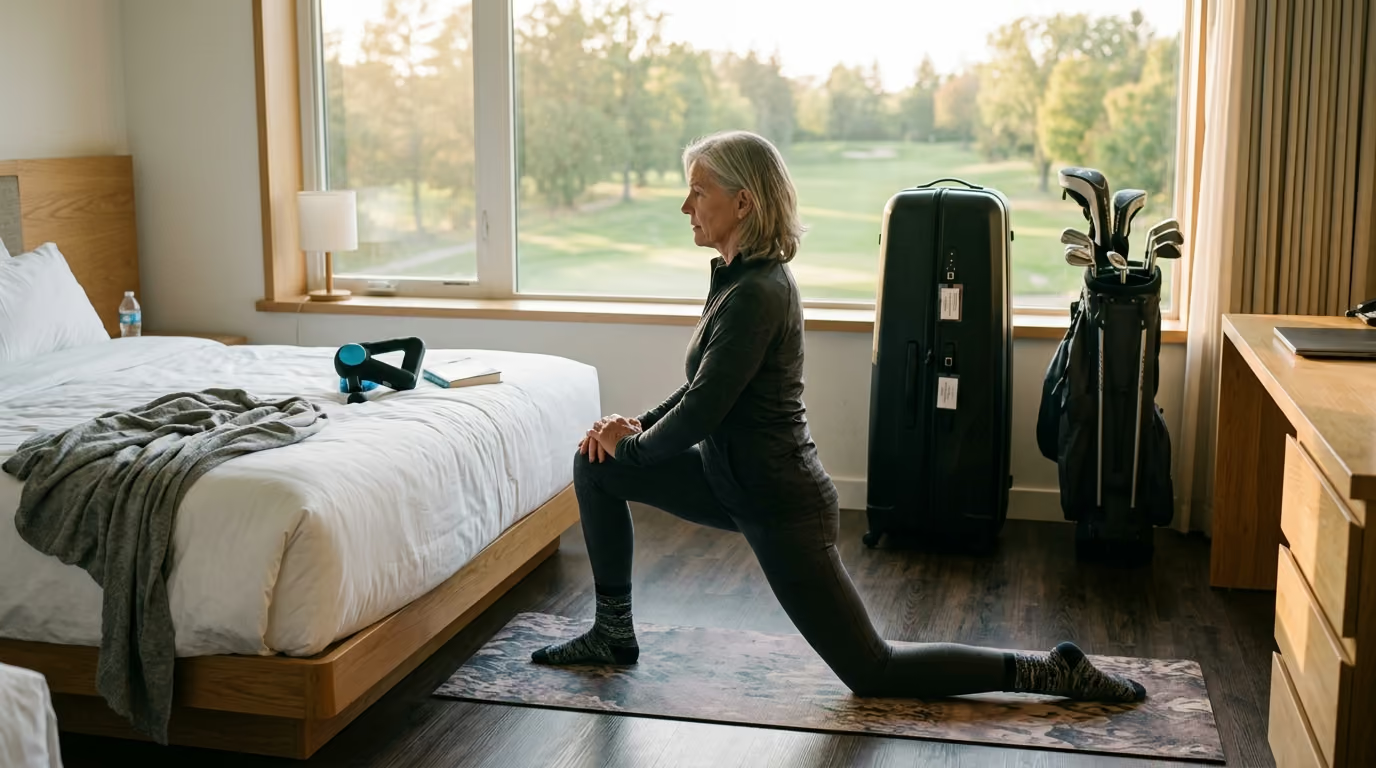
To practice frequently without pain, you must build a resilient body. This requires a dedicated physical routine. You cannot simply walk out of your car and start swinging a driver. A proper physical preparation routine is your shield against repetitive strain.
This routine should focus on restoring overall body mobility and building baseline stability. It prepares your muscles and tendons for the heavy forces of the swing. A good preparation routine should take about ten minutes. It is time well spent for long-term health.
We will focus on four specific movements. These exercises target the key areas affected by high-volume practice: the spine, the hips, the wrists, and the shoulders. Perform this routine before every practice session to prime your body for safety.
The bird dog is an outstanding exercise for protecting your lower back. It builds endurance in the deep muscles that support your spine. This endurance is crucial for handling the torsional forces of the golf swing. It helps prevent back fatigue during long range sessions.
Start on your hands and knees on a comfortable mat. Place your hands directly under your shoulders and your knees under your hips. Keep your head in a neutral position, looking down at the floor. Draw your belly button slightly toward your spine to engage your core.
Slowly extend your right arm straight forward while simultaneously reaching your left leg straight back. Keep your hips level with the floor; do not let your lower back arch or sag. Hold this extended position for three seconds, feeling your glutes and core muscles engage.
Return to the starting position with control. Repeat this movement using your left arm and right leg. Perform ten repetitions on each side, keeping your movements slow and deliberate. Focus entirely on keeping your torso perfectly still as your limbs move. This exercise builds crucial baseline spinal strength over time.
The golf swing requires a high degree of rotational flexibility. If your spine is stiff, your body will force extra movement in your joints. This compensation can strain your lower back and knees. The supine trunk rotation is a safe way to prepare your spine for twisting forces.
Lie flat on your back on a comfortable surface. Bend your knees and place your feet flat on the floor, keeping them close together. Extend your arms out to the sides to form a stable T-shape with your upper body. Keep your shoulders pressed firmly against the ground throughout the movement.
Slowly lower both knees to the right side, letting them fall as far as comfortable. Keep your chest facing the ceiling, feeling a gentle stretch in your lower back and hip. Hold this position for five seconds while taking deep, relaxed breaths.
Use your core muscles to pull your knees back to the center. Now, slowly lower your knees to the left side and repeat the stretch. Perform ten repetitions on each side, moving slowly from side to side. This movement lubricates your spinal joints and prepares them for the rotation of the swing.
Strong, flexible forearms are your best defense against golfer's elbow. These muscles absorb the vibration that travels up the shaft at impact. If they are weak or tight, the elbow tendons will suffer. This simple exercise builds strength and elasticity in these vital tissues.
Extend your lead arm straight out in front of you at shoulder height. Point your palm toward the floor, keeping your elbow straight but not locked. Use your trail hand to gently pull your lead fingers down toward your body. You should feel a deep stretch along the top of your forearm.
Hold this stretch for fifteen seconds, breathing deeply. Next, flip your hand over so your palm points toward the ceiling. Use your trail hand to pull your fingers down toward the floor, stretching the underside of your forearm. Hold this position for another fifteen seconds.
Repeat this sequence on your trail arm. Perform three sets of these stretches before you hit a single ball. For long-term strength, you can perform this exercise with a very light dumbbell. This active strengthening will build a shield of muscle around your delicate elbow joints.
A great physical routine must be paired with smart volume management. Avoid hitting off artificial mats more than two days in a row. If a grass range is unavailable, adjust your practice plan. Spend half of your session on short-game shots that require less impact.
Chipping and pitching put very little strain on your joints. These short shots are highly effective for improving your hand-eye coordination. They allow you to practice your touch without subjecting your body to turf shock. You can also dedicate sessions to putting, which carries almost zero injury risk.
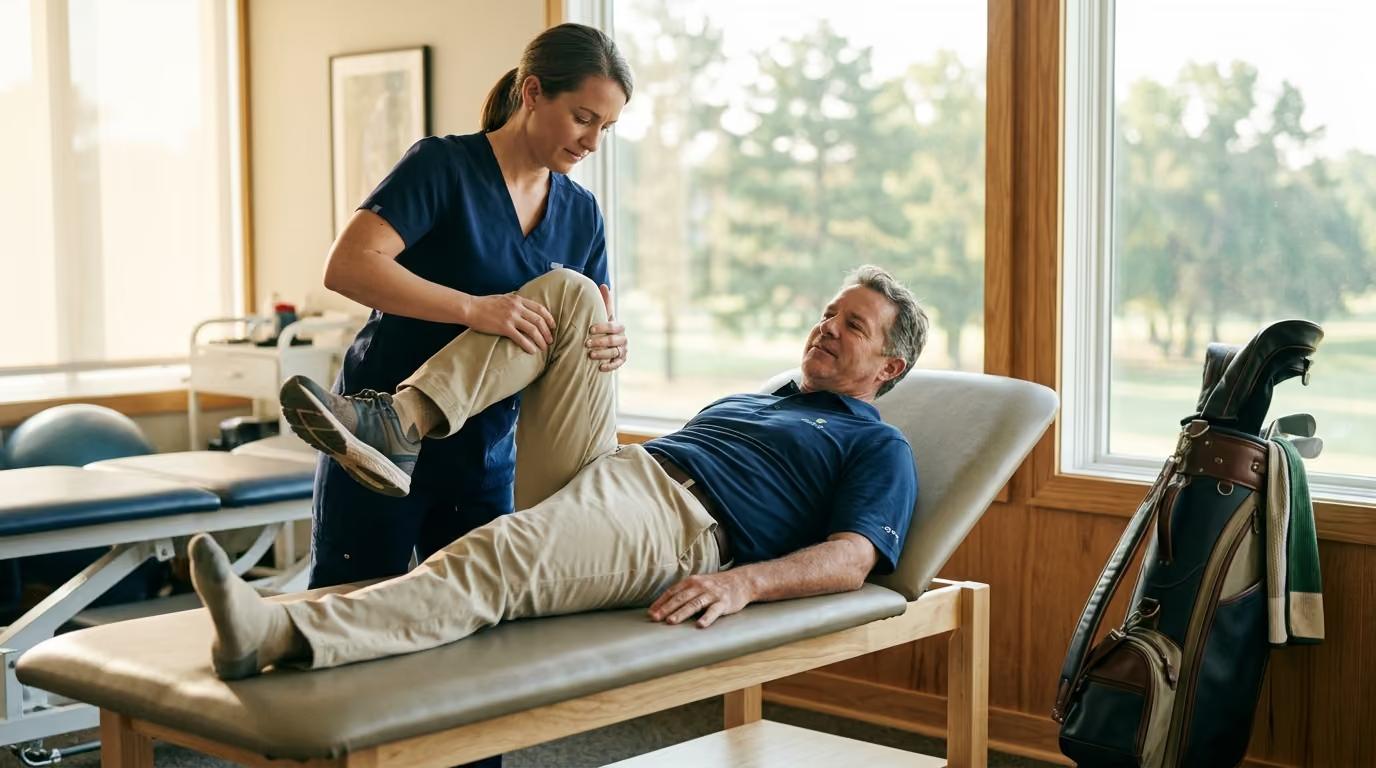
Allow at least one full day of rest after a heavy practice session. This rest gives your muscle fibers time to rebuild and repair. This recovery phase is when your body actually becomes stronger. Skipping rest days will inevitably lead to cumulative fatigue and injury. Prioritize proper muscle recovery to optimize your time off the course.
The convenience of modern driving ranges has created a common pitfall. Many golfers fall into the trap of rapid-fire practice. They stand in one spot and pull ball after ball from the tray. They hit a shot, grab another ball, and swing again within seconds.
This style of practice is highly destructive. It prevents your muscles from recovering between impacts. When you swing in rapid succession, your heart rate rises and your muscles accumulate fatigue quickly. This fatigue compromises your swing mechanics and increases your joint stress.
Rapid practice also ruins your mental game. You are not giving yourself time to analyze your shots or rehearse your routine. You are simply exercising, not practicing. To improve, you must break this cycle and slow down your pace on the range.
When you hit balls quickly, you do not allow your body to reset. Your nervous system becomes overloaded, and your movements become mechanical. You lose the athletic feel that is essential for a good golf swing. This repetitive, mindless motion is a primary cause of overuse injuries.
Try to simulate the pace of a real round of golf. On the course, you have several minutes between shots. You walk to your ball, analyze the lie, and make a deliberate practice swing. You should replicate this deliberate approach on the practice tee.
Step away from the hitting mat after every single shot. Take a deep breath and look at your target. Re-establish your grip and stance before you step back to hit. This simple change will instantly cut your practice speed in half.
You will hit fewer balls per hour, but each shot will be of much higher quality. Your muscles will have time to flush out lactic acid between swings. This rest keeps your stabilizer muscles active, protecting your joints from turf shock. Your practice will feel more like a real game and less like a chore.
Another common mistake is neglecting your clubs. Many golfers assume that their irons never change shape. They buy a set of clubs and play them for ten years without a single check. This neglect can quietly ruin your swing and cause physical strain.
If your clubs are bent, you will sub-consciously alter your swing to compensate. For example, if your irons have bent too flat, you may start swinging more upright. This adjustment puts extra stress on your lower back and shoulders. You are forcing your body to adapt to broken tools.
Make a habit of checking your clubheads for wear. Look for deep scratches or dents on the sole. If you notice uneven wear patterns, your lie angles are likely incorrect. Visit a professional club fitter to have them checked and adjusted.
This simple maintenance step is crucial for extending your playing years with healthy ageing on the course. It makes sure that your equipment is working in harmony with your body. You will make natural, low-stress swings that protect your longevity.
Many players believe that any synthetic surface is fine for practice. This is a costly mistake. Cheap, low-quality mats are far more dangerous than premium systems. They offer zero shock absorption and quickly degrade your joints.
Avoid ranges that use thin green carpet over solid concrete. These surfaces are incredibly hard on your body. If you must practice there, limit your session to short pitches and wood shots. Never hit hard iron shots off these unforgiving surfaces.
Look for facilities that invest in premium hitting mats. These modern mats use specialized bristle technology or gel-filled bases to mimic real turf. They allow the club to move through the surface naturally, greatly reducing turf shock. Choosing the right practice facility is an investment in your physical health.
Your equipment choices play a massive role in protecting your joints. The physical components of your clubs can either amplify or dampen impact vibrations. By selecting the right gear, you can build a physical barrier between turf shock and your body.
The shaft is the most critical component for vibration management. Steel shafts are traditional and offer great control, but they are highly efficient at transmitting vibration. When you strike a hard mat, that metallic shaft acts as a tuning fork, sending the shock straight into your hands.
Graphite shafts are far superior at dampening these vibrations. Modern graphite is highly advanced, offering the same stability and control as steel. However, the composite material naturally absorbs high-frequency vibrations. Making the switch to graphite can instantly reduce the physical toll of your practice.
Research shows that using graphite shafts significantly reduces forearm muscle activity during the follow-through. Specifically, the lead arm experiences less strain when decelerating the club. This reduction in muscle workload helps prevent chronic elbow pain.
Many players resist graphite because they believe it is only for seniors or slow swingers. This is an outdated myth. Many top professional players now use graphite shafts in their irons. They appreciate the joint-saving benefits during their long practice sessions.
If you suffer from chronic wrist or elbow stiffness, consider making this change. You do not have to replace your entire set at once. Start by reshafting your most frequently used practice club, such as your seven iron. Monitor how your joints feel after a week of practice with the new shaft.
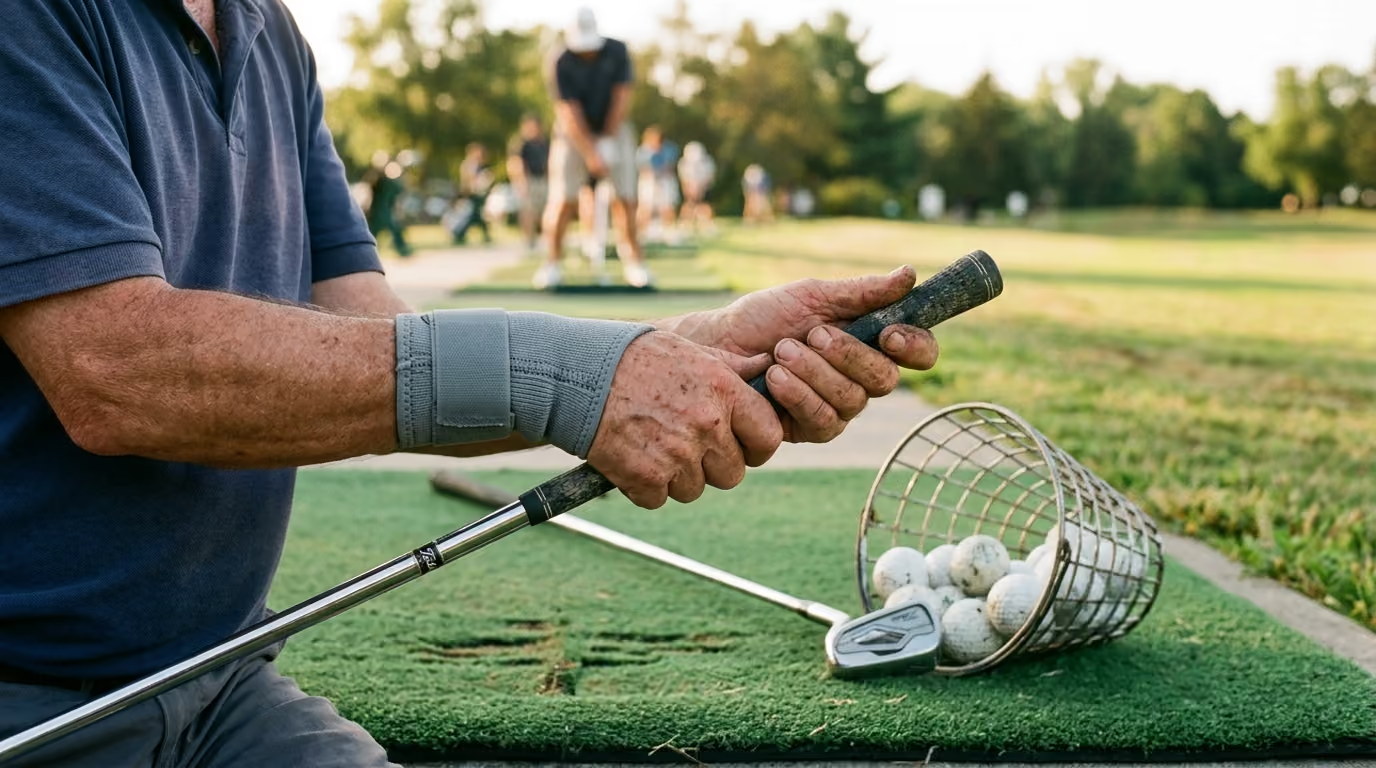
Your grips are your only physical connection to the golf club. They are your first line of defense against turf shock. Hard, worn-out grips lose their ability to absorb impact forces. They force you to squeeze the club tighter, which increases muscle tension in your forearms.
Look for soft, dampening grips made of synthetic compounds. Many manufacturers offer grips designed specifically for vibration reduction. These grips feature internal air pockets or soft gel layers that absorb impact energy. They allow you to maintain a light, relaxed grip pressure throughout the swing.
Replace your grips at least once a year. If you practice frequently, replace them every six months. Clean them regularly with warm water and soap to remove dirt and skin oils. Fresh, tacky grips will help you keep your hands relaxed and your joints safe.
Your shoes provide the foundation for your entire swing. They must offer traction, stability, and cushion. If your shoes are worn out, your body will slip and slide during the swing. This instability forces your knees and lower back to work harder to keep you balanced.
Look for golf shoes with ample midsole cushioning. Many modern shoes feature running-shoe technology, which offers outstanding shock absorption. This cushioning reduces the impact forces that travel up your legs from the hard range bays.
Avoid shoes with extremely stiff, low-profile soles if you practice on mats. These shoes offer great ground connection but very little cushion. They can accelerate joint fatigue in your knees and lower back. Prioritize comfort and support for your practice footwear.
To put these concepts into action, you need a clear, actionable plan. You do not need to change everything overnight. Instead, focus on building sustainable habits that protect your body over time. Use this simple checklist to guide your practice this week:
By following this simple checklist, you can enjoy the benefits of frequent practice without the pain. You will protect your joints, save your equipment, and maintain your performance on the course. Take care of your body, and it will support your game for many years to come.
The secret to extending your playing years is not practicing less, but practicing smarter by selecting forgiving surfaces, monitoring your equipment specs, and preparing your body to absorb every impact safely.
Follow Golfergy for practical insights on performance, mobility, recovery and healthy ageing. Stay connected for new articles, research-led guidance and ideas to help you play better for longer.


Explore practical resources on performance, recovery, mobility and golf longevity.
Read the Blog