
Finishing a long round of walking and swinging taxes your joints, but a structured routine quickly restores your body for peak readiness.




Have you ever searched online for a way to relieve a stiff lower back after eighteen holes of golf? Many of us have crawled out of bed with rigid hips and sore shoulders after a long round. You want a clear way to prevent this next-day stiffness. We will break down a systematic post-round recovery checklist to make sure you wake up feeling ready to play again.
A golf round should be treated as a prolonged physical event. It is not just a few swings. If you treat it like a casual walk, your body will pay the price the next morning. Our team at Golfergy focuses on helping mature players extend their playing years. This guide offers a practical path to recovery.
Imagine you are standing on the fifteenth tee. Your trail leg feels heavy. You try to turn but your trail hip refuses to rotate fully. Because of this restriction, you swing harder with your arms. The ball slices into the right trees. This is not just a bad swing. It is the direct consequence of physical fatigue.
Walking eighteen holes is a major physical effort. Research shows that walking a full round covers between 6.4 and 11.3 kilometers. The exact distance varies based on the course layout and how much you wander. One on-course study recorded an average of 8.25 kilometers of walking. Golfers in that study took an average of 12,766 steps.
This effort requires steady energy. The average heart rate during a walking round reaches about 55.6 percent of an individual's age-predicted maximum. This qualifies as a sustained, low-to-moderate cardiovascular workout. If you carry your own bag, the workload increases.
Let us look at how carrying a bag compares to using a cart. A study of walking golfers reported they took around 17,007 steps. These golfers burned about 880 activity-related kilocalories. Golfers who rode in a cart still took 6,274 steps. They burned about 456 kilocalories. Riding reduces the strain, but it does not eliminate it.
To recover well, you must understand why your body gets stiff. The main culprit behind next-day stiffness is delayed-onset muscle soreness. This is commonly known as DOMS. This soreness typically peaks between 24 and 72 hours after strenuous activity. This explains why you might feel fine Sunday evening but struggle to walk on Monday morning.
Golf places unique structural demands on your muscles. The golf swing is a high-velocity, asymmetric movement. Your body must rotate rapidly in one direction. Your lead side absorbs massive deceleration forces. This sudden stopping motion causes microscopic damage to your muscle fibers.
Specific movements during a round trigger this soreness:
You must also distinguish between local muscle soreness and systemic fatigue. Systemic fatigue affects your whole body. It shows up as low energy, a mild headache, or poor concentration. Local soreness is limited to specific areas like your glutes, calves, or forearms. You can have fully rested muscles but still feel drained.
Accumulated fatigue directly alters your swing mechanics. A study of walking golfers tracked physical changes over eighteen holes. The researchers found progressive changes in weight transfer and clubhead velocity. They also measured changes in the front-knee and front-ankle angles. These physical shifts reduce your distance and accuracy. They also increase your risk of injury.
The first fifteen minutes after your last putt are critical. This is the triage phase. Do not immediately sit down in your car or head straight to the bar. Collapsing into a deep chair causes blood to pool in your lower legs. This slow circulation delays the removal of waste products from your muscles.
Instead, spend three minutes walking slowly around the parking lot. Focus entirely on rolling your foot from heel to toe. This gentle movement acts as a natural pump for your leg veins. It keeps your blood circulating. It also helps your heart rate return to its resting level.
Use this initial window to screen for urgent health issues. Hot weather poses real risks for mature golfers. According to CDC guidelines, heat exhaustion causes headaches, nausea, and dizziness. It also causes heavy sweating and low urine output. Heat stroke is much more dangerous. It causes confusion, slurred speech, or a very high body temperature.
If you notice any of these extreme symptoms, seek medical help immediately. Do not try to treat heat stroke with a sports drink. If your symptoms are normal, you can begin your basic recovery. Keep your body safe. Learn more about protecting yourself on our Injury Prevention page.
Change out of your sweaty golf clothes as soon as possible. Wet garments can cause you to become chilled. This sudden drop in skin temperature can make your muscles tighten up. Put on loose, dry clothing to stay comfortable.
Rehydration is your first major goal. You must replace the fluids you lost through sweat. The most accurate way to measure this loss is by tracking your body mass. Weigh yourself without shoes right before you play. Weigh yourself again immediately after your round.
This weight loss represents lost fluid. The golf recovery review recommends drinking 1.5 liters of fluid for every kilogram of body weight lost. For example, if you lost one kilogram of body weight, your target is 1.5 liters of fluid. If you lost two pounds, your target is about three cups of water.
[Pre-Round Weight] - [Post-Round Weight] = Weight Lost
Weight Lost (kg) x 1.5 = Total Rehydration Target (Liters)
Consume this fluid slowly over several hours. Do not gulp down a massive amount of water in five minutes. Your kidneys cannot process large amounts of water quickly. This can lead to a dangerous drop in blood sodium levels.
If you cannot weigh yourself, use environmental clues:
If you answered yes to these questions, you need to rehydrate. Sweat contains both water and electrolytes. Plain water is not always enough to restore balance. The American College of Sports Medicine recommends consuming 0.5 to 0.7 grams of sodium per liter of fluid when exercising for over an hour.
You do not need fancy drinks to get these electrolytes. You can get them from normal food. Eating a handful of salted pretzels with a tall glass of water is highly effective. You can also drink a commercial sports drink if you prefer. Just make sure to monitor your total sugar intake.
Your muscles need the right nutrients to heal. We like to use the three Rs framework from golf sports science: Rehydrate, Repair, and Restore. Rehydration takes care of fluid levels. Repairing requires high-quality protein. Restoring requires carbohydrates to replenish your energy stores.
To start the repair process, aim to consume 20 to 40 grams of high-quality protein within two hours of finishing. The International Society of Sports Nutrition supports this protein range. High-quality protein contains essential amino acids. These amino acids act as the building blocks for muscle repair.
Excellent post-round protein sources include:
Your carbohydrate needs depend on when you plan to play again. If you are playing another round within four hours, you need rapid recovery. In this scenario, eat 1.0 to 1.2 grams of carbohydrates per kilogram of body weight each hour. This fast replenishment is crucial for tournament play.
If you do not plan to play until the next day, you do not need to rush. Simply eat a normal, balanced meal. Include complex carbohydrates like sweet potatoes, brown rice, or oats. These foods release energy slowly. They will refill your muscle glycogen levels overnight.
Add some fresh produce to your post-round meal. The golf recovery review suggests adding two to three servings of fruits or vegetables. Berries, spinach, and oranges contain antioxidants. These compounds help manage inflammation in your body. They are a great addition to your plate.
Be careful with alcohol after your round. A cold beer at the nineteenth hole is a classic golf tradition. However, research shows that alcohol impairs muscle protein synthesis. It also slows down glycogen storage. If you choose to drink, have a glass of water and a meal first to protect your recovery.
Many golfers believe they must stretch aggressively after eighteen holes. This is a common misconception. You must understand the difference between mobility work and static stretching. Mobility work involves moving a joint through a comfortable range. Static stretching involves holding a muscle in a lengthened position for a long time.
Recent research has challenged the benefits of static stretching. A systematic review published in 2021 analyzed multiple studies. The researchers found no evidence that post-exercise stretching reduces muscle soreness. It did not improve muscle recovery at 24, 48, or 72 hours.
Another review showed that stretching alone did not change pain thresholds. Stretching can feel good and help you relax. However, it will not prevent next-day stiffness on its own. Do not force your joints into painful positions. This can irritate tired tissues.
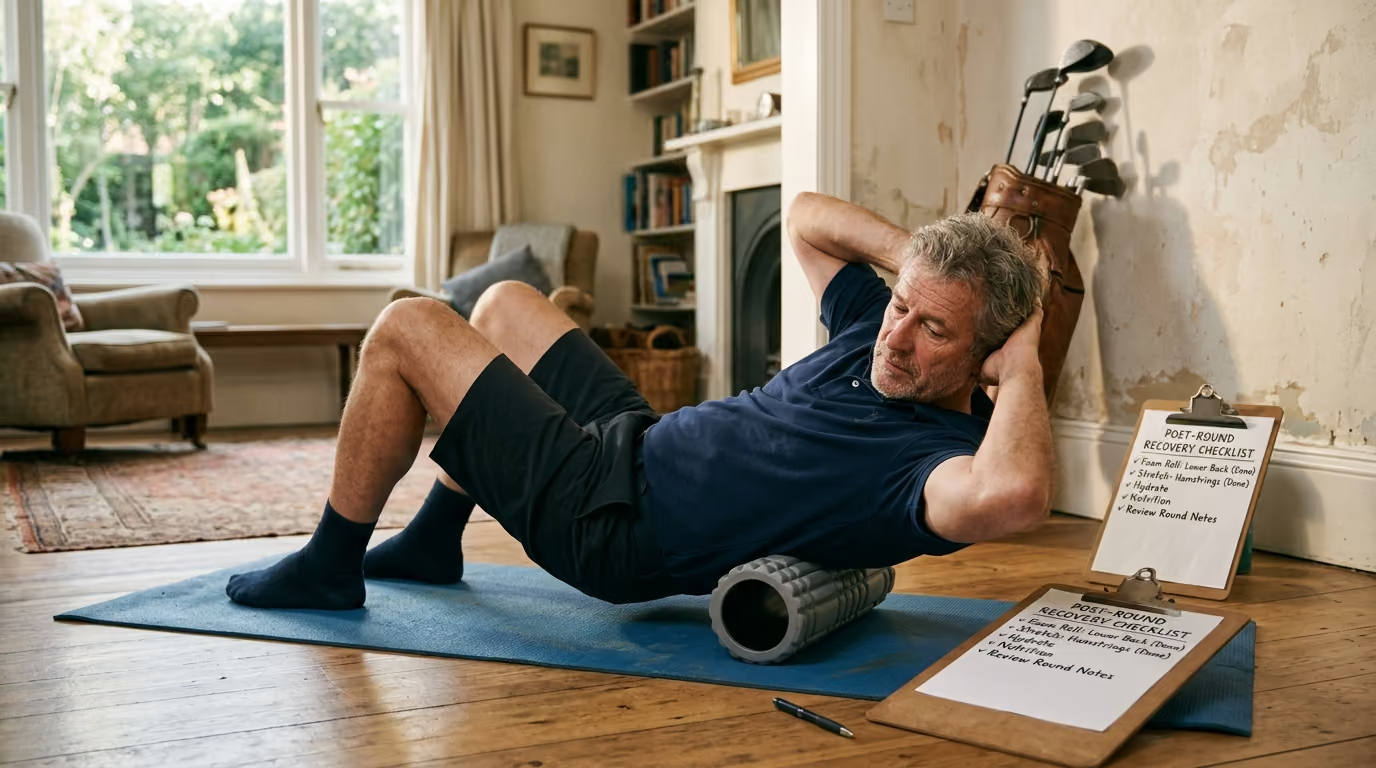
Instead, use self-myofascial release. This technique involves using a foam roller or a tennis ball. It applies gentle pressure to your muscles. This pressure stimulates sensory receptors. It helps calm your nervous system and reduces the sensation of tightness.
Follow this simple foam rolling protocol:
Focus entirely on turning your trail hip while rolling your glutes. This targeted movement helps release tension in the deep rotators. Never roll over bony joints or bruised areas. Stop immediately if you feel any sharp pain or tingling. For more guides on this topic, visit our Mobility section.
Professional massage is also highly effective. A meta-analysis of eleven studies showed that massage reduced soreness at 24, 48, and 72 hours. It also improved short-term muscle performance. If you have access to a massage therapist, schedule a light session. Focus on relaxation rather than deep, painful pressure.
Cold-water immersion is another popular option. Many professional athletes use ice baths after competing. Research confirms that cold water can reduce muscle soreness. A meta-analysis of 28 studies found that cold-water immersion was highly effective for lowering perceived fatigue.
However, cold water has a major drawback. Repeated ice baths can hinder your long-term strength gains. A systematic review showed that routine cold immersion after weightlifting limits muscle growth. The cold temperatures reduce the signals that tell your muscles to grow stronger.
Consider your primary physical goals before using cold water:
If you choose to use cold water, keep the protocol simple. Sit in water that is between 11 and 15 degrees Celsius. Stay in the water for 10 to 15 minutes. This temperature range is cold enough to reduce swelling without causing excessive stress to your body.
Contrast-water therapy is another option. This involves alternating between hot and cold water. Some golfers find this helpful for stiffness. However, we do not have enough research to prove its benefits for golf. Stick to the basics first. You can read more about recovery methods on our Recovery page.
Sleep is your ultimate recovery tool. Your body does most of its healing while you sleep. Growth hormone levels peak during deep sleep. This hormone is essential for repairing muscle tissue and building bone density.
The National Sleep Foundation recommends seven to nine hours of sleep for adults. For older adults, they recommend seven to eight hours. However, sleep needs are highly individual. You should focus on sleep quality, not just the number of hours you spend in bed.
Dehydration can ruin your sleep. If you do not drink enough fluid after your round, you might wake up with muscle cramps. On the other hand, if you drink too much water right before bed, you will have to wake up to use the restroom. Stop drinking large volumes of fluid one hour before sleep.
Keep your bedroom cool to help you fall asleep. Your body temperature needs to drop slightly to initiate sleep. If you played in hot weather, your body may struggle to cool down. Use a fan or air conditioning to keep your room comfortable.
Establish a relaxing pre-bed routine:
When you wake up, take five minutes to assess your body. This assessment will help you decide how to approach your day. It will guide your physical activity and help you avoid injury.
First, perform a simple movement screen. Stand up and walk around your bedroom. Observe your walking speed and gait. Do you feel symmetrical? Sit down in a chair and stand up without using your arms. If your hips feel tight, pay attention to how they move.
Next, try a golf-specific screen. Grab a short iron and make a few easy, slow swings. Focus entirely on turning your trail hip. Keep your feet planted on the floor. If you feel pinching in your lower back, stop. This indicates that your joints are not ready for full speed.
We use a simple traffic-light system to guide your decisions:
Action: Proceed with your planned activity. Maintain your normal warm-up routine.
Action: Modify your physical activity. Avoid hitting balls at maximum speed. Focus on gentle mobility work instead of a long practice session.
Action: Stop all golf activity. Seek professional medical care. Dark urine combined with severe muscle pain can indicate a serious condition called rhabdomyolysis.
In our experience, treating injuries requires active recovery. When I developed medial epicondylitis, commonly known as golfer's elbow, I thought I needed complete rest. Six weeks off the course did nothing to help. I finally learned that active recovery with a flexbar was the actual solution. It taught me that treating golf injuries requires loading the tissue properly, not just sitting on the couch and hoping for the best.
Many recreational golfers make the same recovery mistakes. These errors can delay your recovery and increase your stiffness.
If a muscle feels strained or pulled, do not stretch it. Aggressive stretching can worsen micro-tears in the muscle fibers. This will delay healing and increase your pain. Use gentle movement and light massage instead.
Drinking huge quantities of plain water after a sweaty round is a mistake. It dilutes your blood sodium. This can lead to a condition called hyponatremia. Always pair your water with some salt-containing food or an electrolyte tablet.
Taking anti-inflammatory drugs right after a round to hide joint pain is dangerous. Pain is an important warning signal from your body. If you mask it with medication, you are more likely to overload a damaged tissue. This can lead to a more severe injury.
Your golf equipment can also affect your recovery. Minor changes to your gear can reduce the physical stress on your body.
Check your golf shoes regularly. Worn-out shoes offer poor traction and support. This forces your feet and ankles to work harder to stabilize your body during your swing. Replace your shoes when the cushioning begins to feel flat.
Consider your club grips. If your grips are hard and slick, you will squeeze the club too tightly. This excess tension travels up your forearms and can irritate your elbows. Install soft, shock-absorbing grips to reduce this mechanical stress.
Think about how you transport your bag. Carrying a heavy golf bag places constant downward pressure on your spine. This can compress your spinal discs and cause lower back stiffness. Using a pushcart or hiring a caddie is a much better choice for your joints.
Use this simple checklist after your next round of golf. It will help you recover faster and minimize morning stiffness.
To keep learning about golf fitness and healthy ageing, check out our Golf Performance, Recovery & Longevity Blog | Golfergy. We offer regular tips to help you stay on the course. You can also explore our core philosophy on our main page at Golf Longevity, Performance & Recovery | Golfergy.
Your next-day readiness depends on treating your round as a true physical event and completing the active steps to rehydrate, repair, and restore.
Follow Golfergy for practical insights on performance, mobility, recovery and healthy ageing. Stay connected for new articles, research-led guidance and ideas to help you play better for longer.


Explore practical resources on performance, recovery, mobility and golf longevity.
Read the Blog