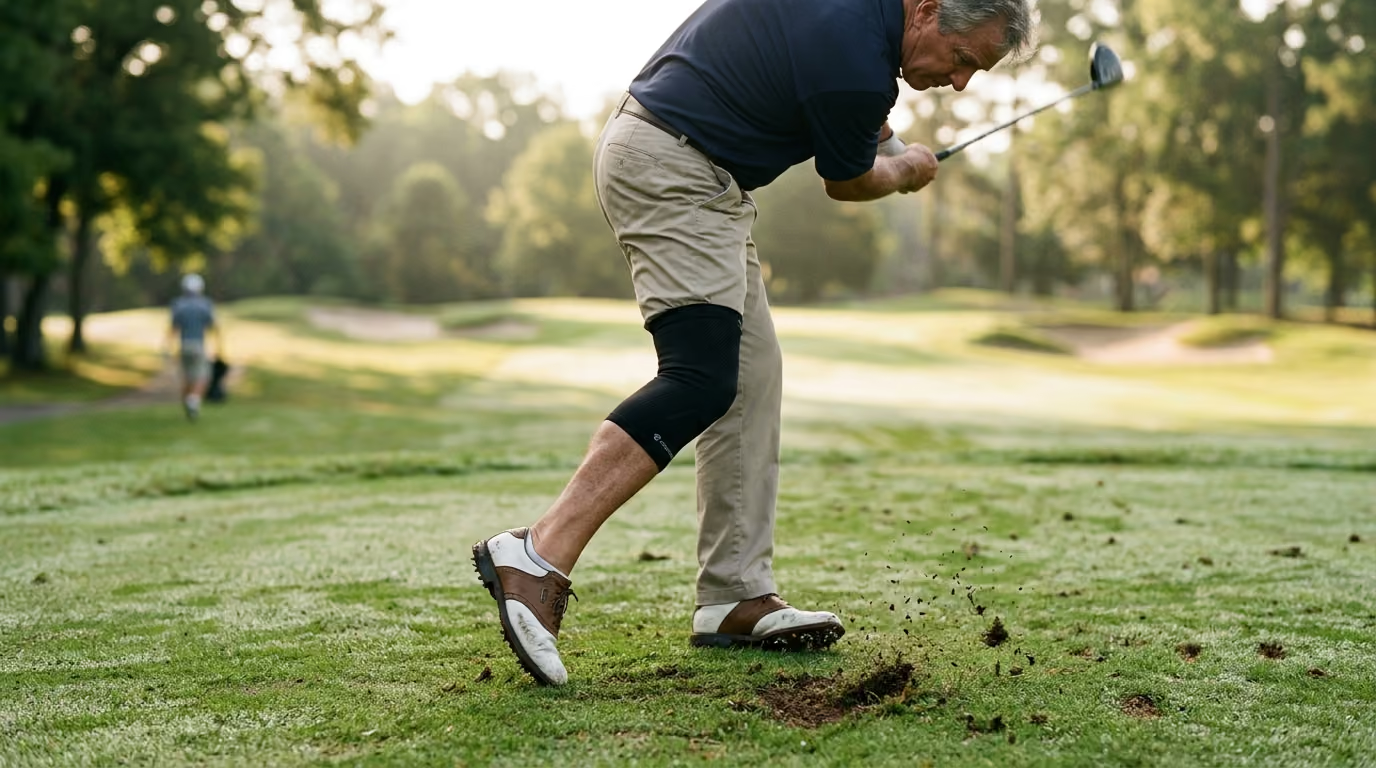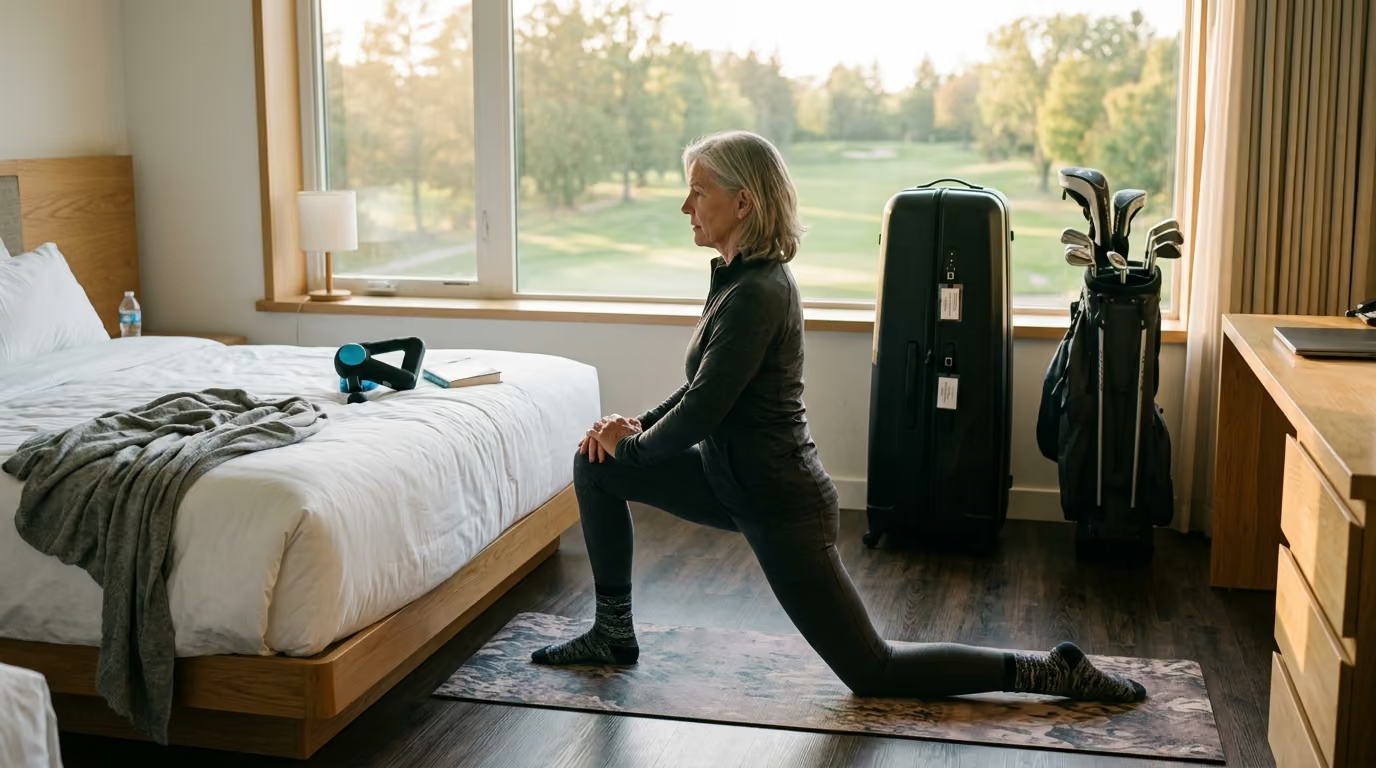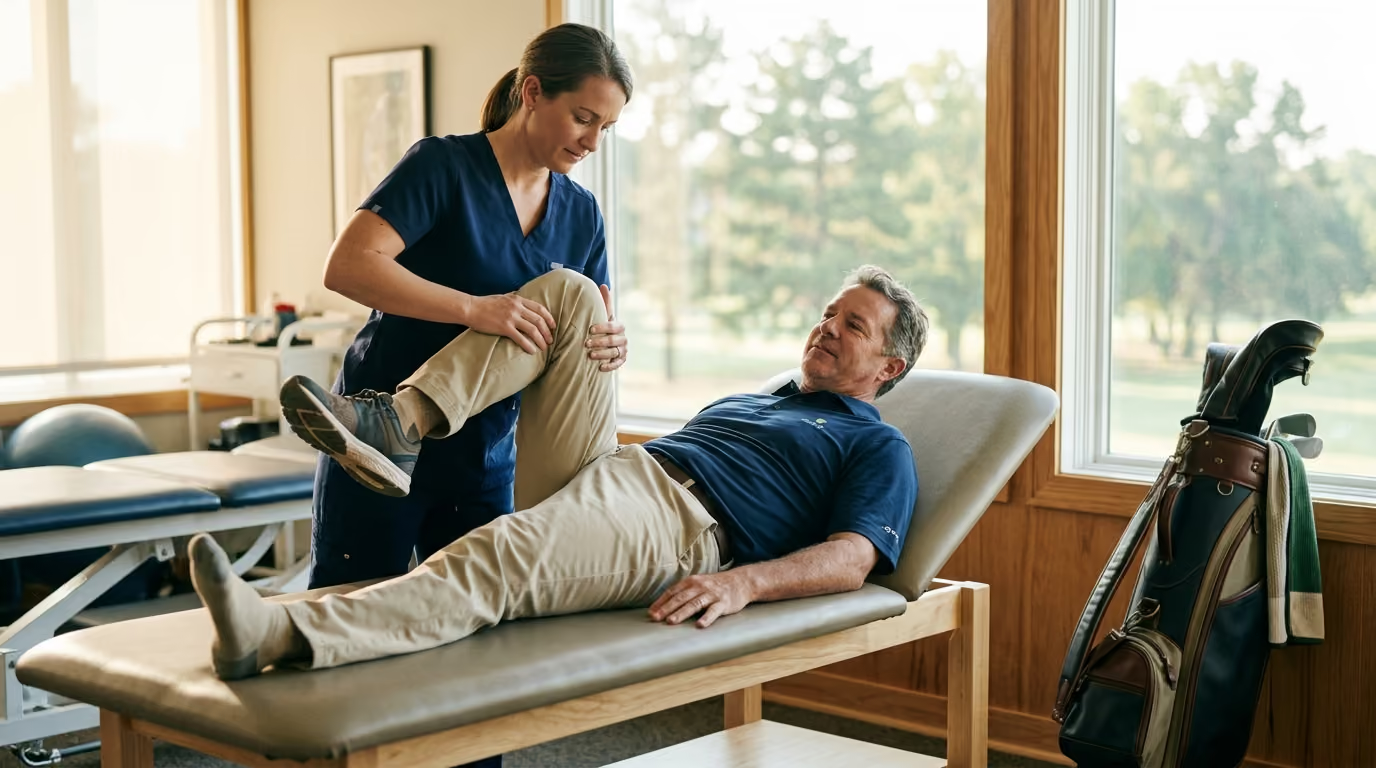

Aging golfers often expect to lose distance, but adjusting their mechanics allows them to overcome sarcopenia and protect their joints effectively.




The senior golf swing is not a sign of physical decline. It is not an inevitable path to shorter drives and aching joints. Instead, the senior swing is a smart adaptation to natural biological shifts. It represents a shift from raw muscular force to efficient biomechanics.
This guide examines the physical changes that occur in your body after age forty. We will examine the exact muscular and skeletal shifts that alter your movement patterns. You will learn how to adjust your swing to protect your joints. We will look at sustainable methods to maintain your clubhead speed for decades.
To support your journey toward playing without pain, we focus on long-term physical durability. You can learn more about our mission to help mature golfers on our About Golfergy page. This resource provides a practical blueprint to keep you swinging freely, safely, and powerfully.
Sarcopenia is the gradual loss of muscle mass and strength that occurs as we age. This process typically begins around age forty. The rate of muscle loss accelerates once you pass fifty. Understanding this change is the first step to protecting your golf game.
Research shows that adults lose three to eight percent of their muscle mass per decade after forty. After age fifty, men and women can lose one to two percent of muscle mass every year. Along with muscle mass, you can lose three to five percent of your power potential annually. This means your physical capacity to generate speed decreases naturally over time.
This muscle loss is driven by a biological process called anabolic resistance. As you age, your muscles become less responsive to protein intake and exercise. Your body struggles to build and repair muscle tissue as easily as it did in your youth. It requires more precise physical signals to trigger muscle growth and maintenance.
This process does not affect all muscle fibers equally. Your body has two primary types of muscle fibers. Type one fibers are slow-twitch, which support endurance and posture. Type two fibers are fast-twitch, which produce explosive speed and power.
As you age, fast-twitch fibers shrink much faster than slow-twitch fibers. Because of this, power is lost at roughly twice the rate of basic strength. Power is the main driver of your clubhead speed. When these fast-twitch fibers shrink, your ability to swing the club fast declines.
Another major physical shift is the loss of spinal flexibility. Studies show senior golfers over fifty have twenty-five percent less side-bending flexibility in their torsos. This is compared to golfers in their late teens. This loss of movement changes how your body moves during the swing.
Imagine standing on the fourteenth tee box of a long par five. You have walked nearly four miles, and the afternoon air is cool. Your playing partners are watching you pull your driver from the bag. You feel a familiar, dull stiffness in your lower back.
During the first few holes, your swing felt free and athletic. Now, your hips feel locked. You try to turn your shoulders, but your body resists. To compensate for this tightness, you use your arms to pull the club down quickly.
This early arm pull disrupts your natural swing path. The club strikes the ball with an open face, causing a weak slice into the right rough. Your lower back pinches as you complete your follow-through. You struggle to hold your balance on your lead leg.
This situation happens because your muscles are fatigued. The loss of fast-twitch fibers makes it harder to maintain a proper swing sequence late in the round. When your primary muscles tire, smaller muscles try to do the heavy lifting. This shift leads to poor shots and increases your risk of injury.
If you want to prevent these painful rounds, you must understand how to protect your body. Read our guide on injury prevention strategies to learn how to keep your joints safe.
To swing without pain, you should understand the joint-by-joint approach. This physical model was developed by movement experts. It views the human body as a stack of alternating joints. Some joints need to be mobile, while others must be stable.
For senior golfers, the mobile joints are the ankles, hips, and thoracic spine. The stable joints are the knees and the lumbar spine. When a mobile joint becomes stiff, the nearest stable joint is forced to move. This compensation causes pain and injury over time.
For example, if your hips are tight, your lower back must twist to complete your backswing. Your lumbar spine is designed for stability, not rotation. Twisting your lower back under speed is a primary cause of back pain.
This structural stiffness disrupts your kinematic sequence. The kinematic sequence is the order in which your body parts accelerate and decelerate. A proper sequence starts from the ground up. Energy moves from your feet to your hips, then to your torso, your arms, and finally the club.
When your hips or thoracic spine lose mobility, this sequence breaks down. You cannot transfer energy smoothly from the ground. Your arms must take over early in the downswing. This power leak reduces clubhead speed and places immense stress on your shoulders.
Restoring mobility to these key areas is the foundation of a lasting game. You can find more targeted movement guides in our mobility resource collection.
Seniors with limited hip mobility should adjust their setup to make turning easier. You do not need to force your body into positions it cannot reach. A few simple adjustments to your stance can free up your rotation. We call this the preset turn setup.
Start by flaring both of your feet outward. Turn your lead foot out about thirty degrees toward the target. Turn your trail foot out about twenty degrees away from the target. Flaring your feet opens your hip joints, which reduces strain on your knees and lower back.
Next, drop your trail foot back slightly. Slide your trail foot two to three inches behind your lead foot. This closed stance presets your hip turn. It allows you to make a deeper backswing without forcing your joints past their comfort zone.
During the backswing, focus entirely on turning your trail hip. Let your lead knee bend slightly toward your trail leg. This movement helps your pelvis rotate fully. Do not try to keep your hips completely still.
As you reach the top of your backswing, allow your lead heel to lift. Lifting the lead heel is a classic movement used by many great players. It releases tension in your calves and hips. This lift allows for a fuller shoulder turn without strain.
When you transition to the downswing, step your lead heel back down. This movement triggers the correct downswing sequence. It helps you transfer your weight to your lead side without using your arms too early. This simple setup adjustment protects your joints while restoring your swing path.
Many golfers arrive at the course and immediately start stretching. They stand by their golf cart and hold deep hamstring stretches. They pull their arms across their chests and hold the position. This is static stretching, and it can harm your performance.
Static stretching involves holding a muscle in a extended position for thirty seconds or more. While it feels good, research shows it reduces muscle power. It temporarily relaxes your muscle fibers, which lowers your rate of force development. Your muscles lose their springiness, which reduces your clubhead speed.
Instead of holding static stretches, you should use dynamic movements before you play. Dynamic stretching involves moving your joints through their full range of motion without holding. This increases blood flow, warms up your joints, and prepares your nervous system for speed.
You can perform a simple dynamic routine right next to the tee box. Start with ten gentle leg swings on each side. Hold onto your golf cart for stability. Swing your leg forward and backward to warm up your hip joints.
Next, place a club across your shoulders behind your neck. Stand with your feet shoulder-width apart. Focus entirely on turning your trail hip backward, then turn your lead hip forward. Repeat this movement ten times to wake up your thoracic spine.
Finish with ten slow practice swings, gradually increasing your speed. This quick routine warms up your joints without draining your muscle power. It prepares your body to swing fast on the very first hole.
Addressing sarcopenia requires a consistent physical routine. You cannot fix muscle loss with a single stretch or swing tip. You need a structured approach that combines resistance training, mobility exercises, and proper nutrition.
According to a study published in the Journal of Strength and Conditioning Research, senior golfers can make rapid progress. An eight-week training program combining resistance exercises and flexibility work helped men aged fifty-five to seventy-nine. They increased their average clubhead speed from eighty-five to eighty-seven miles per hour.
Your weekly routine should include resistance training twice a week. Focus on compound movements that use multiple joints. Excellent choices include goblet squats, glute bridges, and dumbbell rows. Use a weight that is sixty to eighty percent of your maximum effort.
When performing these exercises, focus on the speed of the movement. Lower the weight slowly and under control. Then, push or pull the weight upward as fast as possible. This explosive movement targets your fast-twitch muscle fibers, which helps restore your swing speed.
To support your physical training, you must address anabolic resistance through nutrition. Research from the National Institutes of Health highlights the importance of dietary protein for older adults. You need more protein than younger players to trigger muscle growth.
Aim for a nutritional threshold of zero point four grams of protein per kilogram of body mass per meal. For a one-hundred-and-eighty-pound golfer, this means eating thirty to forty grams of high-quality protein per meal. Focus on protein sources rich in the amino acid leucine, such as eggs, chicken, and whey.
Pair your strength training with a daily mobility habit. Spend five minutes every morning stretching your hips and calves. Consistent daily movement builds long-term joint health. To see our full library of physical programs, visit our golf performance resources page.
If you want to read more about how strength training extends your playing years, browse our strength training articles.
Many senior golfers try to use swing tips designed for young, highly flexible players. One common mistake is trying to keep your head perfectly still. Golf instructors used to teach this as an absolute rule.
Forcing your head to stay still restricts the natural rotation of your neck and spine. If your thoracic spine is already stiff, a still head stops your shoulder turn. Your backswing becomes short, and you must rely on your arms to create speed. This movement puts intense pressure on your cervical spine and lower back.
Instead, let your head rotate slightly during your backswing. Your eyes should remain on the ball, but your head can drift an inch or two away from the target. This small movement allows your shoulders to turn fully without putting pressure on your neck.
Another common mistake is keeping your lead heel glued to the ground. Many golfers believe a planted foot creates a more stable swing. However, keeping your heel down restricts your hip turn.
When your hips cannot turn, you cannot load your trail side. This restriction forces you to tilt your upper body toward the target, creating a reverse spine angle. This position is a primary cause of lower back pain in older players.
To fix this, allow your lead heel to lift slightly off the ground during your backswing. This lift frees up your hips and allows for a deeper turn. As you start your downswing, step your lead heel back down to transfer your weight. This classic movement protects your lead-side hip and lower back.
Your physical health is closely linked to the gear you use. Playing with the wrong equipment can worsen joint pain and decrease your swing speed. It is helpful to audit your golf club specifications regularly.
As your swing speed naturally slows, heavy, stiff shafts become harder to swing. Using a shaft that is too stiff forces you to swing harder to load the club. This extra effort leads to muscle tension and joint fatigue.
Consider switching to lighter graphite shafts in your irons and woods. Graphite absorbs vibrations much better than steel. This change reduces the shock that travels up your arms into your elbows and shoulders. Choosing a softer flex, such as regular or senior flex, helps you launch the ball higher with less effort.
You should also check your grip size. If you have arthritis or hand pain, small grips force you to squeeze the club tightly. This tight grip tension travels up your forearms into your elbows, causing pain.
Switching to midsize or jumbo grips can relieve this tension. Larger grips allow you to hold the club with lighter hand pressure. This change makes it easier to release the clubhead through impact, which can increase your speed.
Finally, look at your footwear. Heavy, stiff golf shoes with long metal spikes can lock your feet to the ground. This restriction prevents your ankles and knees from rotating naturally. Modern, lightweight spikeless shoes offer great traction while allowing your feet to move freely.
Yes, you can maintain impressive swing speed well into your sixties and seventies. Professional golfers like Gary Woodland and Cameron Champ maintain elite clubhead speeds by training their fast-twitch muscle fibers. By focusing on explosive strength movements and hip mobility, you can regain lost speed and prevent decline.
You do not need to spend hours in the gym every day to see results. A simple routine performed two to three times a week is highly effective. Focus on short, thirty-minute sessions that combine strength exercises with dynamic mobility work to get the best results.
You should not automatically give up the game due to back discomfort. Most back pain in mature golfers is caused by mobility restrictions in the hips and mid-back. By restoring movement to these areas, you can take the pressure off your spine and play pain-free. If you want to learn more about recovering between rounds, check out our golf recovery tips.
Walking the course is excellent for your cardiovascular health and endurance, provided you do not experience pain. Walking keeps your joints moving and burns more calories than riding. However, if you feel fatigued on the back nine, using a cart can help you maintain your swing mechanics and prevent injury.
To protect your longevity on the course, flare your feet and lift your lead heel to bypass the physical limits of age-related muscle loss.
Follow Golfergy for practical insights on performance, mobility, recovery and healthy ageing. Stay connected for new articles, research-led guidance and ideas to help you play better for longer.


Explore practical resources on performance, recovery, mobility and golf longevity.
Read the Blog