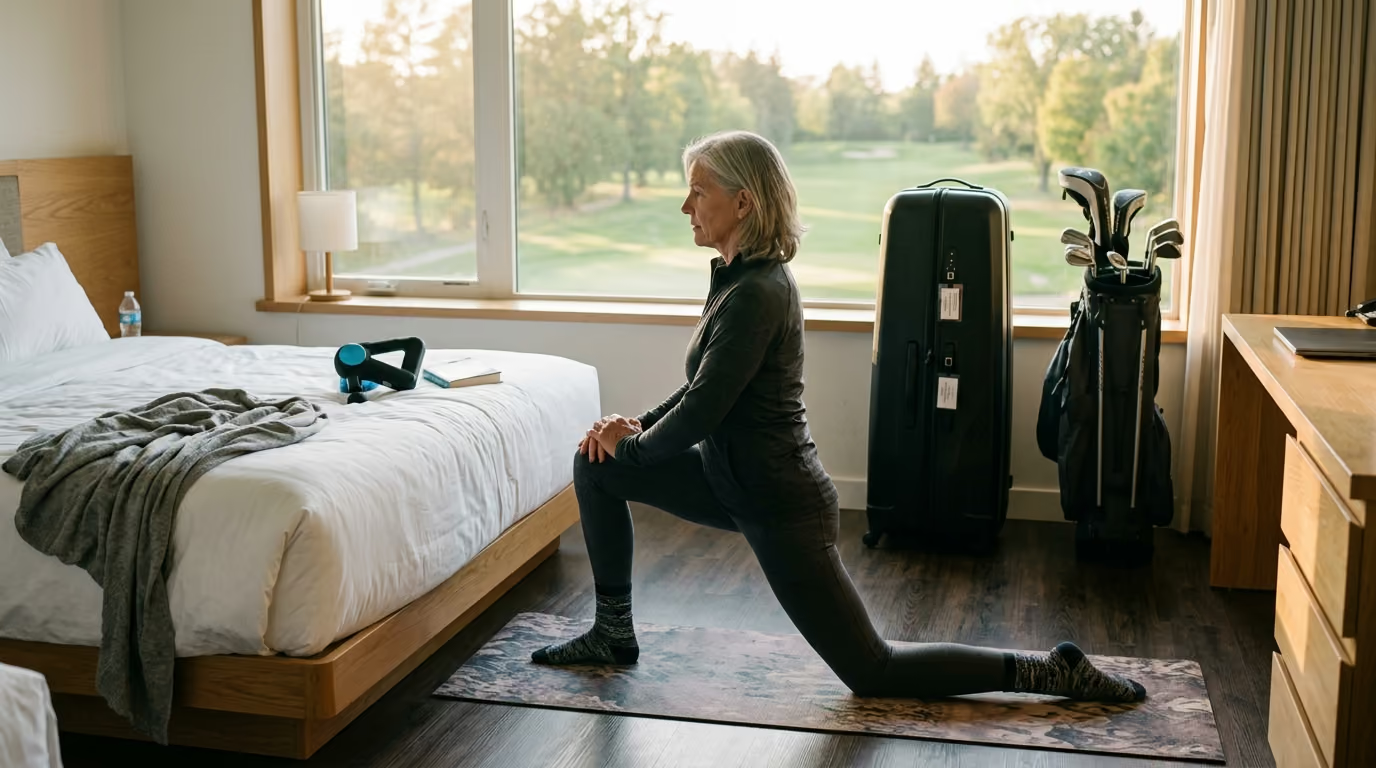
Stiff lower backs on the back nine often signal too much rotational strain, but a shorter swing arc protects your spine and preserves your distance.




If you have ever searched for terms like lower back pain after golf swing, you are not alone. Millions of experienced players face the exact same issue every single season. Many golfers accept this discomfort as a normal part of getting older. They believe that aching joints and stiffness are simply the price of playing the game they love.
That belief is wrong. You do not have to live with physical pain just to enjoy eighteen holes. In our experience, the saddest thing we see in golf is watching lifelong playing partners slowly drop out of our weekend group. It usually starts with a nagging shoulder or knee issue they ignore until it requires surgery. That pattern is exactly why we became obsessed with golf longevity.
We do not have to stop playing as we age, provided we do the right maintenance work between rounds. By making smart adjustments to your swing mechanics, you can protect your body and keep playing for decades.
This guide outlines a simple, research-backed strategy called the Modified Swing Framework. It focuses on a shorter, more controlled swing arc. This approach reduces stress on your spine while keeping your shots long and accurate.
To understand why this framework is so useful, let us look at a common situation on the course. Imagine you are standing on the fourteenth tee. It is a crisp autumn morning, and you have been playing well all day. Your group is enjoying the match, but you are starting to feel a familiar tightness in your lower back. Your muscles are tired, and your hips feel stiff.
Now you face a long par five with a stiff headwind. You feel the urge to swing harder to gain extra distance. You take a wide stance and try to make a massive backswing. As you reach the top of your turn, you stretch your chest and shoulders as far as they will go. You feel a pull in your left side, but you ignore it and swing down with all your strength.
Right at impact, a sharp twinge shoots through your lower back. You manage to hit the ball, but you immediately drop your club in discomfort. For the remaining four holes, you can barely bend over to tee up your ball. The next morning, you can hard get out of bed without stiffness.
This scenario happens because of a conflict between your body and your swing technique. Many players try to copy the swing styles of twenty-year-old professionals. These young athletes have incredible flexibility and can handle high levels of physical stress.
For the rest of us, trying to force a massive range of motion only leads to injury. It keeps us off the course and limits our enjoyment of the game. If you want to protect your physical health, you must focus on proactive injury prevention rather than waiting for pain to force you into retirement.
To fix this problem, we must look at how the human body moves during a swing. The modern golf swing relies heavily on a concept called the X-Factor. The X-Factor is the difference in degrees between your shoulder rotation and your hip rotation at the peak of your backswing.
In a modern swing, players try to keep their hips pointing forward while turning their shoulders as far back as possible. This creates a massive twist in the torso. Sports scientists call this action the X-Factor Stretch. It occurs during the transition, when the hips begin moving toward the target while the shoulders are still finishing the backswing.
This stretch behaves like a loaded rubber band. When you release it, it generates massive speed. However, this action also creates severe mechanical forces on your body.
Modern Swing: High Shoulder Turn + Restricted Hip Turn = Extreme Spinal Torque
Modified Swing: Moderate Shoulder Turn + Active Hip Turn = Low Spinal Torque
Your lower spine is simply not designed to handle that kind of twisting. The lumbar spine consists of five large vertebrae at the base of your back. This area of your body is built for stability, not rotation. In fact, each joint in your lower spine can safely rotate only about two to three degrees.
When you force your lower back to twist beyond this limit, you create intense twisting forces. This strain targets the L4-L5 and L5-S1 segments of your spine. These are the soft discs that cushion the bones in your lower back. Over time, these forces can cause discs to bulge, pinch nerves, or tear muscles.
The modern swing also finishes in a position known as the Reverse-C. This is where your back bends backward and tilts to the side at the end of the follow-through. This position compresses the small joints in your spine and can lead to chronic inflammation.
To make things worse, golf is a one-sided sport. We swing in the same direction hundreds of times every week. This repetition causes muscular imbalances, where the muscles on one side of your spine become much larger and tighter than the other. This imbalance pulls your spine out of alignment and makes you even more vulnerable to injury.
The classic swing offers a much safer way to play. This older style of swinging allows your hips to turn freely during the backswing. It also finishes with your body upright and balanced over your lead leg. By letting your hips rotate, you reduce the strain on your lower spine and prevent injury.
Many golfers hesitate to shorten their swings because they worry about losing distance. They believe that a shorter swing will make them much shorter off the tee. Fortunately, sports science shows that this fear is largely unfounded.
A famous study published in the Journal of Neurosurgery: Spine looked at this exact issue. Researchers compared the physical stress of a full backswing to a shortened backswing. The results were clear.
Vertebral Compression Force Study:
Full Swing: 7.6 N / Body Weight
Shortened Swing: 7.0 N / Body Weight
Spinal Compression Relief: ~8% Reduction
When golfers shortened their backswing, the compression force on their spine dropped from 7.6 to 7.0 Newtons per unit of body weight. This is a significant reduction in stress on your lower back. This change represents a major drop in wear and tear on your spinal discs during a round of golf.
The most surprising finding was how little distance the players lost. The shorter swing caused a tiny drop in clubhead speed of just two meters per second. This minor change resulted in a loss of about ten meters of total distance.
Performance Trade-Off Analysis:
For most recreational players, ten meters is a very small price to pay. In fact, many players find they actually hit the ball further on the course with a shorter swing. This improvement happens because a shorter swing is much easier to control.
When you control your movement, you are more likely to hit the ball in the center of the clubface. Hit the center of the face, and your ball speed will stay high. This concept is known as smash factor. A short swing with centered contact will always beat a long, wild swing that misses the sweet spot.
This concept relates to a physics principle called impulse. In physics, power is a product of force multiplied by time. A longer swing gives you more time to build up speed. A shorter swing gives you less time, which means you must apply force more efficiently.
For the mature golfer, trying to build speed through a massive swing arc is risky. It relies on loose joints and extreme flexibility. A shorter swing relies on stability, timing, and clean contact. This approach is much easier to repeat and far safer for your joints.
To build a safe, compact backswing, you must understand how to position your body and your club. You cannot simply stop your arms halfway up and expect to hit good shots. You must learn how to organize your movement to keep the club stable.
The first step is to focus on your lead wrist. In a standard long swing, many players cup their lead wrist at the top of the turn. This opens the clubface and forces them to make adjustments on the way down.
In a modified short swing, you should aim for a flat or slightly bowed lead wrist at the top. This wrist position keeps the clubface stable and square to your swing path. It also helps you control the ball without needing a massive turn.
Wrist Positions at the Top:
Next, pay attention to the position of your club at the top of the swing. In a short swing, the club will often look laid-off. This term means the shaft points to the left of your target at the peak of your backswing.
This laid-off position is highly stable. It prevents the club from bouncing or moving too much behind your back. It also makes it much easier to drop the club down on the correct path during your downswing.
Two elite professional golfers show us how effective this compact style can be:
Jon Rahm is famous for having one of the shortest backswings on the PGA Tour. He developed this style because of limited mobility in his right ankle. Since his ankle cannot turn fully, he does not try to force a massive backswing.
Instead, Rahm uses a short, compact turn. He keeps his lead wrist bowed and relies on his core muscles to rotate. Despite his short swing, he is one of the longest and most consistent hitters in the world. His style proves that you do not need a long swing to generate elite power.
Tony Finau used to swing the club very far past parallel. He had incredible speed, but he struggled with consistency. Over time, he moved to a much more compact swing to improve his ball-striking.
Finau shortened his arm movement but kept a deep turn with his chest. This adjustment gave him a highly stable swing that still delivers elite distance. He maintains his speed because he hits the center of the clubface consistently and uses his legs efficiently.
By studying these players, we can see that a short swing is not just for players with poor flexibility. It is a highly effective way to build stability and consistency. If you want to improve your ball-striking while protecting your body, focus on building functional mobility in your hips and shoulders rather than forcing a long swing.
When golfers try to shorten their swing, they often fall into a few common traps. These errors can ruin their consistency and cause new physical problems.
This is the most common error. A golfer decides to shorten their backswing, so they stop turning their shoulders. However, their arms keep moving upward. They lift their hands high above their head without any body rotation.
This arm-only movement is highly inconsistent. It disconnects your arms from your chest, which makes it very hard to hit the ball cleanly. It also forces you to rely entirely on your hands to time the shot, leading to thin and fat strikes.
To avoid this trap, make sure your arms only move as far as your chest turns. Your chest and your arms must work together as a single unit.
While a short backswing is great for protecting your lower back, it can put extra stress on your shoulders. When you shorten your swing, your shoulder muscles must work harder to stop and reverse the club.
If your shoulders are weak or stiff, this extra work can lead to injuries. You might strain your rotator cuff or irritate the joints in your shoulders.
To prevent this issue, you must keep your shoulders strong and stable. Focus on gentle strength exercises that target the muscles around your shoulder blades.
Not all bodies are built the same way. Some golfers are highly explosive, with lots of fast-twitch muscle fibers. Others are more like marathon runners, with great endurance but less explosive speed.
If you are an explosive player, like Jon Rahm, a short swing will work beautifully. Your muscles can generate speed quickly over a short distance.
If you have less explosive power, a very short swing might cause you to lose too much distance. In this case, you should not make your swing extremely short. Instead, focus on a moderate swing that allows your hips to turn fully to help you build speed safely.
Understanding these mistakes is a key part of improving your golf performance. By avoiding these traps, you can shorten your swing safely and enjoy better results on the course.
If you are playing a round of golf and your back starts to feel tight, you do not have to walk off the course. You can make a few quick adjustments to your setup and swing to reduce spinal stress immediately. Use these three simple adjustments during your next round:
Before you swing, look down at your feet. Most golf instructors tell you to keep your feet perfectly straight and square to the target line. This position looks neat, but it locks your hips and prevents them from turning.
Foot Positioning Adjustments:
Instead, flare your feet outward at setup. Turn your lead foot out about thirty degrees toward the target. Turn your trail foot out about fifteen to twenty degrees.
Flaring your feet opens your hip joints. This change makes it much easier for your hips to rotate during the swing. It takes the pressure off your lower back and allows you to turn without pain.
When you start your backswing, focus entirely on turning your trail hip. Do not worry about your arms or your shoulders. Simply focus on moving your trail hip back and away from the ball.
This simple movement makes sure your hips turn along with your chest. It prevents you from locking your lower body and twisting your spine. It also helps you load your weight safely onto your trail leg.
If your back is feeling stiff, choke down on the grip of your club by about half an inch. This minor change shortens the club slightly.
A shorter club is much easier to control and swing. It reduces the effort needed to make solid contact with the ball. This adjustment helps you stay balanced and prevents you from swinging too hard.
These quick changes can save your round of golf. They allow you to keep playing without putting your back at risk.
To get the full benefit of the Modified Swing Framework, you must build healthy habits between your rounds of golf. This approach requires regular exercise to keep your body strong and flexible.
A great routine should focus on developing core strength and improving hip movement. Here are three simple exercises you can do at home with no special equipment:
Weekly Exercise Routine:
This drill teaches you how to bend from your hips rather than your lower back. It is critical for building a safe golf posture.
This exercise builds deep stability in your core muscles. It protects your spine from twisting forces.
This drill helps you practice the correct hip and shoulder turn for a modified swing.
To discover more exercises and detailed programs for golf longevity, visit our dedicated resources page. By performing these movements regularly, you can build a body that is ready to play golf without pain.
Your golf equipment can also have a big impact on your physical health. If your gear is not suited to your body, it can force you to make painful swing adjustments. Check these three areas of your equipment:
Many golfers use grips that are too small for their hands. Small grips force you to squeeze the club tightly to keep it from slipping.
This hand tension travels up your arms and into your shoulders and neck. It makes it very hard to swing smoothly and can cause muscle tightness.
Consider switching to midsize or jumbo grips. These larger grips allow you to hold the club with light pressure. This change reduces tension in your upper body and helps you swing with more control.
If you are using heavy steel shafts in your irons, you may be putting unnecessary stress on your joints. Steel shafts do a poor job of absorbing vibrations from impact.
Switching to lightweight graphite shafts can make a massive difference. Graphite absorbs shock much better than steel, which protects your elbows, shoulders, and wrists.
Shaft Material Comparison:
Make sure your shafts have the correct amount of flex. If your shafts are too stiff, you will have to swing harder to get the ball in the air. A softer flex allows the club to do the work for you.
Your feet are your only connection to the ground. If your golf shoes do not provide enough support, your feet will slip during your swing.
This slipping forces your knees and hips to twist in unnatural ways to keep your balance. Look for shoes that offer good lateral support and a stable base.
Avoid shoes with extremely aggressive spikes if you have stiff knees. A shoe that allows a tiny amount of natural rotation can actually protect your joints from injury.
The most important thing to remember is that a shorter, more stable swing arc is the ultimate insurance policy for your lower back. By reducing your range of motion, you protect your spine and extend your playing years.
Use this simple checklist to start applying the Modified Swing Framework this week:
By taking these small, steady steps, you can keep your body healthy and enjoy the game of golf for many years to come.
Follow Golfergy for practical insights on performance, mobility, recovery and healthy ageing. Stay connected for new articles, research-led guidance and ideas to help you play better for longer.


Explore practical resources on performance, recovery, mobility and golf longevity.
Read the Blog