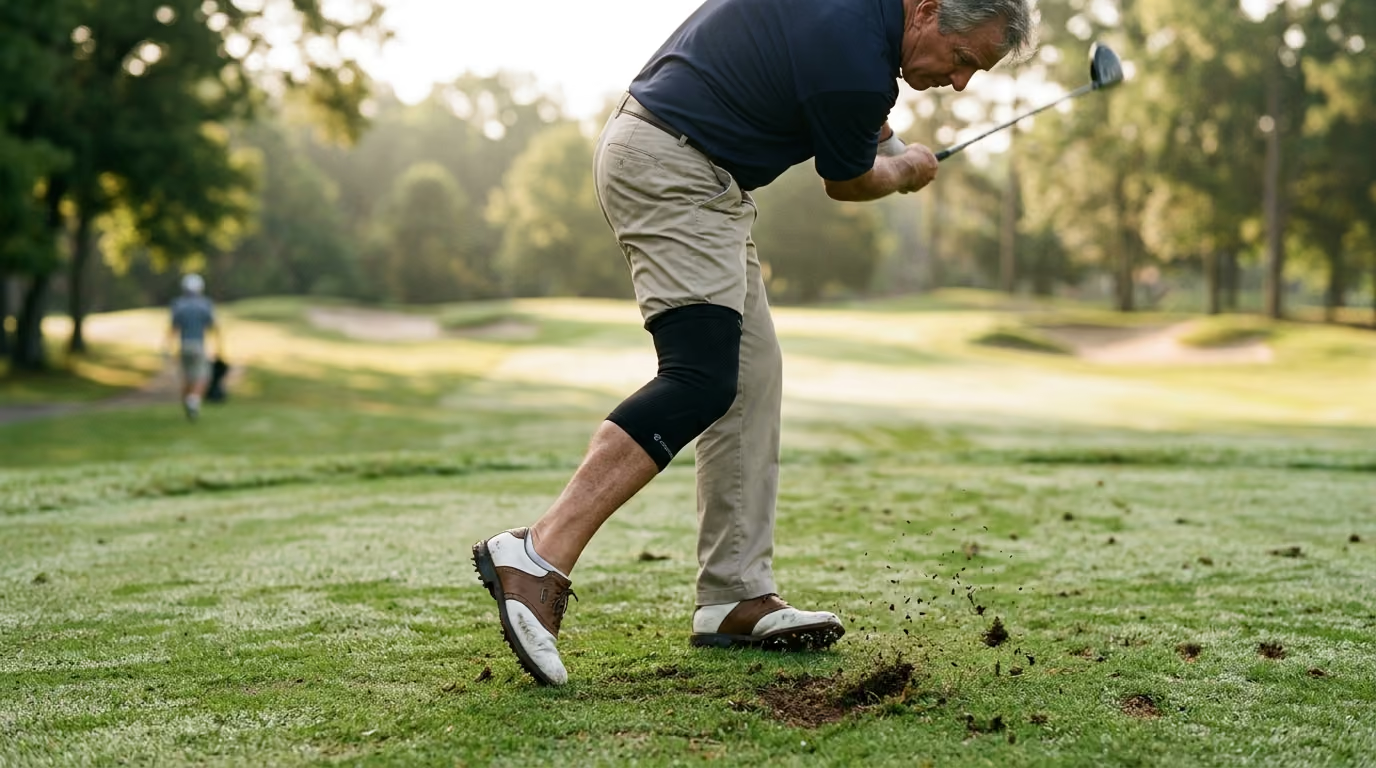
Both lead and trail knees absorb high repetitive loads during a round that can cause meniscus tears and joint friction over time.




Many golfers believe that keeping their lower body quiet is the key to a steady swing. They lock their knees and twist their upper body to create power. This approach actually damages your knee joints over time. Keeping your knees locked increases the twisting forces inside the joint.
We must study how the knee works during the swing to prevent this damage. This guide provides a detailed look at protecting your knees while keeping your yardage. We will look at why knees hurt on the course and how to fix the root causes.
The saddest thing I have seen in golf is watching lifelong playing partners slowly drop out of our weekend group. It usually starts with a nagging shoulder or knee issue they ignore until it requires surgery. That pattern is exactly why I became obsessed with golf longevity. We do not have to stop playing as we age, provided we do the right maintenance work between rounds.
By learning how to move correctly, you can play without pain for years. You can protect your joints and keep your swing speed. Let's look at how your knees function during the swing.
The golf swing is a complex movement that puts unique forces on each leg. Your target-side leg is the lead knee, while your back leg is the trail knee. These two joints perform very different tasks during your swing. Understanding these differences helps you protect them from wear.
During the downswing, your lead knee must handle rapid extension and twisting. The shin bone rotates inside the joint at a high speed. At the moment of impact, the lead knee absorbs a heavy vertical force. This combination of twisting and pressing can damage the meniscus.
Your trail knee has a different job. It acts as a stable anchor during your backswing. Research shows that the trail knee experiences a high net abduction moment impulse during the swing. This force pulls the knee outward, which puts stress on the outer cartilage.
According to studies published in biomechanics journals, the trail knee undergoes significant stress throughout the swing phase. The trail knee actually suffers high repetitive load. Knowing this helps us adjust our setup to reduce stress on both sides.
To manage this pain, we must look at joint wear in specific areas. If you have wear on the inside of the joint, it is called medial osteoarthritis. If the wear is on the outside, it is lateral osteoarthritis. We can use specific setups to unload the painful side.
To protect your knees, you must understand what happens inside the joint. Your knee joint is covered in a slippery layer of articular cartilage. This cartilage allows the bones to glide smoothly over each other. It has no blood vessels of its own, so it relies on joint fluid for nutrients.
Between the bones sit two C-shaped pieces of tough cartilage called the meniscus. There is a medial meniscus on the inside and a lateral meniscus on the outside. These structures act as shock absorbers for every step you take. They also distribute your weight evenly across the joint.
When you swing a golf club, these structures are squeezed and twisted at the same time. This action is like twisting a wet sponge while pressing down on it. Over time, this pressure can cause small tears in the meniscus. Without proper care, these tears can grow and lead to bone-on-bone contact.
As we age, our joint fluid can become thinner and less effective. This increases the friction between the cartilage surfaces during movement. When the cartilage wears away, the body responds by growing extra bone at the joint edges. These growths are called bone spurs, and they can limit your movement and cause pain.
Knee pain is rarely just a knee problem. In many cases, the knee is simply a victim of stiff joints above or below it. We call this relationship the kinetic compensator framework. When your hips or ankles do not move well, your knees must twist to finish the swing.
Your knee is a simple hinge joint designed to bend forward and backward. It has very little ability to twist. Your hip is a ball-and-socket joint designed to rotate in all directions. If your hip joints are tight, the body forces the knee to rotate.
For example, let's look at the trail hip during the backswing. If your trail hip lacks external rotation, your body still wants to turn. To make this turn, your trail knee will twist inward. This inward twist pinches the medial meniscus and strains the ligaments.
Focus entirely on turning your trail hip during the backswing. Let your hip joint take the rotational force. This protects your trail knee from twisting under load. Improving your hip mobility is the single best way to save your knees.
We see the same issue in the lead hip during the downswing. If the lead hip cannot rotate internally, the lead knee must twist to let you clear. This twisting combined with the high forces of the swing causes rapid cartilage breakdown. Keeping your hips loose prevents this dangerous compensation.
Let's look at a common situation on the course. You are standing on the tee box of a long par five with a tight fairway. You want to hit a long drive to clear a hazard. You grip the club tightly and prepare to swing with maximum effort.
During your downswing, your body tries to create extra power by pushing off the ground. But instead of rotating your hips, you stand up too early. This error is known as early extension. Your hips move closer to the golf ball, and your spine straightens before impact.
This sudden movement dumps a massive amount of vertical compressive force straight into your lead knee. Because your body has not rotated, your lead knee is still bent and twisting. You feel a sharp pinch on the inside of the joint as you strike the ball. This is the moment where the cartilage is crushed between your bones.
The combination of early extension and knee twisting is highly aggressive on the meniscus. It wears down the protective layers over time. This leads to chronic swelling and pain after your round. Understanding this mistake helps you avoid it on the course.
You do not have to suffer through 18 holes of knee pain. If you start to feel discomfort during a round, you can make immediate changes. These adjustments will unload the painful joint right away. They do not require any training or special equipment.
First, flare your lead foot outward at address. Turn your target-side toes 20 to 30 degrees toward the target. This open position reduces the twisting force on your lead knee during the follow-through. It allows your hip to clear without forcing the knee to twist.
Second, adjust your distance from the golf ball. If you suffer from pain on the inside of your lead knee, stand closer to the ball. This change reduces the outward bending force on the joint. If you feel pain on the outside of your knee, stand a bit further away to reduce inward bending.
These simple setup tweaks act as immediate relief on the course. They protect your joints while allowing you to finish your round. Try these adjustments on the next hole if you feel any stiffness. They will keep you moving without pain.
To keep your knees healthy for years, you need a regular exercise routine. This routine should focus on hip mobility and leg strength. By making your muscles strong, you reduce the impact forces that reach your joints. Let's look at three exercises you can do at home.
Our first exercise focuses on hip internal rotation. Sit tall on a firm chair with your feet flat on the floor. Keep your knees bent at a 90-degree angle. Focus entirely on turning your trail hip inward by sliding your foot outward.
Keep your pelvis still as you move your foot. Repeat this movement 10 times, then switch to the other side. This simple movement improves your hip mobility. It helps your hips rotate during the swing so your knees do not have to.
Our second exercise is the terminal knee extension. Loop a light resistance band around a sturdy table leg. Step inside the loop and place the band behind your lead knee. Step back until you feel a gentle pull from the band.
Focus entirely on pressing your lead knee backward to straighten your leg. Hold this straight position for two seconds, then slowly let your knee bend again. Repeat this for three sets of 15 repetitions. This movement strengthens the vastus medialis, which is the muscle that supports your kneecap.
Our third exercise is the wall sit. Stand with your back against a flat wall. Slide your hips down until your knees are bent at a comfortable angle. Hold this position for 30 seconds while breathing deeply.
Focus entirely on pressing your heels into the ground. This exercise builds strength in your thigh muscles without irritating your knee joints. Strong thighs absorb the shock of your swing, protecting your cartilage from wear. Perform these three exercises three times a week for the best results.
To maintain your body's overall health, read our guide on Golf Performance to see how strength impacts your game. Keeping your legs strong is key to a long playing career.
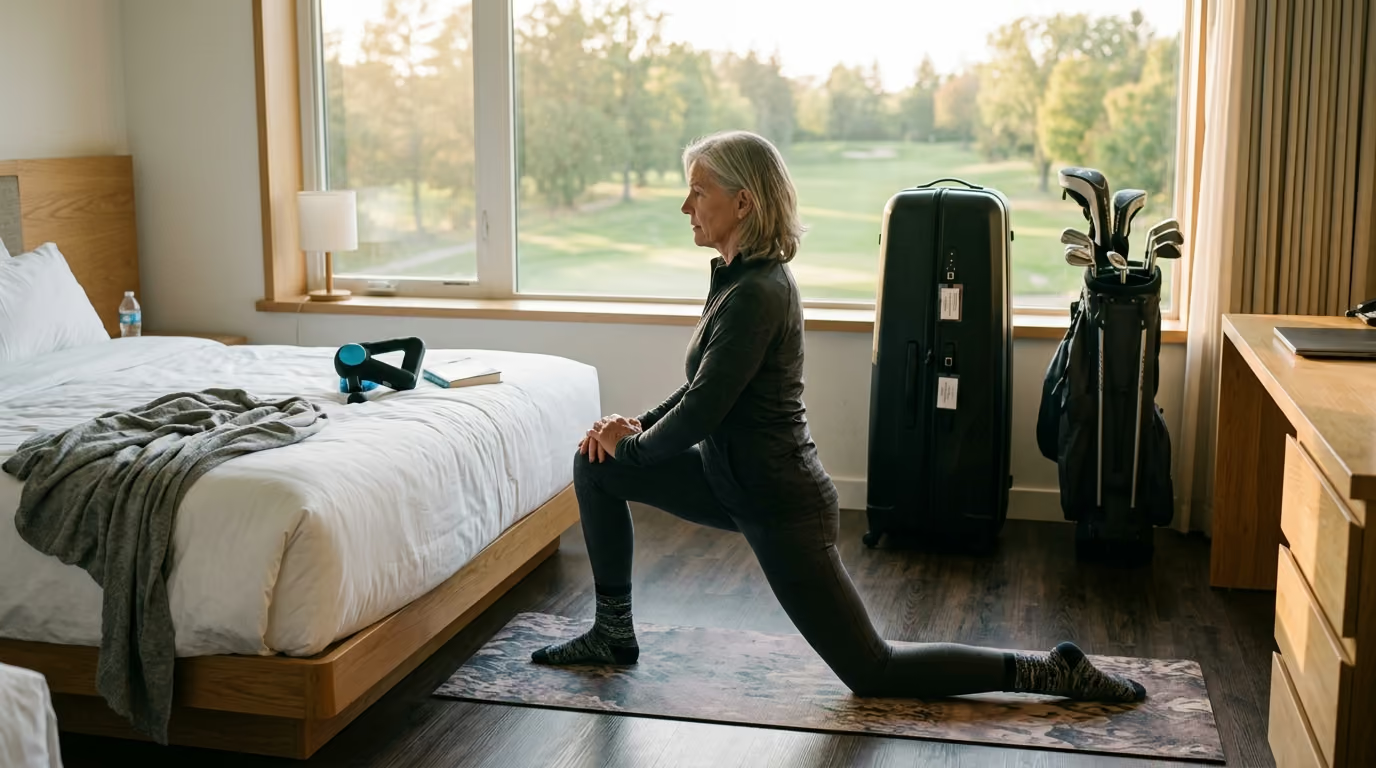
Many golfers arrive at the course, pull their driver out of the bag, and head straight to the first tee. This habit is highly dangerous for stiff joints. Cold joints have less lubricating fluid, which makes them more prone to wear. A simple five-minute warm-up prepares your knees for the forces of the swing.
Start with ankle circles to improve lower leg flexibility. Stand on one leg and lift your other foot off the ground. Focus entirely on drawing large circles with your big toe. Complete 10 circles in each direction, then switch legs.
Next, perform gentle hip swings to loosen your hip joints. Hold onto a golf cart or your driver for balance. Stand on one leg and swing your other leg forward and backward like a pendulum. Focus entirely on moving from your hip joint while keeping your spine straight.
Perform 10 swings on each side to activate the glute muscles. After that, perform some gentle torso twists with your club across your shoulders. Keep your knees slightly bent and let your hips turn freely. This simple routine gets the joint fluid flowing and prepares your knees for the round.
For more training tips, look at our Strength resources. Building a strong foundation before your round is key to avoiding injury.
Many golfers make mistakes when trying to manage knee pain. These mistakes often make the joint wear worse. By avoiding these errors, you can protect your knees from further damage. Let's look at the three most common mistakes.
The first mistake is wearing a rigid knee brace to mask pain. While a brace can offer support, it does not fix the root cause of your pain. If your hips are stiff, wearing a rigid brace will simply transfer the twisting forces to your back. This can lead to hip or lower back pain.
Instead of relying only on a brace, focus on improving your hip mobility. You can find more tips on joint protection in our section on Injury Prevention. Combining support with mobility work is the safest path.
The second mistake is keeping your feet perfectly parallel at address. Many golfers do this because they think it helps their alignment. However, parallel feet lock your hips and force your knees to twist. Always flare your feet slightly outward to allow safe joint rotation.
The third mistake is doing deep, heavy squats. Deep squats place high stress on the meniscus cartilage. If you have osteoarthritis, deep squats can pinch and tear the worn areas of the joint. Stick to shallow squats or wall sits to build strength safely.
Your equipment has a major impact on how much stress your knees absorb. Simple changes to your shoes and clubs can reduce joint friction. This allows you to play longer without soreness. Let's look at what you should check.
First, examine your golf shoes. Many players think that aggressive metal spikes are necessary for traction. However, these spikes lock your feet to the turf. This creates a trap where your foot cannot move, forcing your knee to twist.
Use soft spikes or spikeless shoes instead. These shoes allow a small amount of foot slippage during your swing. This tiny slide acts as a safety valve, releasing the twisting pressure on your knees. It protects your cartilage without hurting your stability.
Second, look at your club shafts. If you are using heavy steel shafts, consider switching to graphite. Graphite shafts are lighter and absorb shock much better than steel. This reduces the vibrations that travel up your leg when you hit the ball.
Third, use hybrid clubs instead of long irons. Hybrids have wide, flat soles that slide easily over the grass. If you hit a shot slightly fat, a hybrid will glide instead of digging in. This prevents the sudden, jarring stop that can shock your lead knee joint.
Learn more about how proper equipment affects joint recovery by reading our articles on Recovery. Small changes in your gear can make a massive difference in how your joints feel the next day.
Flat lies on the fairway are easy on the joints. However, you will often find your ball on sidehill, downhill, or uphill lies. These uneven slopes change how your weight is distributed, putting extra strain on your knees. Knowing how to adjust your setup on these slopes can save your joints from injury.
Let's look at a downhill lie first. On a downhill slope, more weight is forced onto your lead knee. To protect the joint, shorten your swing and use a more lofted club. Focus entirely on maintaining your balance through the shot rather than swinging hard.
On an uphill lie, the weight is pushed back onto your trail knee. This position can strain the trail knee during the backswing coil. To reduce this stress, tilt your shoulders to match the slope. Let your trail knee bend slightly more to absorb the weight without twisting.
For sidehill lies where the ball is below your feet, you must bend more from your hips. This stance puts more weight onto your toes, which increases knee pressure. Focus entirely on keeping your weight back on your heels to protect your joints. Taking these steps prevents sudden, sharp forces from damaging your cartilage.
Excessive lateral movement during the swing is a major cause of knee pain. When you sway to the side during your backswing, you push your trail knee outward. When you slide your hips during the downswing, you force your lead knee to absorb a massive side-to-side force.
To fix this habit, you can practice the swing in a barrel drill. Imagine you are standing inside a narrow wooden barrel that reaches up to your chest. If you sway your hips to either side, you will hit the walls of the barrel. Your only option is to turn your body in place.
When you swing, focus entirely on rotating your hips within this tight space. Your trail hip should turn backward during the backswing. Your lead hip should turn backward during the downswing. This rotation keeps your knees aligned over your feet throughout the movement.
By turning in place, you eliminate the lateral shearing forces that damage joint cartilage. This drill can be practiced in your living room without a club. Just cross your arms over your chest and practice turning your hips. It trains your body to move safely before you head to the range.
Your posture at address determines how forces travel through your legs. A poor stance can load your knees before you even swing the club. By adjusting your posture, you can keep your joints in a safe alignment. Let's look at how to set up correctly.
Start by creating a solid hip hinge. Bend from your hips, not your waist, while keeping your back flat. This position allows your glutes and hamstrings to support your body weight. If you bend too much from your knees, your thigh muscles will pull hard on your kneecaps.
Focus entirely on keeping your weight centered on the arches of your feet. Do not let your weight drift onto your toes or back onto your heels. When your weight is centered, your knees stay in a neutral, stable position. This alignment protects them from both compression and twisting.
You can also practice simple balance drills at home to improve stability. Stand on one leg while brushing your teeth or making coffee. This simple exercise trains the small muscles around your knee and ankle. These muscles help keep your joint stable during your swing.
To learn more about building a strong foundation for your swing, check out our resource page at Golfergy Resources. A stable base is key to preventing injuries on the course.
How you navigate the course during a round can affect how your knees feel. Walking 18 holes on a hilly course can cause joint inflammation if you have osteoarthritis. By making smart choices, you can protect your knees from unnecessary wear. Let's look at some daily habits.
If your joints are feeling stiff or sore, consider riding in a cart. Riding reduces the total steps you take and saves your knees from uphill climbs. If you prefer to walk, use a pushcart instead of carrying your bag. Carrying a heavy bag adds extra weight to your knees with every step.
Avoid using a pull-cart, which forces you to twist your torso as you walk. Pushing a cart keeps your spine straight and distributes weight evenly. This protects your knees and hips from uneven forces. It also saves your energy for the back nine.
When walking down hills, take shorter and slower steps. Walking downhill can put up to four times your body weight through your knee joints. Lean forward slightly and keep your knees bent to let your leg muscles absorb the impact. This simple shift protects your cartilage from harsh pounding.
Finally, stay hydrated during your round of golf. Your joint cartilage is made mostly of water. Drinking water keeps the joint fluid thick and slippery, which reduces friction. Keep a water bottle in your cart and drink at every tee box.
For more advice on staying active as you age, visit our section on Healthy Ageing. Keeping your body hydrated and moving well is the key to golf longevity.
Protect your knees by flaring your feet and letting your hips handle the rotation instead of forcing your joint hinges to twist.
Let these habits guide you on the course to keep your knees healthy and strong for years to come.
Follow Golfergy for practical insights on performance, mobility, recovery and healthy ageing. Stay connected for new articles, research-led guidance and ideas to help you play better for longer.


Explore practical resources on performance, recovery, mobility and golf longevity.
Read the Blog