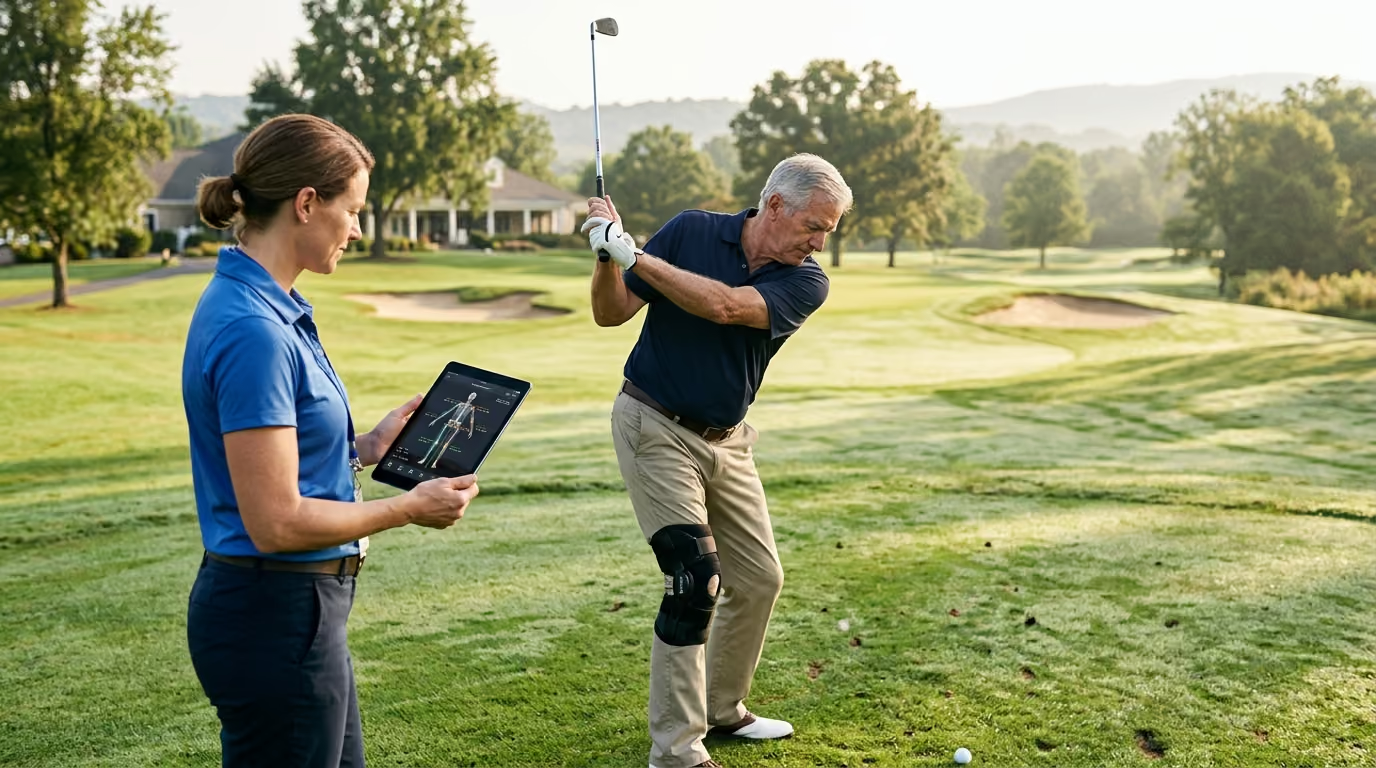

Standing on the first tee after hip or knee surgery requires physical preparation, clear recovery milestones, and smart swing adjustments.




Let us define what returning to golf after a joint replacement is and is not. It is not a race to beat a calendar date. It is not a test of mental toughness. It is a biological process of tissue healing and structural adaptation. Returning to play means building a physical bridge between your new prosthetic joint and your swing. This guide provides a detailed blueprint to help you cross that bridge safely.
We must recognize that every joint replacement is unique. Your recovery depends on your health, your surgery, and your physical preparation. In our experience, golfers who succeed do not rush. They focus on steady progress and professional guidance.
The saddest thing I have seen in golf is watching lifelong playing partners slowly drop out of our weekend group. It usually starts with a nagging shoulder or knee issue they ignore until it requires surgery. That pattern is exactly why I became obsessed with golf longevity. We do not have to stop playing as we age, provided we do the right maintenance work between rounds. Prioritizing long term golf health before surgery and adjusting your swing afterward is the smartest strategy to keep you on the tee box.
To understand this journey, we must first define the terms. A joint replacement is a major physical shift. Knowing the medical definitions helps you set realistic expectations.
Total hip arthroplasty, or THA, replaces the damaged parts of your hip joint with artificial materials. The surgeon removes the worn-out ball of your thigh bone. They replace it with a metal stem and a ceramic or metal ball. They also place a cup in your pelvic socket. For a golfer, this means rebuilding hip rotation, thigh strength, and single-leg balance.
Total knee arthroplasty, or TKA, replaces the damaged surfaces of your knee joint. The surgeon caps the ends of the bones that meet at the knee with metal and plastic. This surgery relieves chronic joint pain and helps you stand straight. For your swing, a new knee must tolerate both compression and rotational twisting.
Prehabilitation is a structured program of exercise and lifestyle changes before your surgery. It is much more than a simple strength program. It addresses your aerobic fitness, balance, nutrition, and home safety. The goal is to build a physical reserve that helps you recover faster after the operation.
Rehabilitation is the post-surgery process of restoring your movement. It begins in the hospital bed and continues for several months. It progresses from basic steps, like getting out of bed, to advanced movements. Finally, it helps you transition back to golf-specific movements.
Calendar clearance is a simple timeline. For example, a doctor might say you can swing a club at twelve weeks. Functional clearance is based on what your body can actually do. It asks if you can balance on one leg, walk on uneven grass, and rotate without pain. Functional clearance is a much safer way to guide your return to the course.
Imagine standing on the tee box of a long par four. The wind is blowing, and you have a sidehill lie. Your lead foot must stand higher than your trail foot. You look down at your ball and feel a sudden flash of worry. You wonder if your new hip will slide out of place when you turn.
This mental barrier is very common for mature golfers. You might find yourself holding back during your swing. You decelerate before impact because you fear pain or joint damage. This hesitation can ruin your shot and cause extra stress on your lower back.
We see this pattern often. In our experience, your brain needs time to trust the new joint. A structured return plan helps replace this fear with physical confidence. By taking small, successful steps, you teach your brain that your joint is stable.
The golf swing looks smooth, but it puts great pressure on your lower body. Your hips and knees must rotate, slide, and absorb force. To protect your new joint, you must understand these physical forces.
During your swing, your hips turn in opposite directions. The backswing forces your trail hip into internal rotation. The downswing shifts this twisting force to your lead hip. Research shows that both hips experience about fifty degrees of twisting during a swing.
Biomechanical studies have looked closely at these forces. One study found that the contact force on a replaced hip can reach five to 6.6 times your body weight. This pressure happens during a driver swing. This force is actually lower than the force of light jogging. This is reassuring news for golfers.
Even so, the twisting action is still intense. The study also showed that the neck of the metal implant touched the plastic liner in thirty-six percent of swings. We do not know the long-term impact of this contact. This is why a smooth, controlled swing is much safer than a high-speed swing.
Your knees act as stabilizers during the swing. They must flex and bend while resisting side-to-side twisting. A replaced knee lacks the natural ligaments that once kept it stable. The surrounding muscles must now do that stabilizing work.
If your leg muscles are weak, your knee might slide or wobble. This wobble puts extra shear stress on the implant. Over time, this stress can cause pain or early wear. Building strong muscles around the knee is vital for a safe swing.
Many golfers think recovery starts after the operation. Real recovery begins weeks before you enter the hospital. This preparation phase is called prehabilitation.
Prehabilitation is not just about lift-off exercises or heavy weights. It is a complete program to prepare your body and mind. It builds a physical reserve that helps you recover from the shock of surgery.
The medical evidence on prehabilitation is mixed but encouraging. A major review of ten medical studies found that prehabilitation reduces your hospital stay. Another study showed that prehab increases strength and early leg movement.
A recent study in 2023 found moderate-certainty evidence of its benefits. Golfers who did prehab had better strength and movement six weeks after knee surgery. They also reported a better quality of life. Prehabilitation does not guarantee a miracle recovery, but it gives you a head start.
We organize prehabilitation into five distinct categories. Each category helps protect your body and supports your return to play.
Surgery causes temporary muscle loss. You must build your muscles before surgery so you have a reserve to draw from. Focus on your quadriceps, gluteal muscles, and hamstrings. These muscles are the primary engines of your golf swing. Developing lower body strength before surgery is a smart way to prepare.
A healthy cardiovascular system speeds up tissue healing. If pain prevents you from walking, try low-impact activities. Stationary cycling and water aerobics are excellent options. They keep your heart strong without overloading your painful joint.
You need adequate joint movement to dress yourself, drive, and swing. Work on your range of motion within your comfort zone. Do not force deep stretches that cause sharp pain. Building functional hip and spine mobility makes a major difference in your swing.
Golf is played on uneven grass and slopes. A replaced joint does not send the same balance signals to your brain. You must train your balance systems before surgery. Simple single-leg balance exercises can help prevent dangerous falls on the course.
You must optimize your general health before surgery. Work with your doctor to control your blood pressure and blood sugar. If you smoke, you must stop at least one month before surgery. Research shows that smokers have a much higher risk of surgical complications.
To prepare your body, you need a structured exercise routine. You can perform these movements at home or in a gym. Always get approval from your medical team before starting.
These exercises focus on one movement at a time. Do not rush through them. Move with control and focus on the target muscles.
This exercise targets your gluteal muscles, which support your hips during the swing. Lie on your back with your knees bent and feet flat on the floor. Keep your arms relaxed at your sides.
Slowly lift your hips toward the ceiling. Focus entirely on squeezing your glutes at the top of the movement. Hold this position for three seconds, then lower down slowly. Repeat this movement ten times for three sets.
This movement strengthens your outer hip muscles, which prevent your knees from collapsing. Lie on your side with your hips and knees bent. Keep your feet glued together.
Slowly raise your top knee while keeping your feet touching. Focus entirely on turning your top hip outward. Do not let your pelvis roll backward during the movement. Lower your knee and repeat ten times on each side.
This exercise improves your ankle and hip stability on uneven turf. Stand next to a sturdy chair or wall for safety. Lift one foot slightly off the ground.
Balance on your standing leg for thirty seconds. Focus entirely on keeping your ankle stable and your knee straight. If this feels easy, try closing your eyes for an extra challenge. Perform this three times on each leg.
This movement builds the quad strength needed to stand up and walk the course. Stand in front of a sturdy chair with your feet shoulder-width apart. Keep your chest up and shoulders relaxed.
Slowly bend your knees and lower your hips toward the chair. Touch the seat lightly with your hips, then stand back up. Focus entirely on pushing through your heels as you rise. Perform three sets of eight repetitions.
You should never go straight from walking to swinging a driver. Your body requires a gradual increase in physical stress. We recommend a five-phase roadmap to guide your return.
Before your surgery, document your physical limits. Note how far you can walk without pain. Record your current golf handicap and driving distance.
This baseline helps you measure your progress during recovery. It also helps your physical therapist design your rehabilitation program. You will know exactly what goals you need to reach.
This phase focuses on wound healing and basic movement. Your first goals are walking safely and doing light therapy exercises. Do not think about golf during these early weeks.
You must also meet safety milestones before driving a car. British health guidelines suggest waiting at least six weeks after hip surgery to drive. You must prove you can make an emergency stop without hesitation. Your doctor must give you formal clearance before you get behind the wheel.
Once your incision heals, you can start building strength and balance. This phase usually happens between weeks six and twelve. You will work on walking longer distances and climbing stairs.
Always monitor your body's response to exercise. If you feel increased swelling or pain the next day, you have done too much. Reduce your exercise level and rest until your joint recovers. Consistent progress is safer than rapid gains. Incorporating smart injury prevention strategies is key during this phase.
You can begin golf movements when your therapist clears you. This phase focuses on light, controlled movements. You must start with the lowest impact activities first.
Now you are ready to play actual holes. Start by playing nine holes while riding in a cart. The cart reduces your walking fatigue and lets you focus on your swing.
Avoid playing on wet days or very hilly courses during your first month back. Wet grass increases your risk of slipping and twisting your joint. Rebuild your walking endurance slowly over several months. Following a dedicated post round recovery protocol will help keep your joints fresh.
You do not need to wait for perfect fitness to enjoy the golf environment. You can make immediate changes to your setup to reduce joint stress. These simple tweaks protect your tissues while you play.
First, flare your lead foot outward at address. Turn your lead toes about thirty degrees toward your target. This simple position reduces the twisting force on your lead hip and knee. It allows your body to rotate toward the target with less resistance.
Second, allow your trail heel to lift early during the downswing. Do not try to keep your trail foot pinned to the grass. Letting that heel lift early releases tension in your back hip. It makes your weight transfer much smoother.
Third, focus entirely on turning your trail hip during the backswing. Do not try to hold your lower body still. Let your hips turn naturally to shorten your swing. A shorter, wider swing is much safer than a long, twisting swing.
Your equipment plays a major role in joint protection. Making smart gear choices reduces the impact forces that reach your body.
Start by switching to spikeless golf shoes. Traditional metal spikes grip the grass too firmly. This firm grip prevents your feet from sliding, which increases twisting forces on your knees and hips. Spikeless shoes allow for slight slippage, which relieves joint stress.
Consider switching to lightweight graphite shafts in your clubs. Graphite absorbs shock much better than steel. This reduction in vibration protects your wrists, elbows, shoulders, and spine.
Use oversized grips on all your clubs. Larger grips allow you to hold the club with less hand pressure. This relaxed grip reduces tension throughout your arms and shoulders.
Use helpful accessories to limit bending. A magnetic ball retriever on your putter grip saves your back and hips. A long-pegged tee allows you to tee up your ball without bending deep. These small changes help you stay within your safe movement zones.
Even the most motivated golfers can make mistakes during recovery. Avoiding these common errors will protect your implant and ensure a long playing career.
Do not treat the average recovery times as strict deadlines. If a study says the average return is four months, that does not mean you must play at four months. Your body may need more time to heal. Progress based on your pain levels and movement quality.
Many golfers feel good and go straight to the first tee. This jump from walking to a full round is too sudden. You must spend time on the practice range first. Test your joints with controlled swings in a safe environment.
Some golfers believe using a cart is a sign of weakness. In our experience, a cart is a vital recovery tool. It allows you to enjoy the social and physical benefits of golf without overworking your joint. You can always return to walking later.
Your prosthetic joint is strong, but the surrounding tissues are still healing. The muscles, ligaments, and bone around the implant need time to rebuild. Treating your joint as indestructible can lead to early wear or dislocation. Respect your body's healing timelines.
While golf is safe, you must watch for signs of trouble. Playing through severe pain is never a good idea. Stop playing immediately if you experience any of these warning signs.
An infection in a joint implant is a serious medical issue. Watch for a persistent fever or chills. Seek help if you notice increasing redness, warmth, or swelling around your incision. Worsening pain at rest is another warning sign.
Blood clots can form in your legs after major surgery. Watch for sudden calf pain or tenderness. Increasing swelling in your calf, ankle, or foot is a common symptom.
If you experience sudden shortness of breath or chest pain, seek emergency medical care. These symptoms can mean a clot has traveled to your lungs. This condition is life-threatening.
Stop playing if you feel your joint catch or lock. A mechanical block or clunking sound requires an evaluation. These signs can indicate implant instability or damage.
Yes, your surgical approach determines your early movement limits. A posterior hip approach requires you to avoid deep bending and twisting inward. An anterior approach has different limits, often involving extension and outward twisting. Always follow the specific rules given by your surgeon.
Yes, bilateral knee replacement patients can return to golf. However, your recovery will likely be slower because both legs must heal. You must focus heavily on balance training because you do not have a strong leg to lean on. Take extra time in the practice range phase before playing on the course.
Making permanent adjustments can help extend your playing years. Keeping your feet flared and shortening your backswing are healthy habits for any golfer over forty. These changes reduce wear on your joints and protect your lower back.
You must test your balance on flat surfaces first. If you can stand on one leg for thirty seconds without wobbling, you are ready for light slopes. Always use caution on wet grass and in deep sand bunkers.
Your new joint can keep you on the fairway for decades, provided you treat your return to golf as a gradual, functional progression rather than a race against the calendar.
Follow Golfergy for practical insights on performance, mobility, recovery and healthy ageing. Stay connected for new articles, research-led guidance and ideas to help you play better for longer.


Explore practical resources on performance, recovery, mobility and golf longevity.
Read the Blog


