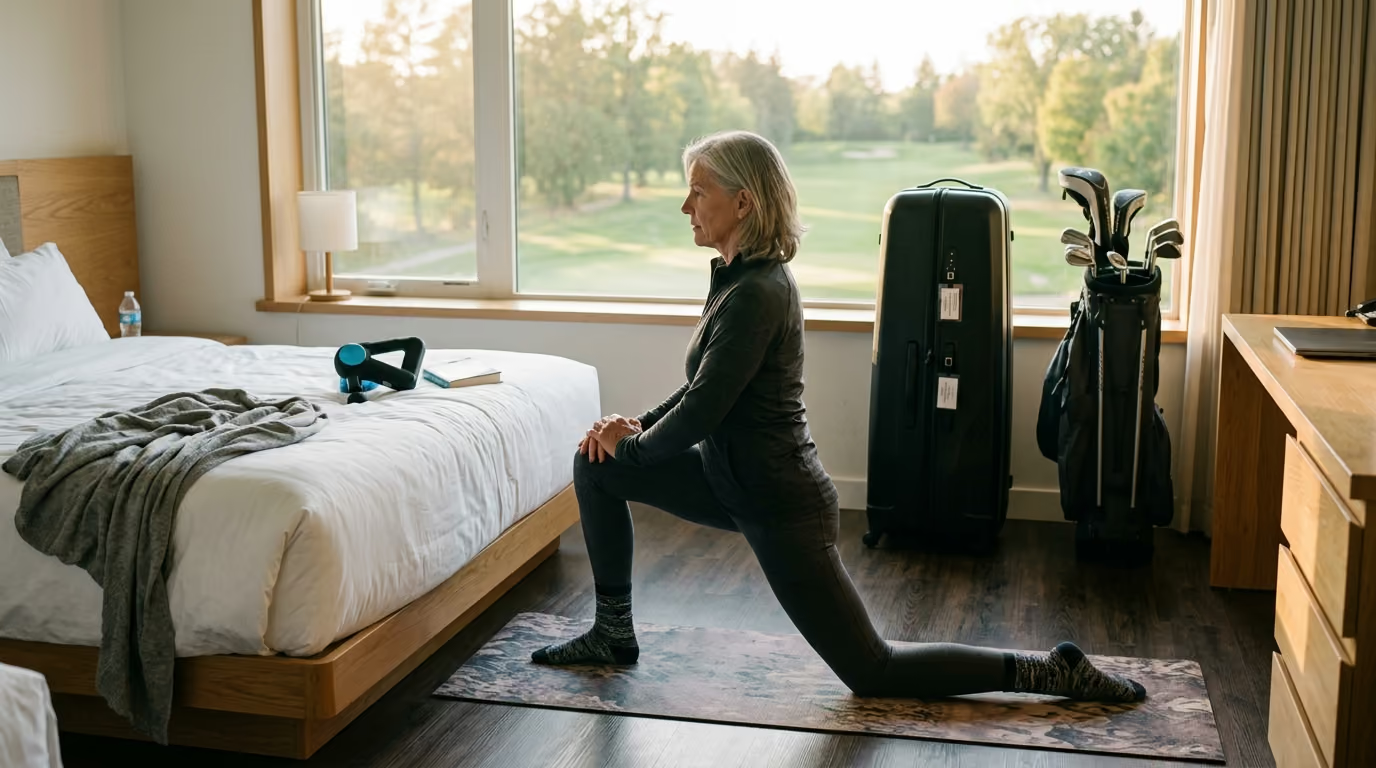
Tired legs during the final four holes indicate that recreational golfers need brief weekly strength sessions to sustain speed and protect joints.




Many dedicated players spend their winters lifting heavy weights, building muscle, and increasing their swing speed. When spring arrives, they completely stop their gym work to spend all their free time on the course. This sudden shift is highly counterproductive. Within a few weeks, the hard-earned physical progress starts to disappear.
Maintaining your athletic gains does not require spending hours in a gym during the playing season. You actually need a fraction of your winter effort to keep your speed and protect your joints. The secret lies in a concept called the minimum effective dose. By reducing your weekly volume while keeping your lifting intensity high, you can play your best golf and avoid late-season physical declines.
The saddest thing I have seen in golf is watching lifelong playing partners slowly drop out of our weekend group. It usually starts with a nagging shoulder or knee issue they ignore until it requires surgery. That pattern is exactly why I became obsessed with golf longevity. We do not have to stop playing as we age, provided we do the right maintenance work between rounds.
This guide outlines a highly practical framework designed for golfers over forty. You will learn how to maintain your peak power, protect your lower back, and finish eighteen holes feeling as strong as you did on the first tee.
It is a beautiful Saturday afternoon, and you are standing on the fourteenth tee. Your scorecard looks respectable, but you are beginning to feel a familiar heaviness in your thighs. When you swing your driver, the ball cuts short and lands in the right rough. You notice that your playing partners are hitting past you, even though you outpaced them easily in May.
By the sixteenth hole, a dull ache begins to tighten in your lower back. You find yourself cutting your backswing short to avoid the discomfort. Your legs feel like lead, and your hips refuse to turn fully through the ball. This is not a swing flaw, nor is it a sudden loss of talent. It is the predictable result of the mid-season physical slide.
When you abandon your strength work in favor of playing, your muscles begin to detrain. Your nervous system loses its ability to recruit fast-twitch muscle fibers quickly. This physical drop-off directly impacts your coordination, ball striking, and stamina. Many players blame their equipment or their swing mechanics for this late-summer decline.
The real culprit is a lack of physical maintenance. Without a consistent stimulus, your body slowly sheds the muscle and power you built during the winter. Your joints lose their supporting strength, which forces your lower back and knees to absorb the high rotational forces of the swing. Recognizing this pattern is the first step toward playing pain-free golf all year round.
To prevent physical decline, we must look at how our muscles and nervous system react to training. Your body is highly adaptable, but it is also highly efficient. It will not maintain expensive muscle tissue or high neural drive unless it has a clear reason to do so. In the winter, you gave it a reason by lifting heavy weights multiple times per week.
When you transition to the playing season, you must continue to send that preservation signal to your brain. Research published in the Journal of Strength and Conditioning Research shows that athletes can preserve structural strength for months with very low volume. You do not need to lift four days a week to stay strong. A single session or two short sessions per week is enough to maintain ninety percent of your strength.
The critical variable here is intensity, not volume. Many golfers make the mistake of dropping their weights and performing high-repetition workouts in the summer. This approach actually tells your nervous system that it no longer needs to produce high forces. To keep your swing speed, you must keep the load on the bar high while drastically reducing the total sets and repetitions.
We also want to avoid extreme muscle soreness, which is known as Delayed Onset Muscle Soreness. Sore legs and stiff shoulders will ruin your weekend tee times. To prevent this, we focus on concentric-dominant movements. These are exercises that focus on the lifting phase rather than the slow, muscle-damaging lowering phase. By avoiding muscular failure and keeping your sets short, you stimulate the nervous system without making your muscles sore.
You do not always have time for a full workout before you play, but you still need to activate your muscles. When you arrive at the course, your body is often stiff from driving or sitting at a desk. Walking straight to the first tee and swinging hard is a recipe for back strain. This simple pre-round routine takes less than five minutes and prepares your joints for the dynamic forces of the swing.
First, find a flat area near the putting green or your golf cart. Hold a mid-iron across your shoulders and stand with your feet shoulder-width apart. Focus entirely on turning your trail hip backward while keeping your lead foot flat on the ground. Hold this turned position for three seconds, then slowly turn through to the target. Repeat this deliberate movement ten times in each direction to wake up your hip rotators.
Second, perform a high-tension isometric hold to prime your core muscles. Stand tall and grip your golf club with both hands. Extend your arms straight out in front of your chest at shoulder height. Squeeze the grip as hard as you can, brace your midsection like you are about to take a punch, and hold this tension for fifteen seconds. This high-tension hold signals your deep spinal stabilizers to wake up and protect your lower back.
Finally, perform five slow, deep air squats. Keep your chest upright and sink your hips back as if you are sitting in a chair. Focus on pushing through your heels as you stand up. This movement gets blood flowing to your glutes and hamstrings, which are the primary power generators in your swing. This quick sequence creates a stable physical platform before you strike your first tee shot.
To make your strength gains last all summer, you need a structured weekly routine. This program is designed to fit around a busy playing schedule. It uses a concept called front-loading, which means we perform the most demanding physical work early in the week. This scheduling choice gives your body ample time to recover before your weekend rounds.
For the mature golfer, a two-day split is the gold standard for strength training for longevity. It provides enough stimulus to protect your joints without causing chronic fatigue. If you play golf multiple times a week, you can even use a micro-dosing strategy. This involves doing short, fifteen-minute workouts right after your rounds to preserve your designated rest days.
Our first weekly session focuses on maintaining maximum force production. We perform this workout early in the week when your body is fully rested from the weekend. Keep your rest periods long, around two minutes between sets, to prevent your heart rate from spiking too high.
Our second session is lighter and focuses on speed, mobility, and joint health. We perform this workout a day or two before your main weekend round to prime your nervous system.
The rotational nature of golf puts unique, asymmetrical stress on specific joints. Over a long season, these repetitive forces can lead to wear and tear. Golfers over forty are particularly susceptible to issues in the elbows, shoulders, and lower back. Incorporating targeted, low-fatigue joint care into your weekly routine is crucial for preventing common golf injuries.
Medial epicondylitis, commonly known as golfer's elbow, is a painful inflammation of the tendons on the inside of the elbow. This issue often stems from weak forearms and poor wrist stability, especially when hitting from deep rough. To prevent this, perform tennis ball squeezes twice a week.
Hold a tennis ball in your hand and squeeze it as hard as possible for ten seconds, then relax. Repeat this five times per arm. Follow this with reverse wrist curls using a very light dumbbell. Perform three sets of fifteen repetitions to build endurance in the forearm extensors, which balances the strain on your elbow tendons.
Your lower back is not designed to twist. It is meant to provide stability, while your hips and upper back handle the rotation. When your hips are tight, your lower back tries to rotate to compensate, which leads to injury.
To keep your spine safe, perform the Dead Bug exercise. Lie on your back with your arms pointing toward the ceiling and your knees bent at ninety degrees. Slowly lower your right arm behind your head while extending your left leg straight out. Keep your lower back pressed flat against the floor throughout the movement. Perform three sets of twelve alternating repetitions to train your deep abdominal muscles to brace your spine.
The lead shoulder undergoes significant strain as it pulls the club through the ball at high speeds. If the shoulder blade is unstable, the rotator cuff can easily become pinched or inflamed.
To protect this joint, perform the kettlebell suitcase carry. Hold a heavy kettlebell or dumbbell in one hand and walk slowly in a straight line for forty yards. Focus on keeping your shoulder pulled down and back while keeping your torso perfectly upright. This simple carry teaches your shoulder stabilizers to coordinate with your core, which keeps the joint secure during your swing.
Many well-meaning players fall into predictable patterns that derail their progress. They assume that any form of exercise is beneficial, but golf-specific training requires a delicate balance. Avoiding these three common mistakes will save your joints and preserve your power.
First, do not fall into the all-or-nothing trap. Many players think that if they cannot lift weights three times a week for an hour, they should not lift at all. This mindset causes them to lose all their winter gains by the middle of July.
It is far better to do one twenty-minute session per week than to quit entirely. In our experience, consistency is much more important than duration. Even a single set of heavy deadlifts once a week will send a strong preservation signal to your brain.
Second, do not swap your heavy weights for high-repetition workouts. It is common to see golfers lifting light weights twenty or thirty times in the summer. They believe this builds muscular endurance and prevents soreness.
However, light weights do not recruit your high-threshold motor units. These are the fast-twitch muscle fibers that generate clubhead speed. When you stop lifting heavy, these fibers quickly atrophy, and your swing speed will drop. Keep your weights heavy, but lower the total number of sets and reps.
Third, do not lift to muscular failure during the playing season. Pushing your sets until your muscles literally give out causes severe muscle damage. This damage requires several days of recovery, during which your golf swing will feel stiff and awkward.
Always leave two or three repetitions in reserve at the end of each set. You want to walk out of the gym feeling energized and athletic, not exhausted and sore. This conservative approach preserves your nervous system so you can play your best golf on the weekend.
Your physical strength is only as good as your connection to the ground and the club. If your equipment is worn out, your body has to work much harder to produce power. This extra strain can lead to premature fatigue and joint soreness.
Inspect your golf shoes before the season begins. The spikes or tread patterns on your shoes are your only traction device during the swing. If your soles are worn flat, your lead foot will slip during the downswing.
This slip forces your lead knee and hip to absorb sudden, lateral forces, which can cause joint pain. Replace your soft spikes every thirty rounds to maintain proper connection with the turf. This grip allows your hips to rotate efficiently without putting extra stress on your knees.
Your club grips also play a major role in upper body tension. When grips become old, slick, and thin, you naturally squeeze the club much harder to prevent it from flying out of your hands. This excessive grip pressure tenses your forearms, elbows, and shoulders.
This tension limits your wrist release, reduces your swing speed, and aggravates golfer's elbow. Inspect your grips every spring and clean them regularly with warm soapy water. If they feel firm and smooth instead of tacky and soft, replace them immediately. A fresh grip allows you to hold the club with relaxed hands, which promotes post-round muscle recovery and a smoother swing.
To ensure your maintenance program is working, you need objective ways to measure your progress. You do not need expensive laboratory equipment to test your strength and mobility. These three simple physical benchmarks can be performed at home or in the gym using basic tools.
Strength Benchmark Table:
Exercise Target Benchmark Focus Area
Trap Bar Deadlift 1.5x - 1.75x Bodyweight Lower Body Power
Strict Push-Ups 15 - 20 Repetitions Upper Body Press
Side Plank Hold 45+ Seconds per side Lateral Core
The first benchmark is your lower body pulling strength. A healthy, strong golfer should be able to perform a trap bar deadlift with one and a half times their bodyweight for a single, clean repetition. If you weigh one hundred and eighty pounds, your target is two hundred and seventy pounds. If you can maintain this level of pull throughout the summer, your legs will have ample power to drive your swing.
The second benchmark is your upper body pushing endurance. You should be able to perform fifteen to twenty strict push-ups with a perfectly neutral spine. Your chest should touch the floor on every rep, and your hips must not sag. This test measures the endurance of your chest, shoulders, and core, which keep your posture stable during long rounds.
The third benchmark is lateral core endurance, which we measure with a classic side plank hold. Lie on your side, prop yourself up on your elbow, and lift your hips until your body forms a straight line. You should be able to hold this position for forty-five seconds on each side without your hips dropping or your torso twisting forward. If you notice a major difference between your right and left sides, focus more attention on your unilateral core work to prevent imbalances.
Ultimately, your playing longevity depends on the consistent, smart maintenance of your body between rounds.
To maintain your clubhead speed and play pain-free all season, you must lift heavy weights once or twice a week with very low volume.
Follow Golfergy for practical insights on performance, mobility, recovery and healthy ageing. Stay connected for new articles, research-led guidance and ideas to help you play better for longer.


Explore practical resources on performance, recovery, mobility and golf longevity.
Read the Blog