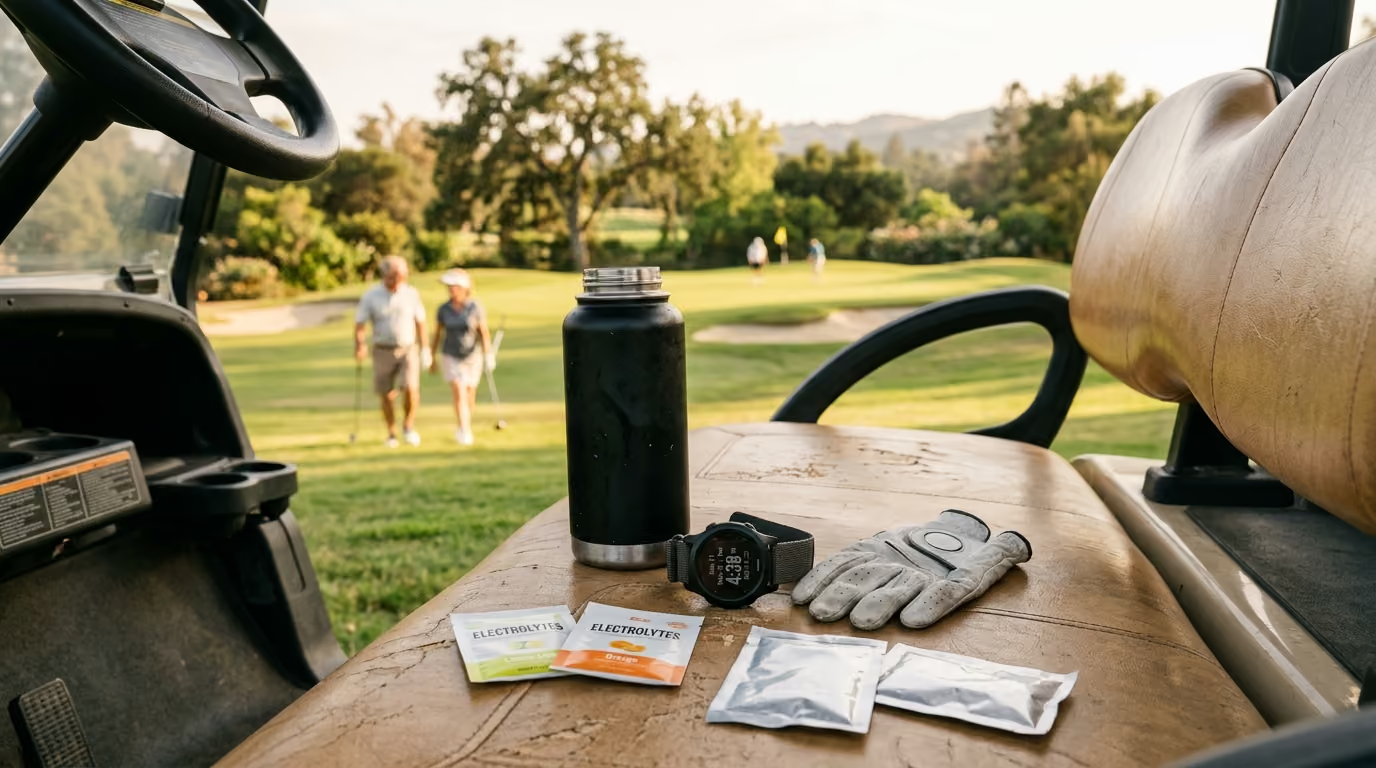

Back-nine fatigue and painful leg cramps often ruin a solid round of golf when your body runs low on vital fluids and minerals.




Proper hydration is the precise management of water and minerals in your body to maintain peak physical and mental performance over eighteen holes. It is not simply chugging a sports drink when you feel thirsty on the tenth tee, nor is it drinking gallons of plain water until you feel bloated. True fluid balance is a science that keeps your muscles firing, your mind sharp, and your score steady from the first swing to the final putt. This blueprint details the physical impact of fluid loss, the real cause of muscle cramps, and a step-by-step routine to keep your game strong.
To play your best golf, you must look at hydration as a core part of your strategy, just like club selection or course management. Many mature golfers accept back-nine fatigue as a normal part of getting older, but it is often just a physical reaction to poor fluid management. By understanding how your body uses water and sodium, you can prevent physical breakdowns, protect your joints, and keep your swings consistent. This guide provides a research-led approach tailored specifically for recreational players who want to maintain their physical edge for years to come.
We will examine the exact performance drops caused by minor water loss, clear up common myths about muscle cramps, and build a practical plan you can use this weekend. This is not about quick fixes or fancy supplements. Instead, it is about sustainable, daily habits that support healthy ageing and keep you pain-free on the course.
Many golfers believe they are perfectly fine until their mouth feels dry. However, sports science tells a very different story. Research reveals that a body mass loss of just 1.5 percent to 2 percent of water weight is the critical tipping point for performance. Once you pass this performance-hydration threshold, your motor skills and your ability to make smart decisions degrade rapidly.
The physical toll of mild dehydration is measurable and severe. A landmark study by Magee et al. (2016) showed that dehydrated golfers take an average of four more strokes per eighteen holes compared to when they are fully hydrated. The study tracked players shooting an average score of 75.7 when hydrated, which ballooned to 79.5 when dehydrated. Those four extra strokes are the direct result of muscle fatigue, poor coordination, and lapses in concentration.
Your iron play suffers immensely when your fluid levels drop. Research led by Smith et al. (2012) discovered that mild dehydration can nearly double your off-target iron accuracy. Golfers in the study went from an average of 4.1 meters off-target to a massive 7.9 meters off-target when dehydrated. Additionally, players experienced an average of 11 percent loss in total iron distance, turning a crisp seven-iron shot into a short, weak strike that misses the green.
Putting precision is equally vulnerable to fluid loss. The same research from Smith et al. (2012) showed a 7.5 percent decrease in putting accuracy under mild dehydration. When your body is low on water, your fine motor controls degrade, making it difficult to regulate putter face angle and speed. Those nagging three-putts on the back nine are often a direct symptom of dehydration rather than a flawed stroke.
Your brain suffers just as much as your muscles. Distance judgment is the first cognitive skill to fail when dehydration sets in. The brain relies on visual processing and mental calculations to estimate yardages accurately. Under mild dehydration, errors in judging distance to the pin increase six-fold, jumping from an average error of 4 meters to a staggering 9 meters. This leads to poor club selection, leaving you short of the green or flying over it.
To protect your performance, you can read more about preventing physical breakdowns on the course through systematic body preparation. Maintaining fluid balance is one of the easiest ways to shave strokes off your scorecard without changing your swing mechanics.
Imagine a typical Saturday morning round. You start the day strong, parring three of the first five holes. Your swing feels fluid, your tempo is smooth, and you feel completely in control of your game. By the time you reach the twelfth tee, the temperature has risen to eighty-five degrees, and a light sweat coats your skin. You feel slightly warm, but you do not feel particularly thirsty yet.
Suddenly, your tee shot on the thirteenth hole fades into the right rough. On the fourteenth green, you leave a fifteen-foot birdie putt four feet short, then miss the par putt on the high side. Your physical energy feels mostly fine, but your focus is slipping away. You find yourself standing over the ball longer, struggling to commit to a target, and feeling slightly irritable.
This frustrating experience is a classic case of cognitive dehydration. It is the point where your brain’s decision-making centers begin to fail long before your major muscle groups stop working. Because golf is a game of intense concentration, minor fluid loss strikes your brain first. Your ability to process visual cues, read greens, and control your emotions degrades when your brain lacks proper hydration.
By the sixteenth hole, your physical swing starts to break down. Your shoulder turn becomes short, your hip rotation stalls, and you start using your hands to force the clubhead through impact. You finish the round with three consecutive bogeys, wondering how a great start turned into a disappointing score. This back-nine collapse is entirely preventable when you learn to feed your body the fluids and minerals it needs before your brain sounds the alarm.
For decades, golfers and athletes were told that muscle cramps are caused by a simple loss of salt. The traditional theory claimed that sweating out sodium leaves muscles dry and irritated, causing them to lock up. While heavy sweating does play a role in overall fatigue, modern sports science has moved past this simple explanation.
The current scientific consensus centers on the Neuromuscular Fatigue Hypothesis. This concept, pioneered by Professor Martin Schwellnus, explains that Exercise-Associated Muscle Cramps (EAMC) are actually caused by a malfunction in your nervous system. When a muscle becomes fatigued, the signals sent between the muscle and your spinal cord become unbalanced. The spinal cord begins to send too many excitatory signals and not enough inhibitory signals, causing the muscle to contract uncontrollably.
This imbalance is particularly common in golf. The golf swing requires explosive, repetitive movements that put intense strain on specific muscle groups, like your calves, lower back, and trail hip. When these muscles get tired, their sensory receptors become hyperactive. If you do not have enough water and minerals to support normal nerve transmission, the nervous system cannot calm the muscle down, resulting in a painful cramp.
To lower your risk of these sudden spasms, you can learn about maintaining muscle mobility during long rounds. Keeping your muscles flexible and well-conditioned prevents them from reaching the point of extreme fatigue where cramps occur. Electrolytes are still vital because they support healthy nerve function, but the ultimate goal is preventing total muscle exhaustion.
To understand how this nervous system imbalance works, think of your muscles as having a gas pedal and a brake pedal. The sensory receptors that cause contractions are the gas pedal, and the receptors that cause relaxation are the brake pedal. When you walk several miles and swing a club dozens of times, the brake pedal becomes worn out. When the brake pedal fails, the gas pedal takes over, causing the muscle to lock up in a painful, continuous spasm.
Stretching helps relieve a cramp because it mechanically forces the muscle to lengthen. This mechanical lengthening sends a strong signal back to the spinal cord, forcing the nervous system to apply the brake pedal. While stretching can solve the immediate spasm, you must address the underlying fatigue and mineral loss to prevent the cramp from returning on the very next hole.
As we age, our bodies undergo physical changes that make hydration management much more challenging. Golfers over the age of forty must understand these changes to stay safe and play comfortably in warm weather. The natural mechanisms that protect younger players from heat stroke and dehydration become less efficient over time.
The first major change is a reduced thirst response. Research from the Cleveland Clinic shows that the brain's ability to sense dehydration decreases as we age. By the time a senior golfer feels the sensation of thirst, they may already be past the two percent hydration threshold. This makes relying on thirst a dangerous strategy, meaning older players must follow a strict, scheduled drinking plan regardless of how they feel.
Additionally, older adults typically have a lower percentage of water in their bodies. A young adult's body is composed of about sixty percent water, but this number can drop to fifty percent in older adults. This means senior golfers have a smaller reservoir of water to lose before hitting that critical performance-hydration threshold. A loss of just one pint of sweat can represent a much higher percentage of an older golfer's total body fluids.
The second major factor is medication. Many mature golfers take daily prescription medications for blood pressure, heart health, or joint pain. Common drugs like diuretics, beta-blockers, ACE inhibitors, and ARBs can significantly alter how your body handles heat and fluids. Diuretics force your kidneys to excrete more water and sodium, raising your baseline dehydration risk before you even arrive at the course.
Beta-blockers can limit your heart rate response, which is your body's primary way of cooling itself down in hot weather. When your heart cannot pump blood to the skin rapidly, your body heat rises, increasing the risk of heat exhaustion. If you take any of these medications, you must discuss your golf routine with your doctor and make sure you are actively replacing fluids and minerals throughout your round.
Furthermore, aging kidneys are less efficient at conserving water when fluid intake is low. They require more water to flush out waste products, which can lead to faster dehydration during physical activity. When you combine reduced kidney efficiency, a dampened thirst reflex, and daily medications, you can see why senior golfers must take hydration planning seriously to protect their physical longevity.
If you find yourself on the fourteenth green with a fuzzy brain, tight calves, and a rising sense of fatigue, you need immediate action. You cannot magically reverse miles of dehydration in five minutes, but you can take steps to stabilize your physical state and save your round.
First, focus entirely on turning your trail hip. When you are fatigued, your body tends to stop rotating, which forces your arms to do all the work and causes wild shots. By simplifying your swing thought to one single movement, such as making sure you turn your trail hip completely back, you reduce the mental energy required to hit a solid shot. This simple physical focus keeps your swing on track even when your brain feels tired.
Next, seek out immediate physical cooling. Grab a damp, cool towel from your cart and place it directly onto the back of your neck. The back of the neck contains major blood vessels that sit close to the skin, and cooling this area sends signals to your brain that help lower your perceived body temperature. Sip small amounts of cold water mixed with an electrolyte packet, rather than gulping down a massive amount of plain water.
Finally, maximize your time in the shade. Whenever you are waiting for your playing partners to hit, stand under a tree or pull your cart canopy over your head. Avoiding direct sunlight for just two minutes between shots can lower your core temperature and give your nervous system a chance to calm down. These quick actions can help you crawl back from the edge of fatigue and finish your round with dignity.
Another useful trick is to swish cold water or an electrolyte drink in your mouth before swallowing. Sensory receptors in your mouth tell your brain that fluids are on the way, which can instantly reduce the perception of fatigue. This trick does not replace the physical need for water, but it can buy you valuable time and improve your mental clarity before a crucial shot.
The key to preventing performance drops is a consistent, structured plan. The Pre-During-Post (PDP) Protocol is a highly researched framework that manages your fluid levels before, during, and after your round. By dividing your day into distinct phases, you can make sure your body always has what it needs to perform.
Your hydration routine should begin long before you arrive at the first tee. Two to four hours before your tee time, drink sixteen to twenty ounces of water mixed with a high-quality electrolyte packet containing sodium and potassium. This early intake gives your kidneys time to process the water and balance your blood sodium levels. Fifteen minutes before you walk to the driving range, drink another eight to ten ounces of fluid to prime your stomach and prepare your body for the physical exertion ahead.
To make sure you are properly primed, check your urine color before leaving home. It should look like pale lemonade. If it is dark, like apple juice, you are starting the day in a fluid deficit and must drink another eight ounces of electrolyte water immediately.
Once you are on the course, consistency is your priority. Instead of drinking large amounts of water every few holes, take small, compensatory sips every fifteen to twenty minutes. This equates to drinking four to eight ounces of fluid on every single hole, which should add up to roughly fifteen to twenty-five ounces of fluid per nine holes.
At the turn, after the ninth hole, drink sixteen ounces of water mixed with five hundred milligrams of sodium to replace the salt you lost through sweat on the front nine. This is a critical transition point. Many golfers make the mistake of buying a hot dog and a sugary soda at the turn, which can cause a rapid blood sugar spike followed by a massive energy crash on the tenth fairway.
The work is not done when you shake hands on the eighteenth green. To speed up your physical recovery and prevent next-day stiffness, you must replace the fluids you lost during play. Weigh yourself before and after your round to find your true fluid loss.
The general rule is to drink twenty-four ounces of fluid for every pound of body weight lost, which represents one hundred and fifty percent of your overall fluid deficit. This extra fifty percent accounts for the water you will continue to lose through urination and breathing after your round. For more tips on structured physical recovery, you can read our guide on recovering quickly after 18 holes.
Even experienced golfers who care about their health often fall into common traps. These mistakes can ruin your performance and even put your physical health at risk on hot days.
The most common mistake is drinking massive quantities of plain water without any electrolytes. When you sweat, you lose both water and vital minerals, primarily sodium. If you replace that sweat with only plain water, you dilute the sodium remaining in your bloodstream.
This condition is called hyponatremia, and it leads to headaches, muscle weakness, confusion, and worsened cramping. It can also cause cellular swelling, as water rushes into your cells to balance the sodium concentration. Always mix an electrolyte packet into your water when playing in temperatures above eighty degrees to maintain the proper concentration of blood sodium.
As we discussed, thirst is a lagging indicator of dehydration. Your body only sends thirst signals after you have already lost a significant portion of your fluid levels. If you wait until you feel thirsty to start drinking, your physical coordination and your distance judgment have already degraded. You must stick to a strict, time-based drinking schedule regardless of whether you feel thirsty.
Try setting a silent vibration alarm on your smartwatch for every fifteen minutes. When it buzzes, take two large swallows of water, even if you feel perfectly hydrated. This simple habit keeps your fluid intake ahead of your sweat rate and prevents the sudden onset of back-nine fatigue.
Many golfers enjoy a cold beer or a large cup of coffee during their round. While these beverages are classic parts of the social golf experience, both alcohol and caffeine act as diuretics. They trigger your kidneys to release more water, speeding up dehydration and making it harder for your body to regulate its temperature.
If you choose to enjoy these drinks, you must double your intake of water and sodium to offset their dehydrating effects. For every alcoholic drink or cup of coffee you consume, drink an additional twelve ounces of water mixed with electrolytes. This simple rule of balance allows you to enjoy your day without destroying your physical recovery.
Your physical equipment plays a major role in how much water and salt you lose on the course. By making smart choices with your gear, you can keep your body cooler and reduce your overall sweat rate.
First, invest in a double-walled, stainless steel water flask. Plastic bottles allow water to warm up quickly in the sun, and warm water is absorbed slower by your stomach than cool water. Keeping your fluids cold makes them much more refreshing to drink, which naturally encourages you to sip more frequently throughout the round. Cold water also helps lower your core body temperature from the inside out, providing a physical cooling effect that can protect you from heat exhaustion.
Second, wear a high-quality, wide-brimmed sun hat made of breathable material. Traditional baseball caps trap heat on the top of your head, which raises your core temperature and increases sweat production. A wide-brimmed hat shades your face, neck, and ears, significantly reducing your direct sun exposure and keeping your overall body cooler.
Look for hats with built-in mesh ventilation panels. These panels allow heat to escape from the top of your head while still blocking harmful ultraviolet rays. Shading your eyes also reduces squinting, which can help prevent tension headaches and eye strain over a long round of golf.
Finally, pay attention to your golf shoes and grips. When your body is dehydrated, your muscles become more prone to cramping and strain. Wearing highly stable golf shoes with proper arch support prevents your feet and calves from working too hard to maintain balance during your swing.
If your feet have to claw the ground because of poor shoe traction, your calves will fatigue quickly, making them highly susceptible to painful cramps. If you want to build a stronger physical foundation, check out our resources on golf strength and joint protection to keep your muscles strong and resilient.
Additionally, make sure your club grips are clean and tacky. Slippery grips force you to squeeze the club tighter, which fatigues the muscles in your forearms and hands. This increased tension can travel up your arms and into your shoulders, causing tightness that ruins your swing path and accelerates overall physical exhaustion.
If you are playing in temperatures above eighty-five degrees, you should aim for one thousand to one thousand two hundred milligrams of sodium per eighteen-hole round. If you are a salty sweater who finishes the day with white salt streaks on your hat or skin, you may need up to one thousand milligrams of sodium per hour of play in extreme heat.
Most commercial sports drinks are very high in sugar and relatively low in sodium. While they provide some fluid, the high sugar content can cause a quick spike and crash in your energy levels. It is much better to use specialized electrolyte powders that contain higher amounts of sodium and potassium with minimal added sugar.
If you take prescription drugs for high blood pressure, heart issues, or water retention, you should consult your doctor. Medications like beta-blockers and diuretics actively change how your body processes water and manages heat. Your doctor can help you adjust your daily fluid targets to keep you safe on the course.
Yes, drinking excessive amounts of plain water without replacing sodium can lead to hyponatremia. This condition dilutes your blood sodium levels, which can cause dizziness, headaches, confusion, and severe muscle cramps. Always make sure to balance your water intake with proper electrolyte replacement.
Keep your fluid levels topped up on every single tee box to protect your brain, your swing, and your scorecard.
Follow Golfergy for practical insights on performance, mobility, recovery and healthy ageing. Stay connected for new articles, research-led guidance and ideas to help you play better for longer.


Explore practical resources on performance, recovery, mobility and golf longevity.
Read the Blog