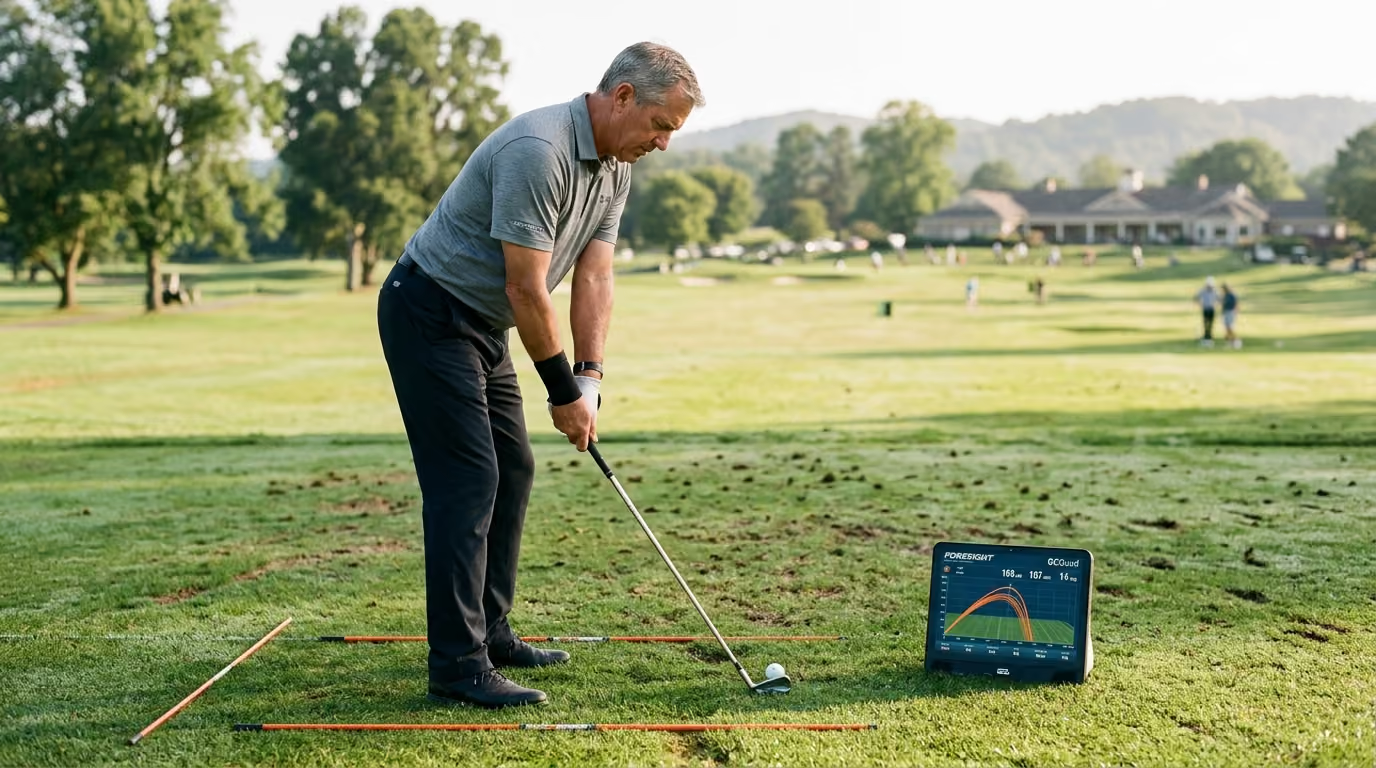

Hitting dozens of rapid-fire range balls often exhausts your joints and breaks down your swing mechanics without building lasting golf skills.




Many golfers believe that hitting hundreds of balls is the only way to build a consistent swing. We see younger players on the range swinging hard for hours. We assume we must match their work ethic to keep playing well. This is a mistake.
Unstructured, high-volume practice is often the fastest way to ruin your swing and damage your joints. For mature golfers, beating balls without a plan causes unnecessary physical stress. It leads to chronic pain and keeps you off the golf course.
A better path exists. You can improve your skills and protect your body at the same time. This guide presents an evidence-informed system designed for your joints. It helps you get more value from fewer swings so you can enjoy this game for decades.
Imagine arriving at the driving range on a warm Tuesday afternoon. You buy a large bucket of one hundred golf balls. You carry it to a hitting mat, pull out your seven-iron, and begin.
You hit the first ten shots quickly. The ball flight is decent, so you keep swinging. By shot forty, you feel a dull ache in your lower back. By shot seventy, your lead wrist is tender, and your swings are getting shorter.
You keep hitting because you want to finish the bucket. This is the trap of "beating balls." It is a practice style defined by rapid swings with no clear goal.
You use the same club to hit the same target over and over. You do not step away between shots. You do not use a pre-shot routine.
This habit relies on sheer volume to build confidence. It creates a false sense of progress during the session. However, it fails to produce lasting skills on the course.
When your body gets tired, you make subtle, harmful adjustments to keep making contact. These compensations put extra stress on your tissues. What feels like a technical breakthrough is often just a tired body trying to protect itself.
Golf is often viewed as a low-impact sport. However, biomechanical studies show that the swing puts significant force on the human body.
Research shows that peak compressive loads on the lower back can exceed six times your body weight during the downswing.
Shear forces on the spine also rise during the follow-through. These values are not dangerous for a few well-executed swings. They become a problem when they are repeated dozens of times without rest.
Most golf injuries do not happen from a single bad swing. A systematic review of golf injuries shows that over eighty percent of injuries are overuse-related.
A study from the United Kingdom found an injury rate of over forty injuries per one thousand hours of golf. The lower back was the most common site of pain, followed by the shoulder, elbow, and wrist. These issues accumulate slowly over weeks of unstructured practice.
To protect your body, you must understand the relationship between physical demand and tissue capacity.
Injury risk rises when physical demand repeatedly exceeds your tissue capacity. This is especially true when you do not give your body enough time to recover.
Aging naturally changes how our tissues respond to physical work. Research on tendon aging shows a reduction in tendon strength and flexibility over time.
Muscle recovery can also become slower as we age. This does not mean mature golfers are fragile. Older adults can improve their strength and range of motion with smart training. However, it means that indiscriminate repetition carries a much higher physical cost.
When you get tired, your brain changes how it coordinates your muscles. A golf-specific fatigue study found that physical fatigue reduces swing speed by about two percent.
The study also showed that golfers change their movement patterns to keep hitting the ball straight. You might still hit a decent shot, but your body is using a different strategy.
You might slide your hips instead of rotating them. You might use your wrists to scoop the ball. These changes increase the stress on your joints.
If you keep practicing when you are tired, you train your brain to use these harmful compensations. You are not building a better swing. You are teaching your body a dangerous movement pattern.
The solution to joint strain is not to stop practicing. The solution is to transition to high-intent, low-volume practice.
High intent means every swing has a specific purpose and a clear plan. You are not just trying to make contact with the ball. Before every swing, you must answer several questions:
High intent does not mean swinging with maximum effort. You can have high intent while swinging at fifty percent speed. The goal is complete mental focus and physical control.
Low volume means reducing the number of full-speed swings in a session. Instead of hitting one hundred balls, you might hit forty.
You replace the missing swings with slow rehearsals, balance drills, and mental preparation. This approach reduces the cumulative load on your spine and joints. It keeps you fresh for your next round on the course.
To implement this framework, follow these steps during every practice session.
Before you touch a club, assess your physical state. Use a simple green, yellow, and red scale.
Never practice without a clear goal. Write your goal on an index card before you leave home.
Your goal should be specific. Avoid vague ideas like "working on my swing." Instead, choose a goal like "controlling my start line with an eight-iron."
This rule prevents rapid fire swinging. Place your bucket of balls five feet away from your hitting mat. This physical distance forces you to walk and reset before every shot.
Stand behind the ball. Pick a target on the range, such as a distance marker or a flag. Decide on the trajectory and shape of your shot.
Take one slow rehearsal swing to feel the movement. Step up to the ball, align your body, and swing.
After the shot, watch the ball until it stops. Note one piece of useful feedback, such as where the ball struck the clubface. Step away from the mat and rest for thirty seconds before hitting the next ball.
This process shifts your practice from physical repetition to active learning. It increases the time between swings, which allows your heart rate to settle and your joints to rest.
If you want to protect your joints, learning proper movement patterns is critical. You can learn more about managing physical stress by reviewing our guide on injury prevention.
If you are on the driving range and your joints start to ache, you need an immediate change. Do not try to finish your bucket of balls. Stop your current routine and use the "Three-Quarter Reset" drill.
Put away your driver and long irons. Take out your pitching wedge or nine-iron.
Find a target on the range that is only eighty yards away. This short distance removes the urge to swing hard.
Make five slow rehearsal swings without a ball. Focus entirely on turning your trail hip smoothly on the backswing. Keep your arms relaxed and your grip pressure light.
Now, place a ball on the turf. Hit five shots to your eighty-yard target using only fifty percent of your normal speed.
Focus on holding your finish position in perfect balance for three seconds. Your chest should face the target, and your weight should be on your lead foot.
This drill lowers the mechanical demand on your spine, shoulders, and wrists. It restores your rhythm and coordination without putting high force through your joints. It helps your nervous system find a comfortable movement pattern.
If your joints feel better after these soft shots, you may continue your practice with light mid-irons. If the stiffness or pain remains, pack up your clubs. Leaving the range early is a sign of discipline, not weakness.
Many golfers hold onto old habits that damage their joints. Recognizing these common errors is the first step toward pain-free golf.
Many players think a long session is always better than a short one. This is incorrect.
Motor-learning research shows that high-volume, repetitive practice can actually slow down your learning. Your brain stops paying attention when you do the same movement over and over.
Varying your practice improves your ability to perform on the golf course. Beating one hundred identical iron shots only teaches you how to hit shots on a range mat.
A dynamic warm-up prepares your muscles and joints for movement. It can improve your performance and make your swing feel smoother.
However, a warm-up does not protect you from the wear of excessive practice. Warm-up research shows mixed results regarding injury prevention. It is not a shield against overuse.
Many older golfers spend ten minutes holding deep stretches before they hit balls. They stretch their hamstrings and lower back while standing still.
Research shows that holding static stretches before exercise can reduce muscle power. It can also decrease joint stability during high-speed movements.
Instead, use dynamic movements to prepare your body. Save the deep, static stretching for after your session.
Some golfers believe they can swing through minor discomfort. They assume the pain will go away once they get warm.
Pain is a warning signal from your nervous system. Working through pain forces your body to create bad movement habits to protect the sore area. These habits can lead to chronic injuries.
Golfers with mild knee or hip issues often ride in a cart to protect their joints. However, research shows that walking can be highly beneficial for arthritic joints.
A study of golfers with knee osteoarthritis found that walking eighteen holes did not cause a meaningful increase in pain. It also provided great cardiovascular benefits. Use a cart during painful flare-ups, but walk when your joints allow it.
Copying a modern professional swing can overload your tissues. Professional golfers have extreme levels of flexibility and strength. They also spend hours in the gym preparing their bodies.
Mature golfers need a swing that fits their own mobility. Focus on a swing that feels comfortable and repeatable. Check out our resources on golf performance to learn how to optimize your unique movement patterns.
If your joints hurt for more than two hours after practice, your session was too intense. This is a classic sign of tissue overloading.
Always adjust your next session based on this feedback. Reduce your volume or speed until you can practice without lingering pain.
Some golfers think playing golf is enough to stay fit. This is incorrect.
Older adults lose muscle mass and tendon strength without resistance training. A simple strength routine builds the capacity to handle swing forces. You can learn how to build dynamic power in our section on strength.
Your equipment has a direct impact on joint stress. Making small changes to your gear can protect your body.
Heavy, stiff steel shafts require more effort to swing. They transfer more vibration to your hands, wrists, and elbows.
Mature golfers should consider lighter graphite shafts. Graphite absorbs shock much better than steel.
Choosing a softer shaft flex can also help. A regular or senior flex shaft allows the club to bend more during the swing. This reduces the need for aggressive muscle force to launch the ball.
Small, worn-out grips force you to squeeze the club tightly. This grip tension spreads up your arms to your neck.
High grip pressure can contribute to elbow and wrist pain. Consider using midsize or jumbo grips. Larger grips allow you to hold the club with less hand tension.
Soft, tacky materials also absorb impact forces at contact. Replace your grips once a year to maintain a secure, relaxed hold.
Your feet are your connection to the ground. Rigid, heavy shoes with long spikes can lock your feet in place.
This restriction puts extra twisting stress on your knees and hips. Spikeless shoes with flexible soles allow for natural foot movement.
If you have flat feet, custom orthotics can improve your balance. Better balance reduces the need for sudden, violent movements during your downswing.
Whenever possible, practice on real grass. Synthetic range mats are often laid over hard concrete.
If you hit a shot slightly fat on a mat, the club bounces violently. This impact shock travels directly into your wrists, elbows, and shoulders.
Grass is much more forgiving on mis-hits. If you must use mats, look for high-quality, thick turf systems that allow the clubhead to pass through.
You do not need hours on the range to improve. A forty-five-minute session with high intent is highly effective. Here is how to structure your time.
Begin with easy walking to increase your heart rate. Perform gentle joint rotations for your neck, shoulders, and hips.
Use dynamic stretches like arm circles and torso twists. Do not hold static stretches. Complete ten slow rehearsal swings without a ball to check your balance.
Start with a wedge and hit five soft pitch shots. Focus on clean contact and a smooth tempo.
Transition to your eight-iron. Hit five half-swings, focusing entirely on turning your trail hip. Finish with five three-quarter swings at moderate speed.
This block is for practicing your movement goal. Hit ten shots with a mid-iron.
Apply the "One Ball, One Decision" rule before every swing. If your goal is holding your finish, focus entirely on that sensation. Do not worry about minor errors in ball flight during this block.
This block simulates a real round of golf. Change your club and your target after every single shot.
Hit a driver toward a narrow fairway. Then, hit an eight-iron to a distant flag. Finish with a wedge shot to a short target.
This variety keeps your mind engaged and reduces repetitive physical strain.
Hit three final shots at your normal playing speed. Choose a comfortable club like a nine-iron.
After the last shot, record your thoughts in a notebook. Write down what worked well and what felt comfortable. Check your body for any signs of joint stiffness or pain.
Maintaining your physical health between sessions is just as important as how you practice. To learn how to recover quickly after a tough day on the range, read our guide on recovery.
Every golfer has a unique body. You must adapt your practice design to your specific physical state.
If you have not played for several months, do not start with a full range session. Your tissues are not prepared for high rotational speeds.
Start with a fifteen-minute session focused on short chips and pitches. Gradually increase your session duration by five minutes each week.
Avoid hitting drivers for the first two weeks. Focus on building clean contact with your short irons first. This progressive loading allows your tendons to adapt safely.
If you have joint arthritis, movement is still your best friend. Physical activity keeps your joints lubricated and strong.
However, you must respect your body's limits. Shorten your swing to reduce the range of motion in your hips and knees. Use a slightly wider stance to improve your stability.
Practice on grass to avoid the harsh impacts of hard range mats. Use the two-hour response rule to guide your practice volume.
As we age, losing distance is common and frustrating. Many golfers respond by swinging harder and hitting more balls.
This approach is a recipe for injury. Instead, focus on improving your strike quality and launch efficiency.
A solid strike on the center of the face produces more distance than a faster, off-center hit. If you want to increase your physical capacity, do so off the range.
A structured strength program is the safest way to rebuild your speed. You can find excellent routines in our mobility section and healthy ageing section.
The secret to playing better golf for longer is simple. Stop measuring your practice by the number of balls in your basket. Measure your practice by the clarity of your intent and the health of your joints.
Your golf longevity does not require you to avoid the driving range. It simply requires you to make every single swing count.
Follow Golfergy for practical insights on performance, mobility, recovery and healthy ageing. Stay connected for new articles, research-led guidance and ideas to help you play better for longer.


Explore practical resources on performance, recovery, mobility and golf longevity.
Read the Blog


