
Pain-free rounds on the course become achievable by adjusting your swing mechanics and protecting vulnerable joints against long-term rotational stress.




This playbook is a structured guide for managing long-term joint wear on the golf course. It is not a quick medical fix. It is not an invitation to push through sharp pain. Instead, it is a detailed look at how you can adapt your game as your body changes.
Many mature players believe that joint stiffness means their golfing days are numbered. That is simply not true. By understanding how your joints handle the physical stress of the swing, you can play pain-free for decades. This guide shows you how to protect your body while keeping your scorecard respectable.
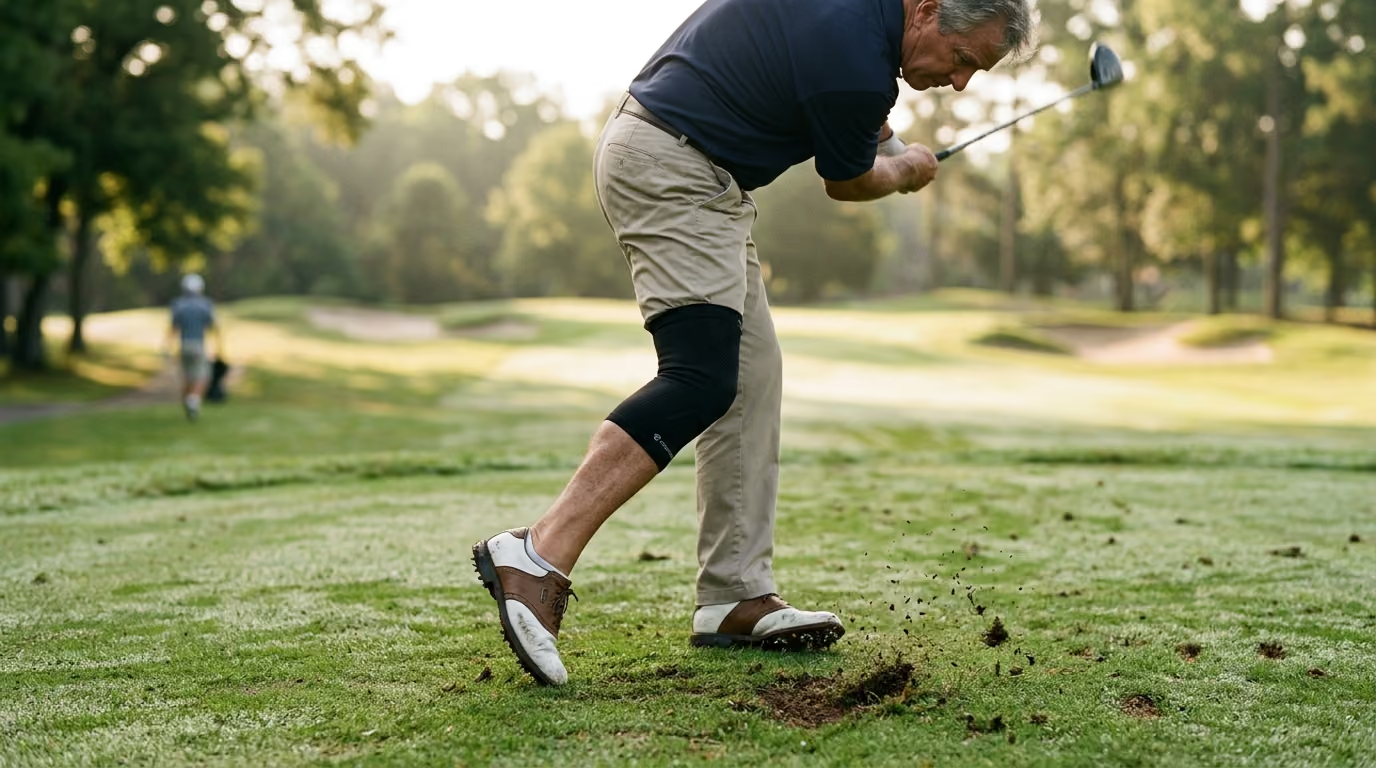
Imagine standing on the fourteenth tee box on a chilly autumn morning. Your lead knee feels stiff and throbs with a dull, nagging ache. You try to swing hard over the water hazard anyway.
The impact of the club on the turf sends a sharp jolt straight up your lead leg. Your ball splashes short of the fairway. Your knee throbs for the next four holes, ruining your focus and your scorecard.
This scenario is common for players managing joint wear. It is the moment where physical limitations collide with the demands of the sport. However, this painful moment is completely avoidable. With the right adjustments, you can swing without fear of a flare-up.
Osteoarthritis is a gradual wearing away of the protective cartilage that cushions your bones. It is a slow process of structural shift, not a sudden tear. Think of it as the tread on a car tire wearing down over thousands of miles.
In golf, this condition is often classified as degenerative joint disease. It most frequently targets the joints that handle the most twisting and weight-bearing forces. These areas include your knees, your hips, your shoulders, and your lower spine.
Unlike a pulled muscle or a sprained ligament, this type of wear does not heal with a few days of rest. It requires continuous management and smart physical adjustments.
Research published in the Journal of the Association of Physicians of Kenya found that knee osteoarthritis affects about 18 percent of active golfers. This rate matches high-impact sports like soccer.
The physical stress of golf is often underestimated. The swing requires rapid rotation under load. When cartilage is thin, these rotational forces press bone against bone.
This mechanical friction causes inflammation, swelling, and stiffness. It is why you feel stiff on the first few holes of the morning. It also explains why you feel sore the day after a long round.
Understanding this condition helps you shift your mindset. You cannot cure joint wear, but you can change how your body moves. Managing this issue is about protecting your remaining cartilage.
The golf swing is a highly repetitive movement that places unique rotational demands on your skeletal system. It requires your body to transfer energy from the ground up through your joints. If one joint is stiff, the next joint in line must work twice as hard.
Your lower back is especially vulnerable to this compensation. Clinical studies show that lower back pain is the most common issue for golfers. It accounts for 24 to 34 percent of all golf-related health complaints.
There is a powerful link between your hips and your lower spine. Research reveals a high correlation of 0.81 between lumbar spine rotation and hip mobility.
Your hip is a ball-and-socket joint designed to rotate in all directions. Your lower spine is made of joints that are designed mostly to bend forward and backward.
When your hips lose their natural rotation because of joint wear, your lower back tries to twist to make up the difference. This forced twisting places extreme shear stress on your spinal discs. It accelerates wear in your lumbar joints.
The lead knee also endures massive stress during the downswing. As you shift your weight toward the target, the lead knee must absorb several times your body weight.
If your stance is too narrow, your weight shifts forward too quickly. This shift increases peak knee pressure. That pressure is a primary driver of joint wear on the inner side of your knee.
By understanding these forces, you can see why traditional swing advice can be harmful. Trying to keep your hips completely quiet while turning your shoulders is a recipe for back pain. Your joints need a swing style that distributes these forces evenly.
You do not need to give up your swing to protect your joints. You simply need to adopt a joint-sparing swing style. This style uses simple adjustments to reduce the twist and pressure on your body.
These modifications can lower the rotation in your lower spine by over 18 percent. They can also reduce the stress on your lead knee by nearly 40 percent.
[Phase 1: Address] ---> Wide stance & flared lead foot (15 to 30 degrees)
|
v
[Phase 2: Backswing] --> Shortened path (hands stop at "3 o'clock")
|
v
[Phase 3: Release] ----> Lift lead heel & finish with a vertical spine
Start by making your setup more compliant. Place your feet slightly wider than shoulder-width apart to create a stable base.
Turn your lead foot outward by 15 to 30 degrees toward the target. This simple flare pre-rotates your lead hip.
Flaring your foot reduces the twisting force on your lead knee during the downswing. It also gives your lead hip an easier path to turn through. You will feel much less pressure in your lower leg at impact.
Next, shorten your backswing path. Do not try to force the club parallel to the ground at the top of your swing.
Instead, let your hands stop when they reach the 3 o'clock position. Focus entirely on turning your trail hip back smoothly.
This shorter swing path keeps your shoulders and hips moving together. It prevents your upper body from twisting independently of your pelvis. This coiling separation is what causes deep wear in your spinal joints.
Finally, adjust your follow-through to protect your lower back. Allow your lead heel to lift slightly off the turf during your backswing.
As you swing through the ball, let your body turn completely toward the target. Finish with your chest high and your spine in a vertical line.
Avoid the classic banana-shaped finish where your back arches backward. A straight, upright finish keeps your spinal joints in a safe, neutral position. It lets the energy of the swing dissipate naturally.
When joint wear flares up, you must change your approach to the game. You cannot use your standard practice routine when a joint is swollen and hot. During these times, you must work within your relative capacity.
Relative capacity means your physical budget is smaller than usual. If you try to spend more energy than your budget allows, you will cause further joint damage. Your goal is to keep your physical load below your temporary threshold.
This is where incorporating smart habits for injury prevention is key to staying on the course. You must learn to listen to your body's warning signs.
The first rule of flare-up management is the tee-only rule. When your joints are sore, use a tee peg for every single shot you play. This includes shots from the fairway and the rough.
Teeing up the ball eliminates the risk of hitting the ground hard. When a club strikes the turf, it stops suddenly. This sudden stop sends a violent shock wave up the club shaft.
This vibration travels directly into your wrists, elbows, and shoulders. By using a tee, you sweep the ball cleanly off the wood. You avoid the jarring impact that triggers joint swelling.
If you feel a joint start to ache mid-round, use a simple quick fix. Stand taller at address to take pressure off your hips and knees.
Take one extra club and swing at half speed. Focus entirely on turning your trail hip smoothly. This slower tempo reduces the torque on your joints while keeping your ball in play.
Returning to the course after a bad flare-up requires a structured approach. You should not go from the couch straight to the first tee. Instead, use a graded return-to-play program to prepare your joints.
This schedule allows your cartilage and muscles to adapt to the stress of the swing. It prevents the cycle of re-injury that keeps many golfers sidelined.
Stage 1-2: Putting and chipping (15 mins) | Half-swings with 7-iron off a tee
|
v
Stage 3-4: Short irons (9-iron to 8-iron) | Transition to hitting off grass
|
v
Stage 5-6: Long irons and hybrids | Driver at 75% effort
|
v
Stage 7-9: 9-hole rounds on flat terrain | Progress to full 18-hole play
Start with putting and short chipping on the practice green. Limit your session to fifteen minutes on the first day.
Focus on keeping your lower body still and quiet. After a few days of pain-free putting, try hitting short half-swings with a 7-iron.
Always hit these shots off a tee peg. This low-impact work stimulates blood flow without stressing your joints.
Move up to full swings with your short irons, such as an 8-iron or 9-iron. Continue to use a tee peg for most of your shots.
As your confidence grows, try hitting a few shots directly off clean grass. Avoid taking deep divots.
Listen closely to how your lead knee and hip feel during rotation. If you feel any sharp discomfort, stop immediately and rest.
Introduce your longer clubs, including your hybrids and fairway woods. You can also begin hitting your driver at three-quarter speed.
Focus entirely on turning your trail hip smoothly. Keep your weight balanced throughout the swing.
Do not try to hit the ball with maximum power. Smooth tempo is your best tool for reducing joint stress.
Begin playing short, nine-hole rounds on a relatively flat course. Use a golf cart to reduce the stress of walking.
Avoid playing from deep rough or steep greenside bunkers. These lies require awkward postures that strain your joints.
Once you can play nine holes without pain, you can return to full rounds. Always take at least one full day of rest between your playing sessions.
To keep playing golf for years, you must build sustainable physical habits. Managing joint wear is not a temporary task. It is a daily commitment to maintaining your physical health.
Many players fall into the trap of using complete rest to treat joint stiffness. This is a mistake. Total inactivity causes your muscles to shrink and your joints to tighten.
Instead, focus on active recovery. Light movement keeps your joints lubricated. It helps pump vital nutrients into your cartilage.
Developing a smart routine for your recovery sessions is a great way to protect your body. This active approach keeps your muscles strong enough to support your joints.
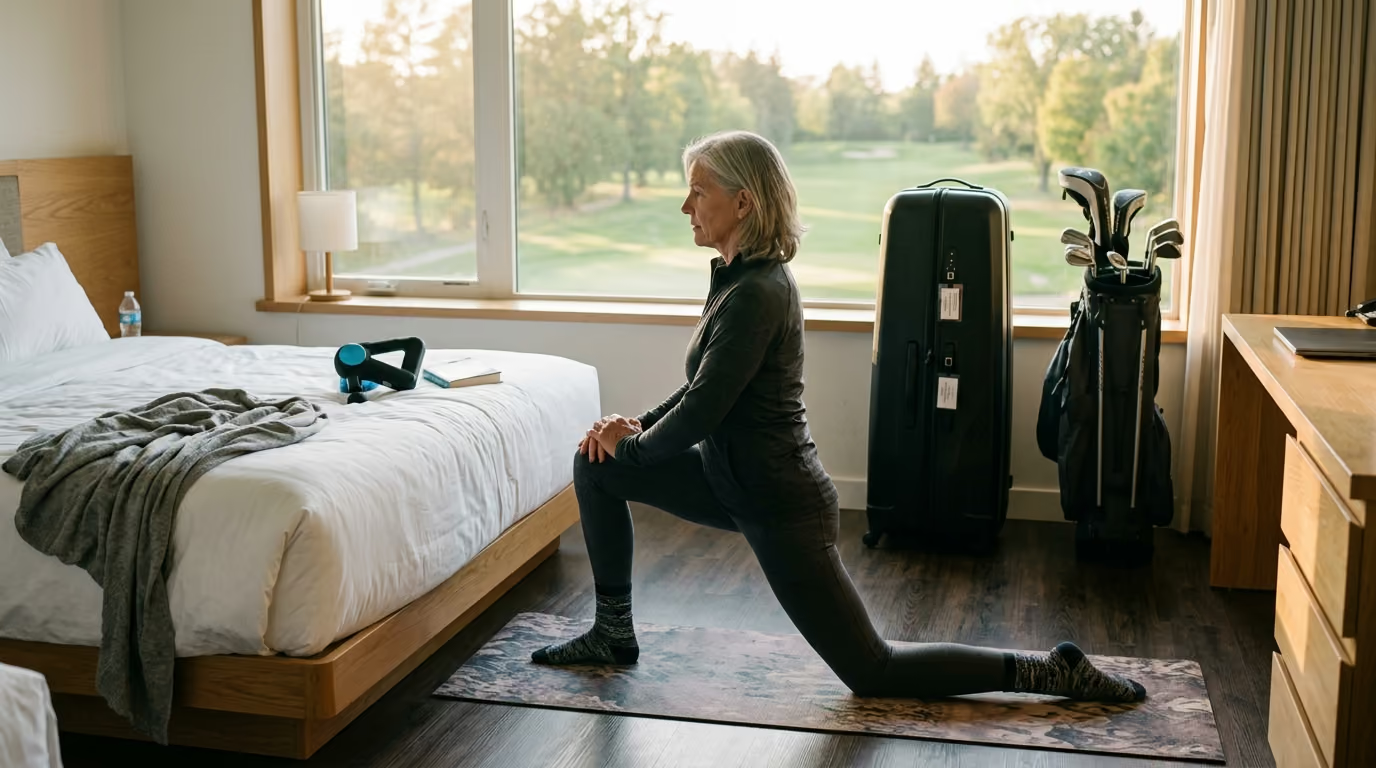
To build a healthy routine, try this simple daily exercise to improve your hip mobility. Lie flat on your back on a comfortable mat. Bend your knees and place your feet flat on the floor, slightly wider than hip-width.
Slowly lower both knees to the left side as far as comfortable. Return to the center, then lower them to the right.
Focus entirely on turning your trail hip through its natural range of motion. Do this movement ten times on each side every morning.
This gentle stretch keeps your hip joints loose. It helps prevent your lower back from taking on too much rotation during your swing.
You can find more ideas for daily movement on the Golfergy website. These simple habits are a cornerstone of healthy playing years.
Your equipment has a major impact on how much vibration reaches your joints. Using the wrong gear can worsen joint wear. The right equipment acts as a shock absorber for your body.
Making smart gear choices is a great way to support your joints. This physical protection is a key part of healthy ageing for active golfers.
[Steel Shafts] -------------> High vibration, hard on elbows & shoulders
[Graphite Shafts] ----------> Absorbs shock, gentler on joints
[High-Compression Ball] ----> Hard feel, transmits force to hands
[Low-Compression Ball] -----> Soft feel, dampens impact shock
[Long Irons] ---------------> Narrow sole, digs into turf
[Hybrids] ------------------> Wide sole, slides across grass
The first change to make is switching from steel to graphite shafts in your irons. Steel shafts are very stiff and transmit high-frequency vibrations up the club.
Graphite is a dampening material that absorbs these vibrations before they reach your hands. This change relieves stress on your fingers, wrists, elbows, and shoulders. You will feel much less joint fatigue after a practice session.
Next, change your golf ball. Switch to a low-compression ball with a rating of 90 or lower.
These softer balls compress easily when struck by the club. This compression softens the feel of the impact.
A soft ball reduces the peak force transmitted through your joints. It helps you maintain a smooth swing without the fear of a jarring impact.
Swap your hard-to-hit long irons for modern hybrid clubs. Long irons have narrow soles that can easily dig into the turf.
This digging action stops the club suddenly, which strains your wrists and shoulders. Hybrids have wide, rounded soles that slide across the grass.
They are much more forgiving when you hit the shot slightly fat. This sliding design keeps your club moving and protects your joints from sudden stops.
Finally, look at your grips. Install oversized or padded grips on all your clubs.
You can also ask your club fitter to wrap extra layers of athletic tape under your grips. Thicker grips prevent you from squeezing the club too tightly.
A lighter grip pressure relaxes your forearm muscles. It reduces the strain on your delicate finger and wrist joints.
Many golfers make simple errors when trying to manage their joint pain. These mistakes often stem from outdated advice or a misunderstanding of how joint wear works.
By avoiding these pitfalls, you can protect your body and stay on the course. Here are three common errors to watch out for.
You can certainly walk if the course is flat and your joint pain is low. Walking is a wonderful way to keep your joints loose and your muscles active.
However, if the course is hilly or you are experiencing a mild flare-up, use a cart. Walking up steep slopes places extreme pressure on your knees and hips.
Using a cart lets you save your physical energy for your swing. It helps you stay within your relative capacity for the day.
Cold temperatures do not cause joint wear, but they can make your symptoms feel worse. Cold weather reduces the blood flow to your joints, which can make your muscles and ligaments stiffer.
The fluid inside your joints also becomes thicker in the cold. This change can lead to increased friction and discomfort during your swing.
To combat this, dress in warm layers and use hand warmers. Spend ten minutes warming up your body before you head to the first tee.
The choice between heat and ice depends on how your joints feel after playing. If your joints feel stiff and achy, use moist heat to relax your muscles and improve blood flow.
If your joints are swollen, warm, or painful to the touch, use ice. Ice helps reduce inflammation and numbs the painful area.
Apply ice wrapped in a thin towel for fifteen minutes at a time. This simple treatment can speed up your recovery after a long day on the course.
Using over-the-counter pain relievers can help manage occasional joint discomfort. However, you should not use them to mask sharp pain so you can swing harder.
Masking pain can lead to overexertion and cause more joint damage. Use these medications to stay comfortable, not to push past your physical limits.
Always speak with your doctor about the safest way to manage your pain. They can help you build a safe plan for your playing years.
Your playing years are defined by how well you move, not by how hard you swing.
Follow Golfergy for practical insights on performance, mobility, recovery and healthy ageing. Stay connected for new articles, research-led guidance and ideas to help you play better for longer.


Explore practical resources on performance, recovery, mobility and golf longevity.
Read the Blog