Pain-free knee longevity on the golf course comes from reducing dangerous rotational stress on your meniscus through smart swing mechanics and weekly conditioning.




Meniscal health in the golf swing is not about avoiding the gym or accepting that aging joints must degrade. It is the active preservation of the two crescent-shaped pads of cartilage that cushion your knee joint. This guide is not a set of generic fitness tips or a promise of a magic cure. It is an in-depth analysis of how physical force interacts with your joints during the swing.
The goal of this guide is to help you maintain a pain-free knee so you can enjoy the game for decades. We will break down the rotational forces of the swing, analyze joint interactions, and build a weekly maintenance routine.
The saddest thing I have seen in golf is watching lifelong playing partners slowly drop out of our weekend group. It usually starts with a nagging shoulder or knee issue they ignore until it requires surgery. That pattern is exactly why I became obsessed with golf longevity. We do not have to stop playing as we age, provided we do the right maintenance work between rounds. By focusing on smart physical preparation, you can protect your joints and keep walking the fairways.
Imagine you are standing on the fourteenth fairway. You have a tight lie on a slight slope, with the ball resting slightly above your feet. You are facing a long approach shot over a deep bunker to a raised green. You select a hybrid club and decide to swing hard to ensure you clear the sand.
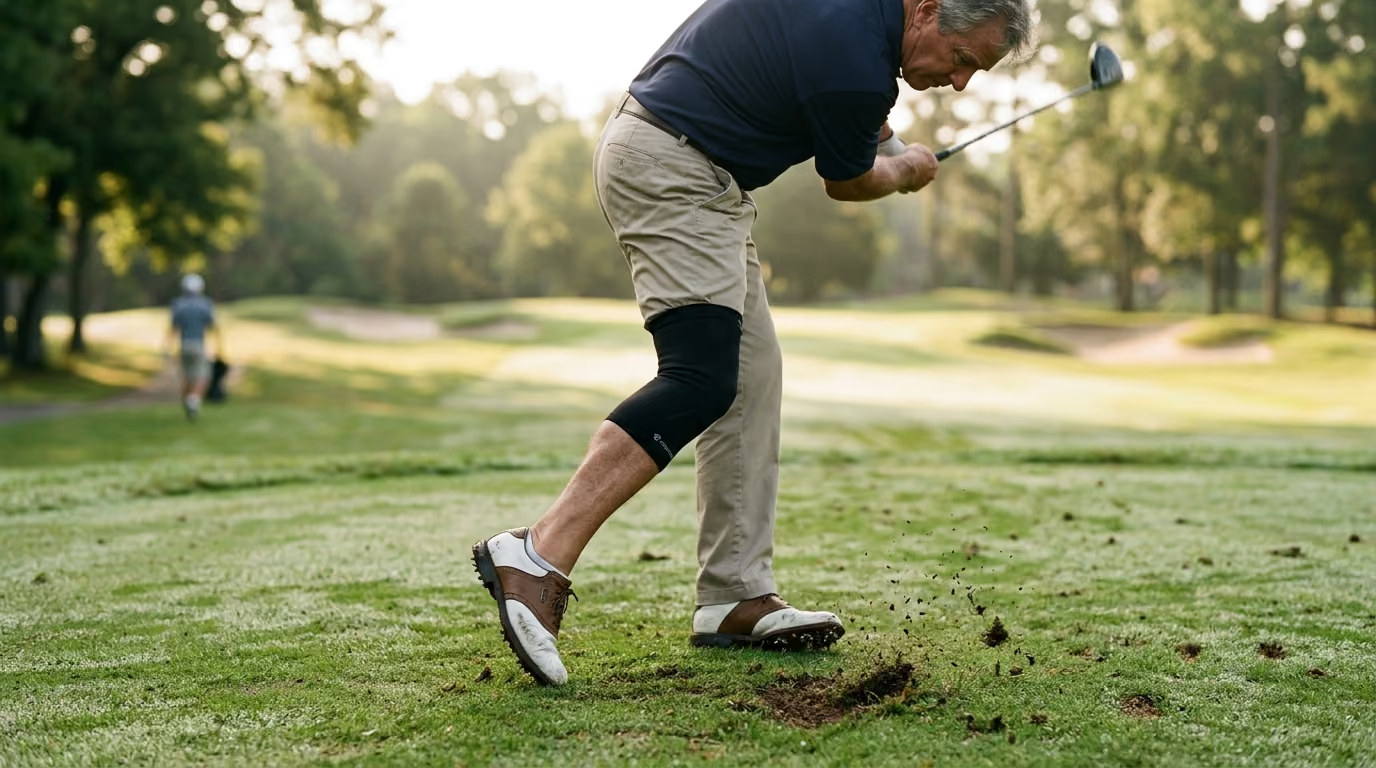
As you start your downswing, your weight shifts rapidly toward your target. Your lead foot plants firmly into the turf, anchoring your lower body. At the moment of impact, your torso and hips rotate with high speed.
Suddenly, you feel a sharp pinch on the outside of your lead knee. The joint feels slightly unstable as you attempt to finish your follow-through. You manage to walk to the green, but each step feels tender. Over the next hour, a dull ache develops inside the joint.
This specific situation happens because the lead knee is forced to act as a pivot point. The lead foot is locked to the ground, while the upper body twists against this resistance. This creates a twisting force that can pinch or tear the delicate cartilage inside your joint.
To protect your knees, you must understand the mechanical forces at play. The meniscus is a thick piece of cartilage shaped like a crescent moon. You have two of these pads in each knee, acting as shock absorbers between your thigh bone and shin bone. They work well when absorbing straight up-and-down weight, but they are highly vulnerable to twisting when compressed.
During a standard golf swing, the forces applied to your lead knee are remarkably high. Research shows that golf generates compressive loads on the knee ranging from 100% to 440% of your body weight. During a powerful downswing, these forces can even reach five times your body weight. This is actually a higher level of joint stress than what is measured during normal jogging.
The timing of this stress is highly concentrated. The maximum load on your lower joints occurs near the exact millisecond of ball impact. This is when your lead leg acts as a brake to stop your forward movement. This rapid braking action is called kinetic chain deceleration.
Your lead knee experiences much higher forces than your trail knee. The lead joint absorbs about 100% of your body weight in lateral compression during the downswing, while the trail knee absorbs around 71%. According to epidemiological data from the British Journal of Sports Medicine, the knee is the second most common site of injury for amateur golfers. Medial meniscus tears are the single most common joint diagnosis in this group.
The human body operates on a system called the joint-by-joint approach. This physical framework looks at the body as a stack of joints with alternating jobs. Some joints are built to provide stability, while other joints are built to provide mobility.
The ankle is designed to be highly mobile, moving in multiple directions. The knee is designed to be stable, moving primarily forward and backward like a simple door hinge. Above the knee, the hip is designed to be highly mobile, rotating through a wide range of motion.
When your hips or ankles lose their natural mobility, a chain reaction occurs. If your hips are stiff, your body still demands rotation to create clubhead speed. Because the hips cannot turn, the rotational force travels down to the stable knee joint.
The knee is forced to twist to make up for the stiff hips. This unwanted twisting under heavy compression is the exact recipe for a meniscus tear. To protect the knee, you must focus on building your hip mobility so the knee can do its proper job of staying stable.
A common piece of golf advice is to post up on a perfectly straight lead leg during the downswing. Many players believe this snapping action transfers maximum speed to the ball. While this move can create power, it is dangerous for the cartilage in your knee.
When you lock your lead leg completely straight, you remove the muscle support around the joint. The quadriceps and hamstrings can no longer help absorb the impact of the swing. All the vertical force and rotation are transferred directly into the bones and the meniscus.
Another dangerous swing pattern is restricting your hip turn to create a larger shoulder turn. This restricted hip turn is often promoted as a way to build power. However, stopping your hips from turning forces the lead knee to collapse inward to let you finish the swing.
When the knee collapses inward, it creates valgus stress. This stress stretches the medial collateral ligament and pinches the medial meniscus. Allowing your hips to rotate freely is a much safer way to generate clubhead speed. Focus entirely on turning your trail hip back during the backswing to prevent this restriction.
You do not need to rewrite your entire golf swing to protect your joints. Simple adjustments to your setup can immediately reduce the twisting stress on your lead knee. These quick changes can be applied during your next round.
The easiest setup change is to flare your lead foot outward. Turn your lead foot about 20 to 30 degrees toward your target before you begin your swing.
This simple angle pre-rotates your lead hip. Because the hip is already turned toward the target, your body does not need to rotate as far during the downswing. This reduces the twist on the lead meniscus at the moment of ball impact.
Your distance from the ball also alters how force moves through your legs. If you stand too far from the ball, you are forced to lean forward, which puts more stress on the outer knee.
Standing a bit closer to the ball allows your weight to stay balanced over the arches of your feet. This posture lowers the inner knee bending force during the downswing. Find a comfortable distance where your arms can hang naturally without forcing you to squat.
Many golfers set up by bending deeply at their knees, creating a squatting posture. Squatting pre-loads your knee joint with heavy vertical pressure before you even begin to swing.
Instead of bending your knees first, focus entirely on bending from your hips. Keep your knees only slightly soft, and push your hips backward. This posture transfers your body weight to your large glute muscles, which are designed to support your frame.
To protect your knees over many years, you need a routine focused on developing your lower body strength. This program should target the muscles that stabilize the knee joint and power your hips. Perform these exercises two to three times per week.
+-------------------------------------------------------------------+
| WEEKLY KNEE LONGEVITY ROUTINE |
+------------------------------+------------------------------------+
| Exercise | Sets & Reps |
+------------------------------+------------------------------------+
| Terminal Knee Extensions | 3 sets of 15 reps |
| Lateral Lunges | 3 sets of 10 reps per side |
| Hip Airplanes | 3 sets of 8 reps per side |
| Glute Bridges | 3 sets of 12 reps |
+------------------------------+------------------------------------+
This exercise trains the quadriceps muscle to support the knee when your leg is nearly straight. It is highly effective for building strength in the specific angle used during the golf swing.
Lateral lunges build strength in the muscles that prevent your knee from collapsing sideways. This movement protects the joint from dangerous side-to-side shear forces.
This balance exercise strengthens the small muscles around your hips. Strong hip stabilizers keep your pelvis level, which prevents unwanted twisting at the knee.
The glute bridge is a fundamental movement for improving your overall golf longevity. It builds the posterior chain strength required to maintain your posture throughout the swing.
Many golfers arrive at the course, pull a club from their bag, and perform a few static stretches. Holding a static stretch for a long time can actually decrease muscle power before an athletic activity. It does not prepare your joints for the high-speed movements of a golf swing.
A dynamic warm-up is a much better choice for proactive injury prevention. Moving your joints through their full range of motion stimulates the production of synovial fluid. This fluid acts like motor oil for your joints, coating the cartilage and reducing friction.
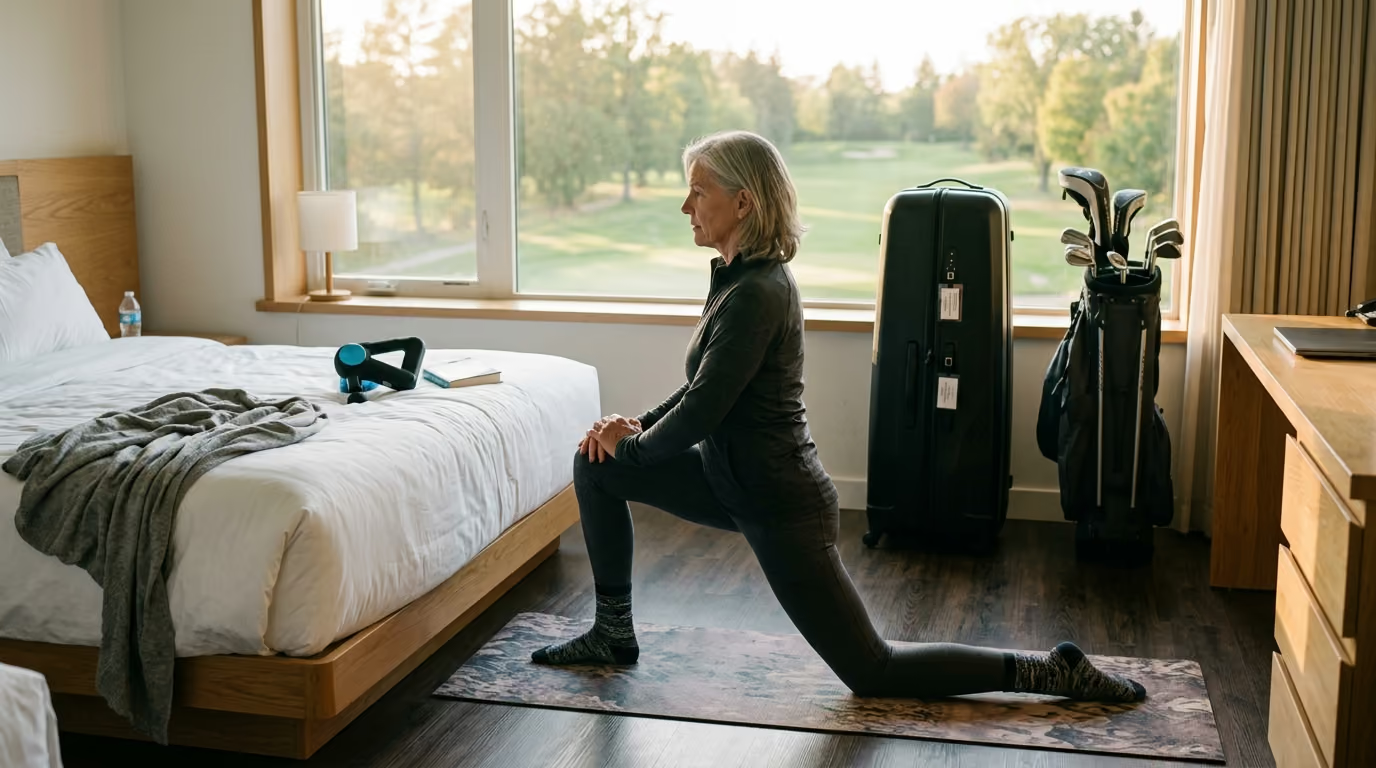
Spend ten minutes before your next round performing dynamic movements. Start with gentle leg swings to loosen your hips. Swing your lead leg forward and backward ten times, then swing it side-to-side ten times.
Next, perform torso twists with your feet flared wide. Twist your upper body slowly from side to side, letting your trail heel lift naturally. Finish with ten slow bodyweight squats, focusing entirely on hinging at your hips. This simple routine prepares your muscles and joints to absorb the physical forces of the game.
Your choice of equipment can have a major impact on the amount of stress your knees absorb. Many players focus entirely on clubs and balls, ignoring how their shoes interact with the turf. Your feet are your only connection to the ground, making your footwear highly important for joint protection.
Modern golf shoes with aggressive plastic spikes offer high traction. While this grip is useful on wet turf, it can be too restrictive on dry ground.
If your lead shoe is locked to the turf, your foot cannot rotate at all during your follow-through. This means all the rotational force of the swing must be absorbed by your knee joint.
Spikeless shoes allow for a tiny amount of natural foot slide. This slight movement releases a significant amount of twisting stress from your lead meniscus. If you suffer from knee pain, switching to spikeless shoes on dry days can provide relief.
You should also look at the flexibility of your shoe soles. A very stiff shoe sole prevents your foot from rolling naturally as you complete your swing.
If your foot cannot roll, your knee is forced to bend at unusual angles to help you finish your motion. Choose a golf shoe that allows your foot to bend easily across the ball of your foot. This flexibility helps distribute forces evenly through your entire leg.
When golfers experience knee discomfort, they often make mistakes that can make the problem worse. Avoiding these errors is critical for protecting your joints over the long term.
A simple elastic knee sleeve can make a sore joint feel warm and secure. However, a sleeve does not fix the underlying movement issue that caused the pain.
If you use a brace to mask discomfort, you will continue to swing with poor mechanics. This can lead to more wear on the cartilage over time. Use a sleeve for comfort, but focus your energy on building hip mobility and leg strength.
Taking anti-inflammatory medication before you play is a common habit among older golfers. While this can temporarily reduce pain, it masks your body's natural warning system.
Pain is a signal that a joint is absorbing too much force. If you numb this signal, you are highly likely to overload the joint and cause further damage. Address the physical cause of the pain rather than silencing the warning signs.
Many golfers try to fix knee pain by doing leg extensions to build their quadriceps. While strong quads are important, over-training them can pull your kneecap out of alignment.
You must balance your quad strength by training your hamstrings and glutes. A balanced leg program keeps your kneecap sliding smoothly in its groove, reducing overall joint wear.
The human knee is a simple joint that prefers to move in a single plane. It does not possess the structural ability to safely twist under heavy weight. When your hip or ankle joints lose their flexibility, your knee is forced to rotate to complete your swing.
Stiff hips are particularly dangerous for the lead knee. During the downswing, your lead hip must rotate internally to let your body turn toward the target. If your hip joint is stiff, your pelvis will stop turning too early.
To complete your follow-through, your body will force your lead knee to twist inward. This inward twist places massive shear stress on the medial meniscus. Focus on dynamic hip rotations to maintain the movement of your hip sockets.
Your ankles play a similar role in protecting your knees. If your ankle is stiff, your foot cannot roll inward or outward during the swing. This lack of movement forces your knee to wobble sideways to help you stay balanced. Keeping your ankles mobile ensures that your feet can adapt to uneven lies without straining your knees.
To protect your lead knee from damage, flare your lead foot toward your target and let your hips turn freely throughout your entire swing.
Many golfers can play with a mild meniscus tear, provided they modify their swing and build leg strength. You should consult your doctor to confirm the tear is stable.
To play safely, flare your lead foot outward and avoid using aggressive metal or plastic spikes. Focus entirely on keeping your swing smooth rather than trying to hit the ball with maximum power.
Walking on flat ground is actually very healthy for your knees, as it stimulates joint fluid production.
However, walking on steep slopes or deep sand can place high stress on a sore joint. If your course is very hilly, using a cart can help you avoid awkward uphill and downhill lies. On flat courses, walking at a steady pace is highly beneficial for your overall health.
Meniscus pain is often sharp and localized to the joint line, especially when you twist your leg. It may also cause your knee to feel like it is clicking or catching.
Osteoarthritis pain is usually a dull, deep ache that feels stiff in the morning and improves as you move. A medical professional can provide a clear diagnosis using physical tests or an MRI scan.
The classic golf swing, which allows the lead heel to lift during the backswing, is generally safer for your knees.
Lifting your lead heel reduces the tension on your hips and lower back. This allows your entire body to rotate as a single unit, which lowers the twisting forces on your lead knee. The modern swing, which keeps the lead heel planted, increases the physical stress on your joints.
Follow Golfergy for practical insights on performance, mobility, recovery and healthy ageing. Stay connected for new articles, research-led guidance and ideas to help you play better for longer.


Explore practical resources on performance, recovery, mobility and golf longevity.
Read the Blog